

What is cruelty-free pet care? A guide to safe, ethical choices
TL;DR:
- Cruelty-free pet care has no legal definition in the U.S., making third-party certifications essential for verification. Certified brands like Leaping Bunny ensure no animal testing at any supply chain level, unlike self-claims which lack oversight. Ethical pet care requires considering testing standards, ingredient sources, environmental impact, and ongoing research beyond just labels.
Any brand can slap “cruelty-free” on a label right now, no questions asked. There is no law stopping them. That is a problem for pet owners who genuinely care about what goes on their fur babies. You want products that are safe, ethical, and backed by something real, not just feel-good words on a bottle. This guide cuts through that confusion. We cover what cruelty-free actually means in pet care, which certifications matter, how it differs from vegan or sustainable, and exactly how to shop with confidence.
Table of Contents
- Decoding cruelty-free: What does it really mean?
- Certifications: The gold standard for cruelty-free pet care
- Cruelty-free vs. vegan vs. sustainable: How are they different?
- Pitfalls and edge cases: What to watch out for
- Practical steps to choose cruelty-free pet care
- Why “cruelty-free” is only the beginning for ethical pet care
- Find cruelty-free pet care solutions at Percy Loves
- Frequently asked questions
Key Takeaways
| Point | Details |
|---|---|
| Certified matters most | Pet care products should be certified cruelty-free for genuine no-animal-testing assurance. |
| Definitions vary widely | Cruelty-free, vegan, and sustainable are separate concepts—always review labels and certifications. |
| Watch for edge cases | Brand claims may be misleading due to hidden company policies and geographic regulations. |
| Prioritize holistic care | Combine cruelty-free status with environmental and pet safety factors for the healthiest decisions. |
| Verify before buying | Use certification directories and ingredient lists to confirm cruelty-free claims before purchasing. |
Decoding cruelty-free: What does it really mean?
Let’s start with the truth that surprises most people. “Cruelty-free” has no legal definition in the United States. None. That means any company can print it on packaging without meeting a single external requirement. There is no government agency checking. There is no mandatory audit. It is completely self-declared.
So what should it mean? At its core, cruelty-free pet care refers to pet products such as grooming shampoos, treats, food, and toys that are not tested on animals at any stage. That includes ingredients, formulations, and the finished product itself. Every step of the process should be free from animal testing.
“There is no legal definition for ‘cruelty-free,’ allowing brands to self-declare without verification; rigorous certifications like Leaping Bunny require supplier monitoring, annual pledges, and independent audits to ensure no animal testing in the full supply chain.” PETA Prime
That gap between what brands claim and what they actually practice is why verification matters so much. A brand can have the best intentions and still source ingredients from suppliers who test on animals further up the chain. Without a third-party certification holding everyone accountable, those gaps stay hidden.
Here is what a genuinely cruelty-free product should cover:
- Ingredients: No individual component was tested on animals
- Formulations: The blending and development process involved no animal testing
- Finished product: The final item was never tested on animals before sale
- Supply chain: Suppliers at every level follow the same no-testing standard
Understanding brand quality standards is the first step in knowing whether a product lives up to its label. And considering that 69 million pounds of pet products have been recalled in recent years, cutting corners anywhere in the process is genuinely risky. Following expert non-toxic care tips helps you shop with a sharper eye.
Now that the confusion around the term is clear, let’s look at how trusted certifications tackle this challenge.
Certifications: The gold standard for cruelty-free pet care
If self-claims are unreliable, certifications are the answer. They provide third-party accountability that removes the guesswork. Not all certifications are created equal, though, so it pays to know which ones carry real weight.
Leaping Bunny is widely recognized as the most trusted independent cruelty-free certification. Leaping Bunny certifies pet grooming products like shampoos and explicitly covers pet care in its Animal Care section. Brands like earthbath have achieved this certification across their entire product line. That is not easy to do. It requires consistent effort at every level of production.
What makes Leaping Bunny certification rigorous? It goes far beyond a simple pledge. Certified brands must monitor their full supplier list, submit annual recommitment pledges, and open themselves up to independent audits at any time. That no-testing supply chain requirement is what separates Leaping Bunny from a brand simply saying “we don’t test on animals.”
Here is a quick comparison of certified versus self-claimed brands:
| Feature | Certified (e.g., Leaping Bunny) | Self-claimed cruelty-free |
|---|---|---|
| Third-party audit | Yes | No |
| Supplier monitoring | Required | Optional |
| Annual recommitment | Required | None |
| Supply chain coverage | Full chain | Brand-level only |
| Consumer trust | High | Low to moderate |
| Verification source | Public directory | Brand’s own word |
The difference is stark. A certified brand has skin in the game. A self-claiming brand has none.
Here is how to verify a product’s certification before you buy:
- Find the certification logo on the product packaging (Leaping Bunny, PETA’s Beauty Without Bunnies, etc.)
- Visit the certifying organization’s official website
- Search the brand name in their public directory
- Confirm the specific product line is included, not just the brand
- Check the certification’s renewal or last audit date if available
Pro Tip: Use the Leaping Bunny app (Cruelty-Cutter) when you are shopping in-store. It lets you scan barcodes and instantly confirms certification status so you never have to guess.
Pairing this knowledge with a solid pet grooming workflow makes your routine both safe and consistent. If your pet has sensitive skin, certified products matter even more since you already know the standards they meet. You can also find odor-free grooming tips that pair well with certified products.
With certifications demystified, let’s examine how cruelty-free pet care differs from vegan and sustainable options.
Cruelty-free vs. vegan vs. sustainable: How are they different?
This is where a lot of pet owners get tripped up. These three terms sound like they belong together, and sometimes they do overlap. But they are not the same thing, and assuming they are can lead to real surprises at the ingredient level.
Cruelty-free focuses entirely on testing. It means no animal was harmed in the testing process. It says nothing about what ingredients are inside the product.
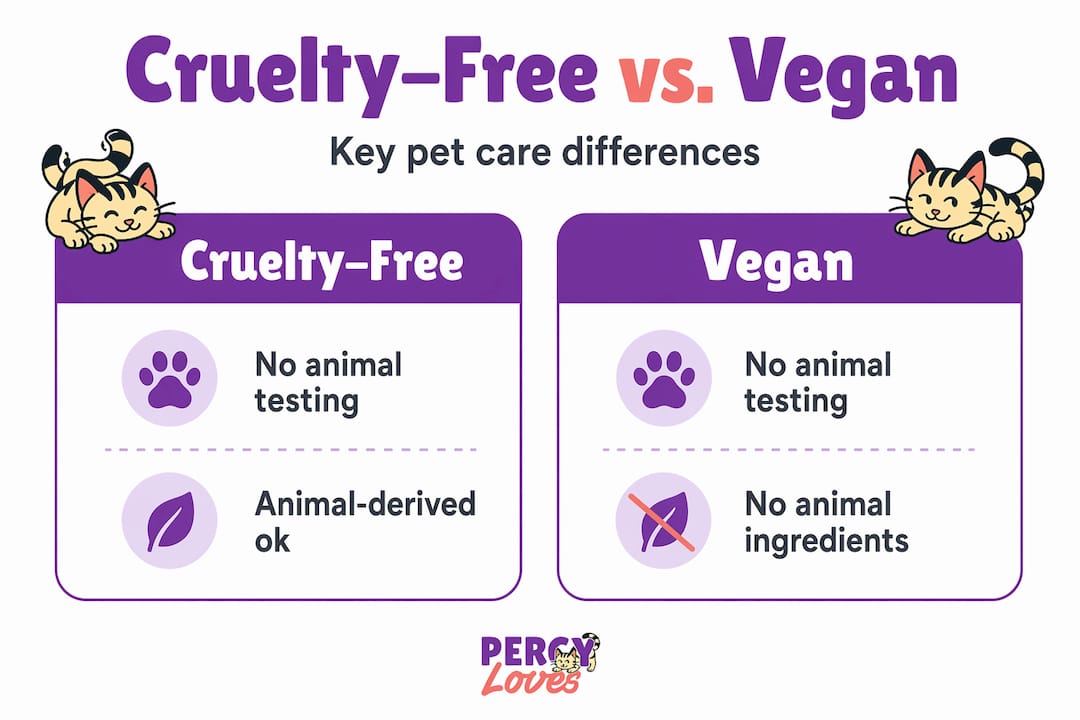
Vegan means the product contains no animal-derived ingredients. That includes things like beeswax, lanolin (a wax from sheep wool), or gelatin. A vegan product could theoretically still be tested on animals in some markets.
Sustainable focuses on environmental impact. A sustainable product is made with low-carbon practices, eco-friendly packaging, or responsibly sourced materials. It does not speak to testing or ingredients directly.
Here is how they compare side by side:
| Label | No animal testing | No animal ingredients | Low environmental impact |
|---|---|---|---|
| Cruelty-free | Yes | Not required | Not required |
| Vegan | Not required | Yes | Not required |
| Sustainable | Not required | Not required | Yes |
| All three | Yes | Yes | Yes |
Cruelty-free products may contain animal-derived ingredients like beeswax or pig ears sourced from humane farms, which are distinct from vegan or sustainable claims. And as the difference between cruelty-free and vegan gets clearer, it becomes obvious that not all vegan pet products are cruelty-free, and not all cruelty-free products are vegan.

On the environmental side, meat-based pet food carries a notably high environmental footprint, while plant-based alternatives offer potential benefits but require digestibility studies and veterinary validation to confirm they actually work for individual pets.
When you are shopping, ask yourself these questions:
- Does this product carry a recognized cruelty-free certification?
- Does the ingredient list include any animal-derived components I want to avoid?
- Does the brand share environmental impact data for their products?
- Is the packaging recyclable or made from sustainable materials?
- Has the brand disclosed its supply chain transparency?
Exploring eco-conscious pet care and checking pet safety standards together gives you a much more complete picture of what a product actually stands for.
Understanding product categories is crucial, but pet owners must also spot common pitfalls and edge cases in the market.
Pitfalls and edge cases: What to watch out for
Even informed shoppers can get caught off guard. The cruelty-free landscape has some real blind spots, and knowing about them ahead of time is your best protection.
Important: Geographic laws can directly contradict a brand’s cruelty-free claim. Products sold in physical stores in certain countries may be required by law to undergo animal testing, regardless of what the brand states on its label.
Here are the most common pitfalls to watch out for:
-
Geographic testing requirements: Products sold in some countries, notably in certain physical retail stores in China, have historically required animal testing under local regulations. A brand that sells in those markets may not be fully cruelty-free, even if their US packaging says otherwise.
-
Parent company practices: A small brand with a genuine cruelty-free commitment can be owned by a much larger parent company that tests on animals. The parent’s practices can affect the supply chain and overall ethical standing of the smaller brand.
-
Expired or lapsed certifications: Some brands earned certification years ago and have not renewed. Always check the date or renewal status on the certifying body’s website.
-
Humane farming vs. no testing: Some pet treat brands use “cruelty-free” to mean their animal-derived ingredients came from humanely raised animals. That is a completely different claim than “no animal testing.” Both might be good things, but they are not the same thing.
-
Subsidiary brands: A parent company may own dozens of brands, some certified and some not. Purchasing from a cruelty-free sub-brand does not mean all of that parent’s products meet the same standard.
These edge cases are exactly why researching both the product brand and its parent company matters so much. The label on the front is only the starting point.
Pro Tip: Search the brand name plus its parent company name together online before buying. This quick step often reveals important details about corporate practices that the product packaging will never mention.
Staying current on pet brand certifications is an ongoing practice, not a one-time check. Brands change ownership. Regulations shift. Staying informed protects your pets.
By avoiding these pitfalls, you are ready to confidently select cruelty-free pet care for your pets.
Practical steps to choose cruelty-free pet care
Knowledge is only useful when you act on it. Here is exactly how to put everything you have learned into practice every time you shop for your pet.
Shopping for cruelty-free pet care does not have to be complicated. Once you build a simple routine, it becomes second nature. Start with these steps:
- Look for recognized certification logos on the front or back of packaging. Leaping Bunny, PETA’s Beauty Without Bunnies, and similar marks are your most reliable starting point.
- Verify in the official directory. Do not take the logo alone at face value. Spend 30 seconds confirming the brand is listed on the certifying organization’s website.
- Read the ingredient list. If avoiding animal-derived ingredients matters to you, scan for common ones like beeswax, carmine, lanolin, gelatin, and casein.
- Research the parent company. A quick search can reveal whether the owning corporation has conflicting practices elsewhere.
- Check geographic market disclosure. Responsible brands will often state explicitly that they do not sell in markets requiring animal testing.
- Review the brand’s supply chain transparency. Ethical brands publish sourcing policies. If that information is nowhere to be found, that tells you something.
Pet owners should prioritize Leaping Bunny or similar certifications over self-claims for verified no-animal-testing. Combining that with vegan and sustainable labels covers safety, ethics, and environmental responsibility all at once.
Pro Tip: Download the Cruelty-Cutter app and the Think Dirty app. Between the two, you can scan nearly any product and get detailed breakdowns of ingredients and certifications. No research required at checkout.
Getting your pet grooming safety tips dialed in alongside your product choices creates a truly consistent, safe routine for your fur baby.
With practical tools in hand, let’s close out with a fresh perspective and what most articles overlook.
Why “cruelty-free” is only the beginning for ethical pet care
Here is our honest take: cruelty-free certification is a meaningful baseline. It matters. But pet owners who stop there are missing a bigger picture that directly affects their pets and the planet.
We see this all the time. A pet parent spends real energy finding a certified shampoo, and that is genuinely great. But then they grab a bag of conventional pet food without a second thought. The reality is that meat-based pet food has a significantly high environmental impact while plant-based alternatives offer real potential benefits, though they require digestibility studies and veterinary input to validate what works for each individual animal.
Our perspective: Ethical pet care is not a single checkbox. It is a combination of verified testing standards, thoughtful ingredient choices, honest environmental accountability, and ongoing learning. The label is the starting line, not the finish line.
True holistic pet care asks more questions. Does this product harm animals through testing? Does it contain ingredients that came at the cost of animal welfare? Does its production process damage the ecosystems our pets live in? Those three questions together paint a much clearer picture than “cruelty-free” alone ever can.
We believe the most empowered pet owners are the ones who treat their shopping decisions like ongoing research. Certifications help enormously. But pairing them with a habit of reading ingredient labels, checking parent companies, and exploring eco-friendly pet care options builds a level of confidence that no single label can provide on its own.
Pro Tip: Before purchasing a new pet food, look up its environmental impact score and ask your vet whether the protein sources align with your pet’s specific digestive needs. Two simple steps that most pet owners never take.
The humans at Percy Loves think cruelty-free is a start worth celebrating. We also think your fur baby deserves every layer of protection beyond it.
Find cruelty-free pet care solutions at Percy Loves
You have done the research. You know what to look for. Now let us make the next step easy for you.
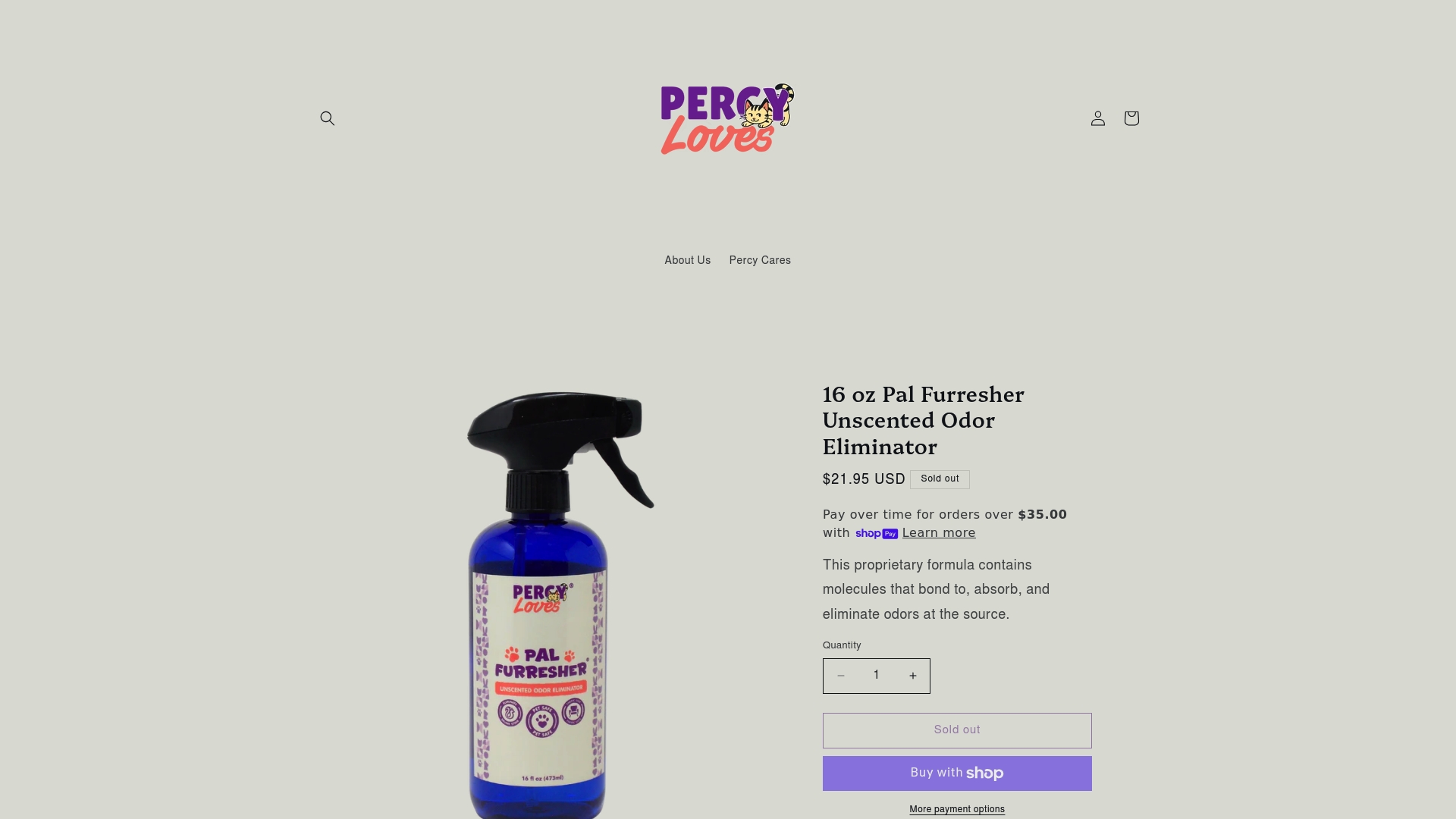
At Percy Loves, every product we make is built around one idea: your pet is family, and they deserve the safest, most effective care possible. Our Pal Furresher odor eliminator 16 oz is lick safe, fragrance-free, enzyme-free, and tackles odors at the source instead of masking them. It is the kind of product that fits perfectly into a cruelty-free, ethically minded pet care routine. You can also grab the Pal Furresher odor eliminator 3-pack to keep your whole home fresh and your conscience clear. Explore all Percy Loves cruelty-free products and find solutions that match your values.
Frequently asked questions
How can I check if a pet product is truly cruelty-free?
Look for recognized certifications like Leaping Bunny, which covers pet care products including shampoos, and verify the brand in their public online directory before purchasing.
Are all cruelty-free products vegan or environmentally sustainable?
No. Cruelty-free products may contain animal-derived ingredients like beeswax or lanolin and may have no sustainability commitments at all. Check each label separately for vegan and environmental claims.
Can a pet product be cruelty-free if the parent company tests on animals?
Yes, this is a real risk. Parent company policies can override a smaller brand’s cruelty-free claim, so always research both the product brand and its parent organization before buying.
Does cruelty-free guarantee safety for pets with sensitive skin?
Not directly. Cruelty-free is an ethical testing standard, not a formula safety standard. Leaping Bunny covers pet care products but you should still read ingredient lists for potential skin irritants specific to your pet.
Are cruelty-free pet treats always humanely sourced?
Not always. Some cruelty-free treat brands use the term to highlight humane animal farming practices rather than a no-animal-testing standard, so the specific meaning behind the claim varies by brand.


