

Sensitive skin pet care: safe grooming for happy pets
TL;DR:
- Pets with sensitive skin react strongly to fragrances, harsh chemicals, and certain grooming ingredients.
- Regular, gentle routines and ingredient-aware product choices help prevent and manage skin sensitivities.
- Slow, consistent changes and patch tests are key to identifying safe products and effective routines for pets.
Not every grooming product is safe for every pet. That’s a hard truth a lot of well-meaning pet parents find out the wrong way. You buy a popular shampoo or a scented spray, and suddenly your cat or dog is scratching, flaking, or rubbing their face on the carpet. Sound familiar? Sensitive skin in pets is far more common than most people realize, and the wrong product can make things significantly worse. This guide walks you through exactly what sensitive skin looks like, which ingredients to avoid, and how to build a gentle routine that actually works for your fur baby.
Table of Contents
- Understanding sensitive skin in cats and dogs
- Common grooming product ingredients to avoid
- Best daily routines for sensitive skin pets
- How to choose safe grooming products for sensitive skin
- Why most pet owners miss sensitive skin triggers and what actually helps
- Find safe, effective grooming solutions for your sensitive pet
- Frequently asked questions
Key Takeaways
| Point | Details |
|---|---|
| Spot sensitive skin early | Knowing the symptoms helps prevent bigger issues for your cat or dog. |
| Avoid harsh ingredients | Choose products without fragrances, sulfates, or parabens to minimize risk. |
| Follow gentle routines | Adapt bathing, brushing, and cleaning based on your pet’s individual needs. |
| Patch test new products | Always test on a small area before full use to catch any reactions early. |
| Use trusted solutions | Opt for unscented, dermatologist-tested products designed for sensitive pets. |
Understanding sensitive skin in cats and dogs
Sensitive skin in pets isn’t just a vague complaint. It’s a real condition that shows up in recognizable ways, and knowing the signs can save your pet from a lot of unnecessary discomfort.
Simply put, sensitive skin means your pet’s skin reacts more intensely to things that wouldn’t bother most animals. The reaction can be immediate or build up slowly over time. Either way, it’s uncomfortable for your pet and stressful for you.
Common symptoms to watch for:
- Redness or inflammation, especially around the belly, paws, ears, or face
- Persistent itching or scratching beyond what’s normal
- Dry, flaky skin or visible dandruff in the coat
- Hair loss in patches or around areas your pet licks frequently
- Recurring hot spots (raw, moist areas of skin)
- Excessive licking of paws, legs, or the base of the tail
Many pets experience irritation from common grooming products that contain synthetic fragrances, harsh detergents, or chemical preservatives. This is more common than vets once thought, and it’s becoming a bigger issue as product formulations grow more complex.
Top triggers for sensitive skin include:
- Synthetic fragrances in shampoos, sprays, and wipes
- Harsh cleaning chemicals in shared spaces
- Frequent bathing that strips natural skin oils
- Seasonal allergens like pollen or mold
- Parasites like fleas, mites, or ringworm
- Food sensitivities that express through the skin
Some pets are also genetically predisposed to skin sensitivity. Breeds like Bulldogs, Shar-Peis, Golden Retrievers, Cocker Spaniels, and Siamese cats tend to have more reactive skin than average. If you have one of these breeds, building a safe grooming workflow from the start is not optional. It’s essential.
| Pet type | Common sensitive areas | Breed examples prone to sensitivity |
|---|---|---|
| Dogs | Belly, paws, ears, skin folds | Bulldog, Cocker Spaniel, Golden Retriever |
| Cats | Face, neck, base of tail | Siamese, Persian, Devon Rex |
Understanding these basics is your starting point. The next step is figuring out what’s actually in your pet’s grooming products because that’s often where the real problem hides. For more on dog grooming safety basics, our blog has you covered.
Common grooming product ingredients to avoid
Recognizing the symptoms is just the start. Choosing the right products is equally important, and that means getting comfortable reading ingredient labels.
Fragrances and certain preservatives are leading irritants for pets with sensitive skin. The tricky part is that they often appear under vague names on labels, making them easy to miss if you don’t know what to look for.
Ingredients to avoid in pet grooming products:
- Synthetic fragrances: Listed simply as “fragrance” or “parfum.” This single word can hide dozens of undisclosed chemical compounds, many of which are known irritants.
- Sulfates (SLS/SLES): Sodium lauryl sulfate and sodium laureth sulfate create that satisfying lather in shampoos, but they strip the skin’s natural oils and cause dryness and irritation.
- Parabens: Used as preservatives (look for methylparaben, propylparaben, butylparaben). Linked to skin reactions and increasingly questioned for long-term safety.
- Alcohol: Drying and irritating, especially on already-sensitive skin. Often found in sprays and waterless shampoos.
- Formaldehyde-releasing preservatives: Names like DMDM hydantoin or diazolidinyl urea release small amounts of formaldehyde over time, which can irritate skin and airways.
- Artificial dyes: Colorants serve zero functional purpose in pet products and can trigger contact reactions.
“When in doubt, fewer ingredients is almost always better. A short, recognizable ingredient list is a green flag for sensitive pets.”
Better alternatives to look for:
| Ingredient to avoid | Safer alternative |
|---|---|
| Synthetic fragrance | Fragrance-free or naturally scented with pet-safe botanicals |
| Sulfates | Gentle, plant-derived cleansers like coco-glucoside |
| Parabens | Natural preservatives like rosemary extract |
| Alcohol | Aloe vera or glycerin-based formulas |
Understanding why pets groom after sprays is also important. When a product smells strong or feels irritating, pets instinctively try to remove it by licking. This is a clear signal that something in that product isn’t working for them.
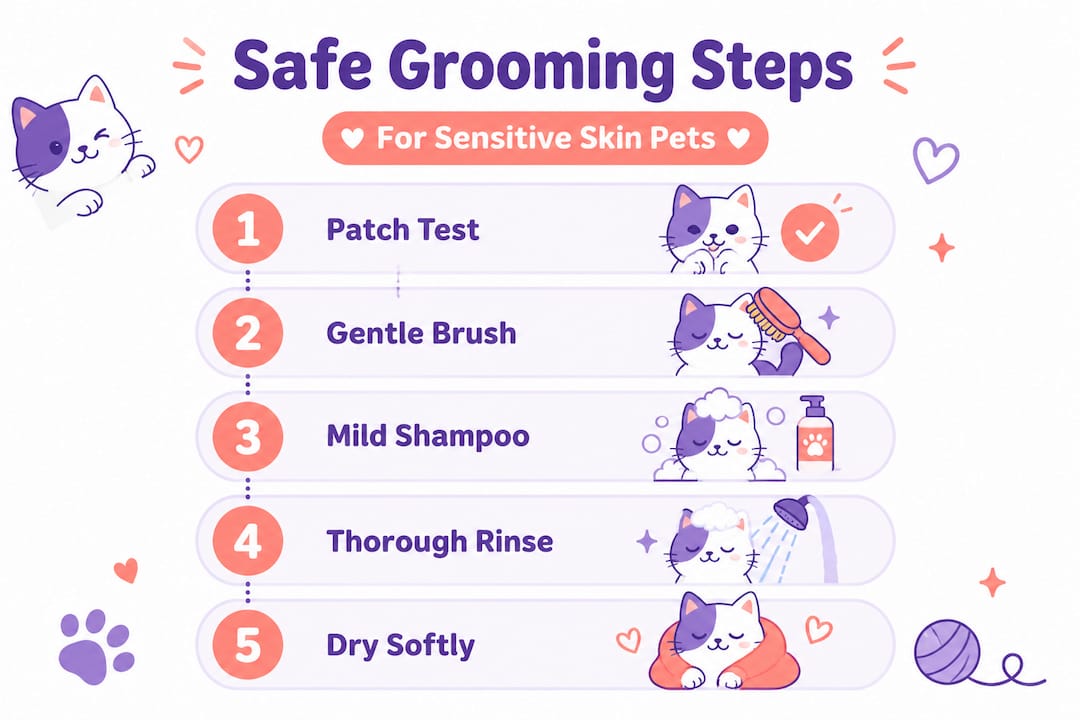
Pro Tip: Before fully committing to any new grooming product, do a patch test. Apply a small amount to a limited area, like the inside of a leg, and wait 24 hours. No redness or itching means you’re likely in the clear. Always check safe pet grooming guidelines before introducing anything new to your routine.
Best daily routines for sensitive skin pets
Once you know which products to use, setting up a safe routine is the next critical step. A good routine isn’t just about what you use, it’s also about how often and how carefully you do it.

Gentle, consistent routines help maintain healthy skin and reduce flare-ups significantly. That consistency matters more than most pet owners expect. Random or reactive grooming, where you only address problems when they appear, tends to worsen sensitive skin over time.
Here’s a practical routine to follow:
- Bathing frequency: For dogs with sensitive skin, aim for every 4 to 6 weeks using a gentle, unscented shampoo. More frequent bathing strips natural oils and disrupts the skin barrier. Cats typically self-groom and rarely need full baths unless specifically recommended by a vet.
- Brushing: Brush your dog or cat regularly to distribute natural skin oils and remove loose hair, dander, and environmental debris. For dogs, 3 to 4 times per week is a solid target. For cats, especially long-haired breeds, daily is even better.
- Paw care: Wipe down paws with a damp, unscented cloth after outdoor walks to remove allergens like pollen, pesticides, and road residue. Paws are a major entry point for irritants.
- Ear cleaning: Check ears weekly for redness, buildup, or unusual odor. Use a vet-recommended ear cleaner and avoid inserting anything into the ear canal.
- Bedding and surface cleaning: Wash your pet’s bedding weekly in a fragrance-free, dye-free laundry detergent. Clean the surfaces your pet spends time on regularly, using pet-safe products only.
- Environment check: Vacuum frequently to reduce dust, dander, and allergen buildup. Consider an air purifier in rooms where your pet spends the most time.
- Diet support: Omega-3 fatty acids from fish oil can support skin health from the inside out. Ask your vet about appropriate supplementation for your specific pet.
Checking in on your pet parenting best practices regularly helps you catch problems before they escalate.
Pro Tip: Keep a simple log of your pet’s grooming routine, products used, and any reactions you notice. When a flare-up happens, this log makes it much easier to identify the cause and adjust quickly. You’d be surprised how often the culprit turns out to be something you changed two weeks earlier.
Signs your routine needs adjusting include new or worsening scratching after a product switch, increased hair loss, changes in skin texture, or your pet becoming more resistant to grooming sessions. For breed-specific guidance, our cat grooming tips and essential pet care tips resources offer deeper detail.
How to choose safe grooming products for sensitive skin
With routines outlined, the final piece is picking the best tools and products to execute your plan safely. This is where a lot of pet parents get overwhelmed, because the market is full of products claiming to be “natural,” “safe,” or “gentle” without much proof behind those claims.
Unscented, gentle products reduce the risk of irritation for sensitive pets consistently and reliably. But not every label that says “unscented” actually means the same thing. Some products add masking fragrances to cover up chemical smells, and those still count as irritants even if you can’t detect them strongly.
What to actually look for on labels:
- “Fragrance-free” is stronger than “unscented.” Fragrance-free means no fragrance ingredients were added at all.
- “Hypoallergenic” is a useful signal but not a guarantee. It means the product was formulated to minimize common allergens, but it’s not a regulated term in the U.S.
- “Dermatologist tested” or “veterinarian tested” adds credibility, but look for specifics. Tested on what? With what results?
- Transparent ingredient lists: Trustworthy brands list every ingredient clearly and don’t hide behind proprietary blends for basic formulas.
- pH-balanced for pets: Pet skin has a different pH than human skin (typically between 6.5 and 7.5 for dogs, slightly higher for cats). Products formulated for human skin can disrupt your pet’s skin barrier.
What to check in reviews:
When evaluating a new product, filter reviews specifically for mentions of sensitive skin, allergies, or reactions. Real feedback from pet parents dealing with the same issues is often more informative than any marketing claim. Look for patterns across multiple reviews, not just a handful of five-star ratings.
Checking the pet-parent cleaning checklist is also smart. Surface cleaners, floor sprays, and fabric refreshers that your pet contacts daily need the same scrutiny as their shampoo. A product that’s great for their coat means nothing if the floors they walk on are covered in harsh chemical residue.
For safe pet grooming for sensitive pets, the general rule is this: if you can’t understand most of the ingredients, or the list is suspiciously short with vague terms, keep looking.
Why most pet owners miss sensitive skin triggers and what actually helps
Here’s something we’ve learned from watching pet parents navigate this issue: buying hypoallergenic products is a good first step, but it’s not enough on its own. Many owners switch to a gentle shampoo, see partial improvement, and assume they’ve solved the problem. They haven’t.
Missed triggers like household cleaners and intermittent flea treatments often worsen sensitive skin completely unnoticed. The shampoo gets all the blame, but the real culprit is the floor cleaner your dog walks on every single day, or the flea collar applied every few months without a second thought.
The other issue is that pet owners tend to make multiple changes at once when their pet flares up. They switch shampoos, change food, try a new spray, and wash bedding with a different detergent, all in the same week. Now when the pet improves (or gets worse), there’s no way to know which change made the difference.
What actually helps is slowing down. Make one change at a time. Give it two to three weeks before evaluating. Document everything. This feels slow, but it’s the fastest path to a real answer because you’re building actual data instead of just guessing.
We also want to challenge the idea that you simply need to find the “right” product. Sometimes the issue is the routine itself. Over-bathing is far more common than most owners think, and it’s one of the most reliable ways to keep sensitive skin chronically irritated. Less is genuinely more here.
Take time to understand what owners miss about cat grooming in particular, because cats present their skin sensitivities differently than dogs and get overlooked because they hide discomfort so well.
The bottom line: sensitive skin care is personalized care. No single product or routine works for every pet. Observation, patience, and consistency are the tools that actually move the needle.
Find safe, effective grooming solutions for your sensitive pet
We get it. Finding products you can genuinely trust for a sensitive pet takes time and energy that most pet parents don’t have to spare. That’s exactly why we built Percy Loves around one core commitment: safe, effective formulas that work without causing new problems.
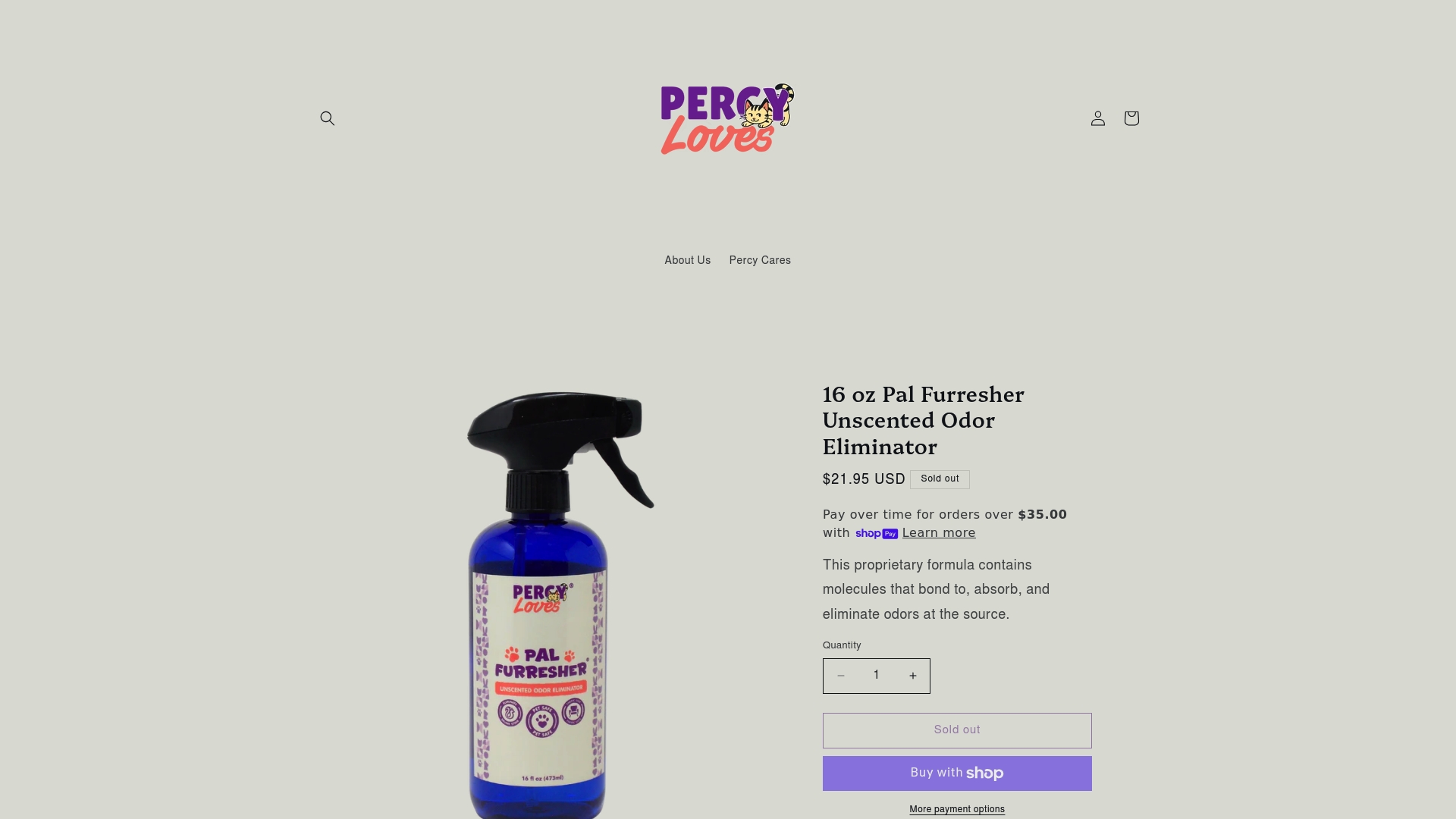
Our 4 oz unscented odor eliminator, Pal Furresher, is completely fragrance-free and lick safe, which matters a lot when your pet naturally grooms after any product touches their coat. It doesn’t mask odors, it tackles them at the source using a proprietary formula that eliminates the problem completely. If you need more on hand, the 16 oz and 4 oz odor eliminator combo gives you great value without any compromise on safety. Explore everything we offer at the Percy Loves shop and find the gentle solutions your fur baby deserves.
Frequently asked questions
What are the most common signs of sensitive skin in pets?
The most common signs are redness, itchiness, flaking, and excessive licking or scratching, which often point to a reaction from grooming products or environmental allergens. Recognizing symptoms like redness and flaking early helps you address the issue before it worsens.
How often should I bathe my sensitive skin cat or dog?
Bathe sensitive pets only when necessary, typically every 4 to 6 weeks, using gentle, unscented products to avoid stripping their natural skin oils. Gentle, consistent routines support healthy skin and help prevent repeated flare-ups.
Are unscented or hypoallergenic products always safest for sensitive pets?
Unscented and hypoallergenic products are typically the safest choices, but always patch test first to confirm your individual pet doesn’t react. Unscented, gentle products consistently reduce the risk of irritation for most sensitive pets.
Can household cleaners contribute to my pet’s sensitive skin issues?
Yes. Many household cleaners leave chemical residues on floors and surfaces that your pet contacts daily, which can absolutely trigger skin reactions. Missed triggers like household cleaners are one of the most overlooked causes of ongoing skin sensitivity in pets.
What should I do if my pet has a reaction to a grooming product?
Stop using the product immediately, rinse the affected area with clean water if accessible, and consult your veterinarian if symptoms like redness, swelling, or excessive scratching persist beyond 24 hours.


