

The Role of Testing in Pet Product Safety
TL;DR:
- Most non-edible pet products lack mandatory federal safety oversight, making third-party testing essential for pet safety. Testing uncovers hazards like toxic chemicals, choking risks, and battery dangers before products reach pets, ensuring trustworthiness. Consumers should look for certification seals, test reports, and recall information to make informed, safe purchasing choices.
Most pet owners assume that if a product is sold in a store, someone checked it first. That assumption is wrong more often than you might think. The role of testing in pet product safety is far more complicated than a simple stamp of approval, and the gaps in the system are real. There is no single federal agency overseeing the safety of non-edible pet products like toys, beds, or collars. That means the responsibility for keeping your fur baby safe falls on brands, third-party labs, and informed pet parents like you.
Key Takeaways
| Point | Details |
|---|---|
| No single federal regulator | Most non-edible pet products lack mandatory federal safety oversight, making voluntary testing critical. |
| Testing finds hidden hazards | Labs catch toxic chemicals, choking risks, and battery dangers before products reach your pet. |
| Reports must match the product | A valid test report must be current and tied to the exact product version to count as real compliance evidence. |
| Recalls are a warning signal | Recent recalls of over 51,000 pet laser toys show what happens when testing requirements are skipped. |
| You can verify safety yourself | Certification seals, lab report availability, and recall databases help you shop with confidence. |
The role of testing in pet product safety regulation
Here is something that surprises most pet parents: the U.S. does not have a single federal regulator responsible for the safety of most pet products. The FDA handles pet food and treats. The Consumer Product Safety Commission, the CPSC, oversees children’s products and sometimes steps in when a pet product poses a risk to kids. But for non-edible items like chew toys, collars, pet beds, and laser pointers, very few standards protect pets compared to those protecting children.
ASTM International has been working to close that gap. They have developed voluntary standards for pet products, but adoption is limited. There is no requirement forcing manufacturers to follow them. That is a significant problem when you consider how many products are manufactured overseas with no mandatory safety review before they land on store shelves.
So what fills the void? Third-party testing does. This is where independent labs step in to evaluate products across several categories:
- Chemical testing: Screens for harmful substances like lead, cadmium, and California Proposition 65 chemicals that can be toxic if ingested or absorbed through skin contact
- Physical and mechanical testing: Checks for structural integrity, sharp edges, and small parts that could break off and become choking hazards
- Flammability testing: Confirms that materials used in pet beds and accessories meet fire safety benchmarks
- Microbiological testing: Identifies contamination risks, particularly in products that stay in contact with pets for extended periods
Third-party labs provide compliance evidence through formal test reports that document results against specific safety standards. Brands that invest in this process are taking your pet’s safety seriously. Brands that skip it are taking a gamble with your pet’s health.
Real hazards that testing catches before they reach your pet
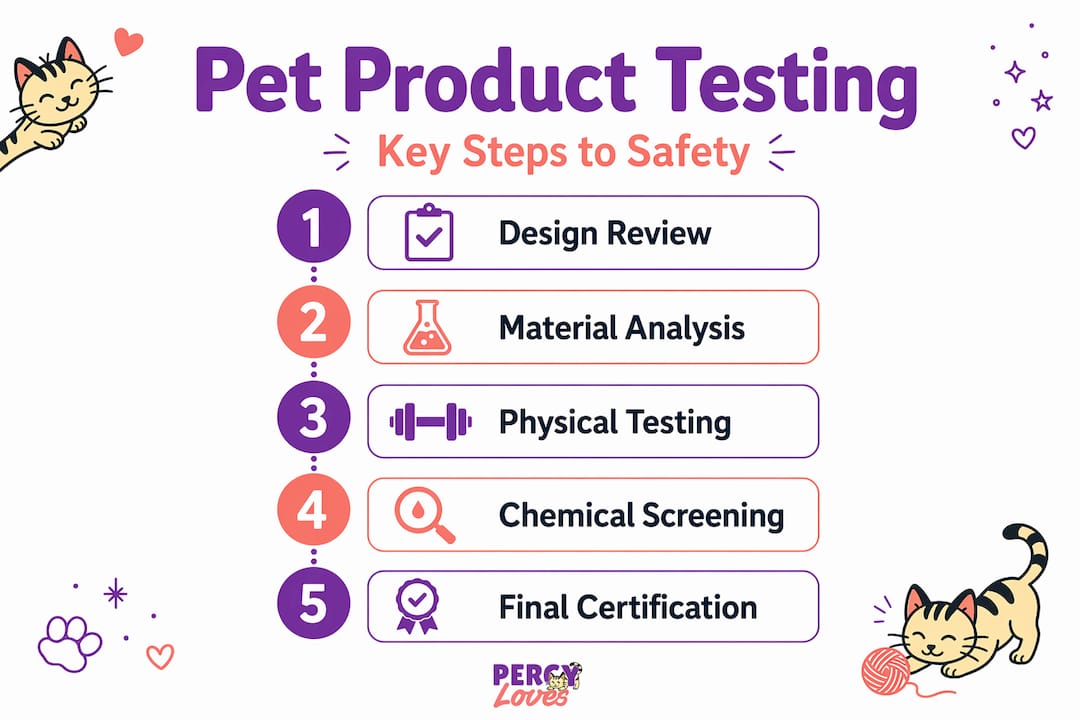
The risks are not theoretical. Let’s look at what actually goes wrong when testing is skipped or inadequate.
Choking hazards are one of the most common issues. Toys with small parts that detach during play can be swallowed by dogs, cats, or small animals like rabbits and ferrets. Physical durability testing specifically simulates rough use to confirm that parts stay intact.

Toxic chemical exposure is another serious concern. Some materials used in cheap pet toys contain dyes, coatings, or plasticizers that release harmful compounds. A dog who chews a toy for hours is getting prolonged contact with whatever that toy is made of. Chemical screening during the testing process catches this before the product ships.
Battery hazards are a growing concern with electronic pet toys. A recall of over 51,000 pet laser toys in 2026 is a perfect example. The recall was triggered by unsecured button cell batteries that could be accessed by children and pets, posing an ingestion risk. Missing child-resistant packaging and no safety warnings made the situation worse. Button cell batteries can cause severe internal burns when swallowed. This type of failure is exactly what comprehensive testing requirements for pet toys are designed to catch.
Microbiological contamination is less visible but equally real. Soft products that stay damp or are used in outdoor environments can harbor bacteria or mold, especially if materials were not tested for resistance to microbial growth.
Pro Tip: Check the manufacturer’s website for a product FAQ or safety section. If a brand cannot tell you anything about how their products are tested, that silence says a lot.
How pet product testing actually works
Understanding the process helps you recognize what good safety evidence looks like. Here is how the process typically flows for a responsible manufacturer:
- Raw material testing: Before production starts, materials are screened for chemical content. This includes checking for restricted substances on lists like California Prop 65 and RoHS.
- In-process quality checks: During production, samples are pulled and tested to catch consistency issues before they scale across an entire batch.
- Finished product testing: The completed product goes to a third-party lab. Physical, chemical, and mechanical tests are run. This is where structural integrity, small-part risk, and chemical compliance are all confirmed.
- Test report issuance: The lab produces a formal report tied to a specific product SKU and the applicable standard version. This document is the compliance record.
- Standard verification: Because standards update, test reports must match the current standard version and the exact product being sold. An outdated report for a slightly different product does not count.
- Ongoing monitoring: Responsible brands do not stop at launch. Continuous quality controls link testing data to supplier audits and corrective action, so safety is maintained over time, not just checked once.
The best brands treat this as a system, not a one-time box to check. Voluntary adoption of ASTM and children’s toy safety standards is becoming a prerequisite for getting into major retail chains, which is a meaningful market signal. Retailers are starting to demand evidence, and that is good news for your pet.
When you see a certification seal or a reference to third-party testing on a product page, it means someone paid for external verification. That matters. When you see nothing at all about pet safety testing standards, that is worth noticing.
How to choose tested, trustworthy pet products
You do not need a chemistry degree to shop smart. You just need to know what to look for.
- Look for certification seals and testing disclosures. Brands that test their products are usually proud of it. A statement like “tested by a third-party lab” or a reference to specific standards is a positive signal.
- Ask about test reports. You can contact a brand directly and ask if test reports are available for a product. Transparent brands will respond. Brands with something to hide usually will not.
- Check for safety warnings and secure packaging. Especially for electronic toys, missing warnings or unsecured batteries are immediate red flags. CPSC recalls are driven by exactly these failures.
- Use recall databases. The CPSC website maintains a searchable recall database. Check it before buying and set up alerts so you are notified if something you already own gets recalled. The scale of pet product recalls is larger than most people realize.
- Think about your pet’s behavior. A heavy chewer needs a toy tested for durability under aggressive use. A small animal like a guinea pig or chinchilla needs products tested for chemical safety since small pets are often in close contact with their accessories for long stretches.
- Buy from brands with transparent quality standards. Brands that publish their approach to pet safety and well-being are making a commitment that goes beyond marketing language.
Pro Tip: When researching a product online, search the brand name plus “recall” or “CPSC” alongside the product name. It takes thirty seconds and can save your pet from real harm.
My honest take on why this matters so much
I have spent years talking to pet parents who are genuinely shocked when they find out how little mandatory safety oversight exists for the products their pets use every day. It catches people off guard because we assume the system protects us. In reality, for most non-edible pet products, it largely does not. The pet industry lacks the injury databases and unified standards that exist for children’s products, and that gap has real consequences.
What I have learned is that the brands worth trusting are the ones who test because they believe in it, not because they have to. That distinction shows up in product quality, in the depth of safety information they share, and in how they respond when something goes wrong. A brand with documented recall response plans and traceability systems is a brand that takes responsibility seriously.
My honest opinion? Voluntary testing must become the industry norm, not the exception. Every pet toy, collar, and pet accessory should go through the same rigor as children’s products. Until regulation catches up, the power sits with us as pet parents. We vote with our wallets every time we buy a product, and brands that invest in safety deserve that vote.
— Kathy
A product that takes safety seriously
When you spend time learning about the importance of product testing for pets, you start looking at everything in your home differently. That includes odor eliminators and cleaning sprays, which pets often come into direct contact with after use.
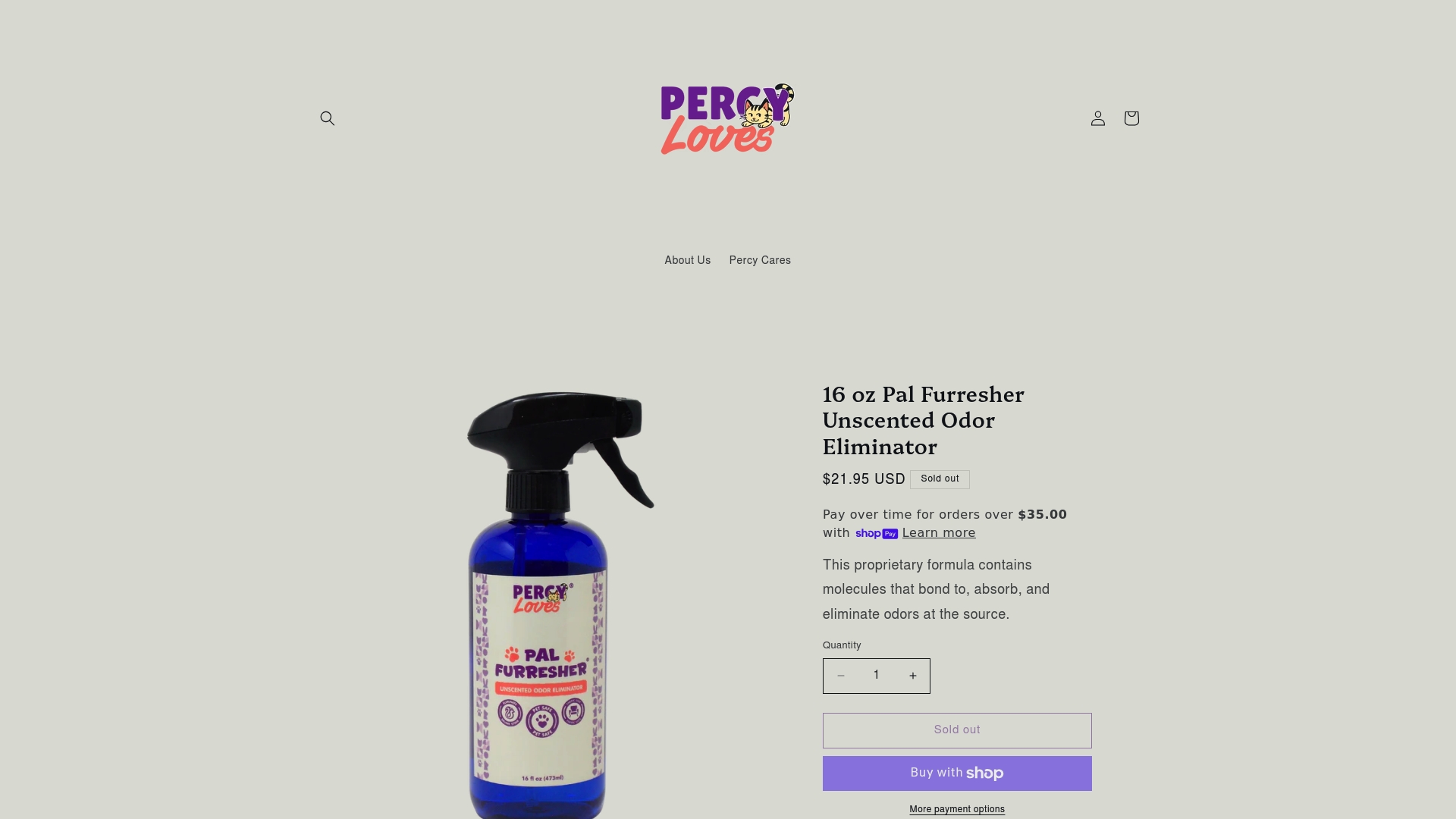
That is why the humans at Percyloves built Pal Furresher the way they did. It is fragrance-free, non-toxic, and lick-safe. It contains no harmful chemicals and is completely enzyme-free, so it is safe for curious pets who sniff and lick everything. The formula bonds to and eliminates odors at the source rather than masking them. It works on pet beds, furniture, litter areas, and anywhere else funk shows up. If you have a sensitive pet or just want one less thing to worry about, Pal Furresher odor eliminator is the safe choice you have been looking for.
FAQ
What is the role of testing in pet product safety?
Testing identifies chemical hazards, physical risks, and design failures before products reach pets. Without it, pet owners have no reliable way to verify that a product is safe to use.
Are pet products regulated by the federal government?
Most non-edible pet products, like toys and accessories, are not subject to mandatory federal safety standards. The FDA regulates pet food, but there is no single federal body overseeing the design safety of pet toys or accessories.
What should I look for to know if a pet product has been tested?
Look for third-party testing disclosures, certification seals, or a published statement about quality standards on the brand’s website. You can also contact the brand and ask if lab test reports are available.
Why do pet toy testing requirements matter for small animals too?
Small animals like rabbits, guinea pigs, and chinchillas spend significant time in direct contact with their accessories, increasing chemical exposure risk. Testing requirements for pet toys help confirm that materials are safe for prolonged contact.
How do I check if a pet product has been recalled?
Search the CPSC recall database at CPSC.gov using the product name or brand. Setting up email alerts lets you stay informed when new recalls are announced.


