

Eco-Friendly Dog Cleaning Explained for Pet Parents
TL;DR:
- Eco-friendly dog cleaning emphasizes using safe ingredients and proper techniques to prevent chemical exposure. It requires understanding contact routes like licking or pawing and maintaining good cleaning habits such as ventilation and thorough drying. Choosing non-toxic, biodegradable products and following safe workflows protect dogs and the environment effectively.
You already switched to reusable bags and biodegradable poop bags. So why are you still spraying harsh chemicals all over the surfaces your dog walks, rolls, and licks? Eco-friendly dog cleaning, what the pet care world increasingly calls non-toxic pet hygiene, is about more than swapping out one bottle for another. It means understanding how your dog actually contacts cleaning products, what ingredients are genuinely safe, and how the way you clean matters just as much as what you use.
Table of Contents
- Key Takeaways
- Eco-friendly dog cleaning explained: what it really means
- Why traditional cleaners are risky for dogs
- Safe ingredients and how to use them
- Cleaning common dog messes the right way
- Sustainable grooming and cleanup products
- My take: eco-friendly does not excuse ignoring risk
- Why Percyloves Pal Furresher fits the eco-friendly routine
- FAQ
Key Takeaways
| Point | Details |
|---|---|
| “Natural” does not mean safe | Some popular natural ingredients can harm dogs depending on how and where they are used. |
| Exposure route is the real risk | Dogs lick paws and surfaces, so residue left behind matters as much as what you spray. |
| Workflow protects your dog | Removing your dog during cleaning, ventilating, and letting surfaces dry fully prevents most exposure. |
| Odor elimination beats masking | Covering smells without removing the source leads to recurring odor problems within weeks. |
| Product choice supports sustainability | Unscented, biodegradable, enzyme-free products keep your home fresh and your dog safe at the same time. |
Eco-friendly dog cleaning explained: what it really means
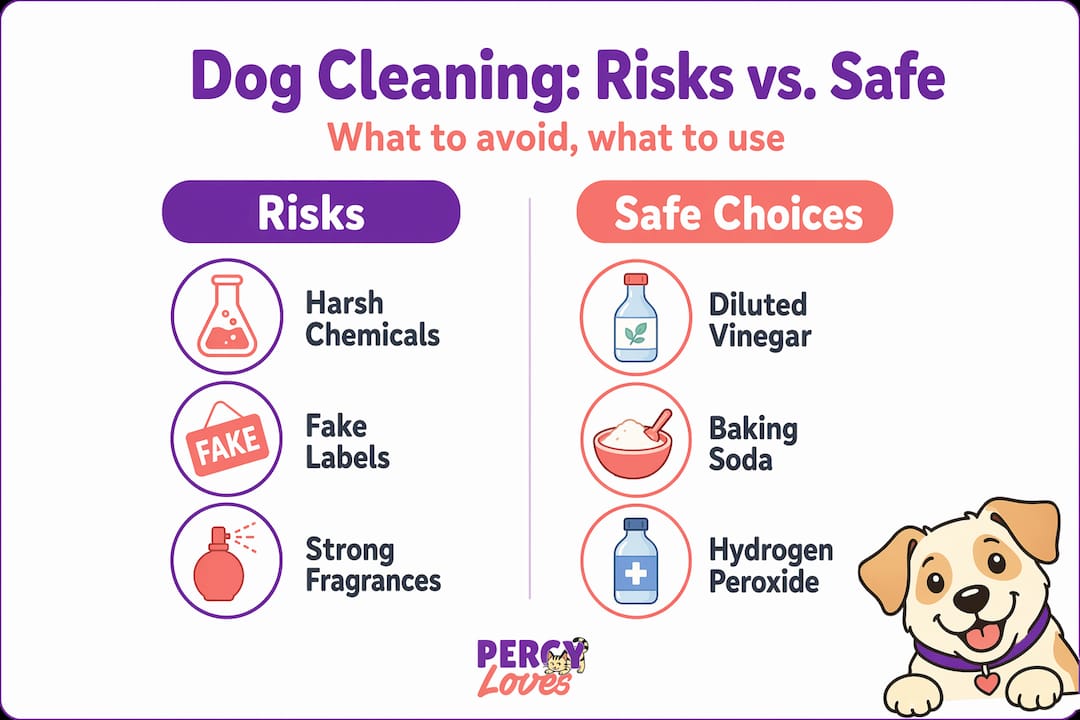
Most people assume eco-friendly pet care means buying a product with a green label and a leaf on the bottle. That assumption is exactly where things go sideways. The real definition has two parts: ingredients that are safe for your dog and the planet, and a cleaning process that actually prevents your dog from being exposed to anything harmful.
Veterinary safety guidance makes this clear. Exposure route is the main risk, not just whether an ingredient sounds natural. A dog does not need to eat a cleaning product to be harmed by it. Paw contact, surface licking, and breathing in residual fumes are all common exposure routes in a normal dog’s day.
So green dog cleaning products matter, yes. But the process around them matters equally. You will see this theme come up again and again throughout this guide.
Why traditional cleaners are risky for dogs
Standard household cleaners were designed for human adults who do not lick the floor after it dries. Dogs do. That fundamental difference makes a lot of conventional products genuinely dangerous in a dog’s home.
Highly toxic to pets are some of the most common cleaning ingredients you probably have under your sink right now:
- Bleach and sodium hypochlorite: Causes respiratory irritation, burns on paws and mouth, and vomiting.
- Ammonia: Found in many glass cleaners; highly irritating to airways and mucous membranes.
- Phenols: Present in many disinfectant sprays; particularly harmful to dogs and can affect the liver.
- Formaldehyde: Even in small concentrations from vapors, it causes respiratory and skin harm.
- Concentrated essential oils: Despite their natural origin, oils like tea tree, eucalyptus, and pine are toxic to dogs in concentrated forms.
Symptoms of chemical exposure in dogs include excessive drooling, pawing at the face, coughing, watery eyes, vomiting, and lethargy. Mild cases pass, but repeated low-level exposure is the real concern. Chronic inhalation or skin contact builds up over time.
Here is the part that trips people up. Even “pet-safe” labels do not replace ingredient knowledge. A product can claim to be pet-friendly while still containing phenols or synthetic fragrances. Reading the ingredient list is not optional when you share your home with a dog who treats every floor as a potential snack bar.
Pro Tip: Search the product name plus “SDS” (Safety Data Sheet) online to find the full ingredient breakdown. Manufacturers must publish these, and they reveal far more than the front label.
Safe ingredients and how to use them
Good news: there are proven, affordable, non-toxic pet cleaning solutions that actually work. The catch is using them correctly.
Diluted white vinegar is a solid starting point. A 1:1 mix with water cleans most hard floors, sealed tile, and bathroom surfaces. It cuts through grime and neutralizes mild odors. However, avoid vinegar on natural stone surfaces like granite and marble. The acid etches the surface over time. If you have stone countertops or floors, use plain water or a pH-neutral cleaner instead.
Baking soda is excellent for deodorizing carpets and upholstery. Sprinkle it on, let it sit for 15 to 30 minutes, then vacuum thoroughly. It absorbs odors rather than covering them. Just keep your dog off the area while it sits, since large amounts of ingested baking soda can cause stomach upset.

3% hydrogen peroxide is worth knowing about. It is an EPA-registered disinfectant that breaks down into water and oxygen, leaving no harmful residue. It is a stronger option when you actually need to disinfect a surface after a sick pet situation. One useful technique: apply vinegar, wipe the surface clean, then apply hydrogen peroxide separately. Applied in sequence rather than mixed together, the two are more effective against pathogens and perfectly safe.
Beyond specific ingredients, the way you clean is what keeps your dog protected. Pet exclusion during cleaning, proper ventilation, rinsing surfaces after use, and letting everything dry completely before your dog re-enters the room are non-negotiables. Even the safest cleaner can cause problems if your dog walks through a wet floor and licks their paws.
Pro Tip: Open two windows in any room you clean to create cross-ventilation. Wait at least 20 minutes after surfaces are visually dry before letting your dog back in.
Cleaning common dog messes the right way
Knowing the ingredients is one thing. Knowing what to do when your dog has an accident on the carpet at 10 p.m. is another. Here is how to handle the most common scenarios safely and with minimal environmental impact.
Step-by-step for urine on carpet
- Blot up as much liquid as possible with an old towel or paper towels. Press firmly. Do not rub.
- Sprinkle baking soda over the damp area and let it sit for 20 minutes to pull up moisture and odor.
- Vacuum up the baking soda thoroughly.
- Lightly spray the area with diluted white vinegar. Let it sit for five minutes, then blot dry.
- Allow the area to dry completely before your dog accesses it again. Use a fan if needed.
The drying step is the one most people skip, and it is the most important. Uric acid crystals in pet urine sit deep in carpet fibers and padding. If the area stays damp, odors return within weeks because bacteria continue to break down residual organic material. Complete drying breaks that cycle.
Surface-by-surface cleaning guide
| Surface | Safe cleaner | What to avoid |
|---|---|---|
| Sealed tile and linoleum | Diluted vinegar or biodegradable floor cleaner | Bleach, phenol disinfectants |
| Hardwood floors | Plain water or pH-neutral soap, wrung-out mop | Vinegar (strips finish over time), soaking wet mops |
| Natural stone (granite, marble) | pH-neutral cleaner, plain warm water | Vinegar, hydrogen peroxide, anything acidic |
| Upholstery and fabric | Baking soda, diluted dish soap, warm water | Bleach sprays, concentrated essential oil mixes |
| Glass and mirrors | Diluted vinegar spray | Ammonia-based glass cleaners |
Building a few daily habits also dramatically reduces the need for heavy cleaning. Wipe your dog’s paws when they come inside. This cuts down on outdoor contaminants tracking through the house and reduces how often you need to clean floors deeply. A dog-friendly home layout can also limit which surfaces your dog contacts most, making your cleaning routine much simpler.
Sustainable grooming and cleanup products
Switching to environmentally friendly dog care goes beyond what you spray on the floor. Your dog’s grooming routine carries its own footprint, and a few smart swaps make a real difference.
Plastic-free grooming tools like bamboo brushes and combs reduce single-use plastic waste without sacrificing performance. For shampoo, look for solid shampoo bars formulated for dogs. Human shampoo bars are too acidic or alkaline for a dog’s skin, so check that the product is specifically pH-balanced for dogs in the 6.5 to 7.5 range.
For odor control between baths, choose products that eliminate odors at the source rather than covering them with fragrance. Synthetic fragrances in pet products are a common irritant, particularly for dogs with sensitive skin or respiratory conditions.
Biodegradable poop bags are worth the extra cents per bag, but they only deliver their environmental benefit if disposed of correctly. “Biodegradable” in a landfill without oxygen means very slow breakdown. Composting options designed for pet waste exist in many areas, and some municipalities now accept pet waste in green bins.
Here is what an eco-conscious product shelf looks like for a dog owner:
- An unscented, non-toxic odor eliminator spray (fragrance-free, no harsh chemicals)
- A biodegradable, pH-balanced dog shampoo bar
- A bamboo or natural fiber brush
- Reusable microfiber cloths for wiping paws and surfaces
- Biodegradable poop bags
Choosing products that are both sustainable and truly safe for your dog is not a compromise. The two goals line up well. Products without synthetic fragrances, without harsh chemical preservatives, and with biodegradable formulas tend to be better for sensitive pets and better for the environment at the same time. For more on building a complete routine, the pet wellness and odor control guide from Percyloves is a practical next read.
My take: eco-friendly does not excuse ignoring risk
I have watched so many dog owners switch to “natural” cleaners and then spray them everywhere with total confidence. And I get it. It feels like you have solved the problem. But I learned the hard way that natural and safe are not synonyms.
What actually changed things in my home was not finding a magic green product. It was changing how I cleaned. Keeping my dog out of the room. Waiting for things to actually dry. Ventilating properly. Rinsing surfaces I had cleaned with anything acidic before letting him walk on them.
I also stopped chasing the idea that one spray could do everything. Some jobs call for baking soda. Some call for diluted vinegar. Some call for hydrogen peroxide. And for everyday odor control, I want something I do not have to rinse off and do not have to worry about if he licks the couch cushion. That is a different category entirely.
The ingredient-aware cleaning approach is the only one I trust now. Not because I am paranoid, but because dogs are low to the ground, they lick everything, and they cannot tell you when something is bothering them slowly over time.
— Kathy
Why Percyloves Pal Furresher fits the eco-friendly routine
When it comes to odor control in a dog home, the product you reach for most often needs to clear a high bar: safe if your dog makes contact with it, effective at actually removing odors (not just covering them), and free of the chemicals and synthetic fragrances that can irritate sensitive pets.
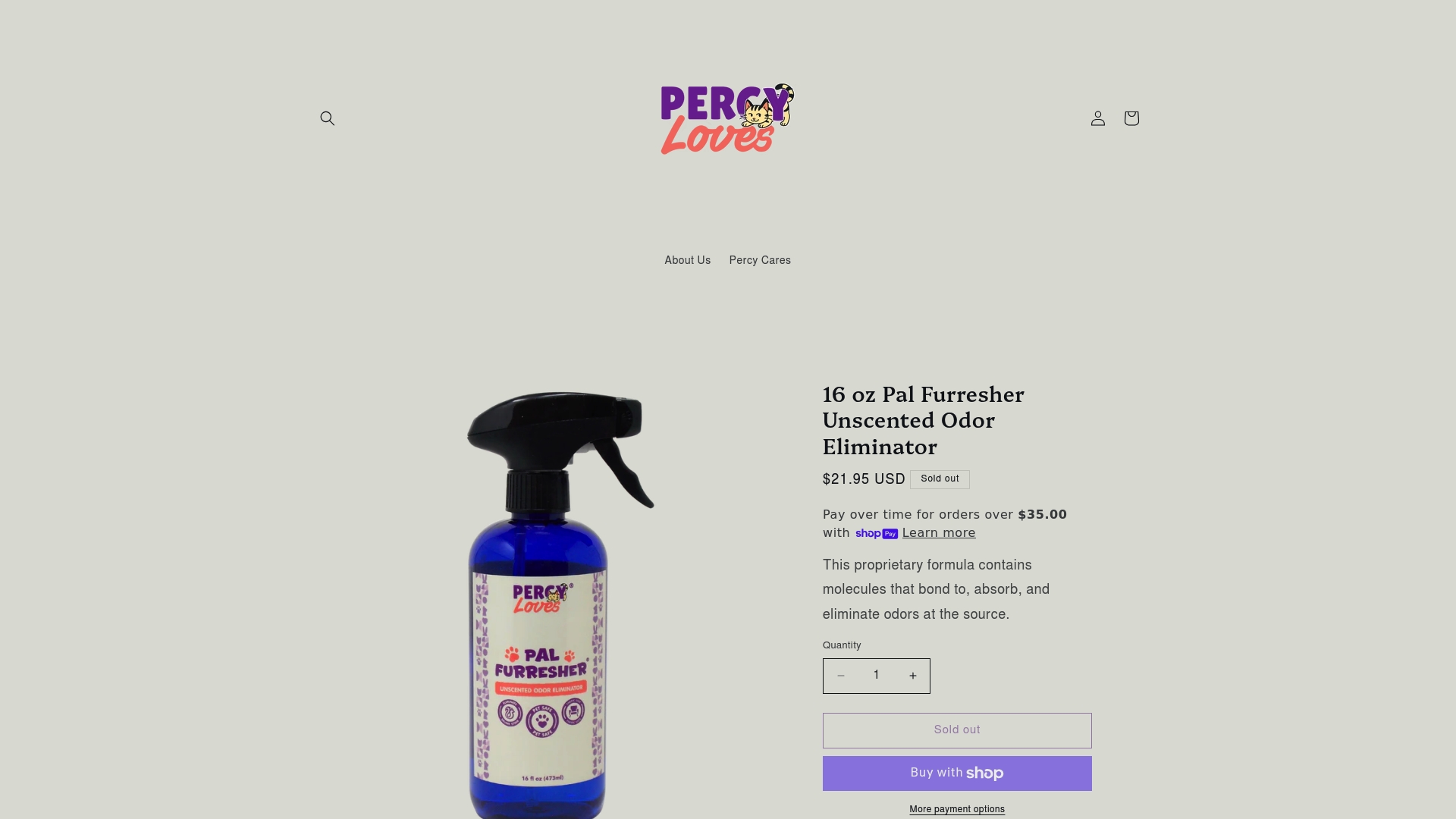
Pal Furresher from Percyloves hits all three. It is completely fragrance-free, enzyme-free, and lick-safe. Its proprietary formula bonds to odor molecules at the source and eliminates them on contact. No masking. No residue that requires rinsing. You can spray it on the couch, the dog bed, the car seat, or the carpet and not worry about what happens next. It is the kind of product that belongs in an eco-conscious dog household because it does its job without anything you need to clean up after.
It comes in a 4 oz Pal Furresher for on-the-go use, a 16 oz bottle for home use, and a pack of three 4 oz bottles if you want one in every room. Percyloves was built for pet parents who do not cut corners on safety, and Pal Furresher is that philosophy in a bottle.
FAQ
What does eco-friendly dog cleaning actually mean?
Eco-friendly dog cleaning means using non-toxic, biodegradable products and safe cleaning workflows that protect your dog from chemical exposure. It goes beyond ingredient labels to include how and when you clean.
Are natural cleaning ingredients always safe for dogs?
Not always. Concentrated essential oils, undiluted vinegar on sensitive surfaces, and even baking soda in large quantities can cause issues. Safety depends on the ingredient, the concentration, and your dog’s exposure to it.
How do I remove dog urine odor without harsh chemicals?
Blot the area dry, apply baking soda to absorb remaining moisture, vacuum it up, then treat with diluted vinegar and allow the surface to dry completely. Full drying is what prevents odors from returning.
Is fragrance-free the same as non-toxic for pet products?
Fragrance-free means no added scent, which is a good sign, but it is not a guarantee of non-toxicity. Always check the full ingredient list or look for products specifically formulated as lick-safe and pet-safe.
Can I use vinegar on all surfaces in my dog’s home?
No. Vinegar damages natural stone like granite and marble and can strip the finish on unsealed hardwood over time. Use a pH-neutral cleaner on those surfaces instead.


