

Safe & effective pet cleaning guide for fresh homes
TL;DR:
- Pet-safe cleaning products should be fragrance-free, non-toxic, and free from phenols, essential oils, and harsh chemicals.
- Regular cleaning routines and preventive measures help avoid stubborn odors and reduce toxin exposure.
- UV black lights and professional cleaning may be necessary for deep-rooted stains and odors that persist.
Safe & effective pet cleaning guide for fresh homes
You walk in the door, and it hits you. That smell. You love your pets more than anything, but the funk they leave behind? Not so much. And here’s the thing most pet parents don’t realize: the cleaners you’ve been reaching for to fight those odors might actually be putting your fur babies at risk. The good news is there’s a better way. This guide walks you through everything you need to know about keeping your home genuinely clean and fresh, without exposing your cats or dogs to harmful chemicals hiding in everyday products.
Table of Contents
- Pet-safe cleaning: What you need to know before you start
- Essential tools and supplies for pet cleaning
- Step-by-step: Cleaning routine for pet parents
- Troubleshooting stubborn odors and stains
- Why safe pet cleaning is about prevention, not just reaction
- Pet-safe solutions to keep your home fresh and toxin-free
- Frequently asked questions
Key Takeaways
| Point | Details |
|---|---|
| Avoid toxic cleaners | Many common cleaning products are harmful to pets and should be replaced with fragrance-free, pet-safe alternatives. |
| Build a safe cleaning kit | Stock up on enzyme cleaners and gentle tools to prepare for pet messes while ensuring your animals’ health. |
| Follow a routine | Regular, methodical cleaning keeps pet-related odors and stains under control and prevents accidents from becoming health hazards. |
| Act fast on odors | Address accidents quickly and use UV light or professional help if problems linger beyond standard cleaning. |
| Prevention is key | Prioritizing prevention over just reactive cleaning leads to a fresher, safer home for everyone. |
Pet-safe cleaning: What you need to know before you start
Before you grab that bottle under the sink, it’s worth pausing. Not all cleaning products are created equal, especially when you share your home with pets. Cats and dogs experience the world differently than we do. They walk on every surface you clean. They lick their paws. They roll around on your floors and furniture. That means whatever you clean with, they’re likely to end up ingesting or absorbing through their skin.
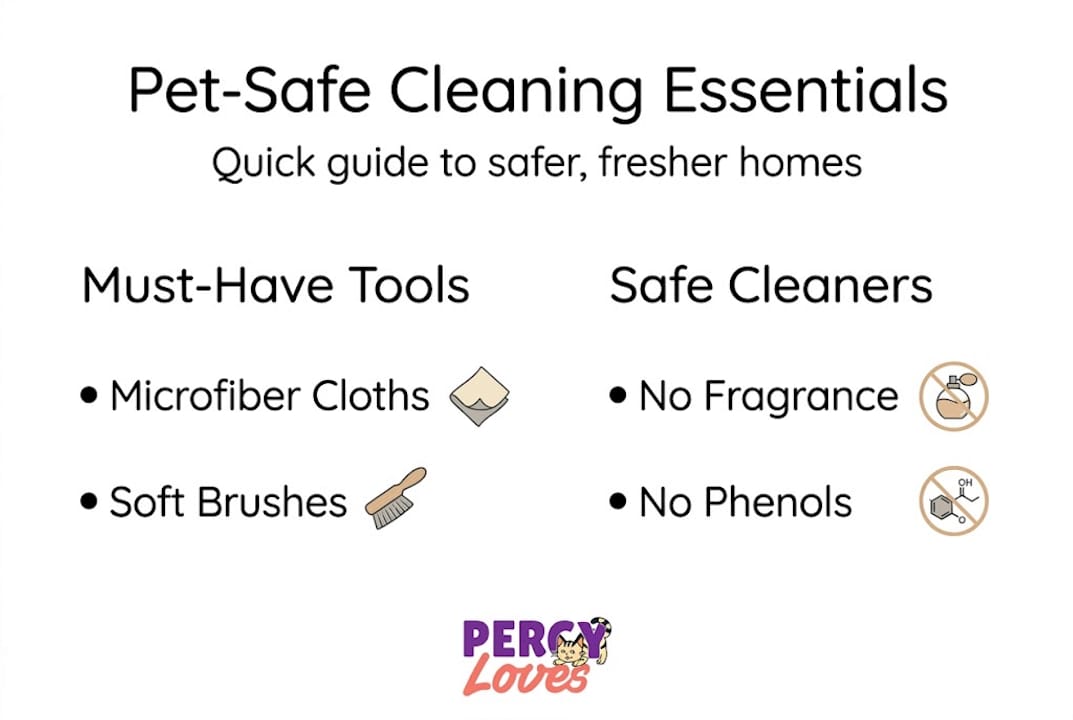
Cats are especially vulnerable. Because of their grooming habits and the way their livers process toxins, cats are more sensitive to phenols, essential oils, and chemical residues than dogs are. A product that seems fine for your dog might genuinely harm your cat. This is why fragrance-free, non-toxic products aren’t just a nice-to-have. They’re a necessity in multi-pet households.
Dogs aren’t off the hook either. They tend to sniff and mouth surfaces far more than humans expect. A freshly mopped floor, a wiped-down baseboard, a sprayed countertop. All of these become contact points for curious noses and tongues. Household cleaners caused 6.4% of all pet toxin exposures in 2025 according to the ASPCA, and the majority of those cases happened right inside the home.
Chemicals to avoid entirely:
- Phenols (found in many pine-based cleaners)
- Bleach and bleach-based sprays
- Ammonia and ammonia-based products
- Synthetic fragrances and parfum
- Essential oils, including tea tree, eucalyptus, and lavender
- Formaldehyde (often in floor polish and some disinfectants)
- Phthalates (found in many scented products)
Remember: If a product smells strongly, that’s a red flag. Fragrance often signals chemicals your pets cannot safely process. A truly pet-safe product doesn’t need to smell like a lavender field to work.
The safest cleaners share a few important traits. They are fragrance-free, free from phenols and essential oils, and clearly labeled as non-toxic to animals. Look for products that are transparent about their ingredients. If you can’t find a full ingredient list, that’s a signal to put it back on the shelf.
Storage matters just as much as the product itself. Keep all cleaning supplies, even pet-safe ones, locked in a cabinet your pet cannot access. During cleaning, always move your pet to a separate room and keep them there until every surface is fully dry. Learning more about pet cleaning safety in 2026 and how to protect pets from chemicals can make a real difference in how you approach your routine.
Pro Tip: Read labels every single time, even on products you’ve bought before. Formulas change, and a product that was safe last year might have a new ingredient today.
Essential tools and supplies for pet cleaning
Now that you understand the risks of common household cleaning agents, let’s focus on assembling a safe and effective cleaning arsenal. Having the right tools ready before a mess happens makes everything faster and less stressful.
Your core kit should include:
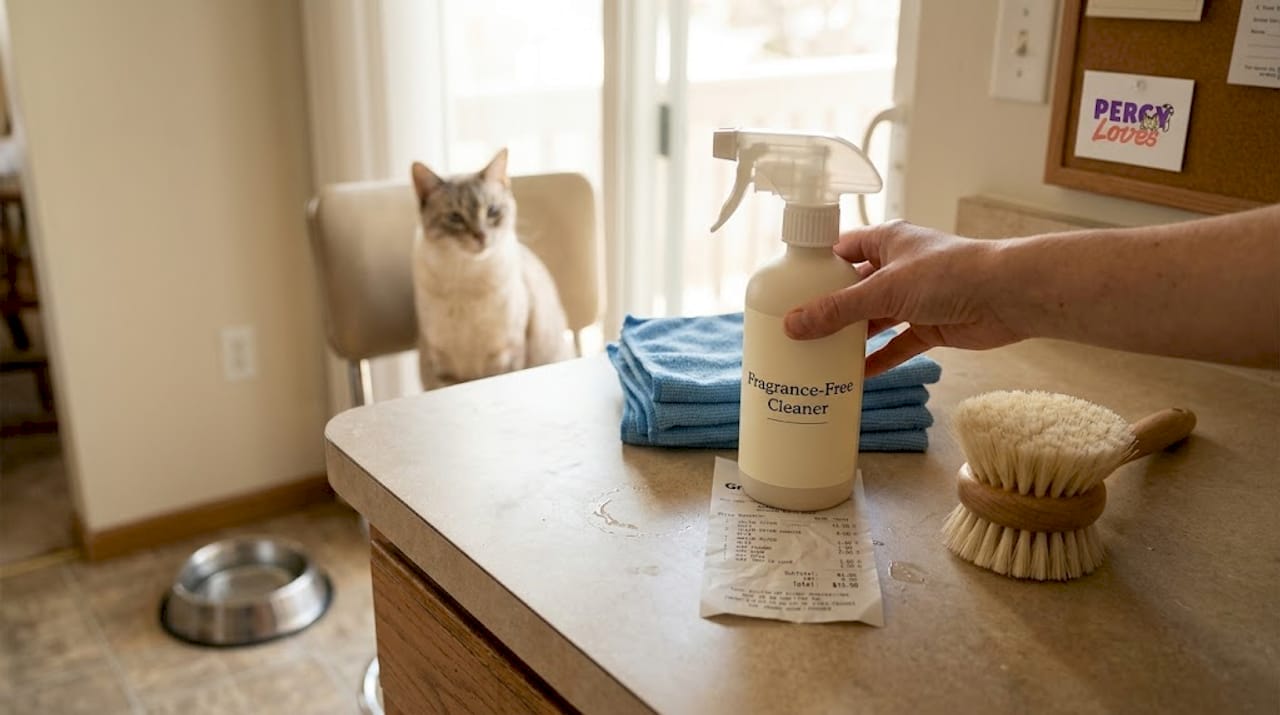
- Fragrance-free, pet-safe multi-surface spray: Look for one with no phenols or synthetic fragrances.
- Microfiber cloths: These lift and trap dirt without needing heavy chemical assistance. They’re washable and reusable, which is better for your wallet and the environment.
- A soft-bristle scrub brush: Useful for upholstery and carpet without harsh scrubbing that spreads a stain further.
- A UV black light: Helps locate old or hidden urine stains that your nose might find but your eyes can’t pinpoint.
- Unscented odor eliminator spray: One that actually eliminates odors at the source rather than covering them up.
- Paper towels for initial blotting: Before any cleaning product touches the mess, you want to absorb as much as possible first.
- A sealed, pet-proof storage bin or cabinet: Essential for keeping products safely out of paws’ reach.
The difference between cats and dogs matters here too. Because cats are more sensitive to chemical residues due to their grooming behavior and liver function, cat households need to be even more vigilant about what goes on surfaces like counters, floors, and furniture. Even a product marketed as natural can contain essential oils that are dangerous for cats.
For dog households, pay extra attention to floor cleaners and yard-tracking messes. Dogs bring outdoor dirt, pollen, and debris inside, which means your floors take a beating. A pet-safe floor cleaner with a neutral pH and no synthetic fragrance is your best friend here.
| Tool | Best for | Reusable? |
|---|---|---|
| Microfiber cloths | All surfaces, fur pickup | Yes |
| Soft-bristle brush | Carpet and upholstery | Yes |
| UV black light | Finding hidden stains | Yes |
| Paper towels | First-response blotting | No |
| Odor eliminator spray | Eliminating smells at source | Yes (refillable) |
Reusable tools aren’t just eco-friendly. They’re more cost-effective over time and tend to be gentler on surfaces than disposables with added chemicals. Keep a dedicated set of cleaning cloths specifically for pet messes so you’re not cross-contaminating other areas of your home.
Pro Tip: Build your kit before you need it. Scrambling to find supplies while your dog has just had an accident leads to rushed decisions and grabbing whatever’s closest, which might not be safe. Check out our pet cleaning checklist to make sure you’ve covered everything.
Step-by-step: Cleaning routine for pet parents
With your safe cleaning toolkit ready, it’s time to put it into action. This section walks you through each essential step so nothing gets missed and your pets stay protected throughout.
Daily tasks:
- Wipe down food and water bowl areas with a damp microfiber cloth.
- Sweep or vacuum fur from floors and furniture.
- Spot-check litter box areas or pet sleeping spots for odors.
- Blot any fresh accidents immediately with paper towels before applying any product.
Weekly tasks:
- Wash pet bedding and blankets in fragrance-free, pet-safe laundry detergent.
- Mop hard floors with a pet-safe floor cleaner diluted to manufacturer instructions.
- Wipe down pet crates, carriers, and feeding stations.
- Spray fabric surfaces like couches and rugs with a fragrance-free odor eliminator.
Monthly tasks:
- Deep clean carpeted areas with a steam cleaner or professional service.
- Check baseboards and wall corners where pet residue can accumulate.
- Inspect storage areas for any leaking or expired cleaning products.
- Reassess your cleaning kit and restock as needed.
When an accident happens, acting quickly is the single most important step. Blot, don’t rub. Rubbing pushes the mess deeper into fibers. Once you’ve absorbed as much as possible, apply your odor eliminator spray and let it sit according to directions before wiping.
Important: Keep pets away from any area that’s been cleaned until it is fully dry and aired out. Even pet-safe products need time to settle before they’re completely safe for contact.
Ventilation matters more than most people think. Open windows, run a fan, or leave doors open after cleaning any room. This reduces fume buildup and speeds up drying time so your pet can return sooner. For upholstered surfaces, allow at least 30 minutes of air drying before letting your pet back on the furniture.
For practical steps for a clean home with dogs and building a pet care workflow for odor-free homes, consistency is everything. A quick daily habit is far easier than a weekly overhaul.
Pro Tip: Keep a small spray bottle of your odor eliminator in every room where your pet spends time. Fast access means faster response, and faster response means odors don’t set in.
Troubleshooting stubborn odors and stains
Even with a solid routine, stubborn messes can occur. Here’s how to handle those tricky spots and persistent odors that just won’t quit.
The most common culprits for set-in odors are urine, anal gland secretions, and vomit. All three can soak through carpet into the padding and even the subfloor beneath. If you’re still smelling something after treating the surface, the problem likely goes deeper than the carpet fibers.
Common sources of stubborn odors:
- Urine that has reached carpet padding
- Vomit that soaked in before being discovered
- Saliva on upholstery from repeated licking
- Dander buildup in air vents and under furniture
- Anal gland residue on pet bedding or furniture
Here’s where a UV black light becomes a game-changer. In a darkened room, urine and many other biological stains glow under UV light. This lets you find the exact location and size of the stain, even if it has dried and is invisible to the naked eye. For set-in odors, check the padding and subfloor with a UV light, because if the stain has penetrated that deep, you may need professional extraction or even replacement.
| Approach | Best for | Pet-safe? |
|---|---|---|
| Fragrance-free odor eliminator | Surface and fabric odors | Yes |
| UV light inspection | Locating hidden stains | Yes |
| Professional steam extraction | Deep carpet and padding stains | Depends on products used |
| Subfloor treatment or replacement | Severe, saturated staining | Yes, if done correctly |
| Baking soda application | Mild surface odors on dry fabric | Yes |
When dealing with stains that have soaked into upholstery, work from the outside of the stain inward. This prevents spreading. Apply your odor eliminator, let it dwell, and blot. Repeat as needed. Patience matters more than pressure here.
For pet-safe cleaning tips that cover specific surfaces, and options for safe cleaning for other pets in your household, having a detailed reference is always helpful.
Know when to call a professional. If you’ve treated a carpet area multiple times and the smell returns after drying, the padding is almost certainly saturated. At that point, professional hot water extraction with pet-safe solutions, or subfloor sealing, is the most effective path forward. Trying to mask it with scented products will only add chemical exposure for your pet without solving the underlying problem.
A key stat worth knowing: Household cleaners rank in the top causes of pet toxin exposure every single year. Reaching for harsher chemicals to fight a stubborn stain might solve the visual problem but create a hidden health risk for your fur baby.
Why safe pet cleaning is about prevention, not just reaction
Here’s something we at Percy Loves feel strongly about: most pet cleaning advice treats cleaning like a fire drill. Something bad happens, and then you scramble. But the most effective, least stressful approach is building habits that prevent the big messes and odor buildups in the first place.
Think about it this way. If you spray down pet furniture and sleeping areas weekly with a fragrance-free odor eliminator, you’re not giving odor molecules the chance to build up and set in. You’re keeping the environment fresh before it becomes a problem. That’s a fundamentally different mindset than waiting until your living room smells and then trying to reverse the damage.
Prevention also means fewer emergency situations where you might grab an unsafe cleaner out of desperation. When the right products are already in your home and your routine is already built, you never have to improvise with something risky. Using a proactive cleaning checklist to stay ahead of messes is genuinely one of the highest-impact things you can do for your pet’s long-term health and your household’s freshness. Fragrance-free, pet-safe products aren’t just damage control. They’re the foundation of a home where your pets can live safely every single day.
Pet-safe solutions to keep your home fresh and toxin-free
Ready to elevate your pet cleaning routine with proven, trusted safe products? At Percy Loves, we built our line around one simple idea: your pets deserve a home that’s clean without being toxic. Our unscented odor eliminator spray, Pal Furresher, is fragrance-free, lick safe, and tackles odors at the source, not just on the surface.
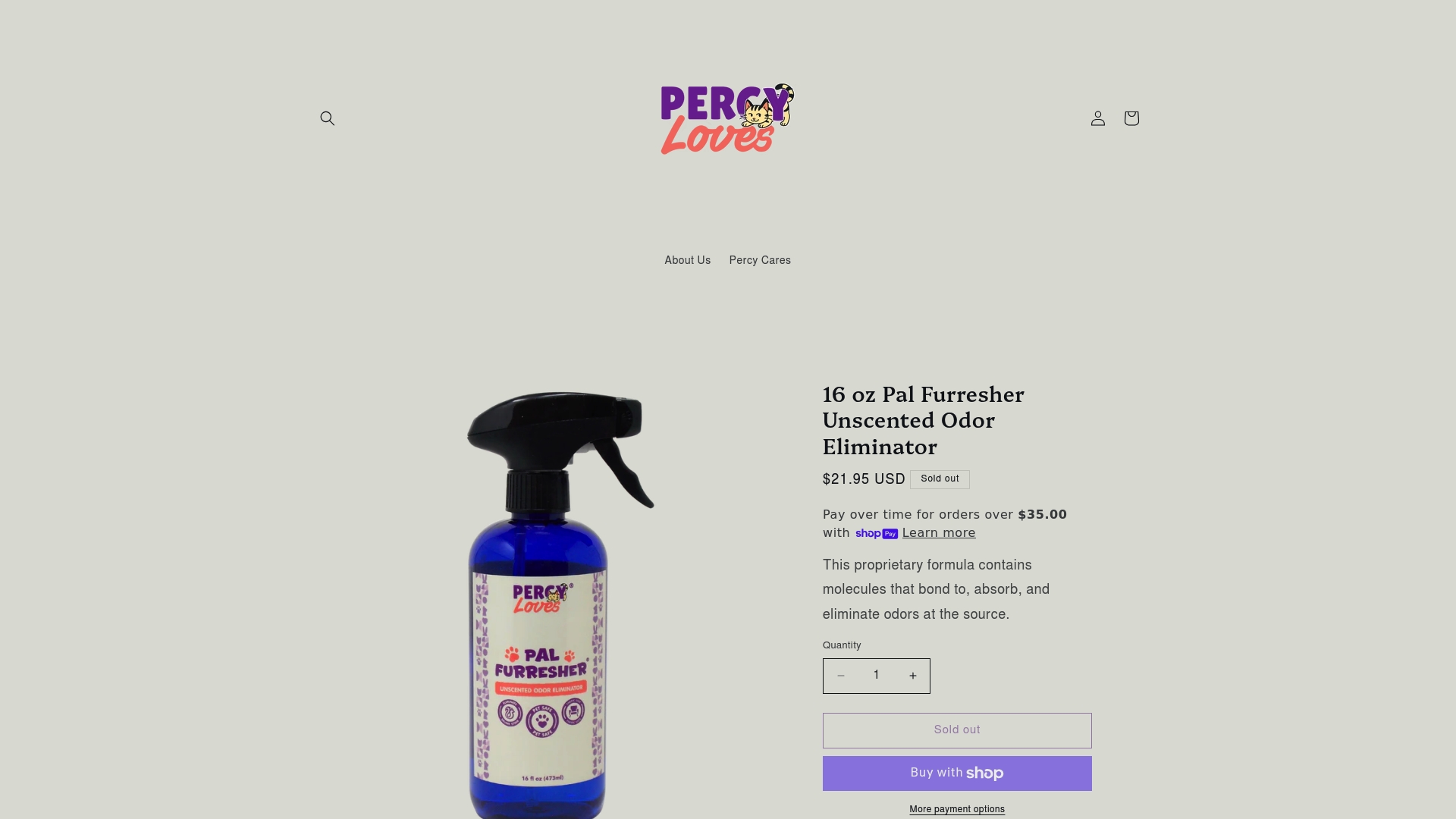
Pal Furresher works with a proprietary formula that actually eliminates odors rather than covering them up with fragrance. It’s safe for use around cats and dogs, and it’s simple enough to use every day. Whether you need a single bottle to try or want to stock up with the odor eliminator pack, we’ve got you covered. We also offer odor eliminator multi-sizes so you can keep a large bottle at home and a smaller one in your bag. Because fresh and safe should always go hand in hand.
Frequently asked questions
What types of cleaning products should pet owners avoid?
Avoid any cleaners containing phenols, essential oils, bleach, or synthetic fragrances, as these can be toxic to cats and dogs due to their grooming habits and differences in how they metabolize chemicals.
How can I prevent my pet from being exposed during cleaning?
Always move pets to a separate room before you start cleaning and only allow them back once every surface is fully dried and aired out, since household cleaners caused 6.4% of pet toxin exposures in 2025.
What should I do if my pet walks through a freshly cleaned area?
Rinse your pet’s paws thoroughly with plain water right away and watch for any signs of redness, irritation, or illness. Contact your vet if symptoms appear.
Are odor eliminator sprays better than chemical cleaners for pet messes?
Fragrance-free odor eliminators that work at the source are a far safer choice for pet households because they eliminate the odor without introducing harsh chemical residues your pet can walk through or ingest.
How do I know if a stain has penetrated beyond the carpet surface?
A UV black light in a dark room will reveal stains in carpet padding or subfloor that are invisible to the naked eye, and deep staining may require professional extraction or subfloor replacement if surface treatments haven’t worked.


