

Small animal cleaning guide: safe and effective solutions
TL;DR:
- Using pet-safe cleaning products and avoiding toxic ingredients is essential for pet health.
- Consistent daily and weekly routines help maintain a safe, odor-free pet environment.
- Proper safety precautions, including ventilation and secure storage, protect pets from harmful cleaning hazards.
You grab the all-purpose spray and start cleaning your pet’s space. Then a little voice in your head asks: is this actually safe for my cat or dog? That worry is real. Many standard household cleaners contain ingredients that can seriously harm small animals, even in small amounts. Accidental pet poisoning from household products is more common than most pet owners realize. The good news? You don’t have to choose between a clean home and a safe pet. This guide walks you through everything: the right supplies, a practical cleaning routine, odor elimination strategies, and the safety steps that protect your fur babies every single time.
Table of Contents
- What you need: Safe cleaning supplies for small animals
- Step-by-step daily and weekly cleaning routine
- Odor elimination: The science of clean, fresh-smelling spaces
- Critical safety precautions every pet owner must follow
- Our take: Why a practical and consistent approach beats perfect products
- Discover safe odor elimination with Percy Loves
- Frequently asked questions
Key Takeaways
| Point | Details |
|---|---|
| Choose pet-safe products | Avoid common household cleaners with harmful chemicals and opt for vet-recommended, animal-safe options. |
| Follow a cleaning schedule | Daily spot cleaning and weekly full routines keep your pet’s environment healthy and odor-free. |
| Use enzymatic for odors | Only enzymatic cleaners truly eliminate urine and pet odors by breaking down organic matter. |
| Prioritize ventilation and safety | Always ventilate, store cleaners securely, and keep pets clear during cleaning until surfaces are dry. |
What you need: Safe cleaning supplies for small animals
Now that you know the risks, gather the right supplies before you start. Choosing the right products is honestly the most important step. The wrong cleaner can irritate your pet’s skin, damage their respiratory system, or worse.
The golden rule? Read every label. A product that says “natural” or “green” is not automatically safe for pets. Pet-safe cleaning means checking for specific toxic ingredients and avoiding them entirely.
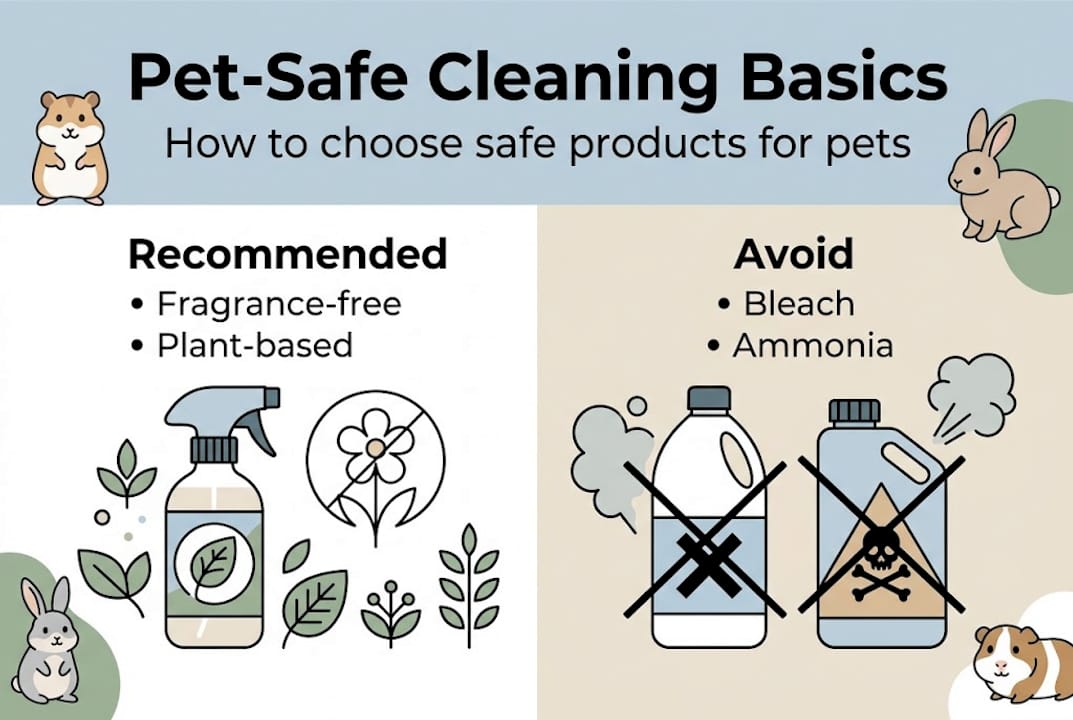
Here’s a quick reference table to guide your shopping:
| Product type | Safe to use | Avoid |
|---|---|---|
| Multi-surface spray | Fragrance-free, plant-based | Anything with phenols or ammonia |
| Floor cleaner | Pet-labeled, pH-neutral | Pine-based, bleach-based |
| Odor spray | Fragrance-free, lick-safe | Essential oil blends |
| Disinfectant | Diluted hydrogen peroxide (rinse well) | Quaternary ammonium compounds |
| Laundry detergent | Unscented, dye-free | Fabric softeners with fragrance |
Cats deserve a special mention here. They groom constantly, which means they ingest whatever lands on their fur or paws. According to cleaners to avoid around pets, phenols found in many disinfectants are especially dangerous for cats and can cause liver damage.
The pet cleaning safety tips you follow matter just as much as the products you pick. Always keep your pet out of the area you’re cleaning. Don’t let them back in until surfaces are fully dry.
Avoid these ingredients entirely:
- Bleach and chlorine compounds
- Ammonia
- Phenols (especially dangerous for cats)
- Essential oils (even lavender and tea tree)
- Formaldehyde
- Phthalates
- High-concentration hydrogen peroxide
Products free of toxic ingredients like bleach, ammonia, phenols, essential oils, alcohol, chlorine, formaldehyde, hydrogen peroxide, and phthalates are the only ones you should bring into a home with pets.
Pro Tip: Before you start cleaning, move your pet to a completely separate room and close the door. Even fumes from “mild” cleaners can irritate their airways. Let the area air out for at least 15 minutes after cleaning before letting them back in.
Step-by-step daily and weekly cleaning routine
With your supplies ready, you’re set to start cleaning. Let’s break down the process for daily and weekly tasks. A consistent schedule is what separates a truly clean pet space from one that just looks clean.
The CDC recommends spot cleaning daily by removing soiled bedding and waste, then doing a full clean weekly that includes washing with soap, disinfecting, and drying completely. Pets should be kept away during the entire process and until everything is dry.
Here’s a simple numbered routine to follow:
- Remove your pet from the area before you touch anything.
- Scoop or remove waste and soiled bedding immediately.
- Wipe down hard surfaces with a damp cloth and pet-safe cleaner.
- Spray odor-prone areas with a fragrance-free odor eliminator.
- Allow all surfaces to dry completely before your pet returns.
- Weekly: Wash fabric items (bedding, soft toys) in unscented detergent.
- Weekly: Scrub food and water bowls with dish soap and rinse thoroughly.
- Weekly: Disinfect the enclosure or sleeping area using a pet-safe product.
Here’s how daily and weekly cleaning compare:
| Factor | Spot cleaning (daily) | Full cleaning (weekly) |
|---|---|---|
| Time required | 5 to 10 minutes | 30 to 60 minutes |
| Effort level | Low | Moderate to high |
| Main benefit | Controls odor and waste buildup | Removes bacteria and deep grime |
| Pet stress impact | Minimal | Can be higher; routine helps |
Cleaning frequency directly affects your pet’s health. Waste buildup creates ammonia fumes that irritate airways. Bacteria from soiled bedding can cause skin infections. Check out this cleaning checklist for pet parents to stay organized week to week. For odor-free cleaning routines, consistency is everything.

You can also find useful cleaning and disinfection guidance from veterinary professionals to help you build a solid schedule.
Pro Tip: Do your daily spot check during feeding time. Your pet is focused on their food, which means less stress for them and less interruption for you. It takes two minutes and keeps things from building up.
Safety warning: Never let your pet back into a freshly cleaned space until every surface is completely dry. Wet cleaners can transfer to paws and fur, and from there directly into their mouths during grooming.
Odor elimination: The science of clean, fresh-smelling spaces
Daily and weekly cleaning keeps things tidy, but odors need their own strategy. Here’s how to truly eliminate them.
Odors from pet accidents don’t just sit on the surface. Urine soaks into fibers, padding, and grout. Regular cleaners wipe away the visible mess but leave behind the odor-causing compounds. That’s why your pet keeps returning to the same spot. They can still smell it, even when you can’t.
For odor elimination, using the right cleaner on carpets, furniture, and floors makes all the difference. You need a product that actually breaks down the odor at its source, not one that just covers it with a scent.
Here’s what works best by surface:
- Carpets and rugs: Use an odor eliminator that soaks in. Let it sit for the time listed on the label before blotting.
- Hard floors: A fragrance-free spray that targets odor molecules directly is your best bet. Avoid anything that leaves a slippery residue.
- Fabric and upholstery: Spray generously and allow to air dry. Don’t rub it in, as that spreads the contamination.
- Pet bedding: Wash with unscented detergent and add a splash of white vinegar to the rinse cycle.
- Litter box area: Clean the surrounding floor and wall regularly. Odor builds up in spots you might not think to check.
Statistic callout: A significant portion of pet poison control calls involve household cleaning products. That’s a strong reminder that the products you use for odor control matter just as much as how you use them.
One of the biggest mistakes pet owners make is using regular sprays that only mask smells. Masking an odor with fragrance doesn’t remove it. Your pet can still detect the original scent, which can encourage repeat accidents in the same spot. Explore more in this pet odor control guide and learn how to approach the pet cleaning process more effectively. For a broader look at your options, this resource on pet odor removal options is worth a read.
Pro Tip: For severe or set-in odors, apply your odor eliminator, let it sit for the full recommended time, blot it up, and repeat the process a second time. One application isn’t always enough for older stains.
Critical safety precautions every pet owner must follow
Even with the right products and methods, safety must come first. Here are the precautions you can’t skip.
Cleaning around pets isn’t just about what you use. It’s also about how you use it, where you store it, and what you do if something goes wrong. These steps are non-negotiable.
Key safety practices every pet owner should follow:
- Ventilate the area by opening windows and running a fan during and after cleaning.
- Store all cleaners in locked cabinets or high shelves, out of reach of curious paws.
- Wear gloves when handling any cleaning product, even pet-safe ones.
- For cat owners: Avoid phenols entirely. There is no safe concentration for cats.
- Consult your vet before introducing any new cleaning product into your home.
- Keep pets away from cleaned areas until surfaces are fully dry and the room is ventilated.
- Never mix cleaning products. Combining bleach and ammonia, for example, creates toxic fumes that are dangerous for both pets and people.
Respiratory health is a real concern. Pets breathe closer to the floor than we do, which means they inhale more of whatever is lingering on surfaces. Fumes from cleaning products settle low and linger longer than you might expect.
For a deeper look at keeping your home safe, this dog-safe cleaning guide covers breed-specific sensitivities and room-by-room tips. You can also review a full list of household hazards for pets from veterinary professionals.
The CDC advises reading all product labels carefully, ventilating areas during use, storing products securely, using gloves, and consulting your veterinarian before using new products around pets, especially cats.
If your pet is exposed to a cleaning product, act fast. Remove them from the area, rinse any affected skin or fur with water, and call your vet or the ASPCA Animal Poison Control Center immediately.
Our take: Why a practical and consistent approach beats perfect products
Here’s something we’ve learned from watching pet parents navigate this: the cleanest homes aren’t always the ones with the most expensive products. They belong to the owners who show up every single day with a simple routine and actually stick to it.
There’s a tendency to chase the “perfect” pet-safe cleaner. We get it. The market is full of options, and the labels can be overwhelming. But a consistent cleaning routine done with basic, safe products will always outperform an elaborate system that only happens once in a while.
Over-cleaning is also a real thing. Scrubbing too aggressively or using too many products at once can strip protective coatings from surfaces and create residue that irritates your pet’s paws. Less is often more.
What experienced pet parents actually do is observe. They notice when their pet is avoiding a spot, scratching more than usual, or sneezing after cleaning day. That kind of attention catches problems early. No product can replace that. Routine plus observation is the real formula for a safe and fresh home.
Discover safe odor elimination with Percy Loves
Having learned the best ways to clean and protect your pets, Percy Loves can help keep your space safe and fresh. We built our products around one simple idea: your pet’s safety should never be a question mark.
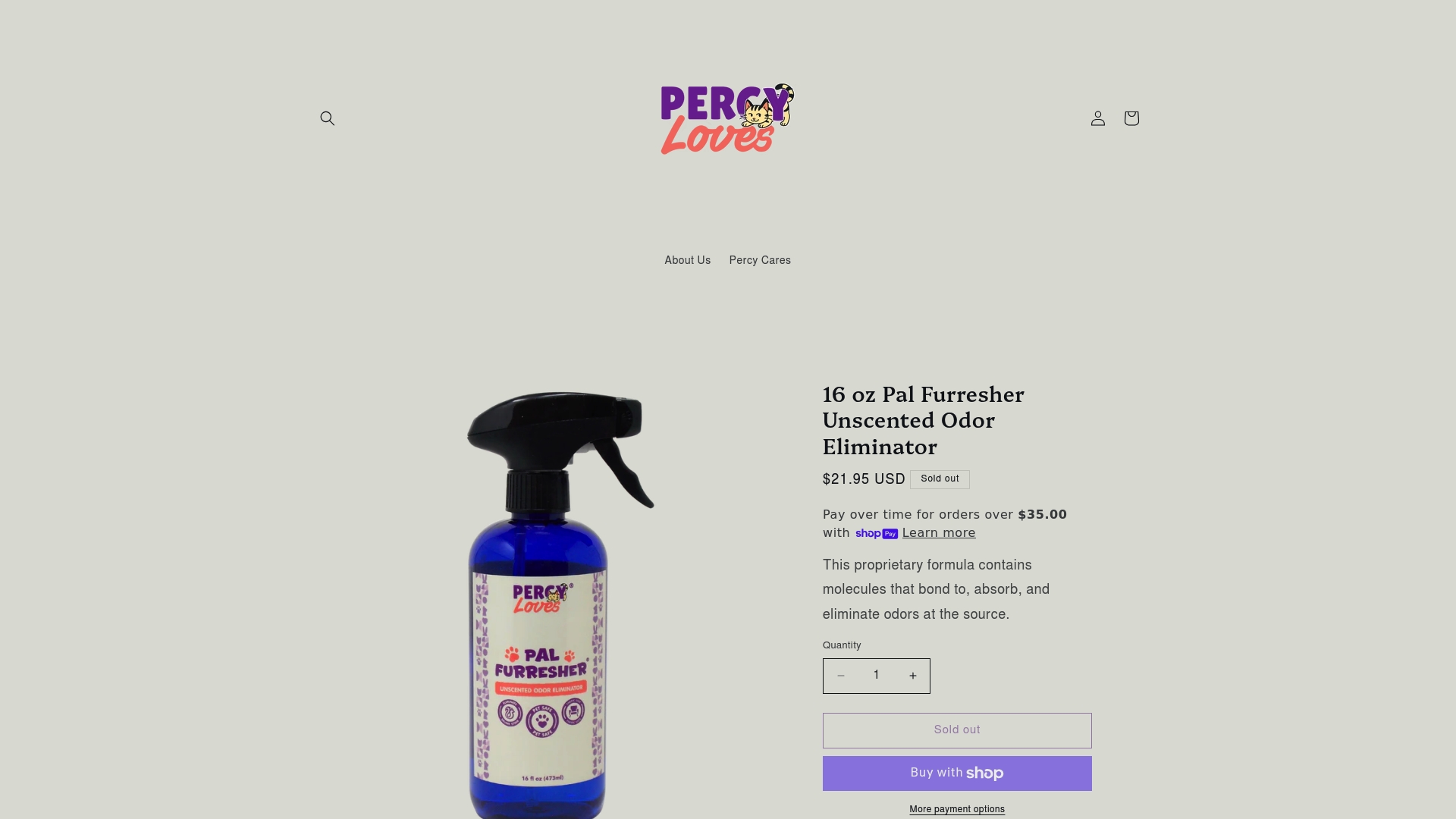
Pal Furresher is our fragrance-free odor elimination spray, and it’s completely lick-safe. Percy himself inspired it, because funk is real and masking it with fragrance just isn’t good enough. Our proprietary formula tackles odors at the source and eliminates them completely, without any scent left behind. It fits perfectly into the daily and weekly routines we described above. Try our unscented odor eliminator for everyday use, or grab one of our odor eliminator bundles to keep a bottle in every room.
Frequently asked questions
What cleaning products should I never use around cats or dogs?
Bleach, ammonia, phenols, essential oils, and hydrogen peroxide are not safe for pets and can cause serious health issues ranging from skin irritation to organ damage.
Are natural cleaners like vinegar and baking soda truly pet-safe?
Yes, vinegar and baking soda are generally safe options, but vinegar alone doesn’t disinfect fully, so always rinse surfaces well and let them dry completely before your pet returns.
How often should I clean my pet’s bedding and toys?
Remove soiled bedding and waste daily, wash pet beds weekly and toys monthly to maintain good hygiene and reduce bacteria buildup.
Do I really need a special odor eliminator for urine and accidents?
Yes, because regular cleaners only mask the smell on the surface. A proper odor eliminator breaks down uric acid crystals so the odor is truly gone and your pet won’t be drawn back to the same spot.
What’s the most important safety tip for cleaning around pets?
Always keep pets away from freshly cleaned areas until every surface is fully dry and the space is well ventilated, and read every product label before use.


