

Pet-safe cleaning: keep your home safe for pets
TL;DR:
- Household cleaners ranked eighth among pet toxins, with many labeled as “non-toxic” or “natural” misleading owners.
- True pet-safe cleaning means avoiding harmful ingredients like ammonia, bleach, phenols, formaldehyde, and certain essential oils.
- Vigilance in reading labels, ventilating, and choosing trusted, certified products reduces pet exposure to toxic residues.
Household cleaners are a bigger threat to your pets than most people realize. In fact, household cleaners ranked #8 in the ASPCA’s top toxins for 2025, responsible for 6.4% of all pet poisoning exposures. And here’s the uncomfortable part: many of those incidents involved products marketed as “non-toxic” or “natural.” There are no official pet-safe cleaning standards, which means the responsibility falls squarely on you. This guide will help you spot the real dangers, understand what labels actually mean, and feel confident choosing cleaning solutions that keep your fur babies safe.
Table of Contents
- What does pet-safe cleaning actually mean?
- How to identify safe and unsafe cleaning products for pets
- Safer cleaning techniques: Methods that minimize pet risk
- Special considerations for sensitive pets and surfaces
- Our take: Why true pet-safe cleaning is about diligence, not just products
- Pet-safe cleaning made easier with trusted solutions
- Frequently asked questions
Key Takeaways
| Point | Details |
|---|---|
| No official standards | Pet owners must rely on label reading and agency advice since no formal pet-safe cleaning standards exist. |
| Avoid harmful ingredients | Common household cleaning ingredients like ammonia and bleach are highly toxic to pets even in small amounts. |
| Cleaning methods matter | Mechanical scrubbing and proper ventilation are as critical as safe products for reducing risks. |
| Adjust for sensitive pets | Cats, small animals, and certain surfaces need extra precautions for true safety in the home. |
| Stay diligent, not complacent | Continued vigilance and education are key since ‘pet-safe’ marketing can be misleading. |
What does pet-safe cleaning actually mean?
Let’s be honest. “Pet-safe” is not a regulated term. No government agency certifies a product as officially safe for pets before it hits store shelves. Instead, pet cleaning safety guidelines are built from veterinary advice, ASPCA resources, and ingredient research done by concerned scientists and pet advocates.
So what does it actually mean in practice? It means choosing products that avoid toxic ingredients that can cause respiratory and skin issues for pets. It means reading labels with a critical eye. And it means understanding that “non-toxic to humans” does not automatically mean safe for a 10-pound cat who grooms herself every hour.
Here are the most common harmful ingredients to watch for:
- Ammonia: Found in many glass and multi-surface cleaners. Causes respiratory irritation and chemical burns.
- Bleach (sodium hypochlorite): Extremely irritating to eyes, skin, and lungs. Even diluted versions pose risks.
- Phenols: Found in some disinfectants and pine-scented cleaners. Especially dangerous for cats.
- Formaldehyde: A preservative in some cleaners and air fresheners. Linked to organ damage.
- Essential oils: Lavender, tea tree, eucalyptus, and others are often marketed as “natural” but can be toxic, especially to cats and small pets.
Not all label language means the same thing. Here’s a quick breakdown:
| Label claim | What it actually means |
|---|---|
| Non-toxic | Generally low risk to humans; no pet-specific testing required |
| Pet-friendly | A marketing term; no regulatory definition or standard |
| Natural | Derived from natural sources; does not guarantee safety for pets |
| EPA Safer Choice | Independently reviewed; ingredients vetted for reduced environmental and health risk |
| Fragrance-free | No added fragrance; often a better choice for sensitive pets |
“Pet-safe” is a starting point, not a guarantee. Always verify what’s actually inside the bottle.
Smaller animals and cats are especially vulnerable. Their bodies process chemicals differently, and even low-level residue on floors or furniture can accumulate through grooming. Reviewing safe pet products tips and checking eco-friendly cleaning ingredients can give you a stronger foundation when comparing options.
How to identify safe and unsafe cleaning products for pets
Now that you know what “pet-safe” really means, here’s how to put that knowledge to work every time you shop.
Step-by-step guide to evaluating a cleaning product:
- Flip the bottle and read the full ingredient list. If a product doesn’t list ingredients, that’s a red flag.
- Search for the hidden names. Phenol can appear as “carbolic acid” or “hydroxybenzene.” Formaldehyde hides as “formalin” or “methanol.” Know the aliases.
- Check for certifications. Look for EPA Safer Choice or similar third-party verification. These aren’t perfect, but they’re better than nothing.
- Look up the product on the ASPCA Animal Poison Control database. It’s a free resource and worth bookmarking.
- Avoid vague claims. “Gentle,” “green,” and “eco-friendly” mean nothing without ingredient transparency.
- Call your vet if you’re unsure. A quick call is always worth it.
When you read all labels carefully and specifically avoid products with ammonia, phenols, and formaldehyde, you dramatically lower your pet’s risk of exposure. It sounds simple, but most pet owners skip this step entirely.

Pro Tip: If you’ve already used a product you’re now unsure about, ventilate the area immediately, wipe surfaces with plain water, and keep your pet out of the room until everything is fully dry. Then check the dog-safe cleaning tips on our blog for a deeper breakdown.
One more thing: “natural” does not mean safe. Tea tree oil, for example, is derived from a plant but is highly toxic to both dogs and cats. Always verify, even when the label sounds reassuring. A solid pet cleaning checklist can help you stay consistent and avoid costly mistakes.
Safer ingredient alternatives to look for:
- Hydrogen peroxide (at low concentrations)
- Castile soap (unscented)
- Baking soda (as a mild abrasive)
- White vinegar (diluted, used sparingly)
- Enzyme-based cleaners (especially effective for pet accidents)
Safer cleaning techniques: Methods that minimize pet risk
Choosing the right product is only half the battle. How you clean matters just as much.
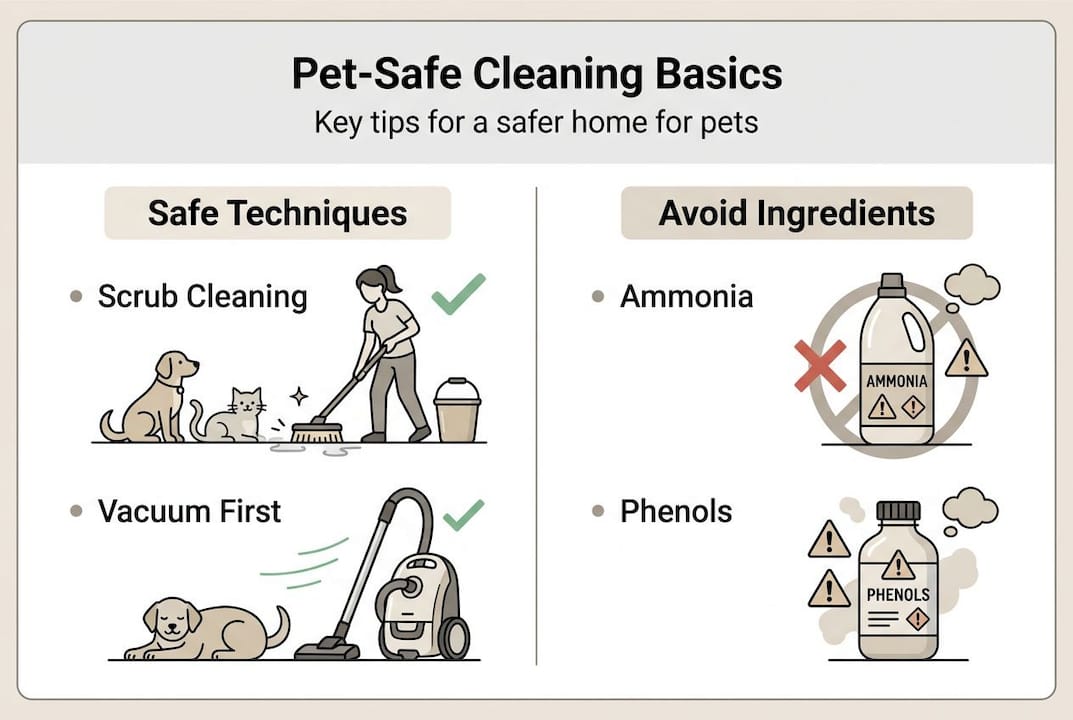
Here’s something that surprises a lot of pet owners: scrub cleaning with detergent surpasses simple wiping in reducing bacterial load because mechanical action is essential. In other words, physically scrubbing a surface removes more bacteria than spraying and leaving a chemical to sit. This is great news because it means you can rely less on harsh disinfectants and more on good old-fashioned elbow grease.
| Cleaning method | Bacterial reduction | Pet risk level |
|---|---|---|
| Spray and wipe (no scrub) | Low to moderate | Higher (residue left behind) |
| Scrub with detergent | High | Lower (less chemical needed) |
| Enzyme cleaner for accidents | Targeted | Very low (formula breaks down organics) |
| Dry wiping or vacuuming | Moderate | Minimal |
Here are the key techniques to build into your routine:
- Ventilate every time. Open windows and run fans during and after cleaning. Fumes linger longer than you think.
- Let surfaces dry completely. Wet floors and counters concentrate residue. A dry surface is a safer surface.
- Keep pets out of cleaned areas. Use baby gates or closed doors until the room is dry and aired out.
- Time your cleaning strategically. Clean while your pet is outside or in another room, not hovering nearby.
- Use enzyme cleaners for accidents. They break down organic matter at the molecular level without harsh chemicals. This is especially useful for urine and feces stains.
Pro Tip: Vacuuming before wet cleaning removes loose debris and pet hair, which means your cleaning solution works more efficiently on the actual surface rather than getting absorbed by hair and dust. Check out these mechanical cleaning methods for a broader look at low-chemical approaches.
Visit our pet wellness cleaning guide for more practical routines you can start using today.
Special considerations for sensitive pets and surfaces
Even with safe habits in place, some pets and some surfaces need extra attention.
Cats are at the top of the sensitivity list. They lack enzymes to process phenols and related compounds, which means even small exposures can cause serious harm. The same goes for laundry pods, which are more concentrated and more toxic when ingested than liquid detergents. If you have cats, laundry pods should be locked away, period.
Small animals like rabbits, guinea pigs, and birds are also highly sensitive. Birds in particular have extremely efficient respiratory systems, which makes them vulnerable to airborne chemical residues that a dog might tolerate without visible symptoms.
Here’s what to watch for with sensitive pets:
- Excessive drooling or pawing at the mouth (possible ingestion)
- Watery eyes or sneezing (airborne irritant)
- Lethargy or loss of appetite (systemic exposure)
- Skin redness or hair loss (contact irritation)
If you notice any of these signs after cleaning, contact your vet or the ASPCA Animal Poison Control Center immediately.
Porous surfaces like wood floors, carpets, and upholstery are another concern. They absorb cleaning product residues and release them slowly over time. Your pet lies on the carpet, grooms, and ingests trace amounts without you ever knowing. For these surfaces, less is more. Use minimal product, rinse thoroughly with plain water, and allow extra drying time.
For multi-pet homes, consider creating a cleaning schedule that accounts for each animal’s sensitivity level. A product that’s fine for your Labrador may not be appropriate around your senior cat or your small rabbit. Learn more about making your home pet-safe for multiple animals.
For bathroom-specific cleaning, check out this resource on bathroom cleaning for pets to understand which products work well in high-moisture, high-traffic areas.
Our take: Why true pet-safe cleaning is about diligence, not just products
Here at Percy Loves, we’ve seen a lot of pet parents breathe a sigh of relief the moment they buy a product with a green leaf on the label. We get it. It feels like the problem is solved. But honestly, that’s just the beginning.
The real work is in the habits. Keeping your pet out of a freshly cleaned room until it’s fully dry and ventilated matters more than which product you chose. Reading the actual ingredient list instead of trusting the front-of-label marketing matters more. Staying updated on new research from agencies like the ASPCA matters more.
Labels are not accountability. They’re marketing. And the gap between what a label says and what’s actually safe for your specific pet can be significant. We always recommend checking your odor-free home checklist regularly and revisiting your cleaning routine as your pet ages or your household changes. True pet-safe cleaning is a practice, not a purchase.
Pet-safe cleaning made easier with trusted solutions
If you want to skip the guesswork, we’ve got you. The humans at Percy Loves built Pal Furresher specifically for pet parents who don’t want to compromise on safety or effectiveness. It’s fragrance-free, lick safe, and its proprietary formula tackles odors at the source instead of masking them with chemicals.
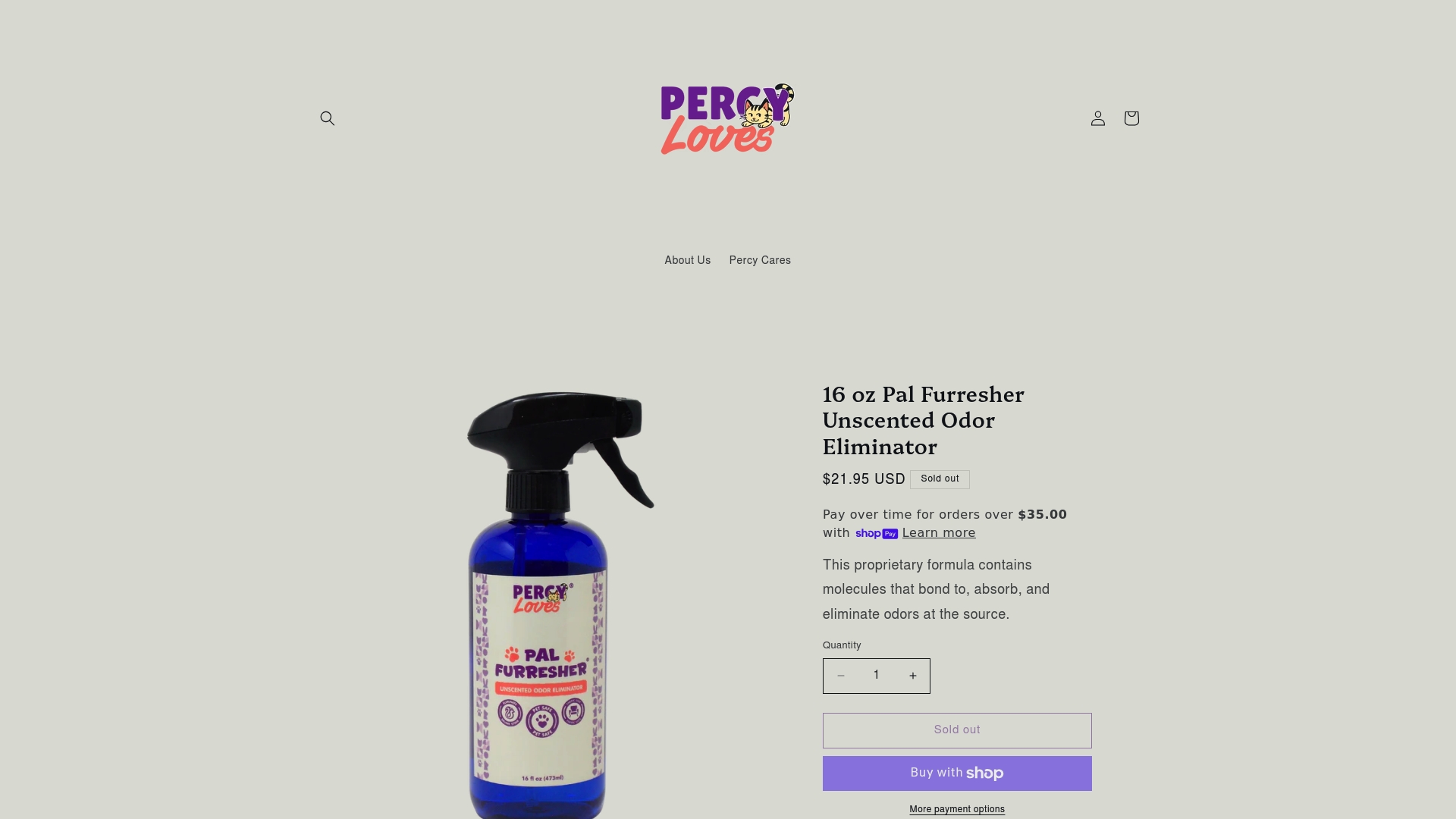
No ammonia. No phenols. No bleach. No harsh ingredients of any kind. Just real odor elimination that you can feel good about using around your pets every single day. Whether you need a quick refresh or a deep clean, our unscented odor eliminator is ready to go. Stock up and save with our odor eliminator sprays bundle. Your home, your pets, and your nose will thank you.
Frequently asked questions
What are the most dangerous cleaning ingredients for pets?
Ammonia, bleach, phenols, formaldehyde, phthalates, and essential oils pose the highest risks. These ingredients can cause respiratory, gastrointestinal, skin, or organ damage in pets even at low exposure levels.
What should I do if my pet walks on a recently cleaned floor?
Keep your pet away from cleaned areas until the surface is thoroughly dry and ventilated to lower residue risks. Ventilating and restricting access until dry is the most effective precaution you can take.
Are natural cleaners like vinegar and baking soda always safe for pets?
While gentler than harsh chemicals, even natural options carry some risk and should not be ingested or left on surfaces in concentrated amounts. Always dilute and rinse.
Is there an official list of pet-safe cleaning products?
No official list exists, but checking for the EPA Safer Choice label and reading labels for certifications can help. Your vet is also a reliable resource for product recommendations.
Why are cats more at risk from cleaning products than dogs?
Cats lack certain enzymes to process phenols and related compounds, making them far more sensitive to chemical residues left on floors and surfaces after cleaning.
Recommended
- Pet-Parent Cleaning Checklist: Safe, Odor-Free Home – Percy Loves
- What is pet cleaning safety? Protect your pets in 2026 – Percy Loves
- What is pet cleaning safety? Protect your pets in 2026 – Percy Loves
- Dog safe home cleaning guide: protect your pet in 2026 – Percy Loves
- Pet-Safe Cleaning: Protecting Pets and Stylish Spaces – Teddy Pet


