

Pet wellness and cleanliness guide for safe odor control 2026
Pet owners trust products labeled pet-safe without realizing many contain harmful ingredients that pose serious health risks. Conventional cleaners often include bleach, ammonia, phenols, and essential oils that can cause respiratory distress, chemical burns, and liver damage in pets. Cats face heightened vulnerability due to their inability to metabolize certain compounds. This guide reveals how to identify truly safe products, eliminate odors effectively with enzyme-based solutions, and maintain pet wellness through informed cleaning choices that protect your fur family.
Table of Contents
- Why Conventional Cleaning Products Can Harm Your Pets
- How Enzyme-Based Cleaners Target Odors Safely And Effectively
- Common Pitfalls In Pet Odor Control And How To Avoid Them
- Choosing Safe And Effective Products For Pet Wellness And Cleanliness
- Explore Percy Loves Safe Odor Eliminators For 2026
- Are Enzyme-Based Cleaners Safe For All Pets?
- What Common Ingredients Should I Avoid In Pet Cleaning Products?
- How Quickly Should I Clean Pet Urine To Prevent Odors?
- Are Essential Oils Safe To Use Around Cats And Dogs?
Key takeaways
| Point | Details |
|---|---|
| Hidden hazards in pet-safe labels | Over 78% of products marketed as pet-safe contain moderate to severe toxins flagged by ASPCA |
| Enzyme cleaners eliminate odors | Enzymatic formulas break down proteins and uric acid at the molecular level for permanent odor removal |
| Cats face extreme sensitivity | Felines lack liver enzymes to process phenols and essential oils, making them 5-10x more vulnerable |
| Immediate cleaning is critical | Acting within 30 minutes maximizes enzyme effectiveness and prevents deep-seated odor persistence |
Why conventional cleaning products can harm your pets
Many conventional cleaning products ranging from bleach and ammonia effectively remove grime but can pose serious risks to pets. These chemicals release fumes that irritate respiratory systems, cause eye watering, and trigger coughing in dogs and cats. When pets walk on freshly cleaned floors, residues transfer to paws and fur, leading to ingestion during grooming.
Ingestion of bleach may cause chemical burns to the mouth, throat, and stomach lining. Phenols found in disinfectants can lead to liver failure, especially in cats. Quaternary ammonium compounds in many surface cleaners cause corrosive burns and severe oral irritation when pets lick treated areas.
Cats face particular danger because they lack liver enzymes and are 5-10x more sensitive to phenols found in many essential oils and chemicals. Tea tree oil, eucalyptus, pine oils, and phenol-based products can cause tremors, lethargy, and organ damage in felines. Even small exposures through skin contact or inhalation accumulate over time.
Pro Tip: Check your dog safe home cleaning guide for species-specific vulnerabilities and safer alternatives.
Common household cleaners containing these harmful ingredients:
- All-purpose cleaners with bleach or ammonia
- Pine-scented floor cleaners with phenols
- Disinfectant wipes with quaternary ammonium
- Air fresheners with concentrated essential oils
- Bathroom cleaners with corrosive acids
Many products labeled pet-safe still contain moderate-severe hazards. Marketing claims often emphasize natural ingredients while downplaying risks from essential oils toxic to pets. Pet poison control centers report thousands of cases annually involving household cleaners, with cats representing a disproportionate number of severe reactions.
The ASPCA Animal Poison Control Center handles over 180,000 cases yearly, with cleaning products ranking among the top five toxin categories for pet exposures.
Understanding ingredient-level dangers helps you make informed choices that protect your pets from unnecessary chemical exposure while maintaining a clean home.
How enzyme-based cleaners target odors safely and effectively
Enzyme-based cleaners use biological catalysts to break down organic matter at the molecular level, offering a safer alternative to harsh chemicals. Enzymes catalyze reactions that reduce odor at the source, unlike deodorizers that mask smells temporarily. Proteases break down proteins in feces and vomit, while urease and uricase specifically target uric acid crystals in pet urine.
True enzymatic action requires specific conditions. Cleaners need a pH range of 6-8 and 12-24 hours of undisturbed contact time to fully break down odor compounds. Rushing the process or wiping surfaces prematurely prevents complete molecular breakdown, leaving residual odors that resurface later.
Only select enzyme cleaners effectively break down uric acid in pet urine, surpassing hydrogen peroxide. Hydrogen peroxide oxidizes surface stains but doesn’t address crystallized uric acid embedded in carpet padding or subfloors. It also damages materials like memory foam and can bleach colored fabrics.
Pro Tip: Apply enzyme cleaner generously to saturate the affected area completely, matching the original urine spread. Cover with plastic wrap to maintain moisture and prevent premature drying.
Baking soda and vinegar are ineffective and can deactivate enzymes in cleaners. The fizzing reaction between these household staples creates carbon dioxide gas and sodium acetate, neither of which breaks down uric acid. Worse, applying baking soda over enzyme cleaners raises pH levels and neutralizes enzyme activity.
Comparing odor control methods:
| Method | Effectiveness | Safety | Limitations |
|---|---|---|---|
| Enzyme cleaners | Eliminates odors permanently | Pet-safe, non-toxic | Requires 12-24 hour dwell time |
| Hydrogen peroxide | Removes surface stains only | Can damage materials | Ineffective on uric acid crystals |
| Baking soda/vinegar | Minimal odor reduction | Generally safe | Deactivates enzymes, doesn’t break down proteins |
| Chemical deodorizers | Masks odors temporarily | Often contains harmful fragrances | Odors return within hours |
Enzyme cleaners work continuously as long as organic matter remains present. Once all proteins and uric acid are broken down into water, carbon dioxide, and simple salts, the enzymes become inactive. This self-limiting process makes them safer than chemical cleaners that leave toxic residues.
For best results, avoid heat sources like steam cleaners or hair dryers during enzyme treatment. High temperatures denature proteins in the enzyme molecules, destroying their catalytic ability. Room temperature application allows enzymes to work efficiently over the required contact period.
Check your pet care workflow odor-free homes guide for step-by-step enzyme cleaner application techniques that maximize effectiveness.
Common pitfalls in pet odor control and how to avoid them
Pet owners frequently make mistakes that undermine odor control efforts and create recurring problems. Understanding these pitfalls helps you implement more effective cleaning strategies that deliver lasting results.
Immediate action within 30 minutes yields best results for pet urine cleanup. Delayed cleaning allows urine to penetrate deeper into carpet padding, wood subfloors, and furniture cushions. As uric acid crystallizes, it becomes increasingly difficult to remove and creates a persistent odor source that resurfaces with humidity changes.
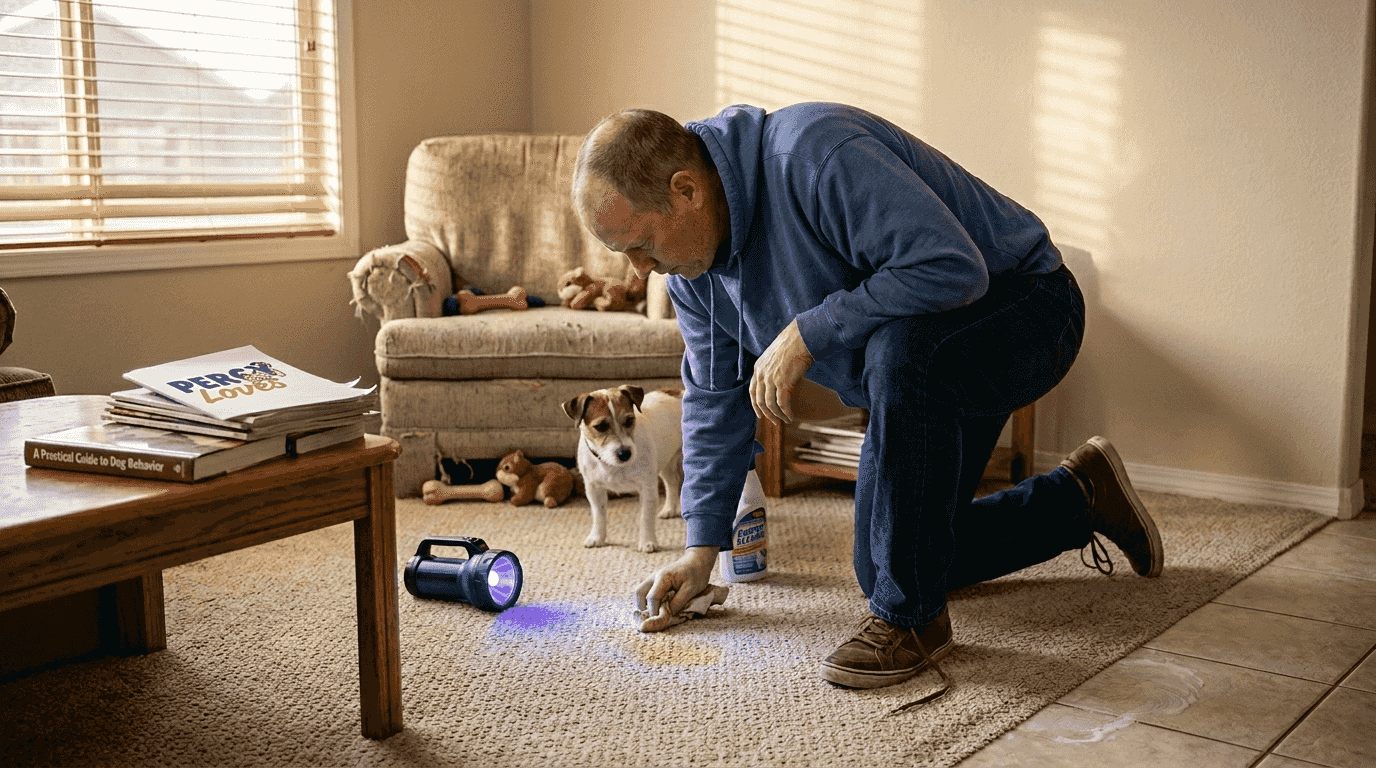
Masking odors with strong scents doesn’t solve the underlying problem. Air fresheners, scented candles, and perfumed sprays temporarily cover smells but leave odor-causing compounds intact. Pets often interpret lingering urine scent as an invitation to mark the same spot repeatedly, creating a cycle of accidents.
Pro Tip: Use a UV blacklight in a dark room to locate hidden urine spots that may be causing mysterious odors. Uric acid crystals fluoresce under UV light, revealing the full extent of contamination.
Surface cleaning proves insufficient for deep-seated residues. Rental carpets often have deep uric acid residue causing odor recurrence despite surface cleaning. Standard carpet cleaners extract surface moisture but can’t reach crystallized deposits in padding or concrete beneath.
Avoid these common mistakes:
- Using hot water or steam on urine stains, which sets proteins and makes them harder to remove
- Applying multiple cleaning products simultaneously, causing chemical reactions that neutralize effectiveness
- Scrubbing aggressively, which spreads urine deeper into fibers and padding
- Assuming one application suffices for old or severe contamination
- Failing to treat both sides of affected materials like rugs and furniture cushions
Improper enzyme cleaner use reduces effectiveness significantly. Wiping or blotting the area immediately after application removes the product before enzymes can work. Similarly, applying insufficient product fails to reach all contaminated material, leaving odor sources active.
Certain cleaning agents inadvertently worsen odor persistence. Ammonia-based cleaners smell similar to urine and may encourage pets to mark treated areas. Vinegar’s acidity can temporarily neutralize odors but doesn’t break down uric acid, leading to smell recurrence.
For comprehensive guidance, review safe pet grooming tips and pet cleaning safety essentials to avoid common cleaning mistakes that compromise pet health.
Choosing safe and effective products for pet wellness and cleanliness
Selecting truly pet-safe products requires looking beyond marketing claims to examine actual ingredient lists. Over 78% of products labeled pet-safe contain ingredients flagged as moderate-to-severe hazards by ASPCA. Understanding what to avoid and what to seek helps you make informed purchasing decisions.
Many products marketed as natural or eco-friendly still pose risks. Concentrated fragrance oils, even from plant sources, can irritate pet respiratory systems and cause allergic reactions. Cats show particular sensitivity to airborne particles from heavily scented products, developing breathing difficulties and skin irritation from repeated exposure.
Essential oils such as tea tree, eucalyptus, and pine oils are toxic to pets, especially cats. These compounds accumulate in feline systems due to missing metabolic pathways, leading to tremors, weakness, and potential organ damage. Even diffused oils create airborne concentrations that affect sensitive pets.
Ingredients to avoid in pet cleaning products:
- Bleach and chlorine compounds
- Ammonia and ammonia derivatives
- Phenols and phenolic compounds
- Quaternary ammonium compounds
- Tea tree, eucalyptus, pine, citrus essential oils
- Synthetic fragrances and perfumes
- Isopropyl alcohol in high concentrations
- Formaldehyde and formaldehyde-releasing preservatives
Air freshening with heavy fragrances can irritate pet respiratory systems. Plug-in air fresheners and automatic spray dispensers create continuous exposure to volatile organic compounds. Pets with existing respiratory conditions or brachycephalic breeds face increased risk from these products.
Look for unscented or enzyme-based odor eliminators that neutralize smells rather than covering them. Products labeled fragrance-free or unscented typically contain fewer irritants. Verify that unscented doesn’t mean masking agents were added to hide chemical odors.
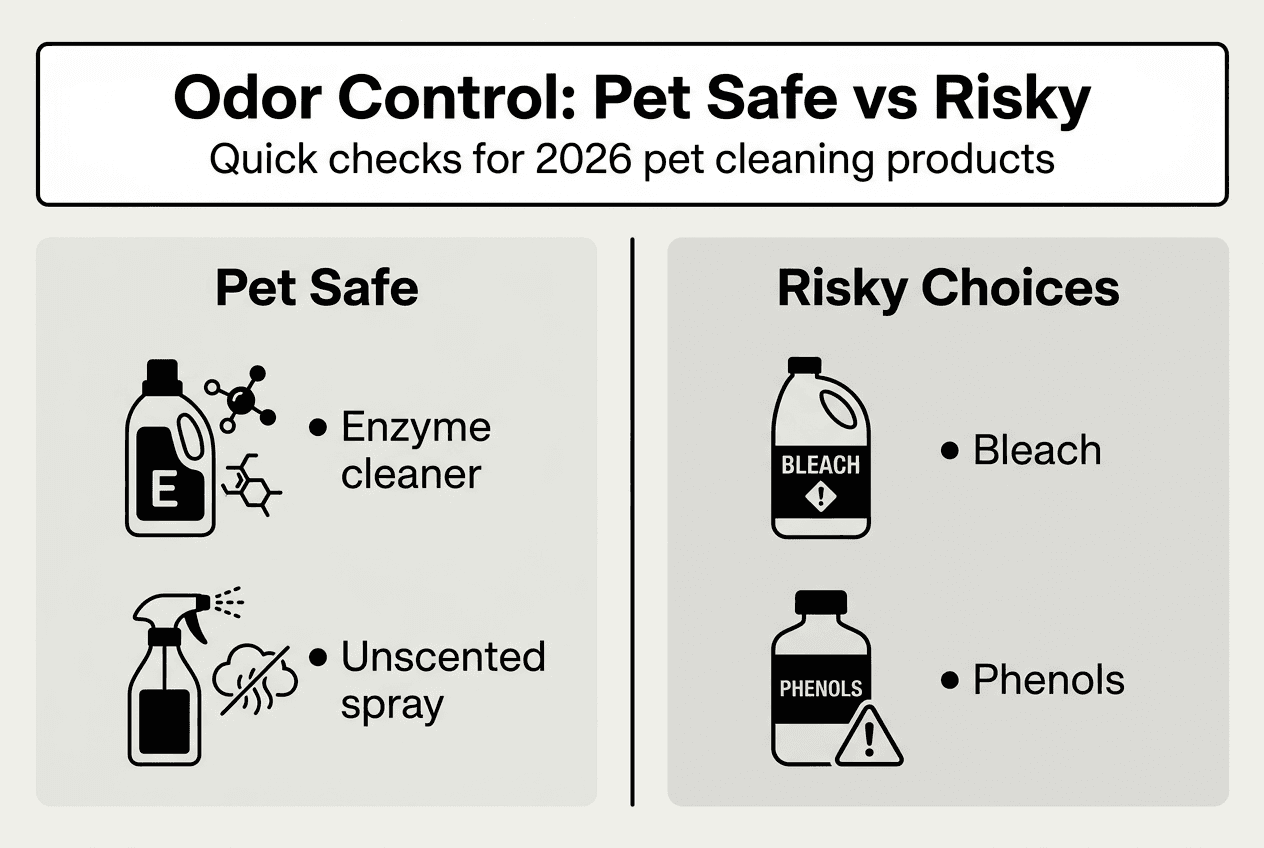
Key features of safe pet cleaning products:
| Feature | Why It Matters | What to Look For |
|---|---|---|
| Enzyme-based formula | Breaks down odors permanently | Protease, lipase, amylase, urease listed |
| Unscented | Avoids respiratory irritation | No fragrance or perfume ingredients |
| Non-toxic certification | Third-party safety verification | EPA Safer Choice or similar labels |
| pH-balanced | Prevents skin irritation | pH 6-8 range specified |
Understand labels and ingredient lists rather than relying on marketing claims. Terms like natural, green, and eco-friendly lack regulatory definitions and don’t guarantee safety. Read the complete ingredient list, researching unfamiliar compounds before use around pets.
Explore safe pet wellness products and odor control safe products guide for detailed product recommendations. Learn more about essential oils toxicity to pets to make informed choices.
Explore Percy Loves safe odor eliminators for 2026
Pet parents dedicated to wellness and cleanliness need products that deliver results without compromising safety. Percy Loves was born from Percy, a real cat with a real problem: funk. The brand developed Pal Furresher, a fragrance-free odor elimination spray that’s lick safe, addressing the exact concerns discussed throughout this guide.
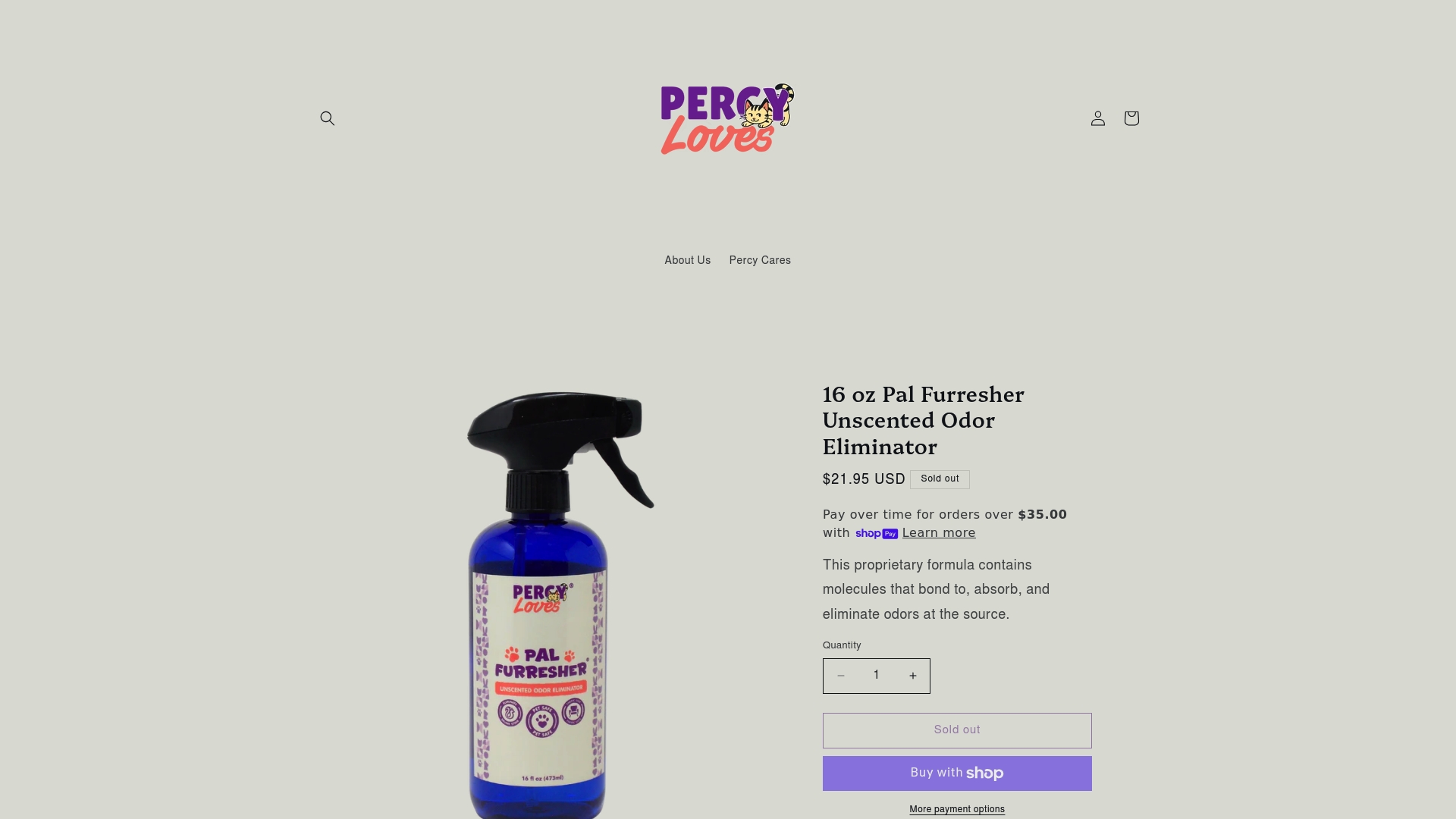
Pal Furresher uses a proprietary enzyme-based formula that works at the source to completely eliminate odors, not mask them. The unscented formulation avoids harmful fragrance oils and toxic essential oils that threaten pet health. Each product undergoes rigorous testing to ensure safety for pets who groom themselves and come into direct contact with treated surfaces.
Choose from convenient sizes that fit your needs: 4 oz Pal Furresher for targeted spot treatment, 16 oz Pal Furresher for regular household use, or Pal Furresher pack of 3 for multi-room coverage. Percy Loves supports effective pet wellness cleaning routines with products that reflect the best practices you’ve learned here.
Are enzyme-based cleaners safe for all pets?
Enzyme-based cleaners are generally safe for dogs, cats, and other household pets when you choose products specifically labeled non-toxic and pet-safe. The enzymes themselves are biological catalysts similar to those naturally present in digestive systems, making them inherently compatible with living organisms. However, some enzyme cleaners include additional ingredients like surfactants, preservatives, or fragrances that may pose risks.
Always avoid enzyme cleaners containing essential oils toxic to pets, particularly tea tree, eucalyptus, pine, and citrus oils. Cats face heightened vulnerability due to their inability to metabolize these compounds. Read ingredient lists carefully and select unscented formulations to minimize respiratory irritation and skin sensitivity.
Pets with existing health conditions, especially respiratory issues or skin allergies, may require extra caution. Consult your veterinarian before introducing new cleaning products if your pet has known sensitivities. Allow treated areas to dry completely before permitting pet access to further reduce any potential exposure.
What common ingredients should I avoid in pet cleaning products?
Avoid bleach, ammonia, phenols, and quaternary ammonium compounds in all pet cleaning products. Bleach causes chemical burns on contact and releases toxic fumes that irritate respiratory systems. Ammonia smells similar to urine and may encourage pets to mark treated areas while causing eye and lung irritation.
Phenols found in many disinfectants lead to liver damage, particularly in cats who lack metabolizing enzymes. Quaternary ammonium compounds cause corrosive burns to mouth and paw tissues when pets contact treated surfaces. Essential oils including tea tree, eucalyptus, pine, citrus, and peppermint accumulate in pet systems and cause neurological symptoms and organ damage.
How quickly should I clean pet urine to prevent odors?
Clean pet urine within 30 minutes for optimal enzyme activity and odor control. Fresh urine remains on the surface and in the top layers of carpet or fabric, making it easier to extract completely. Quick action prevents urine from penetrating into padding, subfloors, and furniture cushions where it crystallizes into persistent odor sources.
Delayed cleaning allows uric acid to bond with materials and form crystals that resist removal. These crystals release odor molecules whenever humidity or temperature changes occur, creating recurring smell problems. Immediate treatment maximizes enzyme cleaner effectiveness and prevents the need for repeated applications or professional remediation.
Are essential oils safe to use around cats and dogs?
Many essential oils are toxic to pets, especially cats who lack liver enzymes to metabolize these compounds. Tea tree oil, eucalyptus, pine, citrus, peppermint, and ylang-ylang cause tremors, weakness, drooling, vomiting, and potential organ damage in felines. Even small exposures through diffusers, cleaning products, or direct skin contact accumulate over time.
Dogs tolerate some essential oils better than cats but still face risks from concentrated exposures. Avoid using essential oil diffusers, scented cleaning products, or topical applications in areas where pets spend time. If you choose to use any essential oils, select only vet-approved products specifically formulated for pets at safe dilution levels, and never apply undiluted oils directly to pet skin or fur.


