

Pet product safety: 69M pounds recalled and counting
TL;DR:
- Most pet products lack strict regulations, increasing risks of hidden toxins and safety issues.
- Recalls happen due to manufacturing errors and poor oversight, not just negligence.
- Using fragrance-free, vet-approved products helps protect pets from harmful chemicals and toxins.
You love your pets like family. You read labels, choose trusted brands, and try to do everything right. But here’s the thing: even well-known brands have faced recalls, and the systems meant to protect your fur babies have real gaps. The FDA has tracked over 69 million pounds of recalled pet food from July 2020 to June 2025 alone, totaling 45 recall announcements. That’s a staggering number. This guide walks you through the hidden risks in everyday pet products, explains why recalls keep happening, and gives you practical tools to make safer choices for the animals who count on you.
Table of Contents
- The hidden dangers in everyday pet products
- Why pet product recalls and safety gaps happen
- Odor control products: Special risks for sensitive pets
- How to choose safe products and protect your pet
- The uncomfortable truth about pet product safety (and what most articles miss)
- Choose safety and peace of mind with proven odor solutions
- Frequently asked questions
Key Takeaways
| Point | Details |
|---|---|
| Hidden product risks | Many pet products contain hidden dangers due to regulatory gaps and poor labeling. |
| Odor control caution | Scented odor control products can cause severe health issues in pets, even with ‘natural’ ingredients. |
| Vigilant choices | Owners should prioritize unscented, certified, or vet-approved products for safety. |
| Check for recalls | Regularly review recall databases and monitor product updates to prevent harm. |
The hidden dangers in everyday pet products
Walk through any pet store and you’ll see shelves packed with colorful toys, treats, grooming sprays, and odor control products. Most look perfectly safe. Many are. But some carry risks that aren’t obvious from the outside, and that’s the problem.
Unlike products made for humans, pet products lack stringent regulations compared to their human counterparts. The Consumer Product Safety Commission (CPSC) can only regulate products for risks to humans, not pets. That leaves a real oversight gap when it comes to pet care and well-being. A toy might pass every human safety check and still pose a serious choking hazard to your dog.
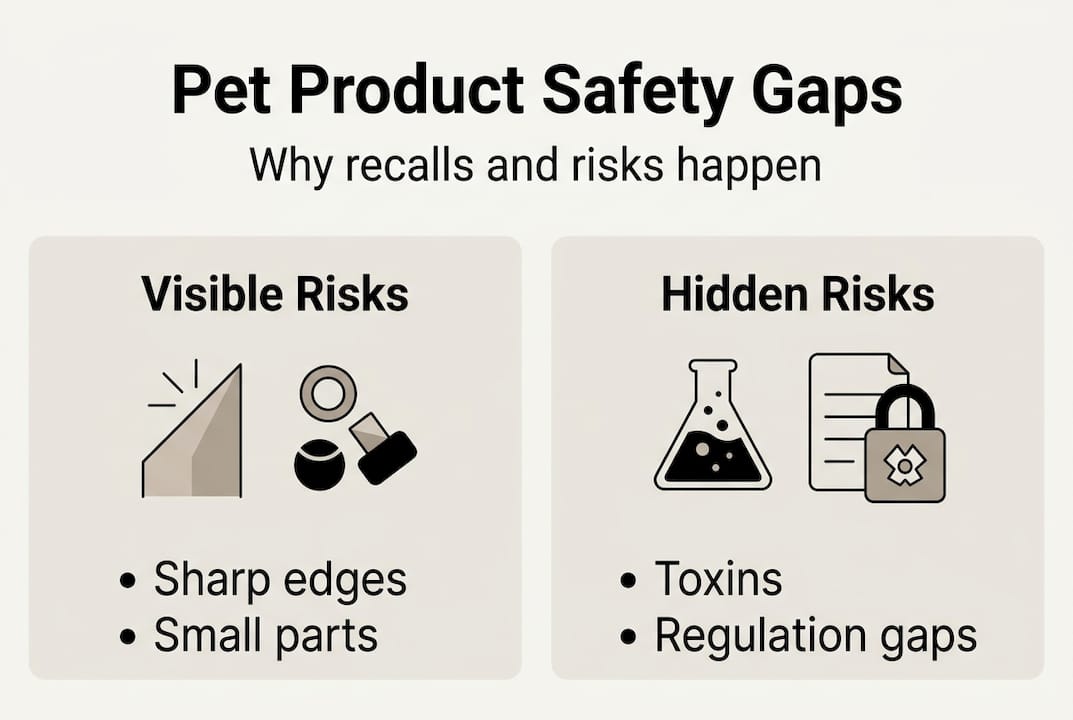
Some dangers are visible. Sharp edges on plastic toys, small parts that break off, or strings that can be swallowed. Others are invisible. Toxic dyes, chemical coatings, and off-gassing materials can cause chronic health problems over time. Pets chew, lick, and roll on everything, so their exposure to harmful substances is often much higher than ours.
Here’s a quick look at the most common hidden hazards by product type:
| Product type | Visible risks | Hidden risks |
|---|---|---|
| Chew toys | Small parts, sharp edges | Toxic dyes, chemical coatings |
| Pet food | Contamination (visible) | Bacteria, heavy metals, mold |
| Odor control sprays | Strong smell | VOCs, phthalates, formaldehyde |
| Grooming products | Skin irritation | Synthetic fragrances, parabens |
| Food containers | Cracks, sharp edges | BPA leaching, suffocation risk |
Common hidden hazards to watch for include:
- Synthetic fragrances in sprays and wipes that irritate respiratory systems
- Heavy metals found in some imported pet food brands
- Mold toxins in improperly stored dry food
- BPA and plasticizers in food bowls and containers
- Phthalates in plastic toys and scented products
“The assumption that pet products are safe because they’re sold in mainstream stores is one of the most dangerous misconceptions pet owners carry.” Understanding pet safety standards is the first step toward making smarter choices.
You can check recent FDA recalls to stay current on what’s been pulled from shelves. It’s worth bookmarking.
Why pet product recalls and safety gaps happen
Recalls don’t happen because companies are always negligent. Sometimes it’s a manufacturing error. Sometimes it’s a supplier problem discovered after products are already in homes. And sometimes it’s because no one was required to test for the issue in the first place.
The CPSC announced 305 recalls in 2024 alone for consumer products, including pet-related items like toys with coin battery ingestion hazards and pet food containers that posed suffocation risks to small animals. That’s a lot of products reaching homes before the problem was caught.
Here’s how oversight compares between human and pet products:
| Category | Human products | Pet products |
|---|---|---|
| Regulatory body | FDA, CPSC, EPA | FDA (food only), CPSC (human risk only) |
| Pre-market testing required | Yes, for many categories | Rarely required |
| Ingredient disclosure | Mandatory | Inconsistent |
| Recall authority | Strong, multi-agency | Limited, often voluntary |
| Labeling standards | Strict | Minimal |
The hidden safety gaps in the current system mean that many pet products reach store shelves without ever being tested for pet-specific risks. Here are the most common root causes of recalls:
- Manufacturing errors: Contamination during production, such as salmonella in dry food
- Poor quality control: Inconsistent ingredient sourcing, especially from overseas suppliers
- Mislabeling: Incorrect ingredient lists or missing allergen warnings
- Faulty materials: Plastics or coatings that weren’t tested for pet chewing behavior
- Delayed reporting: Problems identified internally but not reported promptly
The result? Pet owners often don’t find out about a problem until their pet is already sick. Staying connected to non-toxic care tips and checking recall databases regularly is one of the most practical things you can do. It’s not about being paranoid. It’s about being informed.
The good news is that quality pet care starts with awareness. Once you understand how these gaps exist, you can start filling them yourself.
Odor control products: Special risks for sensitive pets
Odor control is one of the most popular categories in pet care. And it’s also one of the riskiest. Most pet owners don’t think twice about plugging in an air freshener or lighting a candle near their cat’s favorite napping spot. But that’s a problem.
Air fresheners, plug-ins, and scented candles emit VOCs, phthalates, and formaldehyde. These compounds can cause respiratory issues, skin irritation, and serious toxicity if inhaled or ingested over time. Vets recommend avoiding them entirely, especially in homes with cats and birds.

Why are cats and birds especially vulnerable? Their respiratory systems are more sensitive than dogs or humans. Cats also groom constantly, meaning any chemical that settles on their fur gets ingested. Birds have extremely efficient respiratory systems that make them highly susceptible to airborne toxins. Even a small amount of exposure can cause real harm.
Here are the most common odor control risks for pets:
- Plug-in air fresheners: Continuous VOC emission in enclosed spaces
- Scented candles: Soot and fragrance chemicals released during burning
- Essential oil diffusers: Many oils (including lavender and tea tree) are toxic to cats
- Aerosol sprays: Propellants and synthetic fragrances cause immediate respiratory irritation
- Scented litter: Fragrances can deter cats and irritate their nasal passages
Labels that say ‘natural’ or ‘plant-based’ don’t automatically mean safe for pets. Many natural compounds are still toxic when inhaled or ingested by cats and birds.
For a deeper look at what’s on the pet toxin risks list, ASPCA Pro keeps an updated resource that’s worth reviewing.
Pro Tip: If your cat or bird starts sneezing more, seems lethargic, or shows watery eyes after you introduce a new scented product, remove it immediately and ventilate the space. Those are early warning signs.
The safest approach for odor control safe products is to choose fragrance-free options that eliminate odors at the source rather than masking them with chemicals. Your cat odor control tips should always start with what’s in the bottle, not just how it smells to you.
How to choose safe products and protect your pet
Knowing the risks is only half the battle. The other half is knowing what to actually look for when you’re standing in the aisle or scrolling through an online store. Good news: it doesn’t have to be complicated.
Pet product safety prevents both acute injuries like choking and poisoning, and long-term issues like allergies and respiratory damage. Getting this right saves vet bills and, more importantly, protects your pet from unnecessary suffering.
Here’s a quick comparison of safer versus riskier product choices:
| Product category | Safer choice | Riskier choice |
|---|---|---|
| Odor control | Fragrance-free, enzyme-based | Aerosol sprays, plug-in fresheners |
| Toys | Solid rubber, natural rope | Cheap plastic with small parts |
| Food bowls | Stainless steel, ceramic | Plastic with unknown coatings |
| Grooming products | Unscented, vet-approved | Heavily fragranced, unlabeled |
| Litter | Unscented, dust-free | Heavily scented, clay-based |
Avoiding common pet toxins starts with a simple evaluation process. Follow these steps every time you consider a new product:
- Check for recalls first: Search the FDA recall database and CPSC website before buying
- Read the full ingredient list: If it’s not disclosed, that’s a red flag
- Look for vet approval or third-party certification: Not just a marketing badge, but actual certification
- Avoid synthetic fragrances: Even in cleaning products used near pet spaces
- Introduce new products slowly: Watch your pet’s response for 48 to 72 hours
- Consult your vet: Especially for pets with known sensitivities or health conditions
Pro Tip: Baking soda is one of the safest, most effective odor neutralizers you can use around pets. It’s non-toxic, fragrance-free, and genuinely absorbs odors rather than covering them up.
For ongoing guidance on safe odor control and wellness products for odor control, we’ve put together resources that go deeper into specific product categories. Because your pet deserves products that are actually tested with them in mind.
The uncomfortable truth about pet product safety (and what most articles miss)
Here at Percy Loves, we’ve thought a lot about this. And we’ll be honest: the label on a product is not a safety guarantee. Words like “natural,” “gentle,” and “safe for pets” are marketing terms, not regulatory certifications. Any brand can print them.
Even premium brands have faced recalls. Complacency is expensive, and not just in vet bills. The truth is that prioritizing pet safety requires you to stay skeptical, ask questions, and trust your instincts as a pet parent over a pretty package.
Most articles tell you to “read the label.” We’re telling you to go further. Ask who tested it. Ask what the ingredients actually do. Ask whether the company discloses its sourcing. The brands worth trusting are the ones who can answer those questions clearly and without hesitation.
Your pet can’t read the label. That’s your job. And you’re clearly already doing it, because you’re here.
Choose safety and peace of mind with proven odor solutions
You’ve done the research. You know what to avoid. Now you deserve a product that actually meets the standard you’re holding everything else to.
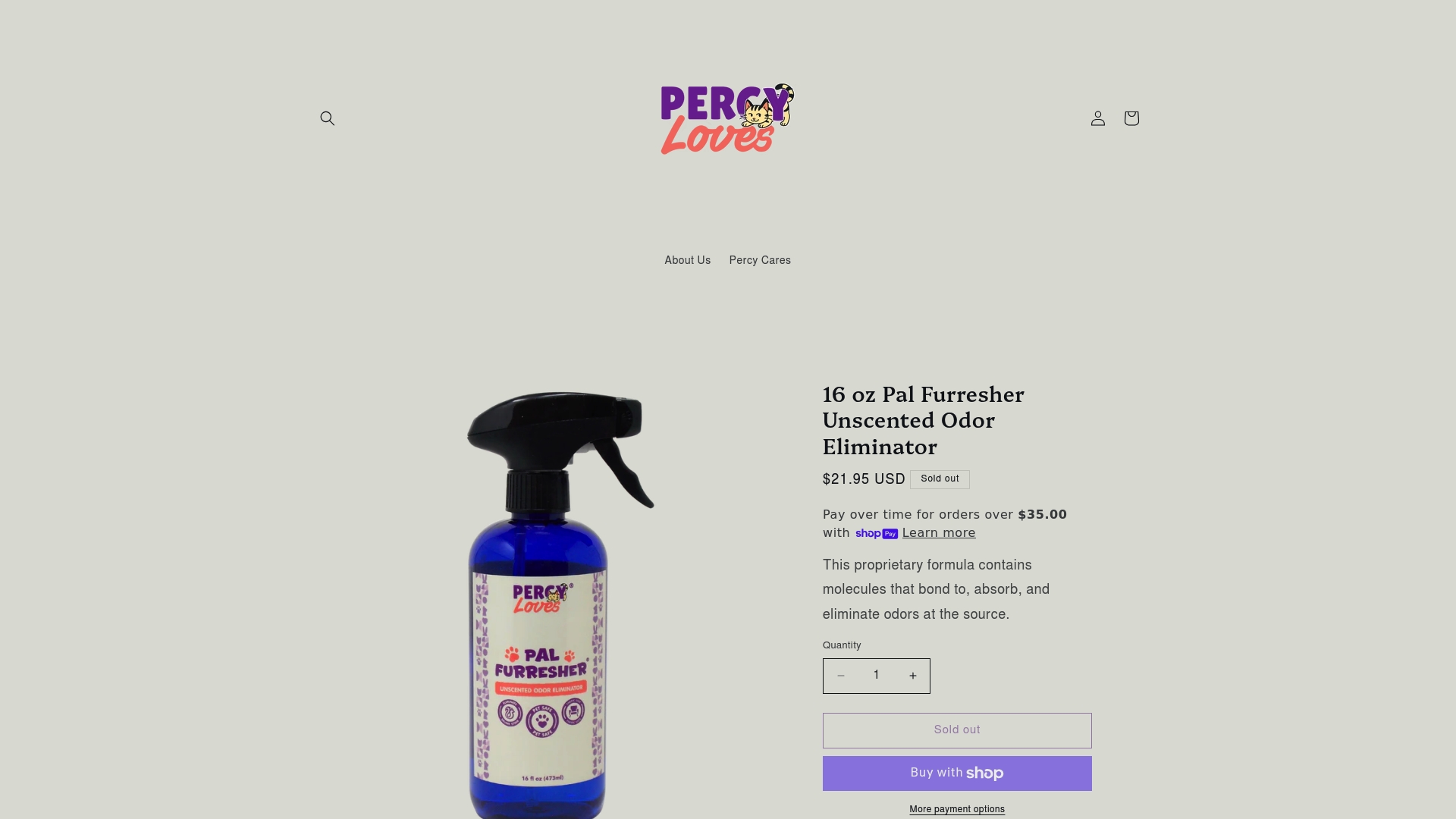
That’s exactly why we created Pal Furresher. Percy is a real cat with a real funk problem, and we weren’t willing to solve it with chemicals that could hurt him. Pal Furresher is a fragrance-free odor elimination spray that’s lick safe and works at the source of the odor, not just on top of it. No masking. No mystery ingredients. Just effective, safe odor control you can feel good about. Try the 4 oz unscented odor eliminator for everyday use, or grab the 16 oz unscented odor eliminator for bigger jobs. See the full Pal Furresher odor eliminators collection and give your pet the safety they deserve.
Frequently asked questions
How often are pet products recalled each year?
Since 2020, there have been an average of around 9 pet food recall announcements per year, with the FDA tracking 45 announcements from July 2020 to June 2025, totaling over 69 million pounds of recalled pet food.
Are ‘natural’ scented odor control products safer for pets?
Not always. Many natural scents and essential oils are still toxic to pets when inhaled or ingested, and the top pet toxins list includes several plant-derived compounds. Unscented and vet-approved options are always the safer choice.
What should I look for when buying odor control products for my pet household?
Prioritize fragrance-free, vet-approved, or certified non-toxic products. As vets recommend, avoid strong fragrances and essential oils entirely, especially in homes with cats or birds.
Who is responsible for recalling unsafe pet products?
It depends on the product. The CPSC handles recalls that pose risks to humans, including 305 consumer product recalls in 2024, while the FDA manages pet food recalls. But because pet products lack stringent regulations compared to human products, many recalls are voluntary and happen after harm has already occurred.
Recommended
- Safe pet products guide: expert non-toxic care tips 2026 – Percy Loves
- How safety ensures quality pet care and well-being in 2026 – Percy Loves
- Pet safety standards: ensure your dog or cat’s well-being – Percy Loves
- Dog safety must-haves every responsible owner needs 2026 – Percy Loves
- 7 Key Insights on Dog Food Recalls 2025 Every Owner Should Know
- Salmonella Outbreak in Canada Linked to Pet Food with 27 Confirmed Cases


