

Safe, Effective Cat Odor Control for Pet Parents 2026
TL;DR:
- Proper litter depth, material choice, and cat health are key to controlling odor effectively.
- Routine cleaning with unscented, natural litters and additives like activated carbon reduces odors significantly.
- Persistent odors or changes in urine smell may indicate health issues requiring veterinary attention.
If you scoop daily and still walk into a room that smells like a litter box, you are not alone. Most pet parents assume more frequent cleaning is the answer. But the real culprits are often litter depth, material choice, and even your cat’s health. The good news? Odor control has come a long way. In 2026, fragrance-free, science-backed solutions are outpacing the old standbys. This article breaks down what actually causes persistent cat odors, which routines work best, and how to choose products that are safe for your fur baby and your home.
Table of Contents
- Understanding the real sources of pet odor
- Routine care: Proven methods for odor elimination
- Choosing safer, more effective litters and additives
- When odor signals a health concern
- Why odor education means happier, healthier pets
- Safe solutions for a fresher home with Percy Loves
- Frequently asked questions
Key Takeaways
| Point | Details |
|---|---|
| Routine matters most | Scooping twice daily and changing litter weekly cuts odors by up to 90 percent. |
| Natural litters outperform | Corn, wood, and grass-based litters trap odors better and are safer than clay. |
| Choose additives wisely | Activated carbon and enzyme products reduce ammonia more safely than baking soda or scents. |
| Odor can be a warning | Persistent smells may signal a cat health issue requiring veterinary care. |
| Trends prioritize safety | 2026 products focus on fragrance-free, health-first solutions with probiotics and carbon. |
Understanding the real sources of pet odor
Not all cat odors come from the same place. Knowing the difference helps you fix the right problem.
There are three main odor types in a cat home:
- Ammonia odor: Comes from urine breaking down. It gets stronger the longer waste sits.
- Organic waste odor: Solid waste releases sulfur compounds. These linger in porous litter materials.
- Bacterial growth: Moisture plus waste creates a breeding ground for odor-causing bacteria, especially in plastic litter boxes with scratches.
The litter itself matters more than most people think. Clay litter is common, but it can trap odors in clumps that break apart during scooping. Natural litters like corn, wood, and grass provide superior odor control through absorption and natural scents, outperforming clay in dust reduction and eco-friendliness. Depth also plays a big role. Too little litter means urine hits the bottom of the box and pools, making ammonia levels spike fast.
One of the most common mistakes pet parents make is reaching for a scented litter or a plug-in air freshener. These products do not eliminate odor. They layer a fragrance on top of it, which can actually irritate your cat’s sensitive respiratory system and discourage litter box use altogether.
Covering up a smell is not the same as getting rid of it. If your cat can still detect the odor beneath the fragrance, they may start avoiding the box entirely.
Your cat’s diet and health also play a surprising role. Cats eating low-quality food with fillers tend to produce stronger-smelling waste. Dehydration concentrates urine, making ammonia odor much more intense. Proper maintaining cat hygiene goes beyond the litter box. It includes monitoring what goes in so you can better manage what comes out.
With the why clarified, let’s examine the best solutions starting at the source.
Routine care: Proven methods for odor elimination
Once you know what causes the smell, here’s how to stop it at the source every day.
A consistent routine is your single most powerful tool. Here is a proven schedule that actually works:
- Scoop twice daily. Morning and evening scooping removes waste before ammonia has time to build up.
- Maintain 3 to 4 inches of litter depth. This gives your cat enough material to cover waste properly and prevents urine from pooling at the bottom.
- Do a full litter change every 7 to 14 days. Even with great scooping habits, bacteria accumulate over time.
- Wash the litter box monthly. Use mild soap and warm water. Avoid bleach, which can leave a residue that repels cats.
- Replace plastic boxes every 1 to 2 years. Scratches in plastic harbor bacteria that no amount of cleaning can fully reach.
Daily scooping twice, with 3 to 4 inches litter depth, and weekly full changes reduce odors by up to 90%. Activated carbon and zeolite additives outperform baking soda, achieving 92% versus 30% ammonia reduction. That is a significant difference, and it is worth paying attention to.

Baking soda is a popular home remedy, but it falls far short of what carbon-based or zeolite products can do. Zeolite is a natural mineral that traps ammonia molecules at a microscopic level. Carbon works similarly, pulling odor compounds out of the air rather than covering them up.
Pro Tip: Add a thin layer of zeolite or activated carbon granules beneath your regular litter. This creates a base layer that catches ammonia before it escapes the box.
Scented litters are another trap. The fragrance wears off within hours, leaving you with the original odor plus an artificial scent that your cat may find off-putting. For more reliable pet care tips that go beyond the basics, building a consistent routine is always the foundation. And for deeper guidance on keeping your space clean and your cat comfortable, cat hygiene best practices can help you level up your approach.
Choosing safer, more effective litters and additives
Knowing how to clean is vital. Choosing the right products makes it even easier.
Not all litters are created equal. Here is a simple comparison to help you decide:
| Litter type | Odor control | Dust level | Eco-friendly | Best for |
|---|---|---|---|---|
| Clay (clumping) | Moderate | High | No | Budget-conscious owners |
| Silica/crystal | Good | Low | No | Low-maintenance routines |
| Corn | Excellent | Low | Yes | Sensitive cats, eco-owners |
| Wood (pine) | Excellent | Low | Yes | Multi-cat homes |
| Grass | Very good | Very low | Yes | Kittens, allergy-prone cats |
Natural litters win on almost every front for pet parents who prioritize safety and performance. They absorb moisture faster and neutralize odors through natural compounds rather than artificial fragrance.
When it comes to additives, here is what to look for:
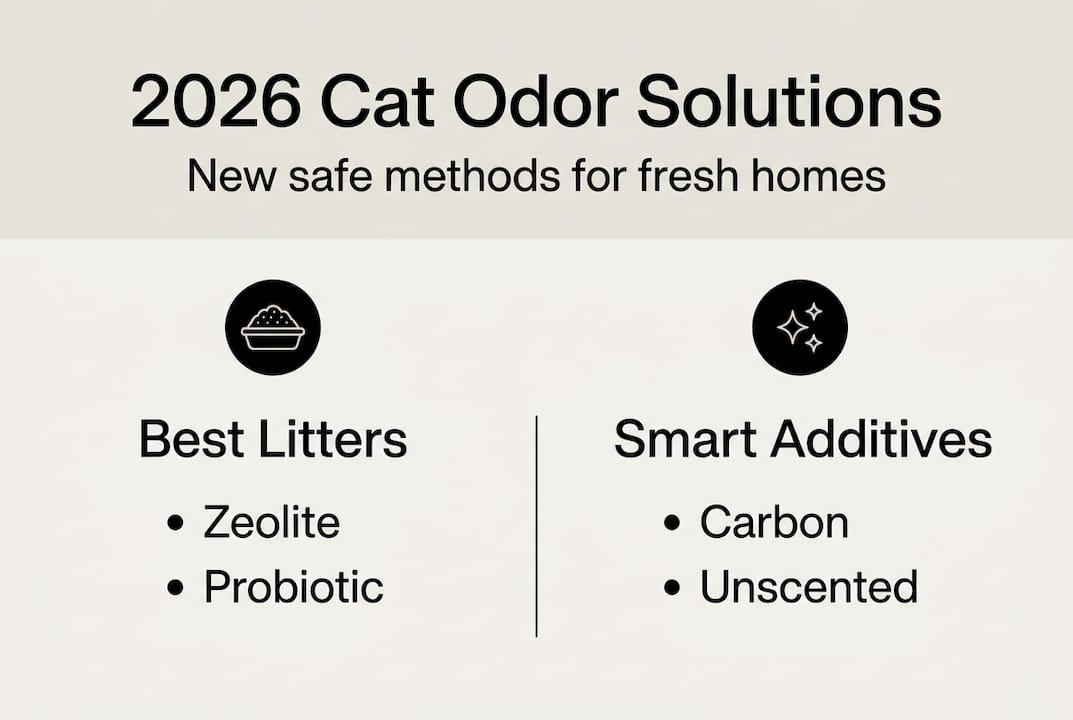
- Activated carbon: Traps odor molecules. Great for ammonia and general litter box smells.
- Zeolite: A natural mineral that locks in ammonia. Works well as a base layer or mixed into litter.
- Probiotic additives: Introduce beneficial bacteria that break down waste compounds over time.
2026 trends favor probiotic-enhanced litters and carbon additives for sustained, fragrance-free control over masking agents. This shift reflects a broader move toward health-first pet care.
Pro Tip: If you have a sensitive cat or a multi-cat home, start with an unscented wood or corn litter combined with a zeolite additive. You will get strong odor control without any of the irritants that come with scented options.
For a broader look at what is working in 2026, check out pet-safe odor control trends and a safer odor control guide that covers the latest in fragrance-free living with pets.
When odor signals a health concern
Odor isn’t always just a cleanliness issue. It can be your first health warning.
If you are doing everything right and the smell is still overwhelming, your cat may be telling you something important. Sudden changes in urine odor, frequency, or color are worth paying close attention to.
Here are the signs that odor may point to a health problem:
- Urine that smells unusually strong or sweet
- Straining in the litter box or crying while urinating
- Blood in the urine (pink or red tint)
- Urinating outside the box
- Drinking much more or less water than usual
Persistent odors or lower urinary tract signs such as difficulty urinating or blood in urine can indicate conditions like feline idiopathic cystitis, urinary tract infections, or bladder stones. A vet check is essential when these signs appear.
Here is a quick reference for common feline urinary conditions:
| Condition | Key symptoms | Action needed |
|---|---|---|
| Feline idiopathic cystitis (FIC) | Straining, blood in urine, frequent trips | Vet visit within 24 hours |
| Urinary tract infection (UTI) | Strong odor, cloudy urine, lethargy | Vet visit, antibiotics may be needed |
| Bladder stones (urolithiasis) | Painful urination, blood, blockage risk | Urgent vet care |
| Dehydration | Dark, concentrated urine, strong ammonia | Increase water intake, monitor closely |
If your cat’s litter box suddenly smells much worse despite your usual routine, that change in odor is a signal worth taking seriously. Do not mask it. Investigate it.
This is where scented additives can actually cause harm. If a strong smell is covering up a health issue, you lose the early warning sign that could prompt a vet visit. For more on monitoring cat health, keeping a simple log of your cat’s litter box habits can help you spot changes before they become emergencies.
Why odor education means happier, healthier pets
Here is what most guides fail to say about odor education.
At Percy Loves, we see a lot of pet parents chasing quick fixes. A new scented litter here, a plug-in there. It makes sense. When something smells bad, you want it gone fast. But the shortcut mindset keeps owners stuck in a cycle of masking rather than solving.
The truth is, odor management is a form of preventive health care. When you understand what smells mean, you catch problems early. When you choose fragrance-free, gentle products, you protect your cat’s respiratory health and encourage consistent litter box use. When you build a real routine, you reduce stress for both you and your cat.
Conventional wisdom says buy the strongest-smelling litter you can find. We say the opposite. Fragrance-free is not a compromise. It is the smarter choice. Spaying or neutering your cat also reduces hormone-driven urine marking and odor intensity, which is one of the most overlooked preventive steps a pet parent can take.
For a deeper look at odor-free best practices, the humans at Percy Loves have put together resources that go beyond surface-level advice. Because your fur baby deserves more than a cover-up.
Safe solutions for a fresher home with Percy Loves
Ready to make the change? Here is where to start simply.
At Percy Loves, we built our products around one cat with one big problem: funk. Percy is real, and so is the challenge of keeping a home fresh when a cat lives in it. That is why we created Pal Furresher, a fragrance-free odor eliminator solution that works at the source of the smell, not on top of it. It is lick safe, which means you never have to worry about your cat coming into contact with it.
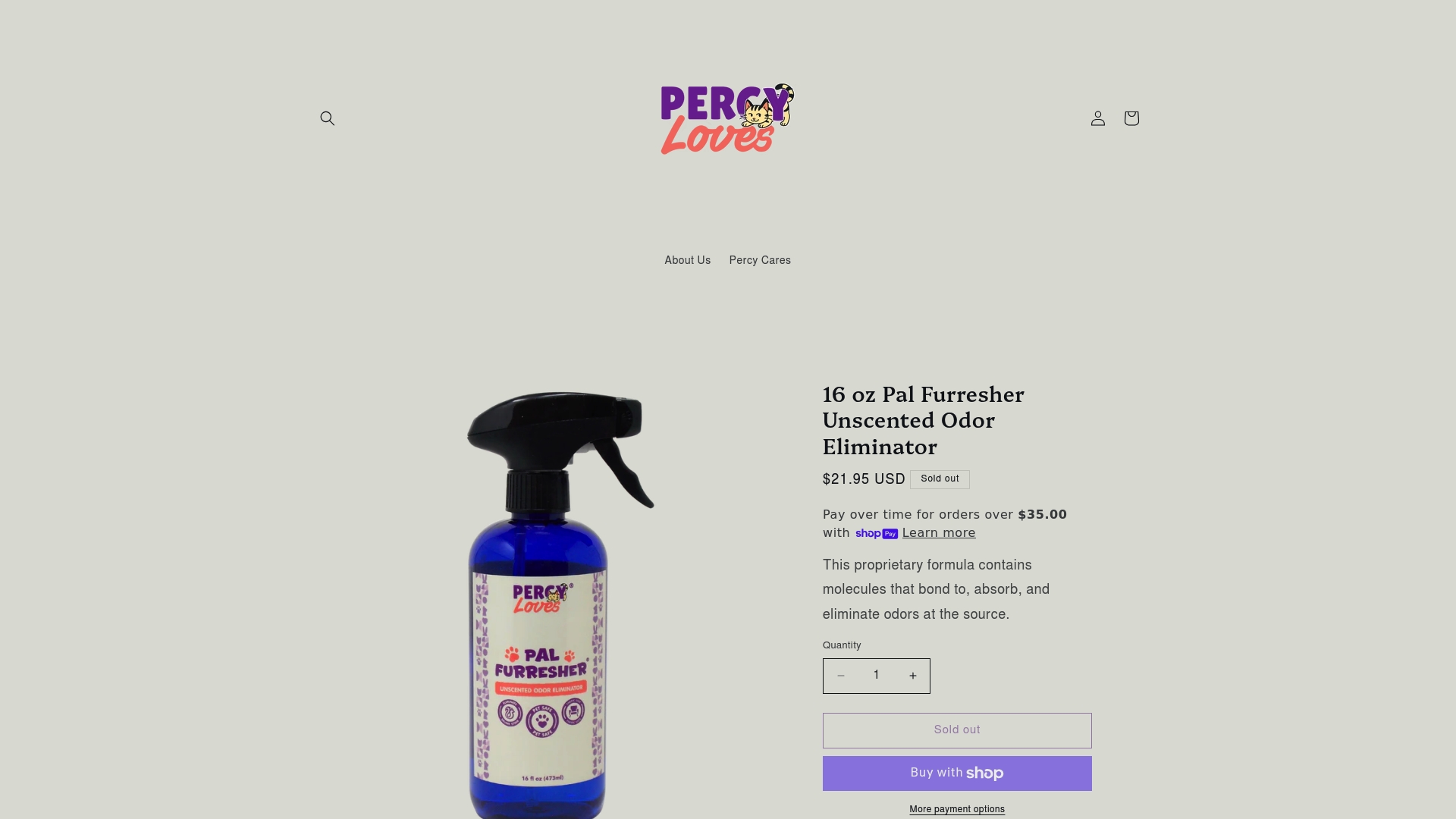
Whether you have one cat or five, Pal Furresher fits into any routine. Spray it on bedding, near the litter area, or anywhere your cat hangs out. Our unscented odor control formula is available in both 4 oz and 16 oz sizes, so you can start small or stock up. No harsh chemicals. No masking. Just a fresher, safer home for the whole family.
Frequently asked questions
What causes persistent cat litter odors even with frequent cleaning?
Persistent odors are often caused by improper litter depth, waste trapped in porous materials, or underlying cat health issues not addressed by routine cleaning. Natural litters like corn, wood, and grass absorb moisture and neutralize odors more effectively than clay alternatives.
How often should I change my cat’s litter for best odor control?
Scoop twice daily, maintain 3 to 4 inches of litter depth, and do a full litter change every 7 to 14 days for maximum odor reduction. Daily scooping and proper depth can reduce odors by up to 90%.
Are probiotic litters safer for my pets?
Yes, modern probiotic litters neutralize odors without harsh chemicals and are recommended for sensitive cats in 2026. 2026 trends favor probiotic-enhanced litters and carbon additives for sustained, fragrance-free control.
When is cat box odor a sign I should see the vet?
See your vet if odors persist despite cleaning, or are accompanied by signs of distress, urine changes, or blood. Persistent odors or urinary tract signs may indicate conditions like feline idiopathic cystitis, UTI, or bladder stones that require prompt care.
Recommended
- How to make your home pet-safe and odor-free in 2026 – Percy Loves
- Pet wellness and odor control: safe products guide 2026 – Percy Loves
- Pet wellness and cleanliness guide for safe odor control 2026 – Percy Loves
- Safe pet hygiene methods to eliminate cat odors 2026 – Percy Loves
- How to Keep Pets Safe Indoors: 5 Essential Steps – iPupPee


