

Cat Hygiene Maintenance Guide: Keep Your Home Fresh
You scoop the litter box every day, brush your cat regularly, and still catch whiffs of that unmistakable funk. Sound familiar? Most cat owners face this challenge, and it’s not just about odor. Poor hygiene routines can lead to hairballs, matted fur, and even health issues for your furry friend. The good news? A few simple, safe practices can transform your home into a fresh, healthy space for both you and your cat. This guide walks you through everything from litter box setup to grooming basics, troubleshooting multi-cat homes, and choosing products that actually work without harsh chemicals.
Table of Contents
- What you need for optimal cat hygiene
- Litter box setup and daily maintenance
- Brushing, bathing, and grooming: Step-by-step
- Nail trimming, ear cleaning, and oral care basics
- Troubleshooting and advanced tips: Multi-cat homes, senior cats, and common mistakes
- Safe, effective odor control for your cat and home
- Frequently asked questions
Key Takeaways
| Point | Details |
|---|---|
| Daily litter care is essential | Scooping every day eliminates 90 percent of odors and keeps cats using the box. |
| Choose unscented, low-dust products | Unscented clumping clay litter and gentle cleaning agents protect feline health and comfort. |
| Regular grooming prevents issues | Brushing and as-needed bathing reduce shedding, mats, and hairballs for all cat breeds. |
| Adapt for seniors and multi-cat homes | Adjust routines and setup for older cats or homes with several cats to reduce stress and accidents. |
| Use cat-safe odor eliminators | Specialized products keep your home and cat environment fresh without risking toxicity. |
What you need for optimal cat hygiene
Before you start any routine, gather the right tools. The wrong products can irritate your cat’s skin, trigger respiratory issues, or simply fail to control odors. Here’s what you need and why each item matters.
Essential supplies for every cat owner:
- Unscented clumping clay litter for superior odor control
- Sturdy scoop with slots for easy sifting
- Mild, unscented soap for box cleaning
- Slicker brush for long-haired cats, rubber brush for short-haired
- Cat-safe shampoo (only for rare baths)
- Nail trimmers designed for cats
- Styptic powder for nail accidents
- Soft towels and a non-slip mat
| Product Type | Best For | Why It Works |
|---|---|---|
| Unscented clumping clay litter | All cats, especially sensitive noses | Reduces respiratory risks, preferred by most cats |
| Slicker brush | Long-haired breeds | Removes mats and loose fur efficiently |
| Rubber brush | Short-haired cats | Gentle massage while collecting shed hair |
| Low-entry litter box | Senior or arthritic cats | Easy access reduces stress and accidents |
Why unscented? Cats have incredibly sensitive noses. Scented litters can overwhelm them and lead to box avoidance. The same goes for cleaning products. Stick with mild, unscented soap and avoid anything with ammonia or bleach, which can intensify urine smells and harm your cat.
For older cats or those with mobility issues, consider low-entry boxes and softer brushes. Arthritis makes jumping painful, and stiff bristles can irritate aging skin. Small adjustments like these keep your senior cat comfortable and using the box consistently.
Pro Tip: Create a dedicated hygiene kit with all your supplies in one portable caddy. You’ll save time and never hunt for the nail trimmers again. Keep it stocked and ready for weekly grooming sessions.
Need more guidance on pet-safe home essentials? Check out our complete setup guide. For deeper insights into safe odor elimination, we’ve got you covered. The ASPCA cat care tips also offer excellent foundational advice.
Litter box setup and daily maintenance
With supplies ready, your next step is to establish effective daily routines to prevent odors and keep your cat content. Location, frequency, and cleaning method all play huge roles in whether your cat uses the box happily or starts avoiding it.
Daily and weekly litter box tasks:
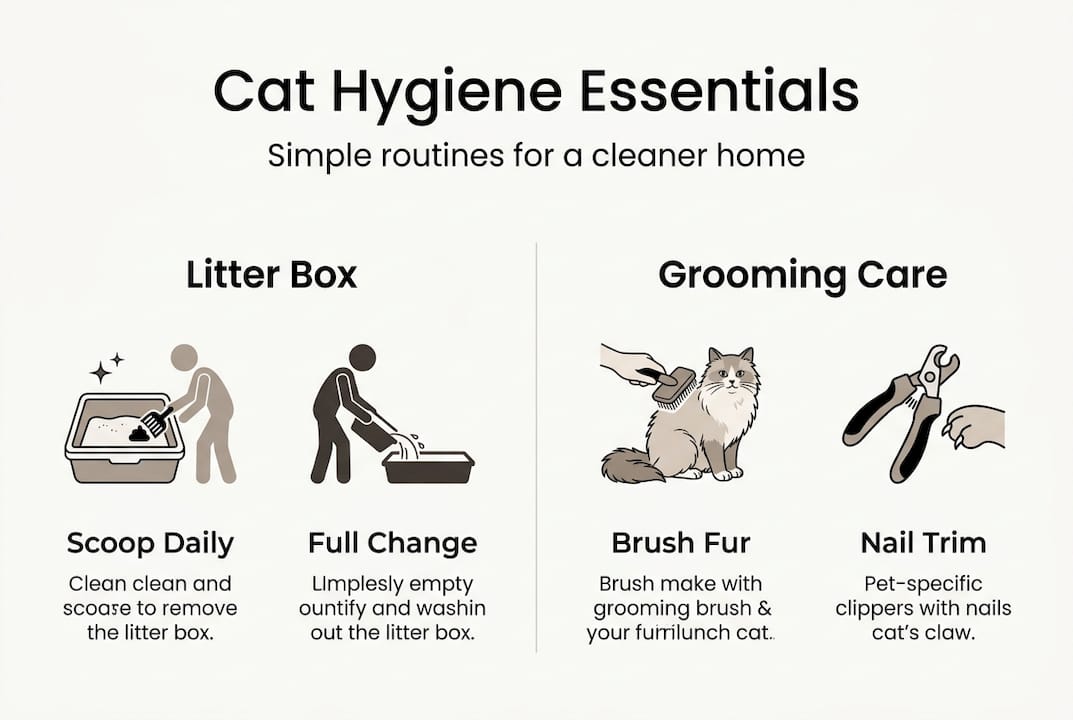
- Scoop litter boxes daily (twice for multi-cat homes) to prevent odor buildup
- Check litter depth and add fresh litter as needed
- Wipe box edges with unscented soap weekly
- Full litter change every 1-4 weeks depending on household size
- Deep clean the box with mild soap monthly
| Household Type | Scoop Frequency | Full Change |
|---|---|---|
| Single cat | Once daily | Every 2-3 weeks |
| Two cats | Twice daily | Every 1-2 weeks |
| Three or more cats | Twice daily minimum | Weekly |
Where you place the box matters just as much as how often you clean it. Cats prefer quiet, low-traffic areas away from their food and water. Avoid basements or laundry rooms with loud appliances. If your cat stops using the box, location stress is often the culprit.
For multi-cat homes, provide N+1 litter boxes to prevent territorial stress. Three cats? You need four boxes. Spread them across different rooms so no single cat can guard all the boxes. This simple rule prevents most multi-cat litter issues.
“Daily scooping isn’t just about smell. It signals to your cat that their space is clean and safe, which reduces stress and prevents urinary issues.”
Pro Tip: Set a phone reminder for litter scooping at the same time each day. Consistency helps you catch problems early and keeps odors from building up overnight.
Never use ammonia or bleach when cleaning boxes. Ammonia smells like urine to cats and can encourage them to mark elsewhere. Bleach creates toxic fumes and can irritate paws. Stick with hot water and unscented dish soap for the safest, most effective clean.
Want a complete litter box cleaning routine? Our detailed guide breaks down every step. For a broader approach, check out our odor-free cleaning checklist. Petfinder cat care also offers practical maintenance tips.
Brushing, bathing, and grooming: Step-by-step
After litter care, regular grooming keeps your cat comfortable and your home cleaner. Brushing removes loose fur before it lands on your couch or forms hairballs in your cat’s stomach. Bathing is rarely needed, but when it is, doing it right prevents stress for both of you.
Brushing frequency by coat type:
- Short-haired cats: weekly brushing to reduce shedding and hairballs
- Long-haired cats: daily or every other day to prevent mats
- Senior cats: more frequent, gentler sessions to help with self-grooming decline
Step-by-step brushing routine:
- Choose a calm time when your cat is relaxed
- Start with gentle strokes along the back and sides
- Work up to more sensitive areas like belly and legs
- Check for mats, especially behind ears and under arms
- Use a slicker brush for long hair, rubber brush for short
- Reward with treats or playtime after each session
Mats can form quickly in long-haired cats, especially during seasonal shedding. If you find a small mat, gently work it out with your fingers or a mat splitter. Never pull or cut mats with scissors near the skin. For large or stubborn mats, a professional groomer can help.
“Regular brushing isn’t just cosmetic. It distributes natural oils, reduces hairballs, and gives you a chance to check for lumps, bumps, or skin issues early.”
When and how to bathe your cat:
Most cats never need a bath. They’re self-cleaning pros. However, bathe rarely if soiled or if you have a Sphynx, which needs regular skin cleaning. Use only cat-safe shampoo, never human products, which can irritate feline skin.
- Fill a sink or tub with 3-4 inches of lukewarm water
- Place a non-slip mat on the bottom
- Wet your cat gently, avoiding the face
- Apply a small amount of cat shampoo and lather
- Rinse thoroughly, ensuring no residue remains
- Wrap in a towel and dry in a warm, quiet room
Pro Tip: If your cat hates baths, try waterless grooming wipes for spot cleaning. They’re safer and less stressful for cats who only need occasional freshening up.

For more on safe grooming routines, we’ve outlined every step. Our efficient grooming workflow helps you save time while keeping your cat comfortable. The ASPCA’s weekly grooming tasks offer additional guidance.
Nail trimming, ear cleaning, and oral care basics
Beyond coat care, complete your hygiene routine with simple nail, ear, and dental checks. These quick tasks prevent painful overgrowth, infections, and dental disease while giving you a chance to spot health issues early.
Step-by-step nail trimming:
- Hold your cat gently in your lap or on a stable surface
- Press the paw pad to extend the claws
- Identify the pink quick inside each nail
- Trim only the clear, curved tip, staying 2mm from the quick
- If you cut too far and bleeding occurs, apply styptic powder immediately
- Reward with treats after each paw
Trim nails every 2-4 weeks to prevent overgrowth, which can curl into paw pads and cause pain. If your cat resists, trim just one or two nails per session and build up gradually. Patience beats force every time.
Ear and dental checks:
- Check ears weekly for redness, discharge, or odor
- Wipe outer ear gently with a damp cloth if needed
- Never insert anything into the ear canal
- Inspect teeth and gums for tartar, redness, or bad breath
- Offer dental treats or toys to reduce plaque buildup
“Routine checks during grooming sessions help you catch infections, dental disease, or other issues before they become expensive emergencies.”
If you notice persistent ear odor, head shaking, or inflamed gums, schedule a vet visit. These symptoms can indicate infections or dental disease that need professional treatment. Early detection saves money and keeps your cat comfortable.
Pro Tip: Make nail trimming easier by getting your cat used to paw handling from a young age. Touch and hold paws gently during cuddle time so trimming feels like a normal part of bonding.
For broader pet cleaning safety tips, our guide covers everything from product selection to handling techniques. Petfinder grooming tips also provide helpful step-by-step advice.
Troubleshooting and advanced tips: Multi-cat homes, senior cats, and common mistakes
Even the best routines face surprises. Here’s how to handle the toughest challenges and keep every cat healthy and happy, whether you’re managing multiple cats, caring for seniors, or dealing with sudden behavior changes.
Common mistakes that lead to odor or stress:
- Skipping daily litter scooping, allowing odors to build
- Using scented litter or harsh cleaning products
- Placing boxes in high-traffic or noisy areas
- Not providing enough boxes in multi-cat homes
- Ignoring early signs of box avoidance or health issues
Solutions for challenging scenarios:
- Box avoidance: Check for medical issues first, then evaluate litter type, box location, and cleanliness
- Multi-cat stress: Add more boxes, create vertical territory with cat trees, and ensure each cat has private space
- Senior cat needs: Older cats need low-entry boxes and more frequent grooming help as self-care declines
- Accidents outside the box: Clean with an odor eliminator, never punish, and address underlying stress or health problems
| Challenge | Quick Fix | Long-Term Solution |
|---|---|---|
| Multi-cat territorial stress | Add one more box immediately | Create separate feeding and box zones |
| Senior cat mobility issues | Switch to low-entry box | Add ramps, softer brushes, more grooming help |
| Persistent odor despite cleaning | Use cat-safe odor eliminator | Review litter type, scooping frequency, and box placement |
“The cost of skipping daily maintenance isn’t just smell. It’s vet bills for urinary infections, stress-related behavior issues, and replacing furniture your cat marked because the box was too dirty.”
Pro Tip: If your cat suddenly stops using the box, rule out medical issues like urinary tract infections or arthritis before assuming it’s behavioral. A quick vet visit can save weeks of frustration.
For more on handling maintenance challenges, our complete guide covers every scenario. The Merck Vet Manual’s senior cat litter box advice offers excellent medical context.
Safe, effective odor control for your cat and home
Now that your maintenance routine is robust, go one step further with the safest, most effective products for a fresh home. Daily scooping and regular grooming handle most odors, but sometimes you need extra help, especially in multi-cat homes or during litter box transitions.
The humans at Percy Loves created Pal Furresher because Percy, our real-life office cat, had a real-life funk problem. We needed something that worked at the source, not just masked smells with perfumes. That’s why our unscented odor eliminator is fragrance-free and lick-safe.

Why unscented matters: Cats have 200 million scent receptors compared to our 5 million. Fragrances that smell pleasant to us can overwhelm them and trigger box avoidance. Pal Furresher tackles odors at the molecular level without adding any scent, so your cat stays comfortable and your home stays fresh.
Whether you need a travel-friendly size or a larger bottle for daily use, our 16 oz and 4 oz size options fit every routine. Use it on litter box areas, cat beds, carriers, or anywhere funk lingers. It’s safe for cats, safe for you, and actually works.
Ready to take control of odors without compromising your cat’s health? Shop cat-safe solutions and discover why thousands of cat parents trust Percy Loves for their toughest hygiene challenges.
Frequently asked questions
How often should I change my cat’s litter completely?
For one cat, a full litter change is needed every 2-3 weeks; for multi-cat homes, every 1-2 weeks, depending on litter type and use.
Do cats actually prefer unscented litter?
Yes, most cats have sensitive noses and overwhelmingly prefer unscented clumping clay litter, which also reduces the risk of rejection or health issues.
How do I manage cat hygiene for elderly or disabled cats?
Use low-entry boxes, groom more frequently, and monitor for signs of stress or health changes closely.
Should I use bleach or ammonia to clean my cat’s box?
No, always use mild, unscented soap; bleach and ammonia can harm your cat and intensify smells.
What’s the best way to reduce cat odors safely?
Scoop the litter daily, use unscented litter, and rely on cat-safe odor eliminators for the most consistent, safe results.


