

Efficient pet grooming workflow for safe hygiene in 2026
Managing your pet’s grooming routine shouldn’t feel overwhelming or chaotic. Many pet parents struggle with disorganized sessions that stress both them and their furry companions, often missing crucial hygiene steps or using products that compromise safety. This guide delivers a streamlined, step-by-step grooming workflow designed specifically for home care, emphasizing safe products and efficient techniques. You’ll learn how to prepare properly, execute each grooming stage with confidence, and maintain your pet’s cleanliness between sessions. By following this practical framework, you’ll transform grooming from a dreaded chore into a manageable routine that supports your pet’s health and keeps them fresh.
Table of Contents
- Gathering Essential Tools And Safe Products
- Step-By-Step Pet Grooming Workflow For Home Care
- Avoiding Common Grooming Mistakes And Troubleshooting
- Maintaining Pet Hygiene And Odor Control Between Grooming Sessions
- Discover Percy Loves Grooming Products For Your Pet
- What Is The Ideal Frequency For Pet Grooming?
- How Can I Calm My Pet During Grooming?
- Are Unscented Odor Eliminators Safe For All Pets?
- What Should I Do If My Pet Has Severe Matting?
Key takeaways
| Point | Details |
|---|---|
| Organized preparation saves time | Gathering all tools and safe products before starting prevents interruptions and reduces pet stress during grooming sessions. |
| Step-by-step approach ensures thoroughness | Following a structured sequence from brushing through drying guarantees complete cleanliness without missing critical hygiene areas. |
| Avoiding common mistakes protects pets | Recognizing errors like improper handling or harsh products prevents injuries and maintains your pet’s comfort throughout grooming. |
| Regular maintenance extends freshness | Simple daily actions and safe odor control between full grooming sessions keep pets hygienic and your home pleasant. |
Gathering essential tools and safe products
Before you begin any grooming session, assembling the right equipment creates a foundation for efficiency and safety. Your toolkit should include a slicker brush for detangling, nail clippers sized appropriately for your pet, stainless steel combs for finishing touches, absorbent microfiber towels, and a low-noise blow dryer with adjustable heat settings. Don’t overlook ear cleaning solution, cotton balls, and pet-safe shampoo formulated without harsh chemicals. Having everything within arm’s reach eliminates the frustration of searching mid-session while your wet pet waits.
Choosing safe products matters as much as selecting quality tools. Using the right grooming tools and safe odor eliminators supports pet wellness and keeps pets odor-free without exposing them to synthetic fragrances or irritating ingredients. Unscented odor eliminators work at the molecular level to neutralize smells rather than masking them with perfumes that can trigger respiratory sensitivity. When selecting shampoos, look for pH-balanced formulas specifically designed for pet skin, which differs significantly from human skin chemistry.
Organizing your workspace before grooming begins pays dividends in reduced stress and faster completion times. Set up a designated grooming area with non-slip mats to prevent your pet from sliding during bathing or trimming. Arrange tools in the order you’ll use them, keeping sharp implements like clippers safely stored until needed. Fill containers with lukewarm water ahead of time so you’re not adjusting temperatures while managing a nervous animal.
Essential grooming tools checklist:
- Slicker brush and deshedding tool for coat preparation
- Pet-safe nail clippers with safety guards
- Stainless steel comb for final coat smoothing
- Microfiber towels for efficient moisture absorption
- Low-noise blow dryer with cool and warm settings
- Ear cleaning solution and cotton balls
- pH-balanced, unscented pet shampoo
- Non-slip mat for bathing area safety
- Treats for positive reinforcement throughout session
| Tool Category | Primary Function | Safety Consideration |
|---|---|---|
| Brushes and combs | Remove loose fur and prevent matting | Use gentle pressure to avoid skin irritation |
| Nail care | Maintain proper nail length | Avoid cutting into the quick which causes bleeding |
| Bathing supplies | Clean coat and skin thoroughly | Test water temperature on your wrist first |
| Drying equipment | Remove moisture to prevent skin issues | Keep dryer moving to avoid heat concentration |
Pro Tip: Create a grooming caddy with all your supplies so you can transport everything in one trip, making setup and cleanup significantly faster while ensuring nothing gets forgotten.
Step-by-step pet grooming workflow for home care
Starting with proper preparation sets the tone for a successful grooming session. Begin by following a structured grooming sequence that reduces pet stress and improves overall hygiene through predictable, gentle handling. This systematic approach helps your pet understand what to expect, making future sessions progressively easier.
Complete grooming sequence:
-
Pre-bath brushing and inspection: Thoroughly brush your pet’s entire coat to remove loose fur, mats, and debris before water touches their skin. This step prevents tangles from tightening when wet, which makes post-bath brushing painful. While brushing, check for skin abnormalities, lumps, or parasites that might need veterinary attention.
-
Bathing with proper technique: Place your pet in the tub or sink on a non-slip mat, then wet their coat completely using lukewarm water tested on your wrist. Apply pet-safe shampoo starting from the neck and working backward, avoiding eyes and ears entirely. Massage the shampoo into the skin using circular motions to lift dirt and distribute natural oils.
-
Thorough rinsing process: Rinse every trace of shampoo from your pet’s coat, as residue causes itching and skin irritation. Pay extra attention to underarms, belly, and leg areas where soap tends to hide. Continue rinsing until the water runs completely clear and the coat feels squeaky when you run your fingers through it.
-
Strategic drying approach: Gently squeeze excess water from the coat using your hands, then wrap your pet in absorbent towels and pat dry rather than rubbing vigorously. Use a blow dryer on the lowest heat setting, keeping it moving constantly and maintaining at least six inches of distance from the skin. Ensure the coat is completely dry, especially in dense-furred breeds prone to hot spots.
-
Nail trimming and paw care: Once your pet is calm and dry, trim nails at a 45-degree angle, removing only the curved tip to avoid the quick. If you accidentally cut too short and bleeding occurs, apply styptic powder immediately. Check between paw pads for debris or matted fur that needs trimming.
-
Ear cleaning and final inspection: Use a veterinarian-approved ear cleaning solution on a cotton ball to gently wipe visible portions of the ear canal. Never insert anything deep into the ear. Finish by brushing the dry coat one final time and checking that all areas received proper attention.
Pro Tip: Keep high-value treats nearby and offer them after completing each major step, creating positive associations that make your pet more cooperative during future grooming sessions.
Safety Warning: Always test water temperature on the inside of your wrist before directing it toward your pet. Water that feels comfortable to your hand may be too hot for sensitive pet skin. When trimming nails, work in good lighting and trim conservatively, as cutting the quick causes pain and bleeding that can make your pet nail-trim resistant.
Avoiding common grooming mistakes and troubleshooting
Even well-intentioned pet parents make errors that compromise grooming effectiveness and pet comfort. Awareness of common grooming pitfalls can prevent injuries and stress in pets, transforming your approach from reactive to proactive. Recognizing these mistakes early helps you adjust techniques before they become ingrained habits.
Improper drying ranks among the most frequent errors, with many people either rushing the process or using excessive heat. Leaving moisture trapped in dense coats creates the perfect environment for bacterial and fungal growth, leading to hot spots and skin infections. Similarly, using human shampoo disrupts your pet’s skin pH balance, stripping protective oils and causing dryness or irritation. The wrong products might seem to work initially but create long-term skin problems.
Awkward handling and restraint techniques stress pets unnecessarily and can result in injuries. Gripping too tightly, lifting improperly, or forcing a frightened animal into uncomfortable positions damages trust and makes future grooming sessions progressively harder. Many pet parents also skip the pre-bath brushing step, discovering too late that wet mats become impossible to remove without causing significant discomfort.
| Common Mistake | Safe Practice |
|---|---|
| Using human shampoo products | Select pH-balanced formulas designed specifically for pet skin chemistry |
| Rushing through drying process | Ensure complete dryness, especially in undercoat and skin folds |
| Skipping pre-bath brushing | Always detangle and remove loose fur before wetting the coat |
| Cutting nails too short | Trim conservatively, removing only the curved tip beyond the quick |
| Forcing anxious pets to continue | Take breaks and use positive reinforcement rather than restraint |
Troubleshooting strategies for challenging situations:
- For pets who hate water, start with damp washcloth baths to build tolerance before attempting full immersion
- If your pet resists nail trimming, handle paws daily during calm moments to desensitize them gradually
- When dealing with severe matting, work from the outside in using detangling spray rather than pulling from the base
- For anxious behaviors, break grooming into multiple short sessions instead of one lengthy ordeal
- If your pet shows signs of overheating during drying, switch to cool air and take frequent breaks
Recognize that not every grooming session will go perfectly, especially when you’re establishing new routines. Patience and consistency matter more than achieving flawless results immediately. Each positive experience builds your pet’s confidence and cooperation, while rushed or stressful sessions create setbacks that take weeks to overcome. Celebrate small victories and gradually extend session length as your pet becomes more comfortable.
Pro Tip: Keep a grooming journal noting what worked well and what triggered stress responses, allowing you to refine your approach based on your specific pet’s preferences and sensitivities rather than generic advice.
Maintaining pet hygiene and odor control between grooming sessions
Full grooming sessions every four to six weeks provide deep cleaning, but daily maintenance keeps your pet fresh and prevents hygiene issues from developing between baths. Regular hygiene maintenance and safe odor control contribute to pet wellness and household freshness without requiring extensive time investments. These small, consistent actions compound into significant improvements in your pet’s overall cleanliness.
Daily brushing serves multiple purposes beyond removing loose fur. It distributes natural skin oils throughout the coat, promotes healthy circulation, and gives you regular opportunities to check for lumps, cuts, or parasites. Spending just five minutes each day brushing prevents the mat formation that makes full grooming sessions difficult. For pets who shed heavily, this routine dramatically reduces the amount of fur accumulating on furniture and floors.
Paw care between grooming sessions prevents dirt and debris from spreading throughout your home. Wipe your pet’s paws with a damp cloth after outdoor activities, paying special attention to the spaces between pads where mud and small stones collect. This simple habit takes less than a minute but stops tracked-in mess before it becomes embedded in carpets. During winter months or in areas with chemical lawn treatments, paw wiping also removes potentially harmful substances your pet might otherwise lick off.
Daily and weekly maintenance actions:
- Brush coat for five minutes daily to prevent matting and distribute natural oils
- Wipe paws after outdoor activities to remove dirt and potential irritants
- Check and clean ears weekly using veterinarian-approved solutions
- Inspect teeth and gums, introducing tooth brushing gradually if not yet established
- Apply safe, unscented odor eliminators to bedding and favorite resting spots
- Monitor for changes in skin condition, coat quality, or unusual odors signaling health issues
- Refresh water bowls twice daily to prevent bacterial growth and encourage hydration
Safe odor control products make a substantial difference in maintaining freshness without exposing your pet to harsh chemicals. Unscented formulas eliminate odors at the molecular level rather than covering them with artificial fragrances that can irritate sensitive respiratory systems. Apply these products to pet bedding, crates, and areas where your pet spends significant time, allowing them to dry completely before your pet returns.
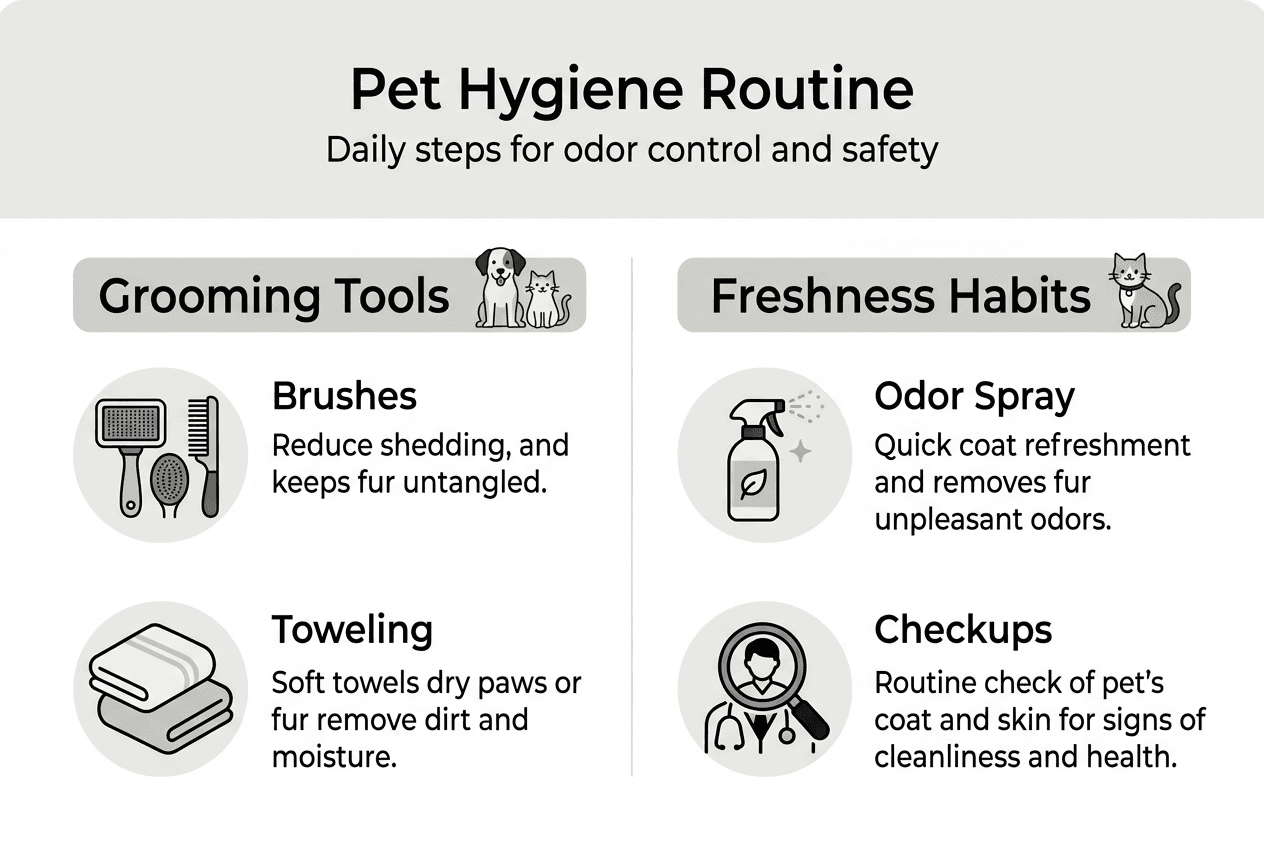
Regular veterinary checkups complement your home hygiene routine by catching health issues before they become serious. Many odor problems and skin conditions stem from underlying medical issues that grooming alone cannot resolve. Your veterinarian can identify ear infections, dental disease, or metabolic conditions that manifest as unusual smells or coat changes. Schedule wellness exams at least annually, or more frequently for senior pets or those with chronic conditions.
Establishing these maintenance habits requires initial effort but quickly becomes second nature. Most pet parents find that spending ten minutes daily on preventive care eliminates the need for emergency grooming sessions triggered by neglect. Your pet benefits from consistent attention, and you enjoy a cleaner home environment without the stress of marathon grooming sessions.
Discover Percy Loves grooming products for your pet
Now that you understand the complete grooming workflow, consider how Percy Loves products support your hygiene routine with safe, effective solutions. Our 4 oz Pal Furresher odor eliminator offers convenient portability for spot treatments and travel, while the 16 oz Pal Furresher odor eliminator provides excellent value for regular household use.

Formulated specifically for sensitive pets, Pal Furresher eliminates odors at the source without masking them with fragrances that irritate respiratory systems. The lick-safe formula means you can apply it confidently to bedding, furniture, and even directly on your pet’s coat between baths. Explore our complete range of pet care solutions at Percy Loves to discover how quality products simplify your grooming routine while prioritizing your pet’s safety and comfort.
What is the ideal frequency for pet grooming?
Grooming frequency depends primarily on your pet’s breed, coat type, and lifestyle factors. Short-haired breeds with minimal shedding typically need full grooming every six to eight weeks, while long-haired or double-coated breeds benefit from sessions every four to six weeks. Pets who spend significant time outdoors or have skin conditions may require more frequent attention. Adjust your schedule based on how quickly your pet’s coat becomes dirty or matted rather than following rigid timelines.
How can I calm my pet during grooming?
Maintaining a calm environment with familiar scents and quiet background sounds helps anxious pets relax during grooming. Use gentle handling throughout the process, taking frequent breaks if you notice stress signals like panting, trembling, or attempts to escape. Offer high-value treats after completing each step to create positive associations. Some pets respond well to calming supplements or pheromone sprays, though you should consult your veterinarian before introducing new products.
Are unscented odor eliminators safe for all pets?
Quality unscented odor eliminators formulated specifically for pets are safe for dogs, cats, and other household animals when used as directed. These products avoid synthetic fragrances and harsh chemicals that trigger respiratory irritation or skin sensitivity. Always perform a patch test on a small area before widespread application, especially with pets who have known allergies or sensitivities. If your pet shows any adverse reaction, discontinue use immediately and consult your veterinarian.
What should I do if my pet has severe matting?
Severe mats require patience and often professional intervention to remove safely without causing pain or skin damage. Never attempt to cut out large mats with scissors, as you risk cutting your pet’s skin, which lies closer to the surface than you might expect. Work on small sections at a time using a detangling spray and metal comb, starting from the outer edges and gradually working toward the base. For extensive matting, especially near sensitive areas, schedule an appointment with a professional groomer who has the proper tools and experience to handle the situation safely.


