

Choose Unscented, Enzyme Free Pet Sprays to Protect Sensitive Pets
Safety is the single most important factor when you choose or use any pet spray, full stop. The safest route is an unscented, enzyme-free formula, applied correctly, with pets kept away until the treated surface is completely dry. Everything else, from scent to price to marketing claims, is secondary to that.
TL;DR:
- Most pet sprays require full surface drying and species-specific label instructions to ensure safe use and prevent accidental ingestion or inhalation.
- Ingredients like essential oils, alcohols, and certain pesticides can cause severe reactions or toxicity in small or sensitive pets, especially cats and birds.
- Applying sprays directly to pets increases risk; instead, mist your hand and rub it into their coat, and always ventilate thoroughly before pet re-entry.
- Unscented, enzyme-free formulas like Pal Furresher reduce crucial irritant sources and are safer options for multi-pet households with delicate animals.
- Proper storage, disposal, and limiting repeated low-level exposure over time are key to minimizing long-term health risks from pet spray chemicals.
Table of Contents
- Why the role of safety in pet sprays matters more than the label suggests
- Ingredients and scents that deserve a second look
- How to spray without turning a fix into a hazard
- Why unscented, enzyme-free formulas are the safer default
- Cats, birds, and small mammals need different rules
- When exposure happens: what to watch for and who to call
- What safety-first product design actually looks like
- Pet spray rules aren’t the same everywhere
- Storing and disposing of pet sprays without creating a new hazard
- What repeated exposure over time can mean for your pet
- Natural doesn’t automatically mean safer
- A safer choice for the whole household, sensitive pets included
- A fellow pet parent’s final safety checklist
- Sources
- FAQ
Why the role of safety in pet sprays matters more than the label suggests
“Pet-safe” on a bottle is a marketing phrase, not a legal guarantee. It tells you the manufacturer believes the product is fine for animals under normal use, but it doesn’t tell you the conditions that make that true. Real safety information lives in the fine print: which species the product is approved for, how long to keep pets off the surface, and whether the room needs airflow while it dries.
The National Pesticide Information Center puts it plainly: many products are only safe once they’ve fully dried, and staying wet is exactly when they’re riskiest. This detail is key for how you handle pet spray products.
Before you spray anything, check the label for:
- The active ingredient name (not just the brand name)
- Which species the product is approved for (a canine flea spray isn’t automatically safe for cats or rabbits)
- Ventilation instructions or warnings about enclosed spaces
- The exact drying or contact time, in minutes or hours, not “let dry”
If a label skips any of these, that’s a signal to look for a different product, not to guess.
Ingredients and scents that deserve a second look
Some ingredients cause real, documented harm, and cats and small animals tend to be the most vulnerable. Essential oils top that list. Tea tree oil, eucalyptus, and similar concentrated plant oils can trigger seizures and liver or kidney damage in pets who lick or absorb them, according to the Merck Veterinary Manual. Cats lack the liver enzymes to break these oils down efficiently, which is why a product marketed as “natural” can still be dangerous for a cat.

Alcohols and hydrocarbons are the next category worth watching. Isopropanol, methanol, and the propellants in waterproofing sprays can cause chemical pneumonitis when inhaled indoors. Veterinary case reports published in the Journal of the American Veterinary Medical Association describe pulmonary injury after these products were used in small, closed rooms.
Pesticide sprays containing pyrethrins or pyrethroids fall into a gray zone. They’re safe when labeled and dosed for a specific species, but the same compound formulated for dogs can cause hypersalivation, tremors, or worse in cats.
Pro Tip: If a product’s ingredient list includes a scientific-sounding oil name you don’t recognize, look it up before you spray. “Natural” and “safe” are not the same word.
Fragrances and other volatile additives round out the list. Even when they aren’t classified as toxic, strong scents irritate sensitive airways and can make small mammals stressed enough to stop eating.
How to spray without turning a fix into a hazard
Getting the application right matters as much as picking the right product. A good spray, used carelessly, can still cause problems.
- Clear the space first. Remove food and water bowls, bedding, and toys before spraying, and move pets to another room.
- Spray the surface, not the pet. For grooming or coat sprays, mist your hand and rub it into the fur instead of aiming the nozzle at your dog’s face. The American Kennel Club notes that dogs’ noses are thousands of times more sensitive than ours, so a direct blast can genuinely overwhelm them.
- Ventilate and wait it out. Open a window or run a fan, and follow the label’s drying or contact time exactly. Some products are only safe once fully dry, per NPIC.
- Clean up afterward. Wipe excess residue, keep treated pets separated until the area is dry, and wash your own hands before touching your pet again.
Skipping step four is more common than you’d think, and it’s often where accidental licking or paw contact happens.
Why unscented, enzyme-free formulas are the safer default
Scented products aren’t automatically dangerous, but strong fragrances add a layer of risk that unscented formulas simply skip. A pet’s respiratory system and behavior can both react to heavy scent loads, showing up as sneezing, avoidance of a room, or general stress that has nothing to do with the ingredient’s actual toxicity.
We don’t recommend or reference enzyme-based products here at all. Percyloves builds every formula without enzymes as a deliberate choice. An enzyme-free, unscented approach removes two common sources of irritation at once: the fragrance load and the enzyme content some pets react to.
For everyday accidents, consider:
- Unscented, low-volatility sprays for spot treatment
- Steam cleaning for fabric and carpet when deeper treatment is needed
- Targeted odor eliminators applied directly to the source instead of the whole room
None of these require you to weigh a strong scent against your pet’s comfort.
Cats, birds, and small mammals need different rules
Body size and biology change the risk math completely. A spray that’s a minor irritant for a 60 pound dog can be a serious exposure for a two-pound guinea pig.
Cats lack certain liver enzymes, which makes them especially sensitive to essential oils and some pesticide compounds. Birds have famously delicate respiratory systems, so aerosols and diffusers should stay out of any room where they live, even briefly. Small mammals like rabbits, hamsters, and gerbils have a higher ratio of lung surface to body weight, meaning inhaled particles hit them harder per pound than they would a larger pet.
- Cats: skip essential oil sprays entirely, even “natural” ones
- Birds: no aerosols or diffusers in the same airspace, ever
- Small mammals: treat outside their enclosure and air the room before they return
When exposure happens: what to watch for and who to call
Most spray exposures resolve with a wash and some monitoring, but a few symptoms mean it’s time to move fast. Watch for severe respiratory distress, seizures, repeated vomiting, or collapse.
- Take a photo of the product label, including the active ingredient and batch number
- Call your veterinarian first if one is reachable
- Contact a regional poison control resource, such as NPIC, for guidance on specific chemicals
Having that label information ready saves precious minutes on the phone.
What safety-first product design actually looks like
Reading labels and following drying times matters, but the products you bring into the house matter just as much. We’ve written before about why pets groom after sprays and why that instinct raises ingestion risk with the wrong formula. That’s the exact problem Pal Furresher was built to sidestep.
Pal Furresher is unscented, enzyme-free, and lick-safe. It works by bonding to and absorbing odor molecules at the source, on contact, rather than covering them up or relying on a breakdown process over time.
A formula that skips fragrance and enzymes removes two of the most common irritant sources in one step. That’s not a marketing angle. It’s a design decision that lines up with everything NPIC and Merck recommend about reducing unnecessary exposure.
We go deeper into these safety-driven design choices here, including how the formula behaves around pets with sensitive skin or respiratory issues.
Pet spray rules aren’t the same everywhere
Regulations for pet products vary quite a bit depending on where you live, and that gap catches a lot of pet parents off guard. In the United States, the EPA requires pesticide-containing sprays to carry specific label instructions, including species approvals and directions for removing pets and their belongings before application. Products that make pesticide claims fall under EPA registration, while grooming and odor sprays without pesticidal claims are regulated more loosely, often through general consumer product safety rules rather than a pesticide-specific framework.
Other regions handle this differently. Veterinary product labels in the United Kingdom and European Union, for example, list detailed special precautions for pyrethrin-based sprays, including age and species restrictions that don’t always appear on similar products sold elsewhere, as shown in veterinary product safety documentation. That means a flea spray considered standard in one country might carry extra warnings, or be restricted for certain animals, in another.
The practical takeaway: don’t assume a product sold internationally carries identical safety testing or labeling standards everywhere. If you’re using an imported product, or traveling with pets, check the label for the country of origin’s specific instructions rather than relying on general assumptions about what “pet-safe” means. When in doubt, a product with clear, specific label language, regardless of where it’s made, is the safer bet over one with vague reassurances.
Storing and disposing of pet sprays without creating a new hazard
A bottle sitting on a low shelf is often a bigger risk than the spray itself, once you actually use it correctly. Store all pet sprays in a closed cabinet, out of paw’s reach, and away from heat sources, since some aerosol propellants are pressure-sensitive.

Keep the original packaging whenever possible. The label carries the active ingredient list and safety instructions you’d need in an emergency, and a bottle with a missing label is a lot harder to identify quickly if your pet gets into it.
For disposal, never pour leftover spray down a household drain or toss a pressurized can in regular trash if your local waste guidelines say otherwise. Many municipalities treat pesticide-containing sprays as household hazardous waste, with dedicated drop-off sites. Check your local sanitation department’s rules before tossing anything that lists an active pesticide ingredient.
A few habits that prevent accidental exposure at home:
- Recap bottles immediately after use, even mid-task
- Never transfer spray into an unlabeled container
- Keep sprays separate from food storage and pet treat areas
- Dispose of empty containers according to local hazardous waste guidance, not general recycling, when the label indicates pesticide content
None of this takes more than a few extra seconds, and it closes the gap between “used correctly” and “stored safely,” which is where a lot of accidental exposures actually happen.
What repeated exposure over time can mean for your pet
A single properly used spray is rarely the issue. The bigger question is what happens when a pet is exposed to the same chemicals, even in small amounts, week after week for years.
Repeated low-level exposure to volatile ingredients, fragrance compounds, and certain pesticide residues has been linked in veterinary toxicology literature to cumulative respiratory irritation, particularly in pets with existing sensitivities like asthma-prone cats or brachycephalic dog breeds. The concern isn’t usually a dramatic reaction. It’s a slow pattern of mild symptoms, occasional sneezing, a bit more scratching, restlessness in a treated room, that owners sometimes chalk up to allergies or aging rather than product exposure.
Diffusers deserve specific mention here, since they run continuously rather than as a one-time application. The Merck Veterinary Manual advises limiting diffuser runtime to under 30 minutes and keeping pets out of the room while active, since microdroplets settle on fur and skin, where they get ingested during normal grooming.
The safest long-term habit is minimizing what you introduce in the first place. Choosing unscented, enzyme-free formulas for daily odor control means you’re not layering a new chemical exposure onto your pet’s routine every time an accident happens. Fewer active ingredients circulating through the house, over months and years, is simply a lower-risk pattern than heavier scented or pesticide-based products used repeatedly in the same spaces.
Natural doesn’t automatically mean safer
“Natural” is one of the most misleading words on a pet product label, and it’s worth untangling before you make a choice based on it. A natural ingredient is still a chemical compound, and plenty of the riskiest substances for pets, like tea tree oil and eucalyptus, are entirely plant-derived.
Chemical or synthetic sprays get scrutinized more heavily precisely because they’re synthetic. Regulatory bodies require specific labeling, dosage information, and species warnings for many manufactured pesticide ingredients. Natural products don’t always carry the same testing requirements, which means a “100% natural” claim can sometimes hide less safety data, not more.
The real dividing line isn’t natural versus chemical. It’s concentration, species-appropriateness, and how the product is applied. A concentrated essential oil blend can be more dangerous to a cat than a properly labeled, EPA-registered flea treatment used exactly as directed. Meanwhile, an unscented, enzyme-free formula built around a simple bonding mechanism, rather than a strong essential oil base or a harsh solvent, sidesteps both extremes.
When you’re comparing two bottles, skip the natural versus chemical framing entirely. Look instead at the active ingredients, the species approvals, and whether the formula relies on fragrance or essential oils to do its job. That comparison tells you far more about actual safety than either word on the front label.
A safer choice for the whole household, sensitive pets included
If everything above has you rethinking what’s under your sink, here’s the good news: you don’t have to choose between effective odor control and peace of mind. Pal Furresher was built specifically for homes where fragrance and enzyme content are dealbreakers, not just preferences.
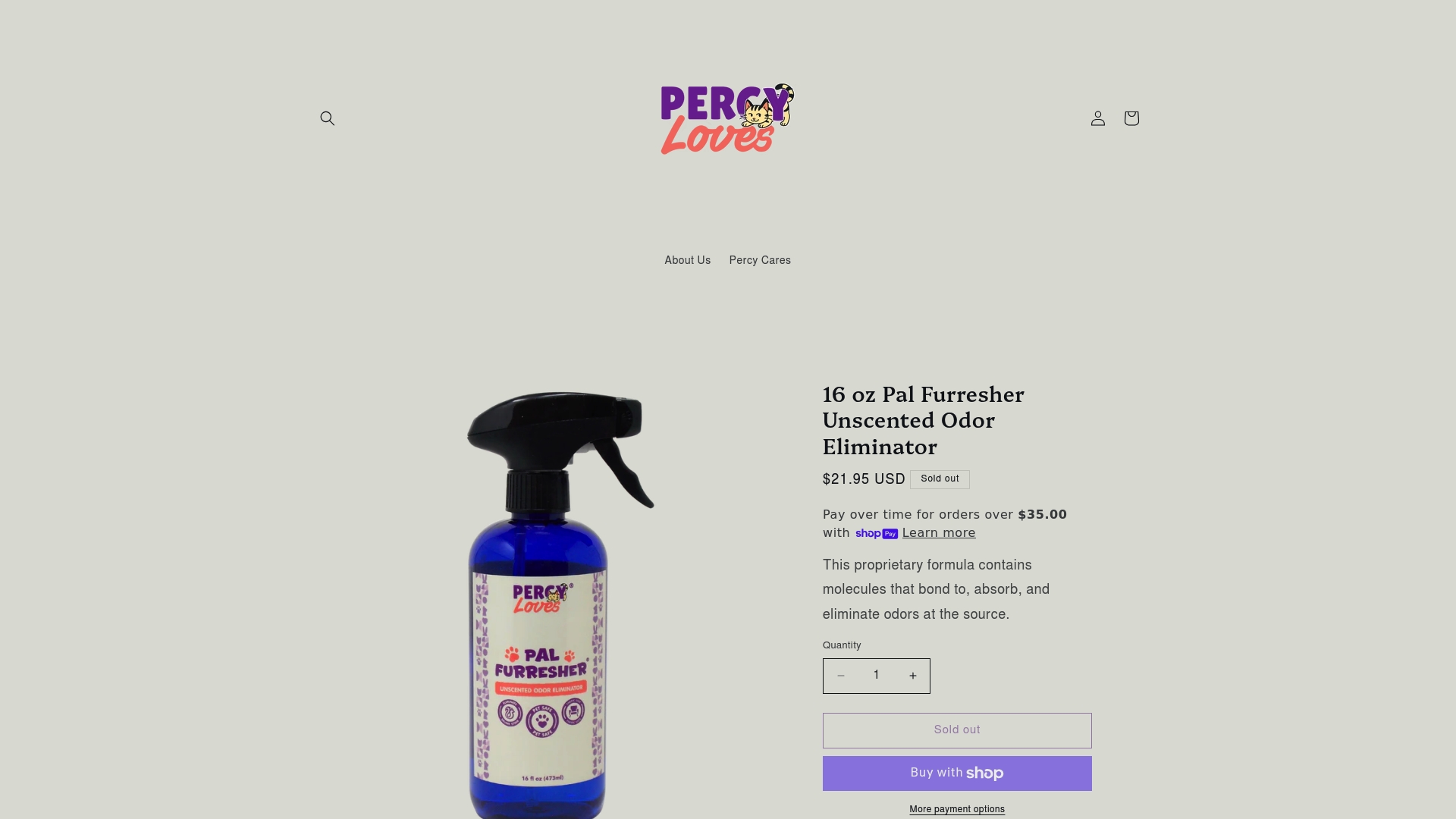
It’s unscented, enzyme-free, and lick-safe, and it works by bonding to and absorbing odor molecules the moment it makes contact, rather than masking them or relying on a slow enzymatic breakdown. That makes it a fit for multi-pet households, homes with birds or small mammals, and any pet parent who’s been burned by a strong-smelling spray that sent their cat sprinting from the room.
Use it the same way you’d apply any spray safely: mist the affected surface, let it sit per the label, and keep curious noses away until it’s dry. Grab the 16 oz size for regular use around the house, or start with the 4 oz bottle if you want to try it in one room first. Either way, you’re choosing a formula built around the same safety principles this whole article just walked through.
A fellow pet parent’s final safety checklist
Here’s what I’d tell any pet parent standing in the cleaning aisle: choose unscented and enzyme-free, read the label twice, keep pets away until surfaces are fully dry, adjust for your pet’s species and size, and call your vet the moment something feels off. Comfort matters, but your pet’s safety always comes first.
— Kathy
Sources
For deeper reading on pet spray safety, the National Pesticide Information Center covers drying times and ventilation. The Merck Veterinary Manual explains topical toxicity risks related to use of plant oils and other compounds in pets., the American Kennel Club details canine scent sensitivity, and the EPA outlines label-reading basics for pesticide products.
- National Pesticide Information Center — Pets and pesticide safety
- Merck Veterinary Manual — Principles of topical treatment in animals
- American Kennel Club — How to unleash your dog’s super sense of smell
FAQ
How long after pest spraying is it safe for pets?
It depends entirely on the label, since drying and contact times vary by product and active ingredient. As a general rule from NPIC, keep pets out of the treated area until the surface is completely dry, and always defer to the specific time printed on the bottle.
Are dog sprays safe?
Most dog sprays are safe when used exactly as labeled, but safety depends heavily on the ingredients and application method. Unscented, enzyme-free formulas reduce common irritants, and spraying onto your hand rather than directly at your dog’s face further lowers the risk of overwhelming their sensitive nose, according to the American Kennel Club.
What smell do dogs hate to pee and poop on?
There’s no single scientifically confirmed scent that reliably stops dogs from marking a spot, and claims about specific “hate” smells vary widely without strong backing. The more reliable approach is eliminating the odor at the source with an unscented, enzyme-free product like Pal Furresher, since dogs often remark spots where lingering scent traces remain.
What is the cleanest house pet?
“Cleanest” depends on grooming habits and odor control rather than species alone, since cats, rabbits, and many small mammals self-groom frequently and produce minimal odor when their environment is managed well. Consistent, safe cleanup, using unscented and enzyme-free products around litter boxes, cages, and bedding, matters more for a fresh-smelling home than the species you choose.


