

Cat hygiene guide: keep your cat and home fresh
You love your cat. But let’s be honest, sometimes the smell is a lot. Cats are famously clean animals, but even the most dedicated self-groomers need a little help from their humans. Neglected grooming leads to matted fur, skin issues, and odors that settle into your furniture, carpets, and air. The good news? A consistent hygiene routine keeps your cat healthy and your home smelling genuinely fresh. This guide walks you through everything, from the right tools to litter box strategies and odor elimination that actually works.
Table of Contents
- What you need for effective cat hygiene
- Step-by-step hygiene routine for your cat
- Litter box management and odor control
- Special cases and troubleshooting
- Enhance your cat hygiene routine with Percy Loves
- Frequently asked questions
Key Takeaways
| Point | Details |
|---|---|
| Supply essentials | Choose the right grooming tools and safe cleaning products for your cat’s needs. |
| Routine matters | Establish regular hygiene and odor control routines for a healthy cat and fresh-smelling home. |
| Odor elimination | Use enzymatic cleaners and proper litter box management to effectively banish cat odors. |
| Special care | Adapt hygiene routines for senior cats or high-risk households by adding extra precautions. |
What you need for effective cat hygiene
Before you start any routine, you need the right supplies. Grooming tools and cleaners vary based on your cat’s coat type and your household setup. Getting organized upfront saves time and prevents you from reaching for the wrong product at the wrong moment.
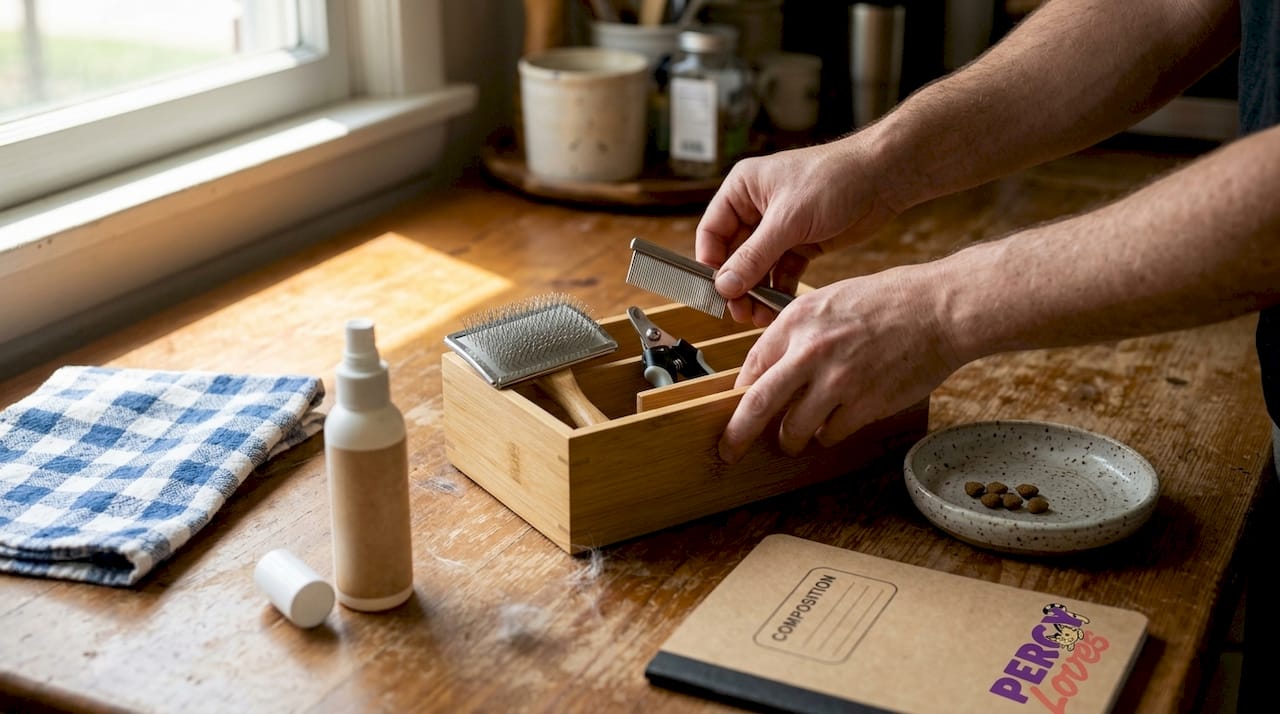
Here’s a quick breakdown of what to stock up on:
Grooming tools by coat type:
| Coat type | Recommended tool |
|---|---|
| Short-haired | Rubber grooming mitt or soft bristle brush |
| Long-haired | Wide-tooth comb and slicker brush |
| Double-coated | Deshedding tool (like a Furminator) |
| Hairless (e.g., Sphynx) | Soft cloth for skin wipe-downs |
Other essentials to have on hand:
- Cat-safe enzymatic cleaner for accidents and litter box areas
- Cat-specific toothbrush and toothpaste (never use human toothpaste)
- Nail clippers designed for cats
- Cotton balls for ear cleaning
- Unscented, fragrance-free odor eliminator spray
- Disposable gloves and a dust mask for litter box cleaning
- One litter box per cat, plus one extra
A critical note on pet cleaning safety: never use human cleaning products, bleach-based sprays, or heavily scented air fresheners around your cat. Many common household cleaners contain chemicals that are toxic to cats. Always check labels and choose products specifically formulated to be safe around pets.
Pro Tip: Keep a small caddy stocked with your cat’s grooming tools and cleaning supplies in one spot. When everything is within reach, you’re far more likely to stick to your routine.
Step-by-step hygiene routine for your cat
With your supplies ready, it’s time to build a routine that covers every base. Consistency is what makes the difference between a cat that smells great and one that doesn’t.
Daily tasks:
- Spot-check your cat’s coat for debris, mats, or anything unusual
- Scoop the litter box (yes, every single day)
- Refresh water and wipe down food bowls
- Do a quick visual check of eyes and nose for discharge
Weekly tasks:
- Brush your cat’s coat. Short-haired cats need weekly brushing, while long-haired breeds need daily attention to prevent painful mats
- Check and trim nails if needed
- Inspect ears for wax buildup or redness
- Wipe down the litter box exterior with a cat-safe cleaner
- Brush your cat’s teeth. Cat dental health is often overlooked, but dental disease affects the majority of cats over age three
For efficient pet grooming steps, try pairing grooming with a calm, predictable moment in your day, like right after your morning coffee. Cats respond well to routine.
Bathing: when and how
Bathing is rarely needed for most cats. Their self-grooming is genuinely effective. The exceptions are hairless breeds like the Sphynx, cats that have gotten into something sticky or toxic, and cats with certain skin conditions. When a bath is necessary, always use a shampoo formulated specifically for cats. Never use human shampoo. It disrupts their skin’s natural pH balance.
| Situation | Bath needed? |
|---|---|
| Healthy short-haired cat | Rarely or never |
| Healthy long-haired cat | Occasionally |
| Hairless breed (Sphynx) | Every 1 to 2 weeks |
| Exposure to toxic substance | Immediately, with vet guidance |
| Heavy soiling | Yes, with cat-safe shampoo |
Pro Tip: Wrap your cat in a towel right after bathing to keep them warm and calm. Cats lose body heat quickly when wet, and a cozy towel wrap makes the whole experience less stressful for both of you.
For more on keeping things clean and safe, check out these safe cat grooming methods that work for cats of all coat types.
Litter box management and odor control
An essential part of cat hygiene is managing litter boxes and keeping your home smelling fresh without compromising safety. This is where most cat odor problems actually start.
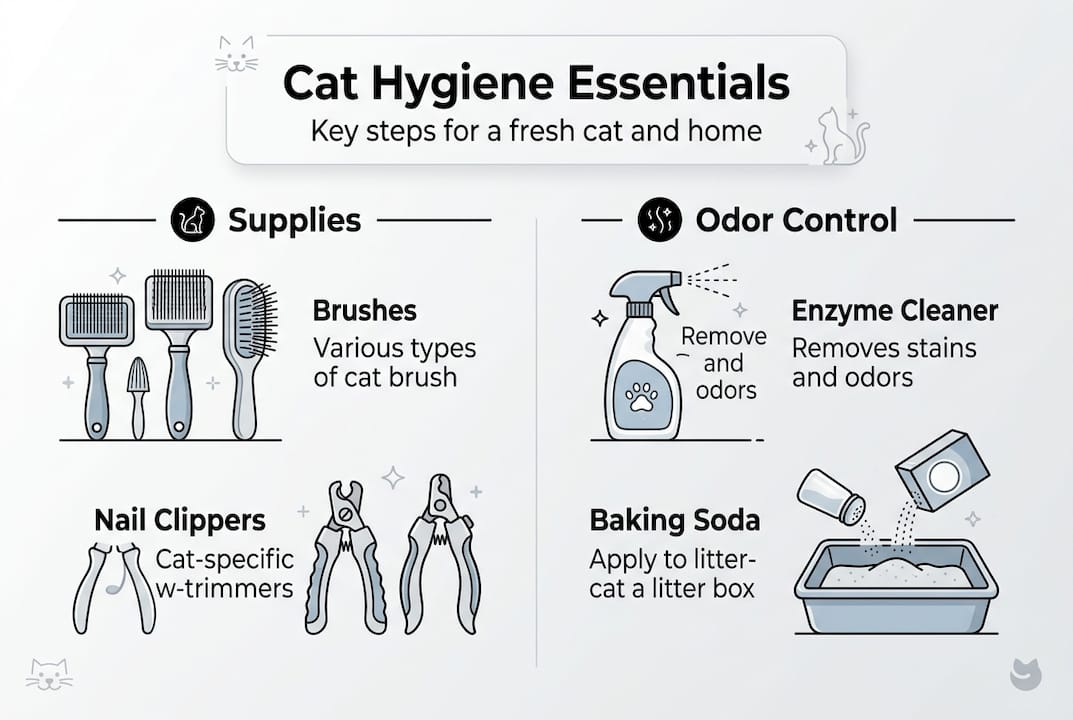
Scoop daily, deep clean weekly to bi-weekly, and follow the N+1 rule for multi-cat homes. That means one litter box per cat, plus one extra. So if you have two cats, you need three boxes. This reduces territorial stress and keeps odor from building up in one spot.
Litter box best practices:
- Place boxes in low-traffic, well-ventilated areas
- Avoid placing boxes near food and water
- Use unscented litter when possible. Heavily scented litters can deter cats from using the box
- Replace litter completely every one to two weeks
- Wash the box itself with mild soap and warm water during each full litter change
- Avoid ammonia-based cleaners, which can actually intensify urine odor
Enzymatic cleaners break down urine proteins at the molecular level, which is why they outperform standard sprays. Baking soda can also help neutralize odors between cleanings. Sprinkle a thin layer at the bottom of the box before adding fresh litter.
One of the biggest mistakes cat owners make is reaching for a scented spray to cover up litter box smells. That just layers fragrance on top of odor. It doesn’t solve anything. For daily litter cleaning routines and tips on building an odor-free home, the key is elimination, not masking.
For stubborn urine odors outside the litter box, these cat urine odor tips cover the most effective removal methods step by step.
“The goal isn’t to make your home smell like a candle. The goal is to make it smell like nothing at all.”
Special cases and troubleshooting
Even with a strong routine, some situations call for extra vigilance and tailored solutions. Not every cat or household is the same.
Senior cats and high-shedding breeds:
- Older cats often groom themselves less effectively due to arthritis or reduced flexibility. Increase brushing frequency and check for mats more often
- High-shedding breeds like Maine Coons or Ragdolls need more frequent grooming to prevent fur buildup on surfaces
- Senior cats may also have more accidents outside the litter box. Keep extra boxes accessible and at floor level
Multi-cat homes:
- Stick strictly to the N+1 litter box rule
- Clean more frequently since odor accumulates faster with multiple cats
- Watch for signs of litter box avoidance, which can signal stress or territorial conflict
Households with pregnancy or health sensitivities:
Extra precautions are needed for pregnant individuals and those who are immunocompromised. Toxoplasmosis, a parasite found in cat feces, poses a real risk. Here’s what to do:
- Wear disposable gloves and a mask when handling litter
- Wash hands thoroughly after any contact with the litter box
- Ideally, have another household member handle litter box duties during pregnancy
- Scoop daily to reduce the window of parasite activation (toxoplasma becomes infectious 1 to 5 days after being shed)
“When in doubt, ask your vet. They can help you adapt your routine to your cat’s specific age, health, and household situation.”
For a full safety checklist for cat owners, especially those managing multiple cats or health-sensitive households, having a written plan makes a real difference.
When to call your vet:
- Persistent odor despite regular cleaning (could signal a health issue)
- Sudden changes in litter box habits
- Skin irritation, hair loss, or excessive scratching
- Discharge from eyes, ears, or nose that doesn’t clear up
Enhance your cat hygiene routine with Percy Loves
You’ve built the routine. You’ve got the tools. Now let’s talk about the one product that ties it all together. At Percy Loves, we know cat odor because our mascot Percy has a serious funk problem. That’s actually why we created Pal Furresher Unscented Odor Eliminator.

Pal Furresher is fragrance-free and lick safe. It doesn’t mask odors, it tackles them at the source with a proprietary formula that completely eliminates the problem. No perfume cover-up. No harsh chemicals. Just clean. It’s safe to use around your cat, on surfaces they touch, and in spaces they live in. If you want to stock up, the multipack odor eliminator is a smart choice for multi-cat homes or anyone who wants a bottle in every room. Visit Percy Loves to find the right solution for your home.
Frequently asked questions
How often should I groom my cat?
Short-haired cats need weekly brushing, while long-haired breeds require daily grooming to prevent mats and skin issues.
What’s the safest way to eliminate cat urine odor?
Use an enzymatic cleaner for odor, ventilate the area well, and treat the spot quickly before the proteins set into the surface.
How can I make litter box cleaning safer for pregnant or immunocompromised people?
Wear gloves and a mask every time, and if possible, delegate litter duties to another household member to avoid any risk of toxoplasmosis exposure.
Do cats really need baths?
Most cats don’t need regular baths because they self-groom effectively. Hairless breeds and heavily soiled cats are the main exceptions.
How many litter boxes should I have?
Follow the N+1 litter box rule: one box per cat plus one extra to reduce stress and keep odor under control.


