

Pet safety standards: ensure your dog or cat's well-being
Most pet owners assume that if a product is on the shelf, someone has already checked it for safety. That assumption is wrong. No mandatory federal standards exist for pet toys, collars, or harnesses, and the gaps in regulation are bigger than most people realize. This guide walks you through what standards actually exist, where the holes are, and exactly what you can do to protect your cat or dog every single day.
Table of Contents
- Defining pet safety standards: What do they cover?
- Housing and daily care: Essential requirements for pets
- Nutrition and pet food safety: Preventing health risks
- Toys, collars, and accessories: The voluntary safety gap
- Pet transportation and vehicle harnesses: Safety beyond the home
- What you can do: Applying safety standards at home
- Solutions for safer pets: Products that meet high standards
- Frequently asked questions
Key Takeaways
| Point | Details |
|---|---|
| Not all standards required | Housing and pet food are regulated, but most toys and accessories aren’t federally mandated for safety. |
| Voluntary testing matters | Look for ASTM/FEDIAF labeling and third-party certifications as signs of safe product choices. |
| Recall risk in pet food | Most recalls are due to microbial contamination, especially in raw and dry foods; check recall histories before buying. |
| Safe transport is evolving | Vehicle harnesses for pets lack universal standards, so prioritize third-party tested models. |
| Owner action is key | Vigilant purchasing, label reading, and emergency prep help keep your pets safest. |
Defining pet safety standards: What do they cover?
Pet safety standards are rules and guidelines designed to prevent harm to animals through the products they use, the food they eat, and the spaces they live in. Some are mandatory laws. Others are voluntary guidelines that brands choose to follow. Knowing the difference is the first step to making smarter choices for your pet.
The major categories covered by safety standards include:
- Housing and shelter: Temperature, space, ventilation, and bedding
- Nutrition: Ingredient quality, labeling accuracy, and contamination limits
- Transportation: Crates, carriers, and vehicle restraints
- Toys and accessories: Small parts, toxic materials, and choking risks
- Cleaning products: Ingredient safety and residue risks for lick-prone pets
Several organizations set these standards. The USDA enforces 9 CFR Part 3 standards for humane handling, care, treatment, and transportation of dogs and cats. The FDA oversees pet food safety. Voluntary industry groups like ASTM International and FEDIAF develop guidelines that brands can choose to adopt. Mandatory standards carry legal weight. Voluntary ones rely on brand integrity.
Pro Tip: When shopping for any pet product, look for brands that reference ASTM or FEDIAF compliance on their packaging. It signals they are going beyond the legal minimum. For a broader overview of what makes a product genuinely safe, check out this safe pet products guide.
Housing and daily care: Essential requirements for pets
Your pet’s living environment has more regulated standards than most other product categories. These rules were originally written for commercial kennels and breeders, but they set a useful benchmark for home pet owners too.
The USDA’s indoor temperature requirements mandate that dogs and cats must be kept above 50°F and below 80°F. That range exists because temperature extremes cause serious physiological stress in both species. Ventilation, shelter size, and bedding quality are also addressed.
Here is how regulated kennel standards compare to typical home care:
| Care area | Regulated kennel standard | Recommended home practice |
|---|---|---|
| Temperature | 50°F to 80°F | Same range applies |
| Space per animal | Minimum square footage per species | Comfortable, unrestricted movement |
| Water access | Fresh water at all times | Refill at least twice daily |
| Exercise | Daily, species-appropriate | At least 30 minutes for dogs |
| Vet care | Regular health checks required | Annual wellness exams minimum |
Key daily care requirements for home pets include:
- Fresh, clean water available at all times
- Species-appropriate food in correct portions
- Daily exercise and mental stimulation
- Clean, dry bedding changed regularly
- Routine veterinary checkups
“A pet’s daily environment is the single biggest factor in their long-term health. Standards exist for a reason, and even home pet owners benefit from following them.”
For a practical breakdown of what responsible ownership looks like day to day, this dog safety must-haves resource covers the essentials clearly.
Nutrition and pet food safety: Preventing health risks
What your pet eats is one of the most regulated areas of pet care, yet recalls still happen with alarming frequency. Understanding why helps you shop smarter.

FEDIAF Nutritional Guidelines set minimum and maximum nutrient levels for pet foods to prevent both deficiencies and dangerous excesses. AAFCO, the Association of American Feed Control Officials, sets similar standards in the U.S. When you see “complete and balanced” on a pet food label, it means the product meets one of these standards. That phrase is not marketing. It is a regulated claim.
Still, 63% of pet food recalls are tied to contamination that could have been prevented. Pathogens like Salmonella, Listeria, and E. coli are the most common culprits, and raw food carries the highest risk.
Here is a quick comparison of pet food types by safety risk level:
| Food type | Contamination risk | Regulatory oversight |
|---|---|---|
| Dry kibble | Moderate | FDA, AAFCO |
| Wet/canned food | Low to moderate | FDA, AAFCO |
| Raw food | High | FDA (limited enforcement) |
| Freeze-dried raw | Moderate to high | FDA (limited enforcement) |
| Homemade diets | Variable | None |
Steps to reduce your pet’s food safety risk:
- Check the FDA’s recall database before buying a new brand
- Look for “complete and balanced” on the label
- Avoid raw food unless you understand the handling protocols
- Store dry food in an airtight container away from heat
- Wash food bowls daily to prevent bacterial buildup
Pro Tip: Bookmark the FDA pet food recall page and check it monthly. It takes two minutes and could save your pet from a serious illness. For more on building smart routines around your pet’s health, explore this pet health routines guide. You can also find practical dog care tips and a deeper look at how quality pet care and well-being connect to the choices you make every day.
Toys, collars, and accessories: The voluntary safety gap
This is where the regulatory picture gets uncomfortable. There are no mandatory federal standards for pet toys, collars, or harnesses. ASTM’s F15.05 subcommittee is actively developing voluntary standards based on the F963 toy safety framework, but those are not law yet.
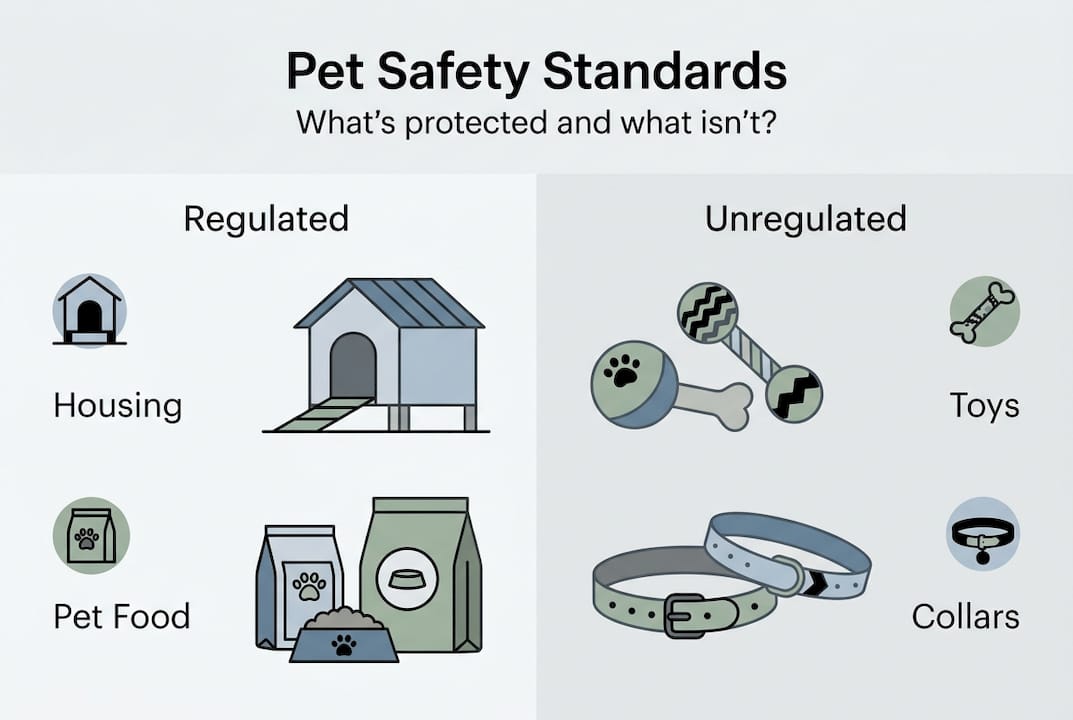
The Consumer Product Safety Commission (CPSC) only steps in when a pet product poses a risk to children. For example, a cat toy with a button battery could trigger a CPSC recall because toddlers might access it. Your cat’s safety alone is not enough to trigger federal action. That is a sobering reality.
What ASTM F963 principles address when voluntarily applied to pet products:
- Small parts that could be swallowed
- Lead content in painted or coated surfaces
- Phthalates in soft plastic materials
- Sharp edges and structural integrity under stress
- Flammability of fabric-based toys
Pro Tip: Avoid any toy with button batteries or small detachable parts. If a toy breaks apart easily in your hands, it will break apart in your pet’s mouth. For a full breakdown of what to look for, this non-toxic care tips guide is worth reading. You should also understand how cleaning products interact with your pet’s safety by checking out this odor control safety guide and this resource on pet cleaning safety.
Pet transportation and vehicle harnesses: Safety beyond the home
Most dog owners travel with their pets regularly, but very few use a crash-tested harness. That is a serious problem, because vehicle harnesses for pets are largely unstandardized, and ASTM is only now developing a formal test method.
An unrestrained 60-pound dog becomes a 2,700-pound projectile in a 35 mph crash. That number is not an exaggeration. It is basic physics applied to your pet’s body weight and collision force.
Best practices for safe pet travel:
- Use a crash-tested crate or carrier secured to the vehicle
- Place your pet in the back seat, never the front
- Never let your dog ride with their head out the window at highway speeds
- Ensure proper ventilation, especially in warm weather
- Stop every two hours on long trips for water and a bathroom break
“Until standardized crash testing becomes mandatory for pet harnesses, your best protection is choosing brands that voluntarily publish their test results.”
For more on keeping your pet safe during grooming and travel prep, this pet grooming safety basics article is a helpful companion. And if you want a full checklist of dog safety must-haves, that resource covers travel gear alongside everyday essentials.
What you can do: Applying safety standards at home
Knowing the gaps in regulation is only useful if you act on that knowledge. The good news is that third-party tested products and voluntary compliance markers give you real tools to make better decisions.
Steps to evaluate any pet product before buying:
- Search the brand name plus “recall” on the FDA or CPSC website
- Look for ASTM, FEDIAF, or AAFCO references on the label
- Check if the brand publishes independent test results
- Read ingredient lists for known toxins like xylitol, propylene glycol, or artificial dyes
- Avoid products with vague ingredient labels or no country of origin listed
Key questions to ask when choosing a brand:
- Does this brand voluntarily follow ASTM or FEDIAF guidelines?
- Has this product been recalled in the past five years?
- Are the ingredients fully disclosed and recognizable?
- Does the brand respond to safety concerns publicly?
For your home environment, create a simple emergency safety plan. Know your nearest emergency vet. Keep your pet’s medical records accessible. Store cleaning products, medications, and toxic foods out of reach. A pet safety checklist can help you organize all of this in one place so you are never scrambling when it matters most.
Solutions for safer pets: Products that meet high standards
At Percy Loves, every product we develop starts with one non-negotiable question: is it safe for your pet? Our unscented odor eliminator Pal Furresher was born from Percy’s own story. Percy is a real cat with a real funk problem, and we needed something that actually worked without putting him at risk.
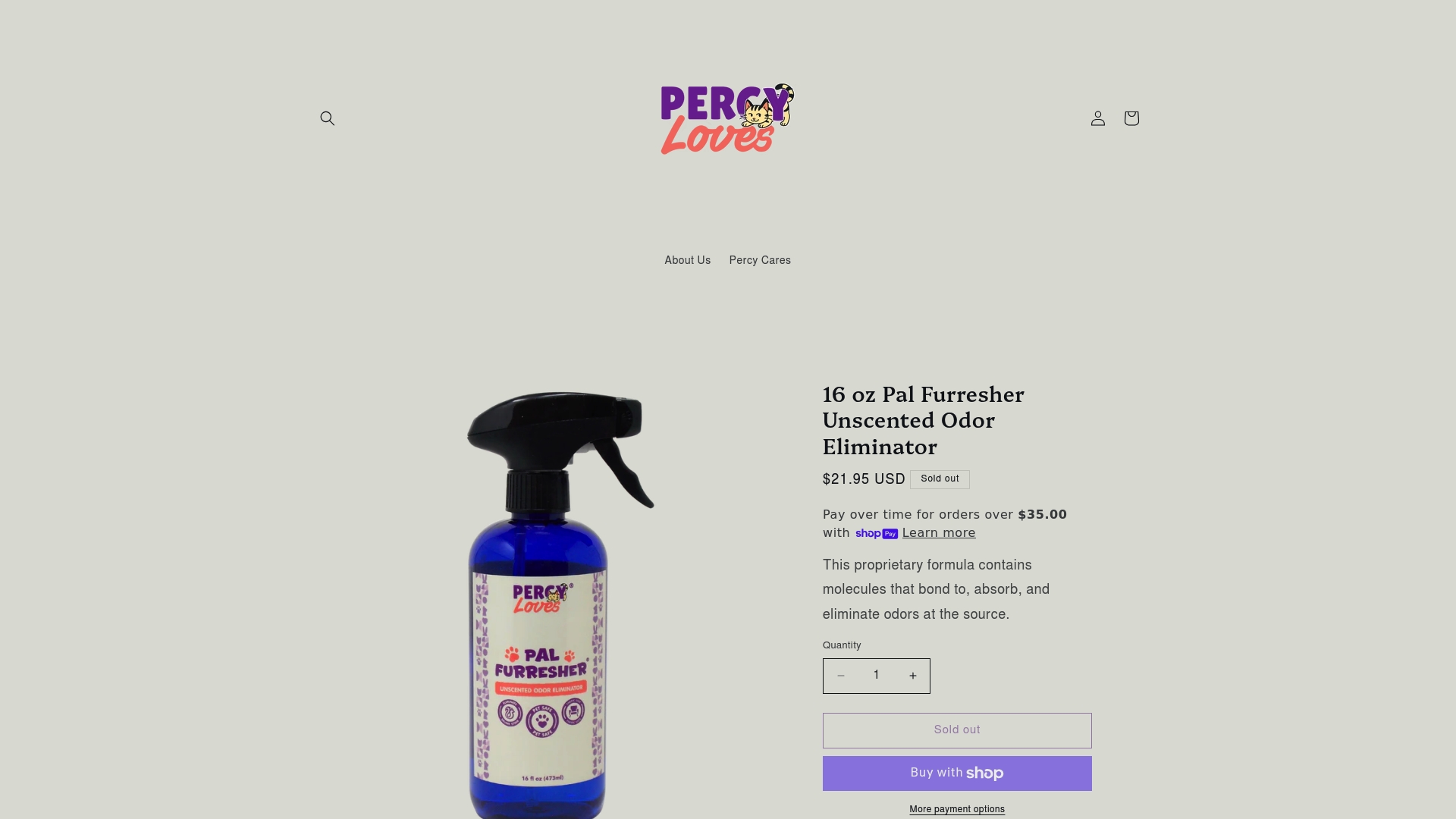
Pal Furresher is fragrance-free, lick safe, and built on a proprietary formula that eliminates odor at the source rather than masking it. No harsh chemicals. No synthetic fragrances that could irritate your pet’s respiratory system. Just clean, effective odor elimination you can feel good about. If you want a travel-friendly option, our pet-safe odor eliminator in the 4 oz size fits easily in any bag. When safety is the standard, not the selling point, you get products that actually deserve a place in your home.
Frequently asked questions
Are there federal safety laws for all pet products?
No mandatory federal standards exist for pet toys, collars, or harnesses. Only housing, care, and food have enforceable federal requirements.
How can I tell if a pet toy or accessory is safe?
Look for ASTM F963 principles voluntarily applied, third-party certifications, and avoid anything with button batteries or small detachable parts.
What pet foods are most likely to be recalled?
Raw and dry foods are most frequently recalled, usually due to microbial contamination from Salmonella or Listeria.
Do all pet vehicle harnesses have to meet a crash test standard?
No. Most harnesses are unregulated, though ASTM is currently developing a formal test method for pet vehicle restraints.
What’s the best way to check a pet product’s safety before buying?
Search for recalls on the FDA and CPSC websites, and prioritize third-party tested brands that publish their safety data openly.


