

Cat grooming tips: Keep your feline clean and happy
Keeping your cat well-groomed isn’t just about aesthetics. It’s about health, comfort, and preventing common issues like hairballs, mats, and overgrown nails. Many cat owners struggle with knowing how often to brush, which tools to use, and when professional help is needed. This guide delivers practical grooming tips that work for cats of all coat types and temperaments. You’ll learn how to build a routine that keeps your feline friend clean, comfortable, and happy while making your home fresher and more pleasant.
Table of Contents
- Understand your cat’s grooming needs
- Essential cat grooming tools and products
- Step-by-step cat grooming routine
- Managing hairballs and shedding: Practical solutions
- How to handle mats and tricky grooming problems
- Keep your cat fresh with trusted odor eliminators
- Frequently asked questions
Key Takeaways
| Point | Details |
|---|---|
| Personalize grooming routines | Different breeds, ages, and coat types require customized grooming schedules. |
| Use proper tools and products | Choosing the right brush, comb, shampoo, and nail clippers makes grooming safer and more effective. |
| Tackle hairballs and mats early | Prompt grooming and dietary changes reduce hairballs and prevent mat formation. |
| Professional help for complex issues | Consult expert groomers or veterinarians for severe mats or frequent hairball problems. |
| Maintain home freshness | Regular grooming combined with odor eliminators keeps your house clean and comfortable. |
Understand your cat’s grooming needs
Not all cats need the same grooming approach. Breed, age, and coat length determine how much attention your cat requires. Senior cats and long-haired breeds need more frequent grooming due to reduced self-grooming ability. Short-haired cats typically handle most of their own grooming, but they still benefit from weekly brushing to remove loose fur and distribute natural oils.
Long-haired cats like Persians and Maine Coons need daily attention to prevent painful mats and tangles. Their thick coats trap dirt, dander, and loose hair more easily. Without regular brushing, these cats develop uncomfortable knots that pull on their skin.
Age also plays a role. Kittens learn grooming habits early, so starting a routine when they’re young makes future sessions easier. Senior cats often struggle to reach certain areas, especially their backs and hindquarters. Arthritis and reduced flexibility mean they need your help to stay clean and comfortable.
Key grooming needs by cat type:
- Short-haired cats: Weekly brushing, occasional nail trims
- Long-haired cats: Daily brushing, frequent mat checks, regular nail care
- Senior cats: Gentle daily brushing, help with hard-to-reach areas
- Hairless breeds: Weekly baths to remove oil buildup
Grooming directly impacts your cat’s health. Regular brushing reduces hairball formation by removing loose fur before your cat ingests it. It also gives you a chance to check for skin issues, lumps, or parasites. A well-groomed cat is a healthier, happier cat. For more detailed hygiene strategies, check out our cat hygiene guide and efficient grooming workflow tips.
Essential cat grooming tools and products
The right tools make grooming easier and more effective. Start with brushes designed for your cat’s coat type. Slicker brushes work well for removing loose fur and small tangles in most coat types. Their fine, bent wires grab dead hair without irritating skin.
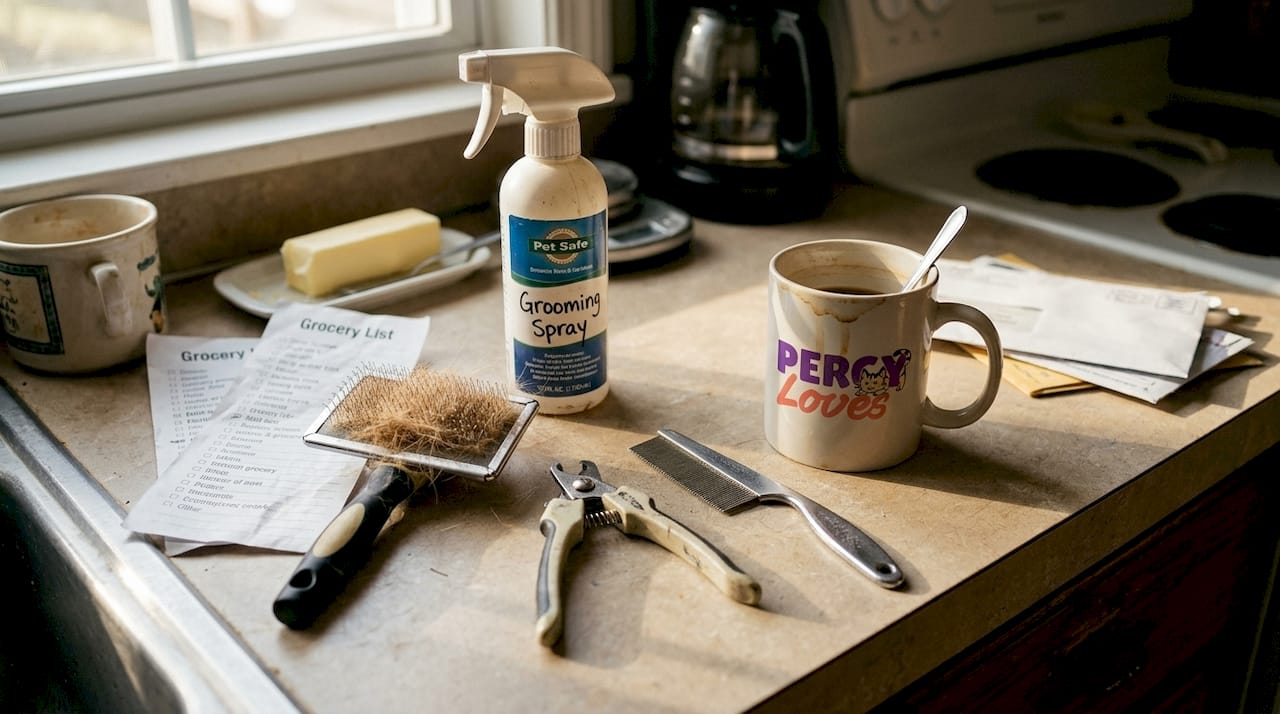
Combs serve different purposes based on tooth spacing. Wide-toothed combs handle long hair and work through minor tangles, while fine-toothed combs catch fleas and remove debris from short coats. Always brush in the direction of hair growth to avoid discomfort.
Must-have grooming tools:
- Slicker brush for general coat maintenance
- Wide-toothed comb for long-haired cats
- Fine-toothed comb for short-haired cats and flea detection
- Cat-specific nail clippers with safety guards
- Gentle, unscented shampoo for occasional baths
- Mat splitter or clippers for severe tangles
Nail care requires cat-specific clippers. Human nail clippers don’t cut cleanly through a cat’s thick nails and can cause splitting. Look for clippers with safety guards that prevent cutting too close to the quick.
For odor management between baths, choose products that are safe if your cat licks their fur. Fragrance-free options work best because cats have sensitive noses and skin. Harsh chemicals or strong scents can cause stress or allergic reactions.
Pro Tip: Introduce new grooming tools gradually. Let your cat sniff and investigate each tool before using it. Pair tool introductions with treats to create positive associations.
| Tool Type | Best For | Frequency of Use |
|---|---|---|
| Slicker brush | All coat types | 1-7 times per week |
| Wide-toothed comb | Long-haired cats | Daily |
| Fine-toothed comb | Short-haired cats | Weekly |
| Nail clippers | All cats | Every 2-4 weeks |
| Mat splitter | Long-haired cats with tangles | As needed |
Invest in quality tools that last. Cheap brushes lose bristles and can scratch skin. Dull clippers crush nails instead of cutting cleanly. Quality tools make grooming safer and more comfortable for your cat. Explore our cat hygiene methods and hair removal checklist for complete home care strategies.
Step-by-step cat grooming routine
Building a consistent routine helps your cat know what to expect. Start with brushing, the most frequent grooming task. Short-haired cats need weekly brushing while long-haired cats should be brushed daily or every other day to prevent matting and reduce hairballs.
Complete grooming routine:
-
Brushing: Start at the head and work toward the tail. Use gentle strokes and watch for signs of discomfort. Check for mats behind the ears, under the legs, and around the tail.
-
Nail trimming: Trim nails every 2-4 weeks to prevent overgrowth. Press gently on the paw pad to extend the claws. Cut only the clear tip, avoiding the pink quick where blood vessels and nerves are located.
-
Ear checks: Look inside the ears for dirt, wax buildup, or redness. Clean only the outer ear with a damp cloth. Never insert anything into the ear canal.
-
Dental care: Brush teeth with cat-specific toothpaste several times per week. Start slowly and build up to full brushing sessions.
-
Bathing: Bathe cats rarely, only when dirty or for hairless breeds like Sphynx. Use cat-specific shampoo and lukewarm water. Most cats never need baths because they self-groom effectively.
Pro Tip: Keep grooming sessions short, especially at first. Five minutes of positive interaction beats a stressful 20-minute struggle. End on a good note with treats and praise.
Mat removal requires special care. Never use scissors because you risk cutting your cat’s skin. Mats sit close to the body, and skin can get caught in the blades. Use clippers or a mat splitter instead. For severe matting, consult a professional groomer who has experience with anxious cats.
Timing matters. Groom when your cat is relaxed, not right after playtime or meals. Many cats are calmer in the evening. Choose a quiet space away from other pets and distractions. Our safe grooming guide and pet parenting best practices offer additional strategies for stress-free sessions.
Managing hairballs and shedding: Practical solutions
Hairballs are a common concern, but they’re not inevitable. Regular grooming reduces hairballs by removing loose fur before your cat swallows it during self-grooming. The more fur you brush away, the less ends up in your cat’s digestive system.
Brushing frequency directly impacts shedding around your home. Daily sessions during shedding season capture loose fur before it lands on furniture and clothing. Even short-haired cats benefit from increased brushing in spring and fall when they shed their seasonal coats.
Diet plays a supporting role. Dietary fiber aids hair passage through the digestive tract. Foods formulated for hairball control contain added fiber that helps fur move through rather than clumping in the stomach. Adequate hydration also keeps the digestive system functioning smoothly.
Hairball reduction strategies:
- Brush daily during shedding season
- Provide fresh water at multiple locations
- Consider hairball-control cat food with added fiber
- Use petroleum-based hairball remedies as directed by your vet
- Monitor hairball frequency and consistency
Pay attention to hairball patterns. Frequent hairballs exceeding 1-2 per month warrant a vet visit because they may signal inflammatory bowel disease, allergies, or blockages. Hairballs accompanied by lethargy, loss of appetite, or constipation require immediate veterinary attention.
Stress affects grooming behavior. Anxiety increases overgrooming, worsening hairballs. Cats who feel stressed lick excessively, ingesting more fur than normal. Environmental enrichment helps. Provide scratching posts, climbing structures, and interactive toys. Create quiet spaces where your cat can retreat when overwhelmed.
| Hairball Frequency | Action Needed |
|---|---|
| 1-2 per month | Normal; maintain grooming routine |
| 3-4 per month | Increase brushing; add dietary fiber |
| 5+ per month | Veterinary consultation required |
| With other symptoms | Immediate vet visit |
Pro Tip: Track hairball frequency in a simple calendar or phone note. Patterns help you and your vet identify triggers or underlying health issues.
For comprehensive home care, explore our hair removal cleaning checklist and pet health routines for maintaining a fresh, healthy environment.
How to handle mats and tricky grooming problems
Mats form when loose fur tangles with attached hair. They start small but quickly grow into painful knots that pull on skin. Mats should be removed promptly because they trap moisture, dirt, and bacteria against the skin, leading to irritation and infection.
Safe removal requires the right approach. Avoid scissors on mats due to the risk of skin cuts. Mats sit tight against the body, making it nearly impossible to see where fur ends and skin begins. Even experienced groomers prefer clippers for safety.
Safe mat removal steps:
- Locate all mats by running your hands over your cat’s entire body
- Use a mat splitter to divide large mats into smaller sections
- Work from the outside of the mat toward the skin
- Hold skin taut below the mat to prevent pulling
- Use clippers for mats close to the skin
- Stop if your cat shows signs of distress
Some situations require professional help. Severe matting, especially over large areas, needs a groomer’s expertise. Cats who become aggressive or extremely anxious during grooming also benefit from professional handling. Groomers have techniques and tools for working with difficult cats safely.
| Mat Severity | DIY Solution | Professional Help |
|---|---|---|
| Small, surface mats | Mat splitter + gentle brushing | Optional |
| Medium mats near skin | Clippers + patience | Recommended |
| Large matted areas | Not recommended | Required |
| Mats with skin irritation | Not recommended | Required immediately |
Anxious cats need special consideration. Create positive associations by offering treats throughout the grooming session. Work in short intervals and stop before your cat becomes stressed. Some cats tolerate grooming better when wrapped gently in a towel, with only the area being groomed exposed.
Pro Tip: If your cat consistently resists grooming, schedule sessions right after playtime when they’re tired. A worn-out cat is often a cooperative cat.
Prevention beats treatment. Daily brushing prevents most mats from forming. Pay extra attention to friction areas where mats develop first: behind the ears, under the front legs, around the collar area, and near the tail base. For additional safety guidance, visit our pet grooming safety basics resource.
Keep your cat fresh with trusted odor eliminators
Your grooming routine keeps your cat clean, but what about the spaces they inhabit? Even well-groomed cats can leave behind odors on furniture, bedding, and carpets. That’s where safe odor control becomes essential.

We created Pal Furresher specifically for pet parents who want effective odor elimination without harsh chemicals or artificial fragrances. Our unscented formula works at the source of odors, not just masking them. It’s completely lick-safe, so you can use it on cat beds, scratching posts, and favorite lounging spots without worry.
Combining regular grooming with smart odor management creates a fresher home environment. After brushing your cat, a quick spray on their bedding eliminates any lingering smells. It’s gentle enough for daily use and effective enough to handle even the funkiest situations.
Explore our 4 oz odor eliminator for targeted freshening, grab the 3-pack for multiple rooms, or choose the 16 oz size for whole-home freshness. Because your cat deserves quality care, and your home deserves to smell clean.
Frequently asked questions
How often should I groom my cat?
Short-haired cats need weekly brushing, while long-haired cats require daily or every-other-day sessions to prevent mats and reduce hairballs.
What tools are best for removing mats in cats?
Use clippers designed for pets and avoid scissors to prevent skin injuries. Seek professional help if mats are severe or your cat is extremely anxious.
Do frequent hairballs mean my cat is unhealthy?
If your cat has more than 1-2 hairballs monthly, consult your vet for possible underlying issues like IBD, allergies, or blockages.
How can I reduce shedding in my home?
Brush your cat frequently to remove loose fur before it spreads. Consider dietary fiber supplements to help fur pass through the digestive system more easily.
Are baths necessary for all cats?
Baths are rarely needed and mostly reserved for dirty cats or hairless breeds like Sphynx. Always use cat-specific shampoo if bathing is required.


