

Cat grooming for odor-free, happy pets: what owners miss
TL;DR:
- Cats groom themselves extensively but need owner assistance to clean hard-to-reach areas. Regular grooming improves health, hygiene, and odor control, and allows early detection of issues. Use cat-specific, safe products like waterless shampoos and enzymatic wipes, avoiding human or generic items.
Cats are famously tidy creatures. They spend up to 50% of their waking hours cleaning themselves, which sounds like a lot of work handled. But here’s the thing: all that self-grooming still leaves gaps. Odors build up. Dander accumulates. Hard-to-reach spots get ignored. That’s where you come in. This guide breaks down how cat grooming actually works, why your involvement matters, and how to build a simple routine that keeps your cat fresh, healthy, and odor-free. We’ll also show you which products are safe and which ones to skip entirely.
Table of Contents
- Why cats groom: Natural behaviors and limitations
- Benefits of cat grooming: Health, hygiene, and odor control
- Essential cat grooming routines for a fresh, odor-free pet
- Choosing safe products for cat hygiene and odor removal
- Why most cat owners misunderstand grooming’s real role
- Keep your home and cat fresh with proven odor eliminators
- Frequently asked questions
Key Takeaways
| Point | Details |
|---|---|
| Self-grooming isn’t enough | Even though cats spend half their waking hours grooming, owner help is crucial for hygiene and odor control. |
| Routine checks matter | Grooming sessions help spot early health issues and keep your cat happy and comfortable. |
| Choose safe products | Only use cat-formulated hygiene and odor products to protect your pet’s skin and overall health. |
| Waterless solutions shine | Waterless foams and enzymatic wipes provide effective, low-stress options for keeping cats fresh and odor-free. |
Why cats groom: Natural behaviors and limitations
Cats groom for reasons that go way beyond looking good. It’s instinctive, purposeful, and constant. Understanding what self-grooming does, and what it can’t do, helps you fill in the right gaps.
Here’s what your cat is actually doing when they lick and groom:
- Distributing sebum: Their tongue spreads natural skin oils across the coat, keeping fur soft and water-resistant.
- Regulating temperature: Saliva evaporates from the coat, helping cool the body in warm conditions.
- Removing parasites: Grooming dislodges fleas, mites, and debris from the fur.
- Social bonding: Cats in multi-cat households groom each other to reinforce relationships.
- Stress relief: Grooming is a self-soothing behavior during moments of anxiety or overstimulation.
“Cats spend up to 50% of waking hours self-grooming to distribute sebum, remove parasites, cool, and stay clean.”
Impressive, right? But here’s the honest truth: self-grooming has real limits. Your cat’s tongue can’t reach every spot. The base of the tail, under the chin, and around the rear end are common problem zones. Odors from these areas don’t get fully addressed through self-grooming alone.
Dander is another issue. Even the most dedicated groomer sheds skin cells constantly, and those cells settle into bedding, furniture, and carpets. No amount of self-licking fixes that.
For long-haired cats, mats can form faster than grooming can prevent them. Short-haired cats aren’t immune either, especially during heavy shedding seasons.
That’s why cat grooming tips from experienced pet owners and professionals always emphasize owner-assisted routines. You’re not replacing what your cat does naturally. You’re completing it. Think of it as a partnership where your cat handles the daily basics and you handle the rest.
Benefits of cat grooming: Health, hygiene, and odor control
When you build a regular grooming habit, the benefits go far beyond a fresh-smelling cat. You’re actively monitoring your pet’s health, strengthening your bond, and keeping your home cleaner.
| Grooming benefit | What it does for your cat |
|---|---|
| Health monitoring | Lets you spot lumps, skin changes, or parasites early |
| Hygiene maintenance | Removes dirt, dander, and buildup from coat and skin |
| Bonding | Builds trust and comfort through gentle handling |
| Odor reduction | Targets areas self-grooming misses, reducing funk at the source |
| Coat health | Prevents mats and distributes oils evenly |
During grooming sessions, you’re in the perfect position to notice things your cat can’t tell you about. Watch for these signs:
- Unusual lumps or bumps under the skin
- Redness, flaking, or irritated patches
- Excessive scratching or hair loss in specific spots
- Flea dirt (tiny black specks near the skin)
- Changes in coat texture or shine
Changes in grooming behavior can signal illness or stress, and catching them early makes a real difference. A cat that suddenly stops grooming, or one that obsessively over-grooms a single spot, deserves a vet visit.
Pro Tip: Keep a simple log of your cat’s grooming sessions. Note anything unusual in their coat, skin, or behavior. Patterns become obvious fast, and you’ll have useful info ready for your vet.
Odor control is one of the most underrated benefits of regular owner-assisted grooming. Targeted hygiene practices like sanitary trims, paw wipes, and litter box maintenance are what actually eliminate cat odors at the source. Spraying air freshener around your cat does nothing for the real problem. Addressing the source does.

Your cat hygiene guide should connect grooming to litter habits too. A clean litter box, combined with regular coat and paw maintenance, dramatically reduces the overall odor load in your home.
Essential cat grooming routines for a fresh, odor-free pet
A good grooming routine doesn’t need to be complicated. Consistency matters more than perfection. Here’s a simple framework to follow:
- Brush the coat to remove loose fur, dander, and surface debris. Short-haired cats benefit from weekly brushing; long-haired cats may need it every other day.
- Check ears and eyes for discharge, redness, or unusual odor. Gently wipe the outer ear with a damp cotton pad if needed.
- Wipe paws and sanitary areas with cat-safe wipes, especially after litter box use. This is one of the most effective steps for odor control.
- Inspect the coat and skin for parasites, mats, or irritation while brushing.
- Trim nails every two to three weeks to prevent discomfort and reduce scratching damage.
- Sanitary trims around the rear end, especially for long-haired cats, prevent buildup and odor.
Not all grooming methods are equal when it comes to odor control. Here’s a quick comparison:
| Method | Best for | Odor control | Stress level for cat |
|---|---|---|---|
| Waterless shampoo foam | Between-bath freshening | Good | Low |
| Enzymatic wipes | Paws and sanitary areas | Excellent | Very low |
| Standard bath | Heavy soiling or skin conditions | Good | High |
| Odor eliminator spray | Spot treatment on coat or bedding | Excellent | Very low |
Best odor solutions consistently point to waterless and wipe-based methods over full baths for routine hygiene. Baths stress most cats out and are rarely necessary unless your vet recommends one.
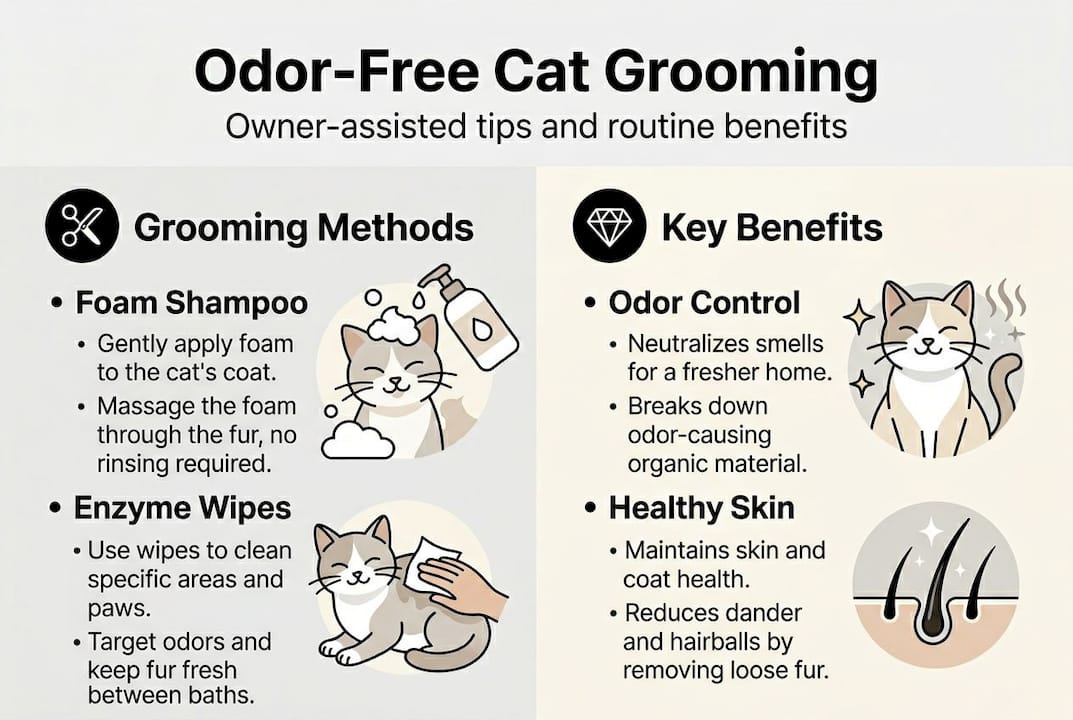
Pro Tip: Always use products formulated specifically for cats. Oatmeal-based waterless shampoos are gentle on sensitive skin and effective at freshening the coat without rinsing. Learn more about safe pet grooming methods that work without stressing your cat out.
Building an efficient grooming workflow means batching tasks together so your cat gets used to the routine. Short, calm sessions work better than long, infrequent ones.
Choosing safe products for cat hygiene and odor removal
Product safety is not optional. Cats groom themselves constantly, which means anything you apply to their coat or skin will likely end up in their mouths. The wrong product can cause skin irritation, digestive upset, or worse.
Here’s what actually works and is safe for your cat:
- Waterless shampoos (oatmeal-based, no rinse): Great for freshening the coat between baths. Gentle on skin, easy to apply, and no rinsing required.
- Enzymatic wipes designed for cats: Ideal for paws and sanitary areas. The enzymes break down odor-causing compounds rather than just covering them up.
- Cat-specific clarifying shampoos: For the rare full bath, use a formula made for cats only. pH levels in human shampoos are wrong for feline skin.
- Fragrance-free odor eliminator sprays: Especially useful for spot treatment on fur, bedding, and furniture. Look for lick-safe formulas.
Safe hygiene and odor products are always cat-specific. Human shampoos, baby wipes, and generic cleaning sprays are not safe alternatives, even if they seem mild.
Reading labels matters. Look for “no rinse,” “cat-safe,” and “fragrance-free” on any product you plan to use on or near your cat. If a product doesn’t list its ingredients clearly, that’s a red flag.
Spot-testing is smart practice. Apply a small amount to a patch of fur and wait 24 hours before full use. This is especially important for cats with sensitive skin or known allergies.
Enzymatic formulas work differently from traditional cleansers. Instead of masking odor with fragrance, they break down the organic compounds that cause the smell. That’s why they’re consistently more effective for cat hygiene maintenance tips focused on real odor elimination rather than temporary cover-ups.
Why most cat owners misunderstand grooming’s real role
Here at Percy Loves, we hear the same thing all the time: “My cat grooms herself constantly, so she’s fine.” We get it. Cats look like they have it handled. But that belief is exactly what leads to funky-smelling cats and frustrated owners.
Self-grooming is maintenance. Owner-assisted grooming is care. Those are two different things.
The real pitfall isn’t laziness. It’s misplaced trust. Owners skip odor control steps because they assume the cat covered it. They delay vet visits when grooming behavior changes because they think it’s just a phase. They grab whatever soap is nearby because it seems harmless.
Responsible pet ownership means being your cat’s partner, not just their observer. You notice the things your cat can’t report. You apply the products your cat can’t choose. You maintain the pet care tips and routines that keep everything running smoothly.
Cats need human partners for truly safe, fresh, and healthy results. That’s not a failure of their self-sufficiency. It’s just the reality of being a responsible cat owner.
Keep your home and cat fresh with proven odor eliminators
You’ve got the knowledge. Now it’s time to put it to work with products that are actually built for the job.
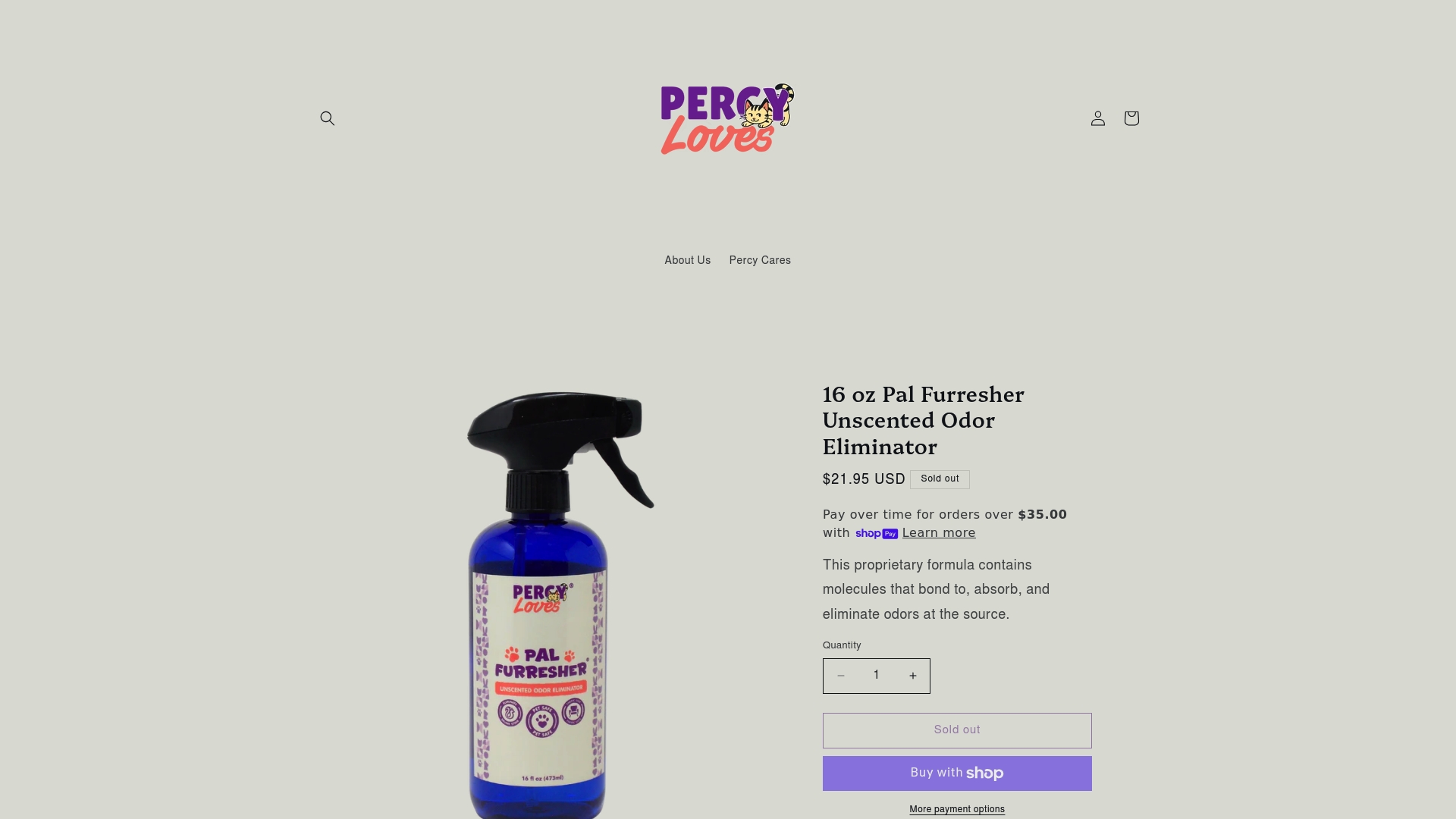
At Percy Loves, we created Pal Furresher because Percy, our real cat with a real funk problem, needed something safe and effective. Pal Furresher is a fragrance-free, lick-safe unscented odor eliminator that doesn’t mask odors. It tackles them at the source with a proprietary formula that completely eliminates the problem. Stock up with our odor eliminator multipack and keep your home and your cat smelling genuinely fresh. Visit Percy Loves to explore everything we offer for cat parents who treat their fur babies like family.
Frequently asked questions
How often should I groom my cat for best hygiene?
Most cats benefit from grooming sessions at least weekly. Cats that shed heavily or have long hair may need attention every few days to stay clean and odor-free.
Is bathing necessary for cats, or can I use waterless products?
Most healthy cats do not need regular baths. Waterless shampoos and enzymatic wipes handle routine hygiene effectively without the stress of a full bath.
What products should I avoid when cleaning my cat?
Avoid all human and baby shampoos, wipes, and sprays. Only use cat-specific grooming solutions that are formulated for feline skin and safe if ingested during self-grooming.
Can changes in grooming habits signal health issues?
Yes. Sudden changes in self-grooming behavior, whether too much or too little, can indicate stress or illness and should prompt a vet visit sooner rather than later.


