

Pet safety certifications explained for smarter choices
TL;DR:
- Nearly half of tested pet toys contain toxins, highlighting the importance of verifying safety certifications. Genuine certifications involve independent testing and facility audits, not just marketing labels. Pet owners should scrutinize labels, check certifying organizations, and demand transparency to ensure product safety.
Nearly half of all pet toys tested by independent labs contain lead or other toxins, even products sold as pet safe. That number should stop every pet parent in their tracks. The world of pet product safety is crowded with labels, logos, and claims that sound reassuring but often mean very little. Knowing which certifications are real, which are marketing fluff, and how to tell the difference is one of the most important things you can do for your fur baby. This guide breaks it all down in plain language so you can shop with real confidence.
Table of Contents
- What are pet safety certifications?
- Major organizations and what their certifications cover
- Common myths and pitfalls when choosing ‘certified’ pet products
- How to read labels and choose genuinely safe pet products
- Why consumer vigilance is your pet’s best line of defense
- Looking for safe pet essentials?
- Frequently asked questions
Key Takeaways
| Point | Details |
|---|---|
| Certification isn’t a guarantee | Many certified products still fail independent safety tests—always check for third-party verification. |
| Know your certifying bodies | Major certifications like NASC, CPS, and ASTM each cover specific pet product categories you should understand. |
| Vigilance beats labels | Consumer awareness is crucial; look for specific test results, agency names, and don’t trust claims at face value. |
| Regulation gaps exist | Not all pet products are subject to strict standards, so choosing from transparent sellers matters. |
What are pet safety certifications?
Pet safety certifications are programs, either voluntary or required by regulators, that verify a product meets defined safety, ingredient, or manufacturing standards. They are not the same as a brand simply saying their product is “tested” or “vet approved.” A true certification involves an outside party reviewing the product, the facility, or both.
Understanding pet safety standards is the first step toward making smarter purchases. Here is a quick breakdown of the most recognized certifications and where they apply:
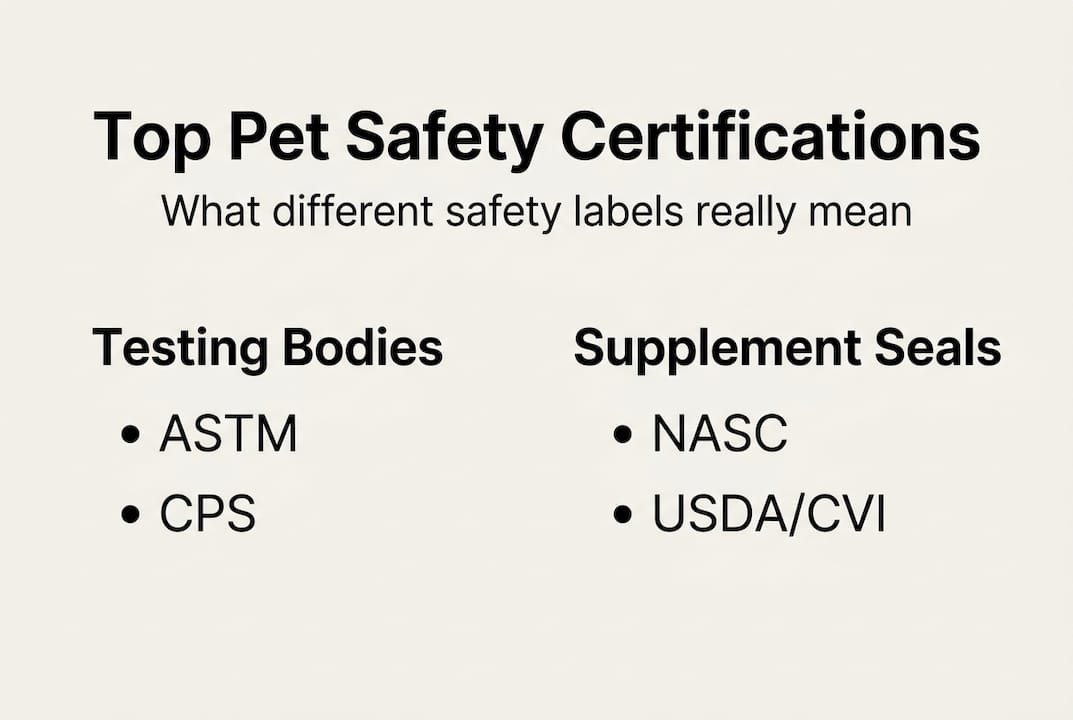
- NASC (National Animal Supplement Council): Covers pet supplements and nutraceuticals. The NASC certification process involves facility audits, quality control documentation, random product testing, scientific review of ingredients, and ongoing compliance monitoring. This is one of the most rigorous voluntary programs available.
- CPS (Center for Pet Safety): Focuses on crashworthiness for crates, carriers, and harnesses. Products must pass physical crash simulations to earn this label.
- ASTM International: A global standards organization now developing pet-specific mechanical and chemical safety standards for toys and harnesses.
- USDA/CVI (Certificate of Veterinary Inspection): Required for pet travel. This confirms health and vaccination status, not product safety.
The difference between a certified product and one that is merely “tested” matters a lot. A brand can test its own product in-house and call it tested. A certified product has been reviewed by an independent body with documented standards. Always look for the certifying agency’s name, not just the word “certified.”
Product categories that most benefit from recognized certifications include supplements, toys, travel carriers, harnesses, and food. For non-toxic care tips across these categories, it helps to know what each cert actually covers before you buy.
Pro Tip: Search the certifying organization’s website directly to confirm a product is listed as certified. Logos can be copied and used without authorization.
Facility audits, third-party lab testing, and ongoing compliance checks are what separate meaningful certifications from rubber stamps. If a brand cannot tell you who tested their product and when, that is a red flag worth taking seriously. Reviewing dog safety must-haves from verified sources is a great place to start building a safer routine.
Major organizations and what their certifications cover
Not all certifying bodies are equal, and each one focuses on a different slice of the pet product world. Here is a closer look at the major players.
ASTM International is one of the most respected standards organizations globally. They are currently developing pet-specific standards through their F15.05 subcommittee, including WK85577 for dog toys covering mechanical and chemical safety, plus new harness test methods. These standards do not yet exist for most pet products, which is exactly why the gap is so dangerous.
NASC is the gold standard for pet supplements. If you buy vitamins, joint support, or calming chews for your pet, look for the NASC Quality Seal. It tells you the manufacturer has been audited and the product has been randomly tested.
CPS (Center for Pet Safety) runs crash simulations on carriers, crates, and harnesses. Their testing mirrors real-world accident conditions, not just manufacturer scenarios. Very few products pass.

USDA/CVI is a travel document, not a product seal. It is issued by a USDA-accredited vet and confirms your pet is healthy and vaccinated for transport. Do not confuse it with a product quality certification.
Here is a quick comparison of what each certification covers:
| Organization | Product type | What it verifies | Third-party tested? |
|---|---|---|---|
| NASC | Supplements | Ingredients, purity, facility | Yes |
| CPS | Carriers, crates, harnesses | Crash safety | Yes |
| ASTM | Toys, harnesses (in progress) | Mechanical and chemical safety | Yes |
| USDA/CVI | Pet travel | Health and vaccinations | Vet-issued |
Here are the key takeaways when evaluating certifications:
- Confirm the certifying body is independent, not the brand itself.
- Check that the certification covers the specific product type you are buying.
- Look for a test date or batch number to confirm it is current.
- Verify the product appears on the certifying body’s official list.
- Remember that certification in one area does not mean safety in all areas.
For more on pet cleaning safety and how to evaluate odor and cleaning products specifically, the standards landscape is still catching up. The same goes for odor control safety, where transparency from the brand matters more than ever. Staying informed about pet family lifestyle safety helps you apply this knowledge across every product you bring home.
Common myths and pitfalls when choosing ‘certified’ pet products
This is where things get uncomfortable. Most pet owners assume that if a product says “crash-tested” or “certified safe,” it passed. The reality is very different.
“Only 1 out of 11 harnesses passed rigorous crash testing in major studies. The rest failed, some catastrophically.” Source
That stat is not a typo. Most harnesses on the market have been crash-tested in the sense that they were put through a test. But passing is a different story entirely. “Crash-tested” does not mean “crash-safe.”
Here are the most common myths and red flags to watch for:
- “Certified” logos without a named agency. Any brand can create a badge. If it does not name a recognized body like NASC, CPS, or ASTM, it is likely decorative.
- Vague phrases like “meets safety standards.” Which standards? Set by whom? If the label does not say, assume it means nothing.
- No batch numbers or test dates. A product tested two years ago may have changed its formula since. Current testing matters.
- Self-certified claims. If the brand tested its own product without independent verification, that is not a certification.
- “Natural” or “organic” as safety proxies. These words are not regulated for pet products and say nothing about toxin levels or manufacturing quality.
Pro Tip: Search the pet product regulations landscape before buying. Many everyday items like bowls, toys, and bedding have no recognized safety standard at all, which means your research and brand trust are your only tools.
For everyday items like cleaners and sprays, checking pet-safe cleaning resources helps you filter out products that rely on vague language. And when you want a broader view of how certifications fit into pet care well-being, the answer is always: look past the packaging.
How to read labels and choose genuinely safe pet products
Shopping smarter starts with knowing exactly what to look for on a label. Here is a step-by-step process you can use every time.
- Find the certifying body’s name. It should be spelled out, not just implied by a logo.
- Check for a test standard reference. Something like “meets ASTM WK85577” tells you what was actually evaluated.
- Look for a test date or batch number. This confirms the certification is current and product-specific.
- Search the organization’s website. NASC, CPS, and ASTM all maintain public lists of certified products.
- Ask the brand directly. A trustworthy company will provide documentation without hesitation.
Here is a label evaluation guide to use while shopping:
| Label claim | What to look for | Green flag | Red flag |
|---|---|---|---|
| “NASC certified” | NASC Quality Seal, audit date | Seal links to NASC site | No agency name listed |
| “Crash tested” | CPS logo, test report available | CPS pass listed publicly | Just says “tested” |
| “Non-toxic” | Third-party lab results | Specific lab named | No supporting data |
| “Vet approved” | Named vet, disclosed relationship | Transparent endorsement | Anonymous claim |
| “All natural” | Ingredient list, sourcing info | Full transparency | Vague, no details |
The numbers reinforce why this matters. Independent lab tests found toxins in 45 to 48 percent of pet toys and tennis balls, and supplements without certifications are frequently contaminated. These are not rare edge cases.
When you are unsure, lean toward brands that publish their testing results, name their labs, and make it easy to verify claims. Use a pet safety checklist to build a consistent habit around evaluating every new product before it enters your home.
Why consumer vigilance is your pet’s best line of defense
Here is an honest take from us at Percy Loves: no label, law, or certification replaces an engaged, informed pet parent. The regulatory gaps in the pet product industry are real and significant. Many everyday products have no governing standard at all.
Even certified products require scrutiny. Industry insiders know that compliance is rarely perfect and that certifications are a snapshot, not a guarantee. A product certified last year may have changed suppliers or formulas since then.
The pet parents who consistently protect their animals are the ones who ask questions, demand documentation, and do not assume safety based on packaging alone. That is not paranoia. That is love in action.
We have seen firsthand how much confusion exists around pet safety standards, and it drives everything we do. The most surprising lesson? The brands worth trusting are almost always the ones most willing to show their work. If a company hesitates to share test results, that hesitation tells you something important.
Your instincts as a pet parent are a powerful tool. Pair them with the knowledge in this guide, and you are already ahead of most shoppers.
Looking for safe pet essentials?
For pet parents who want total confidence in what they bring home, Percy Loves has you covered. We develop every product with safety at the center, not as an afterthought.
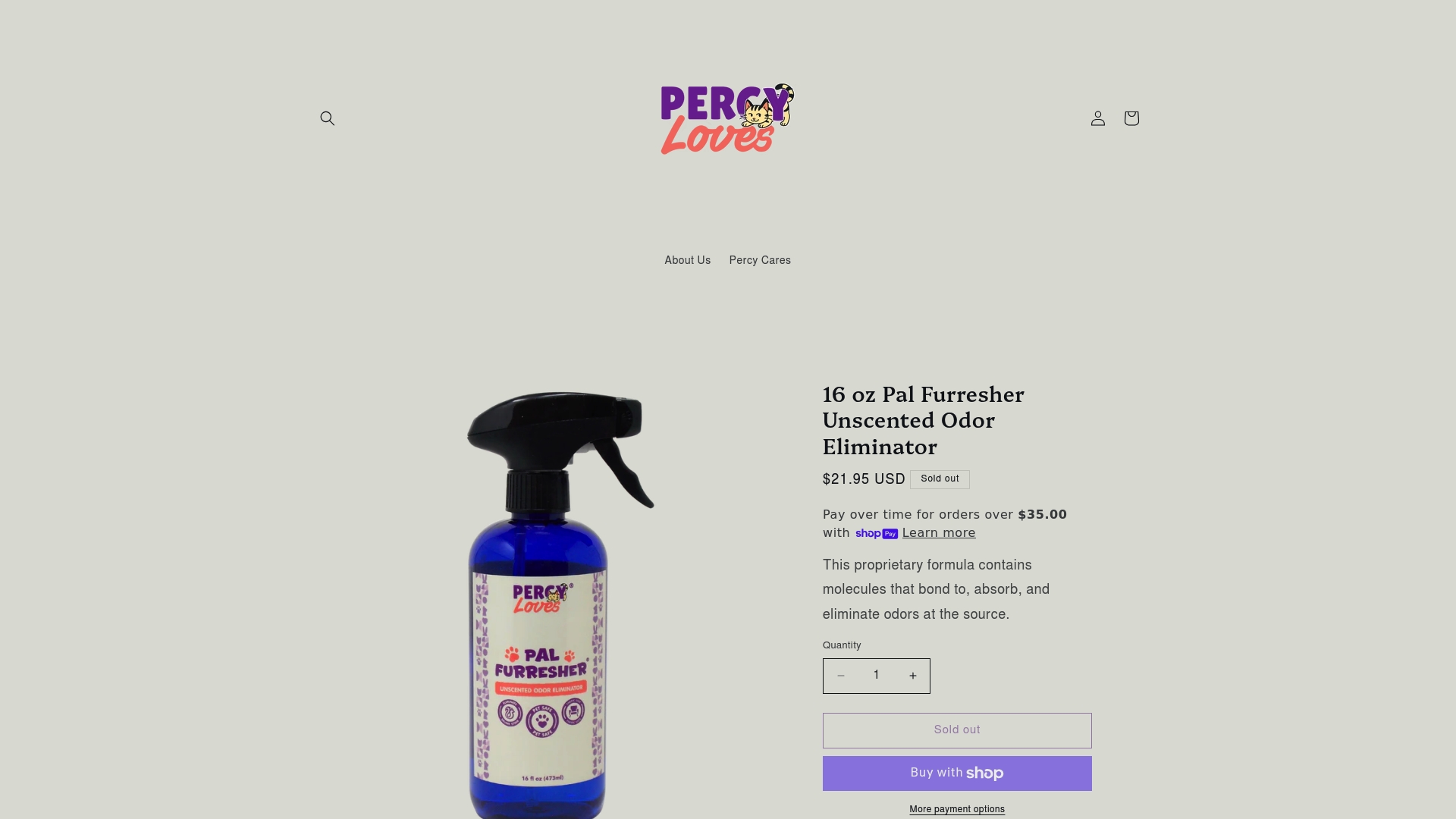
Pal Furresher is our fragrance-free odor eliminator spray, and it is completely lick safe. Percy, our real cat with a real funk problem, inspired it. The formula tackles odors at the source instead of masking them, and it is made with full transparency so you always know what you are using around your fur baby. You can grab the unscented odor eliminator to try it out, stock up with the eliminator pack of 3, or go big with the odor eliminator 16 oz and 4 oz bundle. Safe, simple, and actually effective.
Frequently asked questions
What does NASC certification mean for pet products?
NASC certification confirms a pet supplement is made in audited facilities, randomly tested for quality, and meets scientific ingredient standards. It is one of the most rigorous voluntary programs in the pet supplement space.
Are crash-tested pet harnesses and crates actually safe?
Not necessarily. Most harnesses fail independent crash tests, and only a small number have passed rigorous CPS standards. Always verify a product appears on CPS’s official pass list before trusting the claim.
How can I check if a pet product’s safety certification is real?
Look for the certifying body’s name, a test date, and batch information on the label. Then visit the organization’s official website, such as NASC, CPS, or ASTM, to confirm the product is listed as certified.
Is a Certificate of Veterinary Inspection (CVI) the same as a pet product certification?
No. A CVI confirms health and vaccination status for travel purposes and is issued by a USDA-accredited vet. It has nothing to do with the safety or quality of pet products you buy in a store.


