

Cat safety tips at home: Essential steps for a secure space
TL;DR:
- Hidden household hazards like cords, toxic plants, and unsecured furniture pose silent risks to cats.
- Proper home modifications and safe routines can significantly reduce injury and poisoning incidents.
- Creating a stimulating, safe indoor environment supports long, healthy, and stress-free lives for cats.
Your home feels safe to you, but to your cat, it’s full of invisible hazards. Electrical cords that beg to be chewed, cleaning products stored at nose level, wobbly bookshelves that look like the perfect climbing wall. Even the most devoted cat parent can miss these risks because they blend right into daily life. The good news? A few targeted changes go a long way. This guide walks you through every room, every category of risk, and every practical step you need to protect your feline family member without turning your home upside down.
Table of Contents
- Assessing home dangers: What to cat-proof first
- Hidden household hazards: Chemicals, cords, and small objects
- Plant dangers and safe alternatives
- Cat-friendly home essentials: Litter boxes, scratching posts, and safe spaces
- Indoor living and emergency planning
- Our take: Why true cat safety means rethinking ordinary routines
- Keep your home fresh and safe for cats with Percy Loves solutions
- Frequently asked questions
Key Takeaways
| Point | Details |
|---|---|
| Spot hidden risks | Even loving homes can hide dangers—inspect for toxins, open windows, and unstable furniture. |
| Secure hazardous items | Lock away cleaning supplies, safeguard cords, and remove small swallowable objects to prevent emergencies. |
| Choose safe plants | Remove toxic household plants and swap in cat-friendly greenery to avoid accidental poisoning. |
| Prioritize indoor living | Keeping cats indoors and prepared for emergencies extends their health and well-being. |
| Maintain a safe routine | Regular cleaning with unscented products, proper litter box setups, and annual vet checks are key to cat safety. |
Assessing home dangers: What to cat-proof first
The first step in cat-proofing your home is knowing where to look. Most cat injuries don’t happen in dramatic ways. They happen quietly, in familiar spaces, because something small got overlooked.
Start by getting low. Literally get on your hands and knees and look at your home from your cat’s perspective. You’ll spot gaps behind appliances, dangling wires near baseboards, and small objects that rolled under furniture months ago. This one exercise changes everything about how you assess risk.
From there, focus on the highest-traffic areas first. Wherever your cat spends the most time is where the most urgent hazards will be.
Here are the key structural risks to address right away:
- Windows and balconies: Cats can and do fall from high places, even indoors. As the Merck Veterinary Manual notes, falls from windows are a serious and preventable risk. Install sturdy screens and never assume a cat can self-correct every fall.
- Tall furniture: Bookshelves, dressers, and TVs need to be anchored to walls. Experts recommend anchoring tall furniture to prevent tip-overs when curious cats decide to climb.
- Restricted zones: Laundry rooms, garages, and storage areas often contain hazards that are hard to fully eliminate. The easiest solution is a closed door.
- High and low checks: Look up at ceiling fans and exposed beams, then back down at floor vents and gaps beneath appliances. Both areas can pose risks.
Start with making your home pet-safe as your overall framework, then work room by room.
Remember: Cat-proofing is not a one-time event. Cats are clever and persistent. They will find new ways into trouble as they grow, get bored, or explore new areas of your home. Plan to revisit your safety audit every few months.
Hidden household hazards: Chemicals, cords, and small objects
Once you’ve handled the structural risks, it’s time to look at what’s inside the rooms. This is where many well-meaning cat owners have blind spots, because the items in question look ordinary. A phone charger. A bottle of dish soap. A hair tie on the bathroom counter.
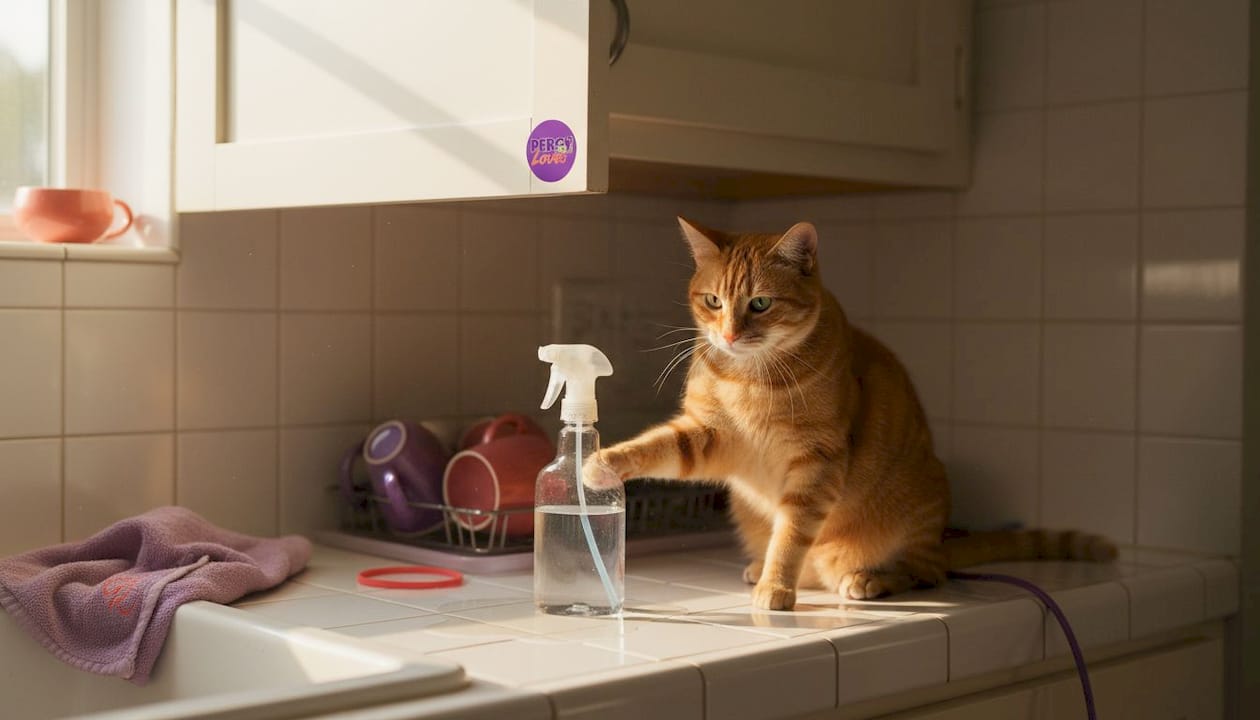
To your cat, all of these are potential playthings. Or worse, a snack.
Follow these steps to systematically eliminate the most common hidden hazards:
-
Lock up cleaning products and medications. The ASPCA is clear: cleaning supplies and medications must be stored in locked cabinets, out of reach. Even products that seem mild to us can cause serious harm to cats. This includes dishwasher pods, bleach, and many essential oils. Check out these pet-safe cleaning tips to find safer alternatives.
-
Manage electrical cords immediately. The Cat Fanciers’ Association warns that chewing electrical cords puts cats at risk of electrocution and fires. Bundle cords with cable organizers, use cord covers, or apply deterrent sprays that make cords taste unpleasant. Do this before it becomes a problem.
-
Clear away small objects. According to the CFA, items like strings, hair ties, and batteries are frequent causes of emergency surgeries in cats. They swallow them, and the results are serious. Do a weekly sweep of bathroom counters, junk drawers, and floors.
-
Never give human medications. Not even a tiny amount. If you suspect your cat has ingested something toxic, call your veterinarian or the ASPCA Poison Control hotline immediately. Don’t wait for symptoms to appear.
-
Reset your home after guests visit. Guests bring bags, coats, and items your cat has never encountered. After any visit, do a quick check for foreign objects, open containers, or moved items. New smells and objects in familiar spaces can also trigger your cat’s curiosity in unpredictable ways.
For more guidance, see how to protect pets from chemicals at home, and explore safe cleaning solutions that won’t put your cat at risk.
Pro Tip: Store all medications, including vitamins, in a cabinet with a child-proof latch. Cats can easily bat pill bottles off counters and then paw them open. Even one acetaminophen tablet can be fatal to a cat.
Plant dangers and safe alternatives
Plants feel like a natural, calming addition to any home. But many of the most popular houseplants are quietly toxic to cats. The issue is that cats don’t know what’s safe. They chew on leaves, bat at hanging tendrils, and roll in potting soil. A plant that looks harmless on an Instagram feed could land your cat in the emergency vet.
The most dangerous plants to remove or relocate right away include:
- Lilies: All parts of the lily plant are toxic, including the pollen. Even a small amount can cause kidney failure in cats.
- Philodendron: Causes oral irritation, drooling, and digestive upset.
- Poinsettia: A holiday staple that irritates the mouth and stomach.
- Sago palm: Extremely toxic; even a few seeds can cause liver failure.
As the Merck Veterinary Manual recommends, the right move is to remove toxic plants entirely and replace them with safe alternatives.
| Plant | Safe for cats? | Notes |
|---|---|---|
| Spider plant | Yes | Non-toxic, easy to grow |
| Boston fern | Yes | Pet-safe and humidity-loving |
| Cat grass | Yes | Great for digestion |
| Lilies (all varieties) | No | Highly toxic, can be fatal |
| Philodendron | No | Oral irritation and GI upset |
| Pothos | No | Toxic if ingested |
| Sago palm | No | Extreme toxicity, liver failure risk |
| Poinsettia | No | Irritating to mouth and stomach |
Pro Tip: Always inspect gift bouquets before bringing them inside. Florists often include lilies and other toxic flowers in arrangements without labeling them. If you’re unsure what’s in a bouquet, look it up before your cat gets near it.
Replacing toxic plants with cat-safe options gives your home the greenery you love while keeping your cat out of danger. For a broader look at safe choices around the house, browse these non-toxic product tips.
Cat-friendly home essentials: Litter boxes, scratching posts, and safe spaces
Managing danger is only half the equation. The other half is building an environment where your cat actually thrives. Safety and enrichment go hand in hand. A stressed or bored cat is far more likely to engage in risky behaviors like chewing on cords, clawing at cabinets, or finding ways into restricted spaces.
Here’s how to set up the essentials right:
-
Litter box placement and number. The ASPCA recommends one litter box per cat plus one extra, scooped daily, placed in quiet locations away from food and water. Skip scented litters entirely. They can cause respiratory irritation and stress. For more on managing litter odors safely, visit our odors and litter guide.
-
Scratching posts that actually work. Cats scratch to stretch, to mark territory, and to maintain their claws. The ASPCA advises posts that are at least 3 feet tall, stable, and covered in sisal. Flimsy posts get ignored. Invest in quality and your furniture will thank you. Trim nails every 2 to 3 weeks to keep claws healthy and your upholstery intact.
-
Vertical space and hiding spots. Cats feel safer when they can observe from above or retreat to a private corner. Cat trees, wall-mounted shelves, and enclosed beds give them the security they need. This directly reduces stress-related behaviors that can lead to accidents or destructive habits.
| Setup option | What it does | Best for |
|---|---|---|
| Covered litter box | Privacy, reduces scatter | Cats who prefer enclosed spaces |
| Open litter box | Easy access, less claustrophobic | Cats who avoid covered boxes |
| Sisal scratching post | Satisfies natural scratch urge | All cats, especially high-energy |
| Cardboard scratcher | Budget-friendly, texture variety | Multi-cat households |
| Wall-mounted cat shelf | Vertical enrichment | Apartments with limited floor space |
| Cat tree with perch | Observation point and napping space | Indoor cats who need stimulation |
Pro Tip: Place a scratching post near where your cat already scratches furniture. Cats scratch in the spots they choose, not the spots you choose. Put the post right there, and gradually move it to a better location once the habit is established.
For overall cat odor and cleanliness tips that don’t compromise your cat’s safety, see our full cat odor and cleanliness tips guide.
Indoor living and emergency planning
Day-to-day safety is essential, but thinking ahead matters just as much. Building a lifestyle and a plan that protects your cat even when things go unexpectedly is the mark of a truly prepared cat parent.
Start with the biggest choice: indoor vs. outdoor living. The data on this is clear. Indoor cats live significantly longer, healthier lives. Outdoor cats face a daily gauntlet of threats including trauma from vehicles, fights with other animals, exposure to diseases, and predators. Keeping your cat indoors permanently isn’t restrictive. It’s protective. Enrich their indoor life with play, vertical space, and mental stimulation to compensate for the outdoor experiences they miss.
Beyond lifestyle, preparation for emergencies matters enormously. Here’s what to have ready:
- A grab-and-go carrier: Keep it accessible, not buried in a closet. Your cat should be comfortable entering it before an emergency.
- Emergency food and water supply: At least 3 to 5 days of your cat’s regular food, stored in a sealed container.
- Medications and medical records: If your cat takes regular medications, keep a small supply set aside. Photograph health records and store them digitally.
- ID tags and microchipping: Even indoor cats should be microchipped. Emergencies cause chaos, and cats escape.
- Separate resources in multi-cat homes: If you have more than one cat, make sure each has their own food bowl, water source, and safe space. Resource competition is a major source of stress and conflict.
Annual vet checkups are non-negotiable, even for cats who never go outside. Indoor cats still age, develop health conditions, and need preventive care. Early detection of issues like kidney disease, dental problems, or hyperthyroidism saves lives and reduces long-term costs.
Our take: Why true cat safety means rethinking ordinary routines
Here’s something most cat-proofing guides don’t talk about: the biggest risks are usually not the dramatic ones. They’re the slow, boring, accumulative ones.
A hair tie gets left on the counter Monday. Another one on Tuesday. By Friday there are six of them, and your cat has been batting them around all week. That’s how ingestion incidents happen. Not in one reckless moment, but through small habits that gradually build into a crisis.
The same is true for stress. Most guides focus on physical hazards, and that’s important. But a cat living in a home with no hiding spots, too much noise, or consistent unpredictability is a stressed cat. Stressed cats get sick more often, engage in destructive behaviors more often, and are more likely to get into things they shouldn’t.
True cat safety is a mindset, not a checklist. It means educating every person in your household, not just the primary caretaker. It means doing a periodic audit every few months, because things change. It means investing in cat-friendly furniture and layout not as a luxury but as a long-term health strategy.
We at Percy Loves see this all the time. Pet parents do the big things right and then overlook the small daily habits that create real risk over time. The fix isn’t complicated. It’s just consistent. Build safety into your routines, not just your one-time setup. You can find helpful pet cleaning safety insights that reinforce this daily mindset.
Keep your home fresh and safe for cats with Percy Loves solutions
A clean home should never come at the cost of your cat’s safety. Many conventional air fresheners and odor sprays contain fragrances and chemicals that irritate cats’ sensitive respiratory systems. Strong scents aren’t just unpleasant for them. They can genuinely stress cats out and, in some cases, cause real harm.

That’s why we created Pal Furresher, Percy Loves’ unscented odor eliminator that is 100% fragrance-free, non-toxic, and lick-safe. It doesn’t mask odors, it tackles them at the source using a proprietary formula that completely eliminates the funk. Whether it’s litter box smells, pet bedding, or mystery odors from your cat’s favorite corner, Pal Furresher handles it safely. We also offer a convenient 4 oz odor eliminator for quick, on-the-go freshness wherever you need it. We give it 5 beans, and so does Percy.
Frequently asked questions
What household items are most dangerous for cats?
Common dangers include cleaning products and medications, electrical cords, small swallowable objects, toxic plants, and unsecured windows or furniture. Addressing all of these categories gives you the most complete protection.
How can I make my windows safe for my cat?
Install sturdy screens, keep windows closed when your cat is unsupervised, and block balcony access entirely to prevent falls, since windows pose serious fall risks even for indoor cats.
Are scented cleaning products or air fresheners bad for cats?
Yes, strong scents can irritate a cat’s respiratory system, and some air fresheners contain compounds that are toxic to cats. Always choose unscented and pet-safe products whenever possible.
What are the safest plants to keep indoors with cats?
Spider plants, Boston ferns, and cat grass are popular, non-toxic plant choices for cat households. Always verify any new plant with a reliable source like the ASPCA’s toxic plant database before bringing it home.
Should I let my cat outside for exercise or happiness?
Indoor-only cats live longer, healthier lives than cats with outdoor access, facing far fewer threats from disease, predators, and trauma. Enriching your home with vertical space, play, and stimulation keeps indoor cats happy without the risks.


