

Top advantages of choosing family-safe pet care products
TL;DR:
- Pet-safe labels are unregulated; always check for third-party certifications and ingredient transparency.
- Using non-toxic, certified cleaning products reduces allergen exposure, irritants, and supports pet health.
- A layered cleaning routine combining vacuuming, non-toxic cleaners, and proper drying maintains a safer, odor-free home.
Walk down any pet store aisle and you’ll see the word “safe” plastered on nearly every bottle. But here’s the problem: “pet-safe” is not a regulated term. It means whatever the brand wants it to mean. Some products hide behind that label while still containing chemicals that can irritate your pet’s skin, disrupt your child’s hormones, or simply fail to clean anything properly. So how do you actually choose products that protect your family and your home? This article walks you through how to assess, compare, and pick pet care solutions that are genuinely safe and genuinely effective.
Table of Contents
- What makes pet care truly family-safe?
- Health and home benefits of family-safe pet care
- Safety vs. effectiveness: Busting the ‘pet-safe’ myth
- Adopting a layered, family-safe cleaning routine
- Why most ‘pet-safe’ labels miss the mark: Our expert take
- Discover truly family-safe odor control solutions
- Frequently asked questions
Key Takeaways
| Point | Details |
|---|---|
| Certified safety matters | Look for products that have third-party certifications like EPA Safer Choice for proven family and pet safety. |
| Effectiveness without harsh chemicals | Non-toxic solutions can match or beat the cleaning power of traditional chemicals when used correctly. |
| Layered cleaning protects health | A routine of vacuuming, safe cleaning agents, and proper drying keeps your home truly clean and minimizes pet risks. |
| Avoid misleading labels | Some ‘pet-safe’ brands lack real performance or certification and may rely on fragrance alone. |
| Routine is key | Consistent, family-safe cleaning habits both cut odors and protect pets day after day. |
What makes pet care truly family-safe?
Family-safe pet care means a product is non-toxic to your pets, the people in your home, and the environment. That sounds simple. But in practice, it requires you to look past the marketing and into the formula itself.
The most reliable way to do that? Look for third-party certifications. The EPA Safer Choice certification is one of the strongest signals you can find. Products that carry this label have been reviewed for every ingredient against a list of high-concern chemicals, meaning you’re not just trusting a brand’s word.
Here’s what to look for on the label:
- Third-party certifications like EPA Safer Choice, EWG Verified, or similar independent standards
- Full ingredient disclosure so you can identify what’s actually in the formula
- Fragrance-free or unscented formulas since synthetic fragrances are a common source of hidden irritants
- No ammonia, bleach, phenols, or quaternary ammonium compounds (QACs) in high concentrations
- Evidence of testing on pets and humans, not just marketing claims
Understanding pet cleaning safety is really about reading past the pretty packaging. A product can call itself “natural” and still contain ingredients that are harmful at normal use levels.
“The safest products aren’t always the ones with the loudest claims. They’re the ones backed by independent data.”
The common misconception is that “pet-safe” automatically means the product has been tested on animals or reviewed by a vet. It almost never does. That label is a marketing choice, not a safety standard. Knowing that changes how you shop.
Health and home benefits of family-safe pet care
When you switch to genuinely family-safe products, the benefits show up fast. Your pets breathe easier. Your kids aren’t crawling on floors that have been mopped with chemical residue. And your home actually smells clean rather than perfumed.
Here are the real advantages you’ll notice:
- Reduced allergen exposure for both pets and humans, especially in homes with sensitive individuals
- Fewer respiratory irritants since non-toxic products skip the synthetic fragrances that trigger reactions
- Safer surfaces for pets who lick floors, counters, and their own paws constantly
- Lower long-term vet bills because a cleaner, less chemically-loaded environment supports better pet health
- Peace of mind when your toddler or curious cat makes contact with a freshly cleaned surface
The layered cleaning methodology research confirms it: combining vacuuming, non-toxic cleaners, and proper drying is the most effective approach for pet homes. It’s not about using one magic product. It’s about doing it in the right order with the right tools.

Pro Tip: Don’t skip mechanical cleaning. Vacuuming before you apply any spray lifts debris and dander so the cleaner can actually reach the surface. Spraying on top of pet hair just wastes product.
A good safe cleaning checklist can help you build this into a routine that doesn’t feel overwhelming. And a solid odor control guide can help you stay on top of smells without reaching for harsh sprays.
The bottom line: family-safe products don’t just protect your household from harm. They actually make your cleaning routine work better.
Safety vs. effectiveness: Busting the ‘pet-safe’ myth
Here’s the myth: if it’s gentle, it doesn’t clean well. Pet owners hear this all the time, and it keeps a lot of families from making the switch. The science tells a different story.
Vinegar at 5% concentration achieves a 2.1 to 2.9 log reduction in bacteria on non-porous surfaces. That’s comparable to some quaternary ammonium compounds (QACs), which are the active ingredients in many conventional disinfectants. Scrubbing with a simple detergent actually outperforms mopping alone, regardless of what cleaner you use.
| Cleaner | Effectiveness | Safety for pets | Notes |
|---|---|---|---|
| Vinegar (5%) | High on non-porous surfaces | Generally safe | Smell fades; avoid on stone |
| Bleach | Very high disinfection | Hazardous at standard use | Requires full rinsing and drying |
| Synthetic fragrances | None (masking only) | Often irritating | No cleaning benefit |
| Certified non-toxic cleaners | High with proper application | Safe when certified | Look for EPA Safer Choice |
Now, not every “natural” brand lives up to the promise. Some popular pet-safe lines may rely on fragrance and marketing rather than third-party safety certifications or proven formulas. That’s not a minor issue. It means you’re paying for a scent experience, not a cleaning result.
Here’s what to verify before buying any pet-safe product:
- Does it carry an independent certification, not just a brand claim?
- Is the full ingredient list available?
- Are there any published test results for efficacy?
- Does it contain synthetic fragrance under any name, including “parfum” or “natural fragrance”?
Explore more on pet-safe cleaning tips and check out our dog safe cleaning guide for species-specific advice.
“Gentle does not mean weak. It means smart chemistry without the collateral damage.”
Adopting a layered, family-safe cleaning routine
Knowing what’s safe is only half the battle. Putting it into a real routine is what actually keeps your home clean and odor-free. The good news: a layered approach is easier than it sounds.
Here’s a simple framework to follow:
- Daily: Remove visible debris. Sweep or vacuum pet areas, especially feeding zones and sleeping spots.
- Every 2 to 3 days: Wipe down hard surfaces with a certified non-toxic cleaner. Let it dwell for 30 to 60 seconds before wiping.
- Weekly: Deep clean soft surfaces. Wash pet bedding, vacuum upholstery, and treat any odor-prone areas with a fragrance-free odor eliminator.
- Monthly: Rotate through less-touched areas. Clean under furniture, behind appliances, and inside crates or carriers.
- As needed: Treat accidents immediately. Blot liquid first, then apply a non-toxic cleaner, then dry completely.
The pet home layered cleaning research supports this structure. Vacuuming before wet cleaning and ensuring proper drying dramatically improves results in pet households.
Pro Tip: For cats and small animals, pay extra attention to litter areas and cage surroundings. These spots accumulate ammonia-heavy odors fast. A fragrance-free neutralizer works better here than a scented spray, because you’re eliminating the odor molecule, not covering it up.
| Task | Frequency | Product type |
|---|---|---|
| Vacuum pet areas | Daily | Vacuum with HEPA filter |
| Wipe hard surfaces | Every 2 to 3 days | Certified non-toxic cleaner |
| Wash pet bedding | Weekly | Fragrance-free detergent |
| Treat soft surfaces | Weekly | Fragrance-free odor eliminator |
| Deep clean crates | Monthly | Non-toxic multi-surface spray |
Your small animal cleaning guide and pet cleaning checklist can help you customize this routine for your specific household.
Why most ‘pet-safe’ labels miss the mark: Our expert take
The humans at Percy Loves have worked with hundreds of pet families. And one thing comes up again and again: people feel misled. They bought a product with a cute design and a “pet-safe” claim. Their cat still sneezed. Their dog still scratched. The smell came back in 20 minutes.
Here’s our honest take. Most mainstream “pet-safe” products are designed around a scent profile, not a safety profile. They smell clean, so they feel clean. But fragrance doesn’t clean anything. And as some product reviews confirm, even well-known brands can fall short on efficacy and certification transparency.
True family safety comes from transparency. You should be able to look up every ingredient in a product and find independent data backing its safety. If a brand can’t show you that, move on.
We always say: choose brands that put testing before scent. Learn how to protect pets from household chemicals and make those choices with your eyes wide open. Your fur baby deserves real safety, not a good-smelling gamble.
Discover truly family-safe odor control solutions
You’ve now got the knowledge to spot the real thing. So let’s put it to work.
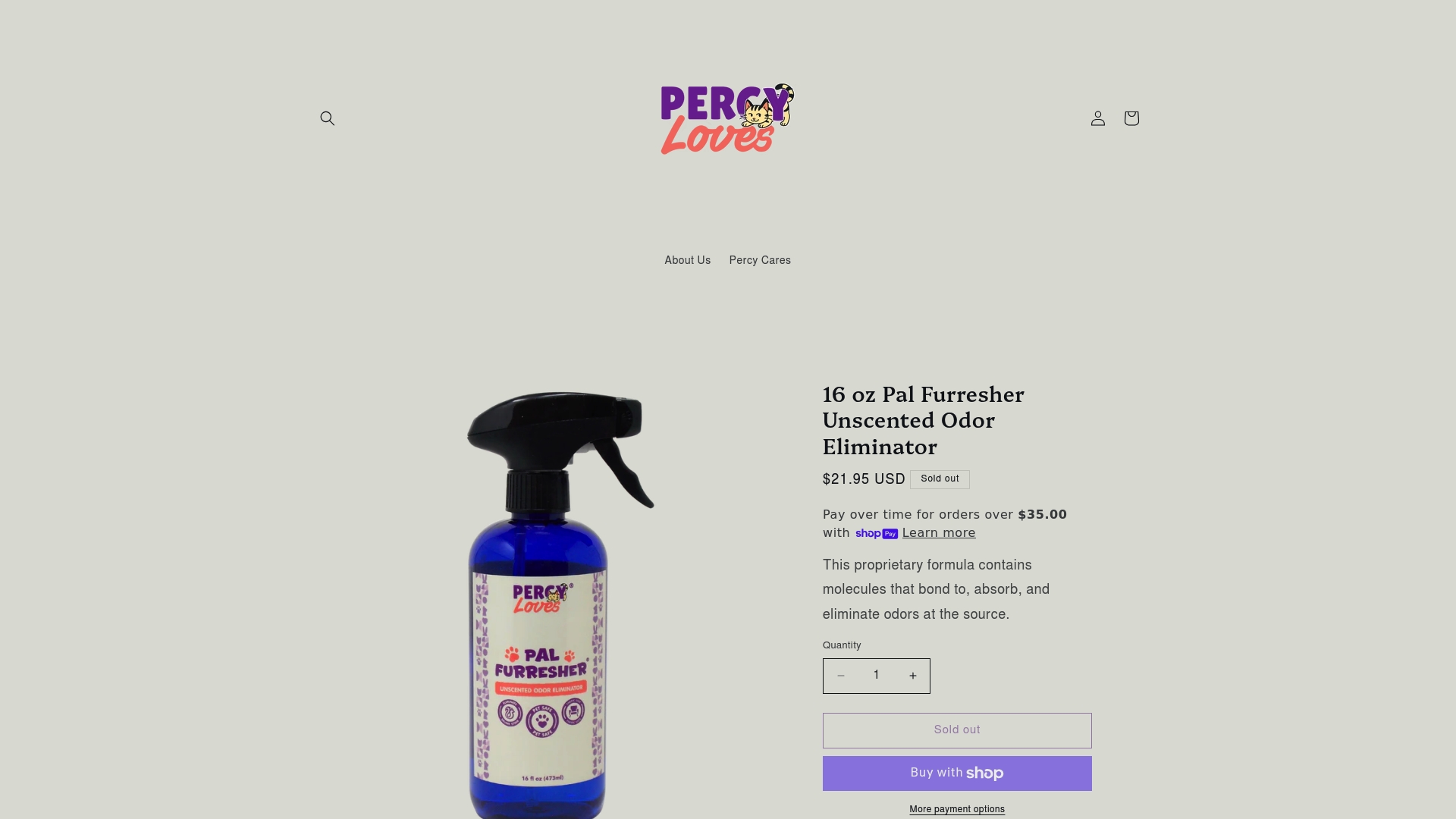
At Percy Loves, everything we make is built around one rule: if it’s not genuinely safe for Percy, it’s not safe enough for your family. Our Pal Furresher is a fragrance-free odor eliminator that is lick safe and tackles odors at the source, not just on the surface. No masking. No mystery ingredients. Just real results you can trust. Check out our unscented odor eliminator or grab the odor eliminator pack to keep every corner of your home fresh and safe.
Frequently asked questions
What chemicals should I avoid in pet care products?
Avoid ammonia, bleach, phenols, and synthetic fragrances in pet care products. These can harm pets even at low concentrations, and certified safer products are specifically reviewed to exclude high-concern chemicals like these.
Is vinegar really safe and effective for cleaning pet areas?
Yes, 5% vinegar reduces bacteria by 2.1 to 2.9 log on non-porous surfaces, which is comparable to some commercial disinfectants, and it is generally recognized as safe for most pets when diluted properly.
Are popular ‘pet-safe’ brands like Mrs. Meyer’s a good choice?
Some well-known brands rely on fragrance rather than verified safety certifications, so always check for third-party certification and full ingredient transparency before buying.
How often should I clean pet areas with family-safe products?
Daily spot cleaning combined with weekly deep cleaning using non-toxic products keeps pet areas safe and odor-free. A layered cleaning approach that includes vacuuming, non-toxic cleaners, and proper drying delivers the best results.
What’s the safest way to control pet odors without fragrances?
Use an unscented odor eliminator that neutralizes odors at the source rather than masking them. Look for products with documented safety testing for both pets and humans to be sure you’re getting true protection.


