

Pet parent responsibilities: full definition and care guide
Most people assume being a pet parent is mostly about love. And love matters, a lot. But pet parent responsibilities go far beyond affection. They include a defined set of daily, lifelong duties that cover nutrition, health, safety, training, and more. If you’ve ever wondered whether you’re doing enough for your fur baby, this guide breaks it all down clearly and practically so you can feel confident in the care you provide.
Table of Contents
- Defining pet parent responsibilities: more than love
- Essential responsibilities every pet parent must meet
- Why health and safety are non-negotiable
- Training, socialization, and minimizing your pet’s impact
- Quality pet care products and ethical choices
- Elevate your pet parenting with trusted solutions
- Frequently asked questions
Key Takeaways
| Point | Details |
|---|---|
| More than affection | Pet parenting means meeting all your pet’s needs for life, not just showing love. |
| Health and safety critical | Routine vet visits, healthy food, and a secure home are non-negotiable responsibilities. |
| Behavior matters too | Training and socialization are part of your duty, supporting both your pet and your community. |
| Quality products help | Choosing the right food, grooming supplies, and safety products makes responsible care easier. |
Defining pet parent responsibilities: more than love
The words we use matter. “Owner” is the legal term in most places. “Guardian” is preferred by some animal advocates. “Pet parent” is the emotional term that most of us connect with today. But here’s the thing: what it means to be a pet parent goes well beyond the label you choose.
“Practices matter more than labels. The daily actions you take for your pet define your role far more than the word you use to describe yourself.” — Psychology Today
This quote gets to the heart of it. You can call yourself a pet parent all day long, but if your dog isn’t getting regular vet visits or your cat’s litter box is never cleaned, the label means nothing. Modern pet family care is about consistent, tangible action.
Here’s what responsible pet parenting actually covers:
- Basic needs: Food, water, shelter, and comfort every single day
- Health care: Vet visits, vaccines, parasite prevention, and emergency planning
- Training and behavior: Teaching your pet how to behave safely around people and other animals
- Legal compliance: Licensing, ID tags, leash laws, and local ordinances
- Emotional well-being: Affection, mental stimulation, and social connection
Legal obligations and moral obligations often overlap, but not always. Legally, you may only be required to provide basic food and shelter. Morally, most pet parents hold themselves to a much higher standard, and rightly so.
Essential responsibilities every pet parent must meet
Understanding the definition gives us context. Now let’s detail the specific daily and lifelong duties every pet parent has. The ASPCA outlines a broad set of responsibilities that cover every stage of a pet’s life.
Nutrition
Feed age-appropriate, high-quality food. Puppies and kittens need different nutrients than senior pets. Always provide fresh, clean water. Avoid table scraps that can cause digestive issues or toxicity.
Shelter and comfort
Your pet needs a safe, comfortable space that protects them from extreme temperatures, hazards, and stress. This applies whether you have a house, an apartment, or a shared living situation.
Health care
Annual vet visits, core vaccines, and parasite prevention are non-negotiable. Build a relationship with a trusted vet before an emergency happens. Have a plan for after-hours care.

Exercise and mental stimulation
Daily exercise needs vary by breed, age, and health. A border collie needs far more activity than a senior Persian cat. Mental stimulation, like puzzle feeders and training games, matters just as much as physical movement.
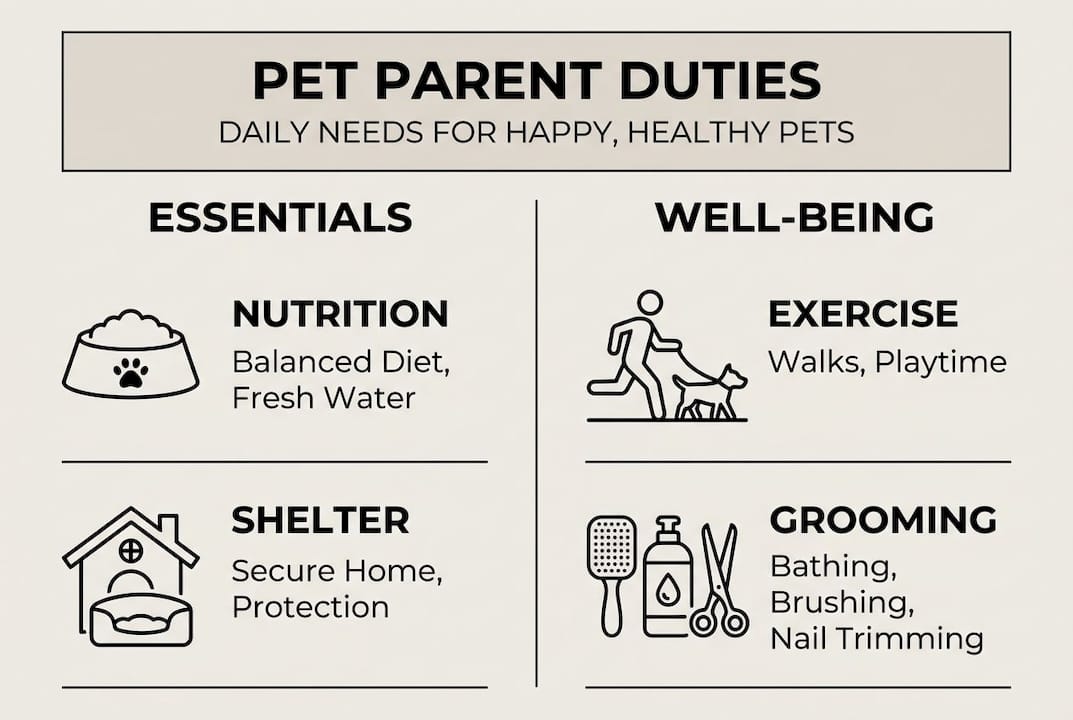
Grooming
Routine grooming keeps your pet comfortable and healthy. This includes brushing, nail trims, ear cleaning, and dental care. Check out pet parenting best practices for grooming routines that work for busy schedules.
ID and licensing
Microchip your pet and keep ID tags current. Register with your local municipality if required. This is one of the simplest ways to protect your pet if they ever get lost.
| Responsibility | Daily | Weekly | Monthly | Annually |
|---|---|---|---|---|
| Fresh food and water | ✓ | |||
| Exercise | ✓ | |||
| Grooming basics | ✓ | |||
| Parasite prevention | ✓ | |||
| Vet checkup | ✓ | |||
| Vaccines review | ✓ |
Pro Tip: Build a simple pet care calendar. Blocking out time for grooming, vet visits, and parasite prevention makes it far less likely you’ll miss something important. Review pet health routines for a ready-made framework.
Why health and safety are non-negotiable
Having the essentials down is a great start. Now let’s zoom in on why health and safety form the backbone of responsible pet parenting.
Here’s a sobering fact: over 50% of dogs and cats in the US are overweight. That’s not a small problem. Obesity in pets leads to joint pain, diabetes, heart disease, and a shorter life. Preventive routines, including proper feeding and daily exercise, are the most powerful tools you have.
Neglect doesn’t always look dramatic. Sometimes it’s skipping a vet visit because nothing seems wrong. Sometimes it’s letting grooming slide for months. These small gaps add up and can lead to serious behavioral and health problems down the road.
Here’s a practical health and safety checklist every pet parent should run through regularly:
- Schedule annual vet visits and keep records
- Stay current on core vaccines
- Apply monthly flea, tick, and heartworm prevention
- Check your home for hazards like toxic plants, loose cords, and unsecured trash
- Have an emergency vet number saved in your phone
- Keep a first aid kit for pets at home
- Monitor weight and adjust food portions as needed
Pro Tip: Keep a simple health log for your pet. Note vet visits, medications, behavioral changes, and anything unusual. This log becomes invaluable when something goes wrong and your vet needs a history fast. Explore dog obesity prevention tips and safety standards for pets to build a stronger routine.
Safe environments matter too. Secure fencing, pet-proofed cabinets, and non-toxic cleaning products all contribute to a home where your pet can thrive. Responsible dog parenting means thinking ahead, not just reacting.
Training, socialization, and minimizing your pet’s impact
Keeping pets healthy and safe is essential, but their behavior and impact on others are equally important. A well-trained, well-socialized pet is a joy to be around. An untrained one can create real problems for you, your neighbors, and your community.
Positive reinforcement training consistently outperforms punishment-based methods. Reward the behavior you want. Redirect the behavior you don’t. It’s that straightforward, and it builds trust between you and your pet.
Socialization is most effective when started early, but it’s never too late. Expose your pet to different people, environments, sounds, and animals in a controlled, positive way. This reduces fear-based reactions and makes everyday life less stressful for everyone.
“Community involvement and positive training aren’t extras. They’re fundamental duties of every responsible pet parent.” — AKC
Here’s a look at common behavioral issues and practical solutions:
| Issue | Likely cause | Solution |
|---|---|---|
| Excessive barking | Boredom or anxiety | More exercise, mental stimulation, training |
| Indoor accidents | Incomplete training or health issue | Revisit training, vet check |
| Marking behavior | Hormonal or territorial | Spay/neuter, consistent training |
| Aggression | Fear or lack of socialization | Professional trainer, gradual exposure |
| Jumping on guests | Learned behavior | Consistent redirection and reward |
Your pet’s impact on others matters too. Clean up waste every time. Manage noise. Respect leash rules in public spaces. These aren’t just courtesies. They’re part of your responsibility as a pet parent. Review pet lifestyle impacts and ASPCA training tips for more guidance on managing behavior at home and in public.
Quality pet care products and ethical choices
Beyond daily routines, the products and sources you choose reflect and reinforce your responsibilities. Choosing quality matters more than most pet parents realize.
Low-quality food, unsafe toys, and harsh grooming products can cause real harm. A chew toy that splinters, a flea collar with toxic chemicals, or a shampoo that irritates sensitive skin are all risks that come with cutting corners. Quality pet care products are integral to positive outcomes, from premium food to safe grooming tools.
Here’s what to look for when evaluating any pet product:
- Ingredient transparency: Can you read and understand what’s in it?
- Safety certifications: Is it tested and approved for use around pets?
- Brand reputation: Does the brand have a track record of recalls or complaints?
- Lick safety: For sprays and topicals, is it safe if your pet grooms themselves after application?
- Fragrance-free options: Pets have sensitive noses. Fragrance-free products reduce irritation risk.
Ethical sourcing matters too. Choosing to adopt from a shelter or buy from a reputable, responsible breeder instead of a puppy mill is one of the most impactful decisions you can make as a pet parent. It reduces demand for inhumane breeding practices and gives animals in need a real chance.
Pro Tip: Before buying any grooming or odor control product, check whether it’s lick safe. Pets groom themselves constantly, so anything applied to their coat or environment can end up in their mouth. Explore the sustainable pet care guide for eco-friendly, pet-safe product recommendations.
Elevate your pet parenting with trusted solutions
We know how much you care about your fur baby. That’s exactly why we built Percy Loves around one simple idea: safe, effective products that make responsible pet parenting easier every single day.
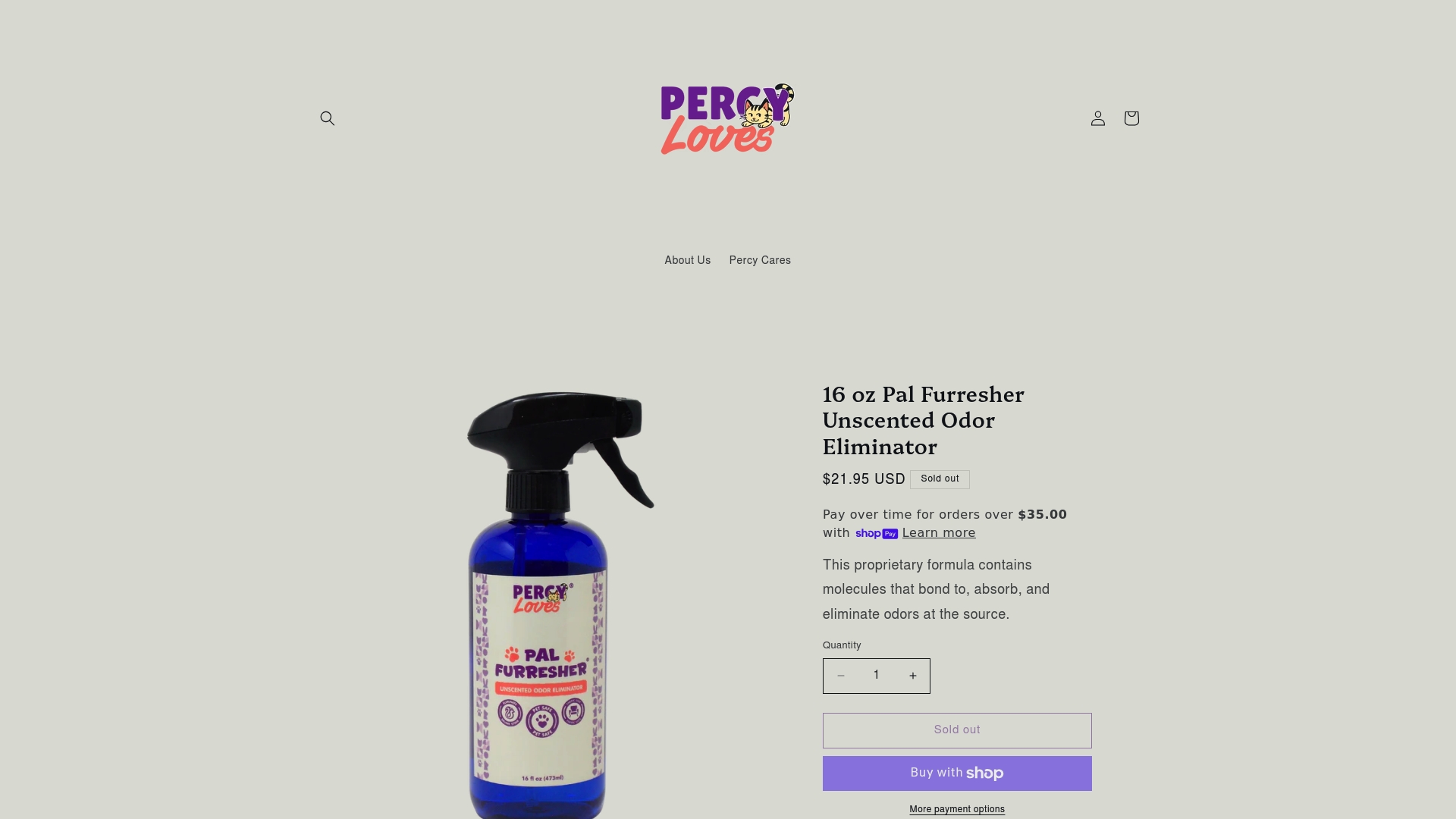
Odor is one of those daily challenges that sneaks up on every pet parent. That’s where Pal Furresher comes in. It’s a fragrance-free odor elimination spray that is completely lick safe. Percy, our real-life funky cat, inspired it. Pal Furresher doesn’t mask odors, it tackles them at the source using a proprietary formula that completely eliminates the problem. No perfume cover-up. No harsh chemicals. Just clean. It comes in a 16 oz size for households that need a little more firepower. Browse everything we offer at Percy Loves and find the tools that help you show up for your pet every single day.
Frequently asked questions
What does ‘pet parent responsibilities’ really mean?
It means providing for every physical, emotional, and social need your pet has throughout their life. Responsibilities cover nutrition, health, safety, training, socialization, ID, and more. Love is part of it, but action is what defines it.
Is there a legal difference between pet owner and pet parent?
Most places use “owner” legally but expect the same standards of care. “Pet parent” is an emotional term that aligns with the same legal obligations as “owner” in most jurisdictions.
What are the basic daily pet parenting tasks?
Feed high-quality food, provide fresh water, exercise your pet, clean up waste, and offer affection and a safe environment. Daily essentials include nutrition, water, exercise, safety, and waste management.
How do I know if my pet is healthy and happy?
Look for a healthy weight, bright eyes, positive behavior, and consistent energy levels. Annual vet visits and positive behavior are the clearest indicators of good health and happiness.
Why is choosing quality pet care products important?
Low-quality products can cause harm, from toxic ingredients to physical injury. Premium food, safe toys, and tested grooming tools support your pet’s long-term well-being and make your job as a pet parent easier.


