

Pet Family Care Definition: Impact on Modern Pet Homes
Every cat parent knows the real test of home comfort comes down to more than just fresh air—it is about creating a welcoming environment where your feline truly feels like family. The concept of pet family care has evolved far beyond basic pet ownership, with American households now embracing their cats as core, emotionally bonded members. Here, you will discover practical solutions for safe, eco-friendly odor elimination that honor your commitment to both your cat’s well-being and the happiness of your entire home.
Table of Contents
- Defining Pet Family Care And Its Origins
- Key Elements Of Pet Family Care Approaches
- Types Of Family Care And Core Roles
- Risks, Mistakes, And Ethical Responsibilities
- Holistic Care Versus Traditional Pet Ownership
Key Takeaways
| Point | Details |
|---|---|
| Emotional Integration | Treat pets as family members, prioritizing their emotional and physical well-being alongside human family members. |
| Holistic Approach | Holistic pet family care focuses on preventive health measures rather than reactive treatments to enhance your pet’s quality of life. |
| Active Involvement | Engage in daily caregiving tasks and integrate pets into family decisions to foster deeper relationships. |
| Environmental Considerations | Maintain a clean and enriching home environment that supports your pet’s health and well-being. |
Defining Pet Family Care and Its Origins
Pet family care isn’t a new concept, but how we practice it has transformed dramatically. Your cat or dog isn’t just an animal living in your home anymore—they’re a family member with emotional needs, health considerations, and a place at the table (sometimes literally). This shift reflects a much bigger change in how society views companion animals.
The origins of treating pets as family members run deeper than you might think. Pet keeping has existed across cultures and history, though the emotional bond we prioritize today emerged gradually. What started as working animals—dogs herding livestock, cats controlling rodents—evolved into something entirely different: animals chosen purely for companionship and emotional connection.
What Pet Family Care Really Means
Pet family care goes beyond basic feeding and shelter. It represents a caregiving approach that mirrors parent-child relationships, where pet parents actively integrate their animals into household routines and decisions.
This means:
- Prioritizing your pet’s emotional and physical well-being alongside human family members
- Making lifestyle choices around your pet’s needs (work schedules, vacation planning, home environments)
- Investing in preventive health care and safety measures
- Creating spaces where your pet feels secure and content
- Understanding that your pet’s quality of life directly impacts family happiness
For cat owners specifically, pet family care acknowledges that indoor cats depend entirely on you for environmental enrichment, mental stimulation, and odor control. Your home is their entire world.
The Cultural Shift Behind Pet Family Care
Something fundamental changed in how families view animals. Pets transitioned from property or tools to genuine family members. This didn’t happen overnight—it’s a cultural evolution tied to changing attitudes about animals, increased urbanization, and a deeper understanding of pet psychology.
Your decision to treat your pet as family reflects modern values about compassion, responsibility, and the human-animal bond.
Pet family care represents a conscious choice to prioritize your animal’s well-being as equal to other household members.
Why This Matters for Your Home
When you embrace pet family care, everything changes. Your environment must support your pet’s needs—cleanliness, safety, comfort, and behavioral outlets. This is where practical solutions become essential.
For households with cats, managing odor naturally and safely becomes non-negotiable. Your pet spends 24/7 in your home, and air quality affects them directly.
Pro tip: Think of pet family care as an ongoing commitment to your pet’s environment—not just their food bowl, but the air they breathe, the surfaces they touch, and the stress-free space they need to thrive.
Key Elements of Pet Family Care Approaches
Effective pet family care doesn’t happen by accident. It requires intentional decisions across multiple areas of your pet’s life. The approach balances your cat’s specific needs with your family’s resources and lifestyle, creating a sustainable caregiving system that works for everyone.
At its core, pet family care combines pet-centric health needs with family dynamics and practical considerations. Your veterinarian becomes a partner in this process, not just someone you visit when something goes wrong. This collaborative approach ensures your pet receives comprehensive care.
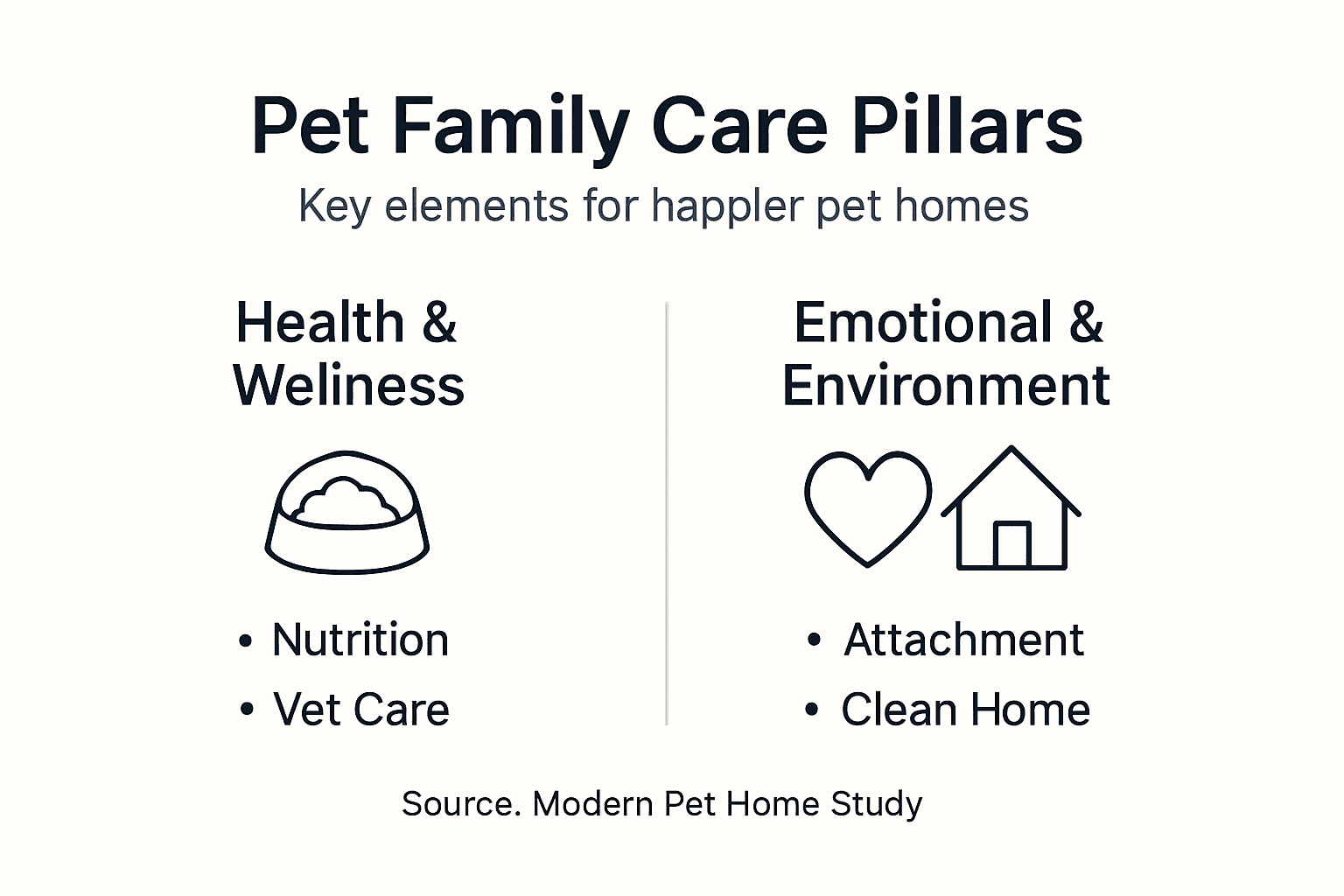
Core Pillars of Pet Family Care
Three main elements define modern pet family care:
- Active involvement in daily care responsibilities and decision-making
- Emotional bonding that recognizes your pet as a valued family member
- Health and behavioral management using strategies adapted to your specific pet
These pillars work together. You can’t achieve true pet family care by focusing on just one area.
Health-Centered Decision Making
Your cat’s health shapes every other decision you make. This means preventive care takes priority over reactive treatment. Regular veterinary checkups, appropriate nutrition, and environmental safety form the foundation.
But health extends beyond medical visits. The air quality in your home matters. The stress levels your cat experiences matter. The cleanliness of their living spaces affects their well-being directly.
Collaborative care planning addresses medical, emotional, and practical aspects of pet wellbeing simultaneously.
Emotional Integration and Attachment
Pet family care embraces the reality that your pet has emotional needs alongside physical ones. Mutual attachment forms the bond that makes caregiving sustainable and meaningful.
This emotional foundation influences:
- How much time you invest in your pet
- The resources you allocate for their comfort
- Your willingness to adapt your environment for their needs
- The priority you give their quality of life
Environmental and Practical Elements
Your home environment directly reflects your commitment to pet family care. For cat owners, this includes managing odor, providing enrichment, ensuring safety, and maintaining spaces that support their natural behaviors.
These practical elements aren’t separate from emotional care—they’re expressions of it.
Pro tip: Schedule a monthly “pet family care check-in” where you assess your cat’s health, behavior, environment, and stress levels, then adjust your approach based on what you observe.
Types of Family Care and Core Roles
Pet family care isn’t one-size-fits-all. Different households approach it differently based on their circumstances, values, and pet’s needs. Understanding the types of care models and the specific roles within your family helps you create a system that actually works.
Modern pet-based family care views domestic animals as core members of the family unit. Your cat isn’t peripheral to family life—they’re integrated into daily routines, decisions, and emotional dynamics. This shift changes how you allocate time, resources, and attention.
Types of Pet Family Care Models
Different households practice pet family care in distinct ways:
- Emotional support model: Your pet provides psychological comfort and stress relief for family members
- Active participation model: Your cat is involved in family routines and activities
- Wellness contributor model: Your pet’s presence supports physical and mental health for the household
- Social facilitation model: Your cat helps strengthen bonds between family members
Most families blend multiple models based on their circumstances.
Core Family Roles in Pet Care
Shared caretaking responsibilities strengthen both family bonds and the human-animal connection. These aren’t optional tasks—they’re expressions of family commitment.
Key responsibilities include:
- Feeding and nutrition: Providing appropriate meals and fresh water daily
- Grooming and hygiene: Brushing, nail care, and maintaining cleanliness
- Health monitoring: Observing behavior changes and scheduling veterinary care
- Emotional nurturing: Active engagement, play, and companionship
- Environmental management: Maintaining safe, clean spaces where your cat thrives
Distributing Roles Across Family Members
Who does what depends on age, capability, and schedule. Younger children might handle play and companionship while adults manage health decisions and finances. Shared responsibility prevents burnout and teaches everyone about commitment.
One person often becomes the primary caregiver. That doesn’t mean others opt out—it means coordinating who handles specific tasks.
Explore core family pet care roles and their importance for your cat’s well-being:
| Role | Example Responsibility | Impact on Cat’s Wellness |
|---|---|---|
| Primary Caregiver | Coordinates veterinary visits | Ensures consistent health oversight |
| Emotional Nurturer | Provides play and engagement | Supports mental stimulation |
| Environmental Manager | Maintains odor-free spaces | Promotes comfort and safety |
| Nutrition Provider | Monitors food and water intake | Supports balanced nutrition |
The most sustainable pet family care models distribute responsibilities in ways that work for your specific household, not based on outdated assumptions about who should care for pets.
The Environmental Care Role
One critical role often gets overlooked: maintaining the home environment itself. Your cat breathes the air in your home, uses litter boxes daily, and spends their entire life in your space. Air quality, odor management, and cleanliness directly impact their health and well-being.
This role requires intentional attention and effective solutions.
Pro tip: Assign specific pet care responsibilities to each family member based on their schedule and capabilities, then rotate them quarterly to prevent one person from burning out and to ensure everyone understands all aspects of your cat’s care.
Risks, Mistakes, and Ethical Responsibilities
Pet family care comes with real responsibilities that extend beyond affection. When you commit to treating your cat as family, you’re making a promise about their welfare, health, and quality of life. Understanding the risks and ethical obligations helps you navigate difficult decisions with clarity.
The biggest risk in pet family care is misalignment between what your cat needs and what you’re actually providing. Conflicts between medical recommendations and owner preferences create situations where your pet’s welfare hangs in the balance. These aren’t simple situations with obvious answers.
Common Mistakes in Pet Family Care
Well-intentioned pet parents make predictable mistakes:
- Delaying necessary veterinary care due to cost, anxiety, or denial
- Inadequate communication with your veterinarian about concerns or preferences
- Prioritizing convenience over your cat’s environmental or emotional needs
- Ignoring behavioral changes that signal health or stress issues
- Choosing cost-cutting measures that compromise your cat’s quality of life
The pattern is clear: avoidance and shortcuts harm your cat.
Ethical Challenges You’ll Face
Misalignment between families and veterinarians regarding care goals creates moral distress for everyone involved. Sometimes your financial situation limits options. Sometimes you disagree with a veterinarian’s recommendation. These tensions are real.
Your ethical responsibility centers on honest decision-making that prioritizes your cat’s welfare over convenience or cost.
The Environmental Welfare Risk
One overlooked ethical area: your cat’s home environment. Poor air quality from odors and ammonia, dirty litter boxes, and inadequate space create chronic stress and health issues. Your cat can’t leave the house to escape these conditions.
Providing a clean, safe home environment isn’t optional—it’s a core ethical responsibility.
Ethical pet family care means advocating for your animal’s best interests, even when that requires difficult conversations or financial sacrifice.
Financial and Emotional Burdens
Pet family care can create significant stress. Veterinary costs, time demands, and emotional weight accumulate. Acknowledging these pressures honestly prevents them from compromising your care quality.
Set realistic expectations about what you can sustain.
Pro tip: Before adopting or committing to pet family care, create a realistic budget that includes routine veterinary care, quality food, environmental management tools, and emergency funds—then be honest about whether you can sustain it long-term.
Holistic Care Versus Traditional Pet Ownership
There’s a fundamental difference between keeping a pet and practicing pet family care. Traditional pet ownership centers on meeting basic needs—food, shelter, veterinary care when something breaks. Holistic pet family care operates from a completely different philosophy about your relationship with your cat.
Holistic pet care treats the whole animal, considering mental, social, and physical influences on health. Rather than waiting for problems to develop, you actively shape conditions that support wellness. This shift changes everything about how you approach your cat’s life.
Traditional Pet Ownership Model
Traditional ownership typically involves:
- Reactive veterinary care focused on treating illness or injury
- Basic food and shelter requirements
- Limited consideration of emotional or environmental needs
- Minimal lifestyle adjustments for the pet
- Separation between pet care and family decisions
This approach works, but it doesn’t maximize your cat’s quality of life or your bond with them.
To visualize the shift in pet care philosophies, here’s how traditional pet ownership and holistic pet family care compare:
| Aspect | Traditional Pet Ownership | Holistic Pet Family Care |
|---|---|---|
| Approach to Health | Treat illnesses after symptoms | Preventive and proactive measures |
| Emotional Involvement | Limited bonding | Deep mutual attachment |
| Environmental Focus | Basic shelter, minimal changes | Regular enrichment and air quality |
| Family Integration | Separate from household routines | Integrated into daily decisions |
The Holistic Family Care Approach
Holistic care emphasizes proactive measures including emotional support and lifestyle modifications, rather than just addressing symptoms. You’re thinking ahead constantly. What does your cat’s environment need? How is their stress level? Are they getting adequate enrichment?
This approach includes:
- Preventive health strategies and personalized nutrition
- Active emotional engagement and mental stimulation
- Environmental optimization for comfort and safety
- Genetic and individual insights about their specific needs
- Integration of your cat into family routines and decisions
Why the Distinction Matters
The difference isn’t philosophical—it produces measurable outcomes. Holistic care promotes deeper bonding and significantly enhances your cat’s quality of life. Your cat experiences less chronic stress, maintains better health, and receives intervention before problems become serious.
For cat owners, this means your home environment becomes part of the care strategy, not an afterthought.
Holistic pet family care treats your cat’s entire existence—their physical health, emotional well-being, and environmental quality—as interconnected elements of wellness.
Practical Implications for Your Home
Choosing holistic care changes daily decisions. Air quality matters. Litter box cleanliness matters. Your cat’s stress levels matter. You’re not just maintaining a pet; you’re actively cultivating an environment where they thrive.
This requires investment—time, attention, and resources—but the payoff is substantial.
Pro tip: Audit your current cat care practices against holistic standards: Are you addressing only problems that arise, or are you proactively creating conditions for wellness? Identify 2-3 areas where you could shift from reactive to preventive care this month.
Enhance Your Pet Family Care With Safe Odor Solutions
The article highlights how integral your cat’s home environment is to their overall wellbeing and quality of life. Managing odors naturally and maintaining fresh air quality are essential parts of modern pet family care. If you want to create a stress-free and healthy living space for your furry family member, addressing these challenges is critical. Specifically, the discussion about “environmental management” and “odor control” shows how these details deeply affect your cat’s emotional and physical health.

Discover how Percy Loves offers solutions designed for committed pet parents who treat their pets as family. Our flagship product, Pal Furresher, is a fragrance-free odor elimination spray that is lick safe and works at the source of the problem instead of just masking odors. Take action today to improve your cat’s environment and reinforce your holistic approach to pet family care. Visit Percy Loves now to bring safe, effective odor control into your home.
Frequently Asked Questions
What are the key components of pet family care?
Pet family care involves active involvement in daily responsibilities, emotional bonding, and health management tailored to the specific needs of the pet and household dynamics.
How can I ensure my pet’s emotional well-being in a family setting?
Emotional well-being can be enhanced by providing regular engagement, playtime, and creating a secure environment that prioritizes their individual needs within the family structure.
What changes can I make to my home to better support my pet’s needs?
You can improve your home by maintaining cleanliness, ensuring good air quality, providing environmental enrichment, and creating safe spaces that reflect your pet’s natural behaviors.
Why is preventive health care important for pets in family settings?
Preventive health care helps to identify potential health issues early, ensuring your pet remains healthy and happy, which ultimately contributes to the overall happiness and well-being of the family.


