

How science shapes pet care: evidence-based solutions
TL;DR:
- Evidence-based veterinary medicine uses research and expertise to improve pet health outcomes.
- Science guides pet nutrition, emphasizing key nutrients like protein, omega-3s, and energy balance.
- Preventive care routines, including exams and vaccinations, are proven to extend pet longevity and well-being.
Not all pet care advice is created equal. Some tips get passed around for years without any real research behind them, and well-meaning guidance from a neighbor or a social media post can actually lead you in the wrong direction. The good news? Veterinary science has made enormous strides in giving pet parents tools that actually work. From nutrition standards to AI-powered diagnostics, science is changing what it means to care for your cat or dog. In this article, we cover how evidence-based medicine, nutrition research, preventive care, and new technology come together to help your fur baby live a longer, healthier life.
Table of Contents
- How evidence-based veterinary medicine informs pet care
- Nutrition science: What your pet’s food is (and isn’t) backed by
- Science-guided preventive care routines for cats and dogs
- Technology and innovation: New frontiers in veterinary science
- What most pet owners miss about science and everyday care
- Find science-powered pet solutions with Percy Loves
- Frequently asked questions
Key Takeaways
| Point | Details |
|---|---|
| Trust the science | Evidence-based approaches offer clear benefits over outdated or anecdotal pet care advice. |
| Read nutrition labels | Nutrition guidelines help you select better pet foods for health at every life stage. |
| Prioritize prevention | Routine exams, vaccines, and parasite control are critical parts of science-backed pet care. |
| Embrace innovation | AI and food technology are shaping practical advances for pet health now and in the future. |
How evidence-based veterinary medicine informs pet care
Evidence-based veterinary medicine, or EBVM, is not just a buzzword. It is a structured approach to making clinical decisions using the best available research, combined with a vet’s clinical expertise and your values as a pet owner. Science drives pet care through EBVM, integrating research evidence with clinical expertise and owner values to produce better outcomes for pets.
What does EBVM actually look like in practice? Here are a few real-world examples:
- Diagnosis: Instead of relying on intuition alone, vets use peer-reviewed studies to identify the most likely cause of symptoms and order targeted tests.
- Treatment: Drug choices and dosages are guided by clinical trials, not just tradition or habit.
- Prevention: Vaccination schedules and parasite control protocols are updated regularly as new data becomes available.
The difference between guesswork and science-guided care is significant. Pets treated under EBVM principles benefit from decisions that have been tested, questioned, and refined. That means fewer unnecessary procedures, more accurate diagnoses, and treatments that are more likely to work.
“The integration of research evidence, clinical expertise, and owner values is what separates modern veterinary medicine from outdated trial-and-error approaches.”
Of course, EBVM is not without its challenges. Veterinary research receives far less funding than human medicine, which means some areas still lack strong clinical evidence. Busy practices may not always have time to review the latest literature. But the direction is clear: science-based preventive pet care is becoming the standard, not the exception.
Pro Tip: Ask your vet what research supports their recommendations. A good vet will welcome the question and may even point you to resources that support a holistic pet wellness approach for your specific pet.
The bottom line is that EBVM gives you a framework for cutting through the noise. When you understand that decisions should be grounded in evidence, you become a more informed advocate for your pet.
Nutrition science: What your pet’s food is (and isn’t) backed by
Food is one of the most important decisions you make for your pet every single day. And yet, pet food marketing often outpaces the actual science. So how do you know what is truly backed by research?
The gold standards for pet nutrition are FEDIAF (the European pet food industry federation) and AAFCO (the Association of American Feed Control Officials). Nutritional science establishes guidelines for complete pet foods based on metabolizable energy, setting minimum and maximum levels for key nutrients. These organizations update their guidelines regularly as new research emerges.
Here are the key nutrients the science consistently highlights:
- Protein: Essential for muscle maintenance, immune function, and energy. Quality matters as much as quantity.
- Energy balance: Overfeeding is a leading cause of obesity in pets. Guidelines set energy density targets to help prevent this.
- Phosphorus: Especially important for senior pets with kidney concerns. Too much can accelerate kidney disease.
- Omega-3 fatty acids: Linked to coat health, joint support, and reduced inflammation.
One area where the science still has gaps is senior pet nutrition. Current FEDIAF standards for nutrition do not yet have fully separate guidelines for senior dogs and cats, even though their metabolic needs differ significantly from younger animals. Researchers are actively working to close this gap.
| Nutrient | Purpose | Watch out for |
|---|---|---|
| Protein | Muscle and immune support | Low-quality sources |
| Phosphorus | Bone health | Excess in kidney disease |
| Omega-3 | Coat, joints, inflammation | Oxidation in cheap foods |
| Fiber | Digestive health | Too much causing loose stools |
Pro Tip: Look for a statement on the label that says the food meets AAFCO or FEDIAF nutritional profiles. That single line tells you the food has been formulated to meet science-based minimums. Use this alongside your dog wellness checklist to make sure you are covering all the bases.
Reading labels with a scientific lens takes practice, but it pays off. You stop being swayed by buzzwords and start focusing on what actually matters for your pet’s body.

Science-guided preventive care routines for cats and dogs
Reactive care costs more and often produces worse outcomes than preventive care. Science backs this up clearly. Building a routine around prevention is one of the smartest things you can do as a pet parent.
According to WSAVA wellness guidelines, preventive care benchmarks include wellness exams, core vaccinations, parasite control, and regular health assessments tailored to your pet’s life stage. These are not optional extras. They are the foundation of a science-backed care plan.
Here is a simple framework for building your preventive routine:
- Annual wellness exams for adult pets, twice yearly for seniors.
- Core vaccinations on schedules recommended by your vet based on current guidelines.
- Parasite prevention year-round, including heartworm, fleas, and ticks.
- Dental checks at least once a year, since dental disease affects over 70% of pets by age three.
- Weight monitoring at every visit to catch early signs of obesity or muscle loss.
Did you know? Pets that receive regular preventive care visits are significantly less likely to face emergency hospitalizations, which can cost five to ten times more than routine checkups.
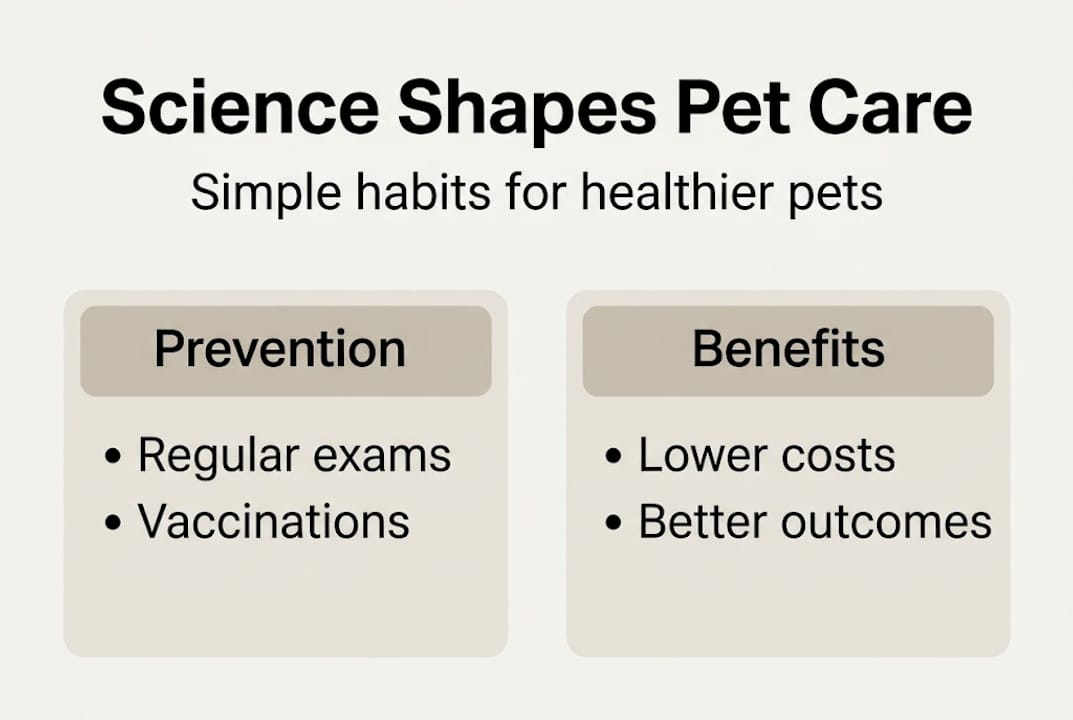
The comparison between reactive and preventive care is stark:
| Approach | Cost | Outcome | Stress on pet |
|---|---|---|---|
| Reactive (treat when sick) | High | Often worse | High |
| Preventive (routine checks) | Lower | Better long-term | Lower |
Building these preventive care tips into your calendar is not complicated. Think of it like scheduling your own annual physical. Your vet becomes a partner, not just someone you call in a crisis. Consistent pet health routines make a measurable difference in lifespan and quality of life.
Technology and innovation: New frontiers in veterinary science
Veterinary science is moving fast. The tools available to vets and pet owners today would have seemed futuristic just a decade ago. And the pace is only accelerating.
Artificial intelligence is one of the biggest game-changers. AI applications improve diagnostics, analytics, and research in veterinary medicine, with algorithms now capable of detecting patterns in imaging and lab results that human eyes might miss. Early detection of conditions like cancer, heart disease, and kidney failure is becoming more accessible because of these tools.
On the nutrition side, pet food processing impacts health in ways that researchers are only beginning to fully understand. NOVA-inspired classifications, which categorize foods by level of processing, may soon be applied to pet food. This could reshape how we think about kibble, canned food, and raw diets.
Here are some of the most exciting developments happening right now:
- AI-powered imaging: Detects tumors, bone abnormalities, and organ changes earlier than traditional review.
- Wearable health monitors: Track heart rate, activity, sleep, and even stress levels in real time.
- Genomic testing: Identifies breed-specific disease risks so you can take proactive steps.
- Microbiome research: Emerging science on gut health is influencing both food formulation and probiotic recommendations.
“The integration of AI into veterinary diagnostics is not replacing vets. It is giving them sharper tools to catch problems before they become serious.”
For pet parents, this means more options and more information. But it also means more responsibility to stay informed. Understanding pet food processing and safety helps you make smarter choices at the store. And knowing that technology can now help eliminate household pet health risks means you have more science on your side than ever before.
What most pet owners miss about science and everyday care
Here at Percy Loves, we talk to a lot of pet parents. And the pattern we see most often is this: people are genuinely trying to do right by their pets, but they are working from incomplete information. They follow advice that sounds authoritative but lacks any real research foundation.
The truth is, EBVM is essential but often challenging for busy pet parents and even veterinarians without institutional support. Life gets busy. You grab the food that is on sale. You skip the vet visit because your pet seems fine. These are understandable choices, but they add up.
What actually moves the needle is not the big dramatic interventions. It is the small, consistent habits: regular vet visits, reading labels, asking questions, and staying curious. The science does not require a PhD to apply. It just requires a willingness to look past the marketing.
Our honest take? The gap between what science knows and what most pet owners practice is still wide. Closing that gap, one decision at a time, is exactly what pet parenting best practices are built on. Work with your vet, stay skeptical of trends, and trust the data over the hype.
Find science-powered pet solutions with Percy Loves
At Percy Loves, everything we make is built around one idea: your pet deserves products that are both safe and effective. We do not cut corners on ingredients, and we do not make claims we cannot back up.

Our pet-safe odor eliminator, Pal Furresher, is a perfect example. It is fragrance-free, lick-safe, and works at the source of odors instead of just covering them up. No harsh chemicals. No mystery ingredients. Just a formula your fur baby can be around safely. Pair it with solid preventive care strategies and you have a home environment that supports your pet’s health from every angle. Science-backed care starts with the choices you make every day, and we are here to make those choices easier.
Frequently asked questions
What is evidence-based veterinary medicine and why does it matter?
Evidence-based veterinary medicine combines scientific research, clinical expertise, and your values to guide effective pet care decisions, reducing guesswork and improving outcomes for your pet.
How does science inform the food I choose for my dog or cat?
Science sets nutrition standards and ingredient minimums through organizations like FEDIAF and AAFCO to ensure foods support your pet’s growth, energy, and long-term health.
Why are preventive vet visits key to pet health?
Routine checks and vaccinations can detect problems early and prevent serious illness. WSAVA wellness benchmarks show that preventive care consistently leads to longer, healthier lives for both cats and dogs.
Is grain-free pet food healthier for my dog or cat?
The research is mixed. Grain-free studies show potential benefits for some pets but also possible risks, including links to certain heart conditions, so talk to your vet before making the switch.


