

What is pet wellness? A 2026 guide to holistic care
Most pet owners think wellness means annual vet visits and quality kibble. That’s like saying human health is just yearly physicals and cereal for breakfast. Pet wellness encompasses physical vitality, emotional balance, mental stimulation, and preventive care working together. This holistic framework addresses root causes rather than masking symptoms. Understanding these interconnected dimensions helps you make informed decisions that genuinely improve your companion’s quality of life and longevity.
Table of Contents
- Understanding Pet Wellness: A Holistic Approach
- Core Pillars Of Holistic Pet Wellness
- The Nuances And Challenges Of Holistic Pet Care
- Applying Pet Wellness: Practical Steps For Owners
- Explore Safe Products To Support Your Pet’s Wellness
- What Is Pet Wellness? Frequently Asked Questions
Key takeaways
| Point | Details |
|---|---|
| Holistic focus | Pet wellness integrates physical, emotional, mental health with prevention at its core |
| Four pillars | Nutrition, exercise, stress management, and veterinary care form the foundation |
| Obesity epidemic | 25% of dogs and 40% of cats are overweight, requiring dietary intervention |
| Integrated approach | Combining conventional diagnostics with holistic methods yields optimal outcomes |
| Personalized plans | Aging pets and those with chronic conditions need customized wellness strategies |
Understanding pet wellness: A holistic approach
Pet wellness is a comprehensive approach integrating physical, emotional, mental, and sometimes spiritual health, focusing on prevention rather than symptom treatment. This definition shifts the paradigm from reactive medicine to proactive care. Instead of waiting for illness to manifest, you create conditions where disease struggles to take hold.
The holistic framework includes several interconnected components:
- Species-appropriate nutrition with whole foods and targeted supplements
- Regular physical activity tailored to age and breed requirements
- Natural therapies like acupuncture, chiropractic care, and massage
- Stress reduction through environmental enrichment and behavioral support
- Preventive veterinary care including vaccinations and parasite control
Traditional pet care typically focuses on treating symptoms after they appear. Your dog limps, you visit the vet, you get medication. Holistic wellness asks why the limp developed and how to prevent future injuries through strength training, weight management, and joint support. This proactive stance improves quality of life significantly.
Consider this perspective from holistic practitioners: “Prevention is the highest form of medicine. When we address imbalances before they become disease, we give pets their best chance at vibrant, pain-free lives.” This philosophy extends beyond physical health to emotional wellbeing, recognizing that anxiety and stress manifest as physical symptoms.
Integrating pet health routines guide principles into daily life creates consistency. Your pet thrives on routine. Regular meal times, exercise schedules, and calm environments reduce cortisol levels and support immune function. These seemingly small choices compound into significant health advantages over years.
Core pillars of holistic pet wellness
Four fundamental pillars support comprehensive pet wellness. Each requires attention and balance to create optimal health outcomes.
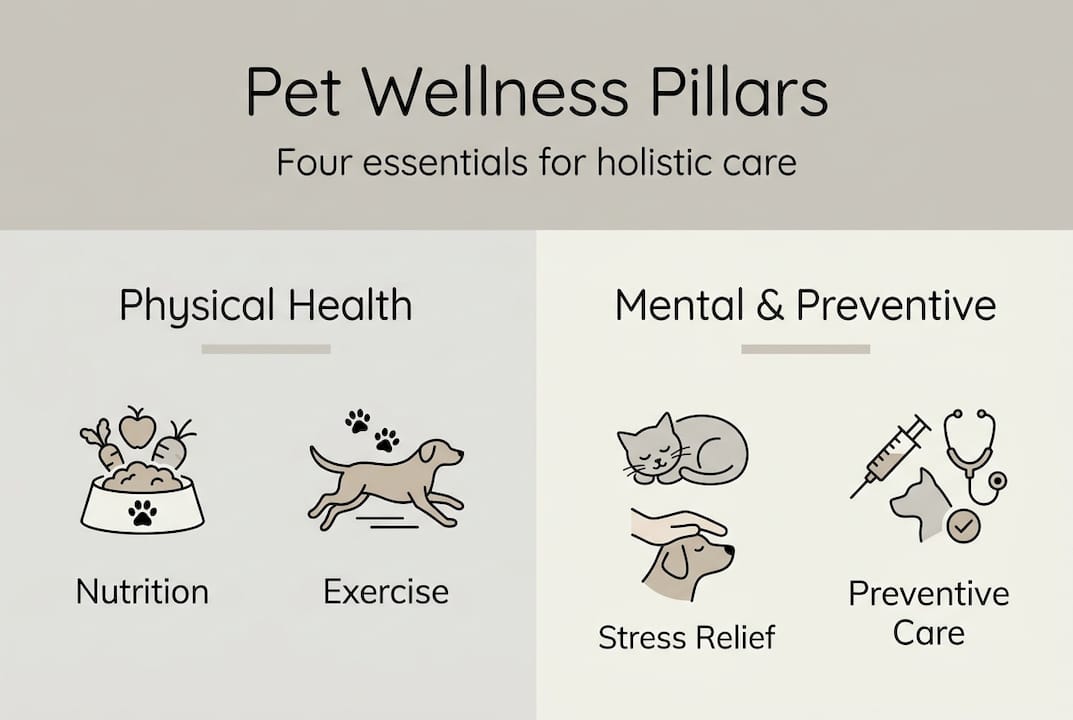
Nutrition forms the foundation. Holistic pet wellness includes nutrition with whole foods and supplements, exercise, stress management, and natural therapies alongside regular vet check-ups. Fresh, minimally processed foods provide bioavailable nutrients that support cellular function. Supplements like omega-3 fatty acids, probiotics, and joint support compounds address specific needs.
Exercise prevents the obesity epidemic. Current data shows 25% of dogs and 40% of cats are overweight, creating cascading health problems. Daily activity maintains lean muscle mass, supports cardiovascular health, and provides mental stimulation. Breed-specific needs vary dramatically. A Border Collie requires intense physical and mental challenges, while a Bulldog needs moderate, temperature-controlled activity.

Stress management utilizes natural therapies. Acupuncture releases endorphins and reduces inflammation. Chiropractic adjustments improve mobility and nerve function. Massage therapy decreases cortisol while increasing oxytocin bonding. Reiki and energy work calm anxious pets, though scientific validation remains limited. These modalities work best as complementary treatments, not replacements for conventional care.
Preventive veterinary care catches problems early. Regular wellness exams, vaccinations per WSAVA protocols, dental cleanings, and parasite prevention form the safety net. Blood work establishes baselines, making it easier to detect subtle changes that signal emerging issues.
Pro Tip: Schedule wellness exams every six months for senior pets (over seven years for dogs, over ten for cats). Age-related changes accelerate quickly, and early intervention prevents minor issues from becoming major crises.
Here’s how these pillars compare in practical application:
| Wellness Component | Primary Benefits | Implementation Frequency |
|---|---|---|
| Whole food nutrition | Improved digestion, coat quality, energy levels | Daily |
| Exercise routines | Weight control, cardiovascular health, behavior management | Daily |
| Natural therapies | Pain relief, stress reduction, mobility support | Weekly to monthly |
| Veterinary check-ups | Early disease detection, preventive care, vaccinations | Biannually or annually |
The nuances and challenges of holistic pet care
Holistic care is complementary, lacks regulatory standards, requires integration with conventional diagnostics, and is not suitable for emergencies. The term “holistic” carries no legal definition in veterinary medicine. Anyone can claim holistic credentials without formal training or oversight. This creates a landscape where genuine expertise mixes with unfounded claims.
Conventional diagnostics remain essential. Blood chemistry panels, imaging, and biopsies detect conditions that holistic assessment might miss. A dog showing lethargy and poor appetite might benefit from acupuncture, but without bloodwork, you could miss kidney failure requiring immediate intervention. Integration means using both toolkits appropriately.
Emergencies demand conventional medicine. Holistic approaches cannot address acute trauma, toxin ingestion, or life-threatening infections. A cat in diabetic crisis needs insulin and fluid therapy, not Reiki. Once stabilized, complementary therapies can support recovery and long-term management.
Diagnostic challenges arise when vague symptoms mask serious conditions. Chronic digestive upset might respond to dietary changes and probiotics, but it could also indicate inflammatory bowel disease, parasites, or cancer. Relying solely on holistic methods delays definitive diagnosis.
Pro Tip: Find a veterinarian trained in both conventional and holistic modalities. These integrative practitioners understand when each approach works best and how to combine them safely for your pet’s specific situation.
Personalization becomes crucial for complex cases. Senior pets often juggle multiple conditions requiring careful balancing of medications, supplements, and therapies. A 12-year-old dog with arthritis, heart disease, and cognitive decline needs an individualized protocol that addresses all three without creating harmful interactions.
Consider these integration principles:
- Use conventional diagnostics to establish accurate diagnoses
- Apply holistic therapies to support healing and quality of life
- Monitor response objectively through follow-up testing and exams
- Adjust protocols based on measurable outcomes, not assumptions
- Maintain open communication between conventional and holistic practitioners
The pet health safety guide emphasizes evidence-based decision making. When research supports a holistic intervention, incorporate it confidently. When evidence is lacking, proceed cautiously and monitor closely. Your pet deserves treatments that work, not just treatments that sound appealing.
Applying pet wellness: practical steps for owners
Prioritize lean body condition, regular parasite and vaccination protocols per WSAVA, and use fresh/whole diets shown to improve metabolic health. These evidence-based recommendations translate into daily actions you can implement immediately.
Start with these foundational steps:
- Feed species-appropriate whole foods or high-quality commercial diets with named protein sources
- Provide daily exercise matching your pet’s age, breed, and health status
- Create calm environments with designated rest areas away from household chaos
- Schedule preventive veterinary visits every six to twelve months
- Monitor body condition monthly using rib palpation and waist observation
- Track behavior changes, appetite shifts, and elimination patterns
Diet quality dramatically impacts wellness outcomes. Fresh, minimally processed foods deliver nutrients in forms your pet’s body recognizes and utilizes efficiently. Commercial dry foods offer convenience but often contain fillers, preservatives, and lower bioavailability nutrients.
| Diet Type | Key Benefits | Important Considerations |
|---|---|---|
| Whole food (raw/cooked) | Maximum nutrient bioavailability, improved digestion, better coat quality | Requires careful balancing, food safety protocols, higher cost |
| Premium commercial | Convenience, consistent nutrition, regulatory oversight | Variable ingredient quality, processing reduces nutrient density |
| Hybrid approach | Balances convenience with fresh food benefits | Needs proper ratios to maintain nutritional completeness |
Natural therapies and environmental wellness work together. Reducing household stressors like loud noises, chaotic schedules, and poor air quality supports immune function. Products designed for safe pet wellness products help maintain clean, healthy living spaces without introducing harmful chemicals.
Pro Tip: Introduce dietary changes gradually over 7 to 10 days, mixing increasing amounts of new food with decreasing amounts of old food. Sudden switches trigger digestive upset and make it harder to identify food sensitivities.
Weight management requires consistent monitoring. Feel your pet’s ribs weekly. You should easily palpate them without pressing hard, but they shouldn’t be visibly prominent. An hourglass waist when viewed from above indicates healthy body condition. Monthly weigh-ins catch gradual gains before they become problematic.
Behavioral changes often signal health issues before physical symptoms appear. Increased vocalization might indicate pain or cognitive decline. Reduced grooming suggests arthritis limiting mobility. Appetite changes can reflect dental disease, nausea, or metabolic disorders. Document these observations and share them with your veterinarian.
Explore safe products to support your pet’s wellness
Creating a healthy home environment extends beyond nutrition and exercise. Clean living spaces free from harsh chemicals and persistent odors contribute to respiratory health and overall comfort. Percy Loves understands that pet parents want effective solutions without compromising safety.

Our unscented odor eliminator 4 oz and unscented odor eliminator 16 oz formulas work at the molecular level to eliminate odors rather than masking them with fragrances. The lick-safe formula means you can use it confidently around curious pets who investigate everything with their tongues. This aligns perfectly with holistic wellness principles: addressing root causes with safe, effective solutions that support rather than undermine your pet’s health.
What is pet wellness? Frequently asked questions
What defines holistic pet wellness?
Holistic pet wellness integrates physical health, emotional balance, mental stimulation, and preventive care into a comprehensive approach. It emphasizes addressing root causes rather than treating isolated symptoms, using both conventional veterinary medicine and complementary therapies when appropriate.
How often should I consult a vet within a wellness plan?
Healthy adult pets need annual wellness exams, while senior pets (over seven for dogs, over ten for cats) benefit from biannual visits. Pets with chronic conditions may require quarterly check-ups to monitor disease progression and treatment effectiveness. Preventive care catches problems early when they’re most treatable.
Are natural therapies safe for all pets?
Most natural therapies like massage and acupuncture are safe when performed by trained practitioners, but individual pets may have contraindications. Always consult your veterinarian before starting new therapies, especially for pets with existing health conditions or taking medications. Some dog obesity reduction tips incorporate safe movement therapies.
How can I prevent obesity in my pets effectively?
Measure food portions accurately using a scale, not a cup. Provide daily exercise appropriate for your pet’s abilities. Limit treats to less than 10% of daily calories. Monitor body condition monthly and adjust feeding amounts based on weight trends rather than package recommendations, which often overestimate needs.
What products support a wellness-friendly home environment?
Look for fragrance-free, non-toxic cleaning products and odor eliminators that work at the molecular level. Avoid harsh chemicals, artificial fragrances, and aerosol sprays that irritate respiratory systems. Products designed for pet wellness odor control maintain clean spaces without compromising air quality or safety.


