

How education shapes better pet parenting and hygiene
TL;DR:
- Educated pet parents make better health and hygiene decisions, leading to healthier pets.
- Veterinarians and credible sources are essential for accurate pet care information.
- Ongoing observation and emotional awareness strengthen the bond and improve pet well-being.
Most pet parents love their fur babies deeply. But love alone doesn’t prevent fleas, dental disease, or a home that smells like, well, pet. What actually changes outcomes is education. Preventive healthcare knowledge empowers pet parents to make smarter decisions for their cats and dogs every single day. Whether you’re brand new to pet parenting or you’ve had animals your whole life, there’s always more to learn. This article walks you through why education matters, where to find the best guidance, and how to turn what you learn into real, daily habits that keep your pets healthier and your home fresher.
Table of Contents
- Why education is essential for responsible pet parenting
- Veterinarians and trusted sources: The backbone of reliable pet education
- Key hygiene practices: What every educated pet parent needs to know
- Adapting education for all life stages and unique needs
- Our perspective: What most pet education guides miss
- Bring education home with safer, fresher solutions
- Frequently asked questions
Key Takeaways
| Point | Details |
|---|---|
| Education prevents problems | Learning proper preventive healthcare leads to better health outcomes for pets. |
| Trust your vet | Veterinarians provide the most reliable and personalized education for pet parents. |
| Hygiene habits matter | Educated owners are more likely to implement key routines that keep pets and homes clean. |
| Adapting is key | Tailored educational focus is important for pets’ age, breed, and unique life situations. |
Why education is essential for responsible pet parenting
There’s a common assumption that experience makes you a good pet parent. And experience does help. But experience without accurate information can actually reinforce bad habits. You might have bathed your dog the wrong way for years and never known it. You might have assumed your cat’s bad breath was just normal. Education is what closes that gap between well-meaning and truly responsible.
Better pet health outcomes are directly linked to how much pet parents know about preventive healthcare. That’s not a small thing. It means the difference between catching a parasite problem early and dealing with a full-blown infestation. It means knowing that a dog’s gum color can signal a health emergency.
Here’s what educated pet parents tend to do differently:
- They schedule regular vet visits instead of waiting for symptoms
- They follow species-specific nutrition guidelines
- They recognize early signs of illness or discomfort
- They maintain consistent hygiene routines at home
- They ask better questions during vet appointments
Compare that to pet parents who rely solely on guesswork or outdated advice from a neighbor. The gap in outcomes is real.
| Educated pet parent | Less informed pet parent |
|---|---|
| Schedules preventive vet visits | Visits vet only when pet is sick |
| Follows parasite control calendar | Treats parasites reactively |
| Maintains dental and coat hygiene | Skips hygiene until problems arise |
| Reads credible resources regularly | Relies on memory or word of mouth |
| Understands breed-specific needs | Applies one-size-fits-all approach |
So where does education come from? The best channels include your veterinarian, credentialed online courses, reputable pet health blogs, and hands-on workshops. Your preventive pet care guide is a great starting point for building that foundation at home.
“Informed pet owners don’t just react to problems. They prevent them. That shift in mindset is everything.”
Education also improves your home environment. When you understand why odors form, why fur accumulates, and how bacteria spread, you start cleaning smarter. That’s better for your pets and better for everyone living under the same roof.

Veterinarians and trusted sources: The backbone of reliable pet education
Not all pet advice is created equal. A quick search online can pull up conflicting information, outdated studies, or outright myths. That’s why knowing where to learn matters just as much as being willing to learn.
Veterinarians are the gold standard. Dog owners rely on vets as their primary source for 13 out of 14 preventive health topics. That’s a striking number. It tells us that pet parents already sense that their vet is the most trustworthy voice in the room. The key is making the most of that relationship.
Here are the core topics your vet is best positioned to educate you on:
- Vaccines and booster schedules specific to your pet’s age and lifestyle
- Nutrition and weight management tailored to breed and health status
- Parasite prevention including flea, tick, and heartworm protocols
- Dental care routines and when professional cleaning is needed
- Hygiene basics for skin, coat, ears, and nails
Beyond the clinical knowledge, how your vet communicates matters. When pet parents feel heard and respected, they’re more likely to follow through on recommendations. Trust is built in the exam room, and that trust directly improves compliance and outcomes. The WSAVA wellness guidelines reinforce this, emphasizing that ongoing owner education is a core component of responsible veterinary care.
For cat owners specifically, check out these essential cat care tips to complement what your vet shares.
Pro Tip: Before every vet visit, write down your top three questions. Include one about hygiene, one about nutrition, and one about anything unusual you’ve noticed. You’ll walk out with more useful information every single time.
When it comes to online resources, look for content backed by veterinary organizations, peer-reviewed research, or credentialed professionals. If a source doesn’t cite its claims, treat it with caution.
Key hygiene practices: What every educated pet parent needs to know
Knowing that hygiene matters is one thing. Knowing how to do it correctly is another. Education bridges that gap. Many pet parents perform hygiene tasks inconsistently or with the wrong technique, not because they don’t care, but because no one ever showed them the right way.
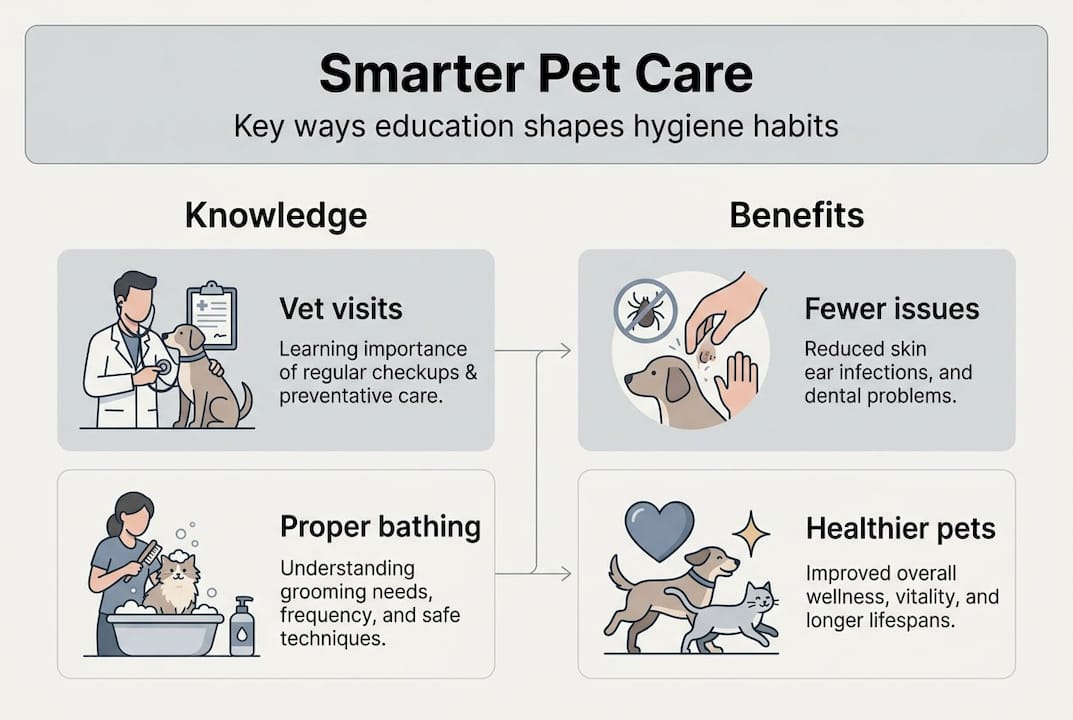
WSAVA guidelines emphasize that regular fecal diagnostics, deworming, and parasite control are foundational to responsible ownership. These aren’t optional extras. They’re core practices that protect your pet and your household.
Here’s a simple 4-step home hygiene routine every pet parent should follow:
- Weekly coat and skin check. Look for fleas, ticks, unusual lumps, or skin irritation. Catch problems before they escalate.
- Regular bathing on schedule. Frequency depends on breed and coat type. Ask your vet what’s right for your specific pet.
- Daily or weekly dental care. Brushing your pet’s teeth prevents tartar buildup, bad breath, and costly dental procedures later.
- Clean living spaces consistently. Wash bedding, vacuum pet areas, and use a lick-safe odor eliminator to keep the home genuinely fresh.
Here’s where education makes the biggest difference: knowing why each step matters keeps you consistent. It’s easy to skip brushing your cat’s teeth when you don’t realize that dental disease affects over 70% of cats by age three.
| Common hygiene mistake | What education teaches instead |
|---|---|
| Bathing too frequently | Match bath frequency to coat type and activity level |
| Skipping parasite prevention in winter | Parasites survive indoors year-round |
| Ignoring ear cleaning | Ear infections are painful and preventable |
| Using scented sprays near pets | Fragrance-free, lick-safe formulas are far safer |
| Brushing teeth only when odor appears | Daily or weekly brushing prevents disease |
For a full breakdown of routines, visit our healthy pet parenting tips and our efficient grooming workflow guide.
Pro Tip: Print out a pet parent cleaning checklist and post it somewhere visible. Visual reminders dramatically improve follow-through on hygiene routines.
Adapting education for all life stages and unique needs
A kitten’s needs are nothing like a senior cat’s. A puppy’s schedule looks completely different from an adult dog’s. Education isn’t a one-time event. It evolves as your pet does.
Routine vet visits every 3-4 weeks for kittens, annually for adults, and twice yearly for seniors cover vaccinations, parasite control, dental care, and early detection of age-related issues. That cadence exists for a reason. Each life stage brings new risks and new educational priorities.
Here’s a snapshot of must-learn topics by life stage:
- Kittens and puppies: Socialization, vaccination schedules, safe handling, early dental habits, and house training
- Adult pets: Nutrition optimization, parasite prevention, weight monitoring, and behavioral enrichment
- Senior pets: Joint health, mobility support, increased dental vigilance, and recognizing cognitive changes
- Special breeds: Breed-specific respiratory, skin, or structural concerns that require tailored hygiene and care approaches
Post-pandemic data has also revealed a concerning trend. Some hygiene practices declined during and after the pandemic, with disrupted vet visit schedules and reduced access to professional grooming. Educated pet parents are better equipped to fill those gaps at home.
“The most important thing a pet parent can do is stay curious. Your pet’s needs will change, and your knowledge needs to keep up.”
Regional factors matter too. Tick populations vary by geography. Certain breeds are more prone to skin conditions in humid climates. A cookie-cutter approach to pet education misses these nuances. Use resources like our pet health routines guide and cat hygiene maintenance tips to stay current on what’s relevant for your specific situation.
Our perspective: What most pet education guides miss
Here at Percy Loves, we’ve noticed something. Most pet education content focuses heavily on checklists, schedules, and techniques. And those things matter. But they miss something equally important: the relational side of pet parenting.
Your pet communicates with you constantly through body language, behavior shifts, and subtle signals. Learning to read those signals is education too. It’s not in most guides, but it’s one of the most powerful skills you can develop. When you understand your cat’s stress behaviors or your dog’s anxiety triggers, you can intervene earlier and more effectively than any checklist allows.
Vets as trusted sources boost compliance precisely because the relationship matters. The same principle applies at home. When you build a genuine bond with your pet through consistent, attentive care, routines become easier and your pet becomes more cooperative.
We believe the best pet parents combine structured knowledge with emotional awareness. Read the guides. Follow the schedules. But also sit with your pet. Observe. Notice what’s different today versus last week. That kind of attentiveness is what separates good pet parenting from great pet parenting. Explore our pet family lifestyle advice for more on building that kind of intentional relationship.
Pro Tip: Set aside five minutes each day just to observe your pet with no distractions. You’ll be surprised what you start to notice.
Bring education home with safer, fresher solutions
Putting your knowledge into practice is where the real magic happens. You’ve learned the routines. You know the hygiene basics. Now it’s about having the right tools to support them.

At Percy Loves, we built Pal Furresher specifically for pet parents who take hygiene seriously. It’s fragrance-free, lick-safe, and tackles odors at the source instead of masking them. No harsh chemicals. No artificial scents. Just effective, responsible odor elimination that fits right into the clean routines you’re building. Percy himself inspired it, because real pets have real funk, and you deserve a real solution. Pair it with the habits you’ve learned and explore our healthy home best practices to keep your space genuinely fresh every day.
Frequently asked questions
How often should I take my cat or dog to the vet for routine education and health checks?
Kittens and puppies should visit every 3-4 weeks, adult pets annually, and seniors twice a year for comprehensive checkups covering vaccines, dental care, and parasite control.
What are the most critical hygiene habits for responsible pet ownership?
Regular parasite control, dental care, bathing on the right schedule, and consistently clean living spaces are the foundation. WSAVA guidelines specifically highlight fecal diagnostics and deworming as non-negotiables.
How does education improve trust between pet parents and veterinarians?
When pet parents come to appointments informed and engaged, communication quality improves, which builds trust, increases visit frequency, and leads to better compliance with health recommendations.
Are hygiene needs and educational focus different for senior pets?
Absolutely. Senior pets need bi-annual health checks and extra attention to dental health, mobility, and early signs of cognitive decline. Our pet health routines guide covers age-specific care in detail.


