

Family care makes better pet parents: 97% agree
TL;DR:
- Sharing pet care responsibilities enhances pet well-being and reduces individual burnout.
- Family involvement teaches empathy, responsibility, and strengthens household bonds.
- Effective routines, communication, and positive reinforcement are key for successful family pet parenting.
Most pet parents assume one person handles everything. One adult feeds, walks, cleans, and schedules vet visits while everyone else enjoys the cuddles. Sound familiar? That setup burns people out fast. Here’s the thing: when the whole family gets involved in pet care, outcomes improve across the board. Pets are calmer, routines stick, and no one person carries all the weight. This guide breaks down the real science behind family-centered pet parenting, shows you how to divide responsibilities without drama, and gives you practical tools to make it work in your home, starting today.
Table of Contents
- Why pets are truly family: Data and cultural shifts
- The family care model: Sharing roles, routines, and rewards
- Health, hygiene, and well-being: Why teamwork matters
- Challenges and solutions: Common pitfalls in family pet care
- Balancing the benefits and costs of family pet care
- Our take: What most guides miss about family pet parenting
- Keep your whole family and home thriving
- Frequently asked questions
Key Takeaways
| Point | Details |
|---|---|
| Pets are family | Viewing pets as family boosts involvement and well-being for everyone at home. |
| Sharing tasks matters | Dividing pet care roles across the family creates healthier routines and lowers stress. |
| Teamwork prevents problems | Coordinated family care reduces health risks and keeps homes clean effortlessly. |
| Challenges have solutions | Common hurdles like busy schedules and missed chores can be managed with structured routines and positive reinforcement. |
| Balance rewards and effort | Family pet parenting brings joy and growth but works best with open communication about its real demands. |
Why pets are truly family: Data and cultural shifts
Pets have always held a special place in American homes. But something has shifted in recent years. The connection between people and their animals has grown deeper, more intentional, and more emotionally loaded than ever before.
97% of US pet owners view their pets as family members. That is not a small trend. That is a near-universal cultural reality. Pets sit at the dinner table in conversation, appear in holiday photos, and get birthday parties. This is not quirky behavior anymore. It is the norm.
“Nearly all American pet owners consider their pets part of the family, reshaping how households organize care, share responsibilities, and make decisions together.”
Pets now fill unique emotional roles across every generation in a household. For children, pets teach empathy, patience, and what it means to care for another living thing. For adults, pets offer stress relief, routine, and companionship. For older family members, pets provide connection and purpose. Everyone benefits. Everyone has a stake.
Household structures are also changing. More couples are choosing pets before or instead of children. Multi-generational homes are more common. Single-person households are rising. Each of these setups creates a different relationship between people and their animals, but the emotional attachment stays just as strong across all of them.
Understanding what pet family care actually means in a modern household helps everyone get aligned. It is not just about who feeds the cat. It is about shared values, shared effort, and shared joy.
Here is a quick look at how pet ownership trends map to household types:
| Household type | Common pet role | Key care dynamic |
|---|---|---|
| Couples without kids | Companion and focus of affection | Shared 50/50 or primary/secondary split |
| Families with young children | Teacher and emotional anchor | Adult-led with kid involvement |
| Multi-generational homes | Bridge between generations | Rotating or age-appropriate roles |
| Single-person households | Primary companion | Solo but often community-supported |
The data is clear. Pets are family. The next step is making sure the whole family shows up for them.
The family care model: Sharing roles, routines, and rewards
Knowing pets are family is one thing. Actually organizing how your family cares for them is another. Most households fall into an accidental pattern where one person does most of the work. It does not have to be that way.
Pets boost family cohesion and teach responsibility across all ages. That benefit only happens when everyone is genuinely involved, not just watching from the sidelines.
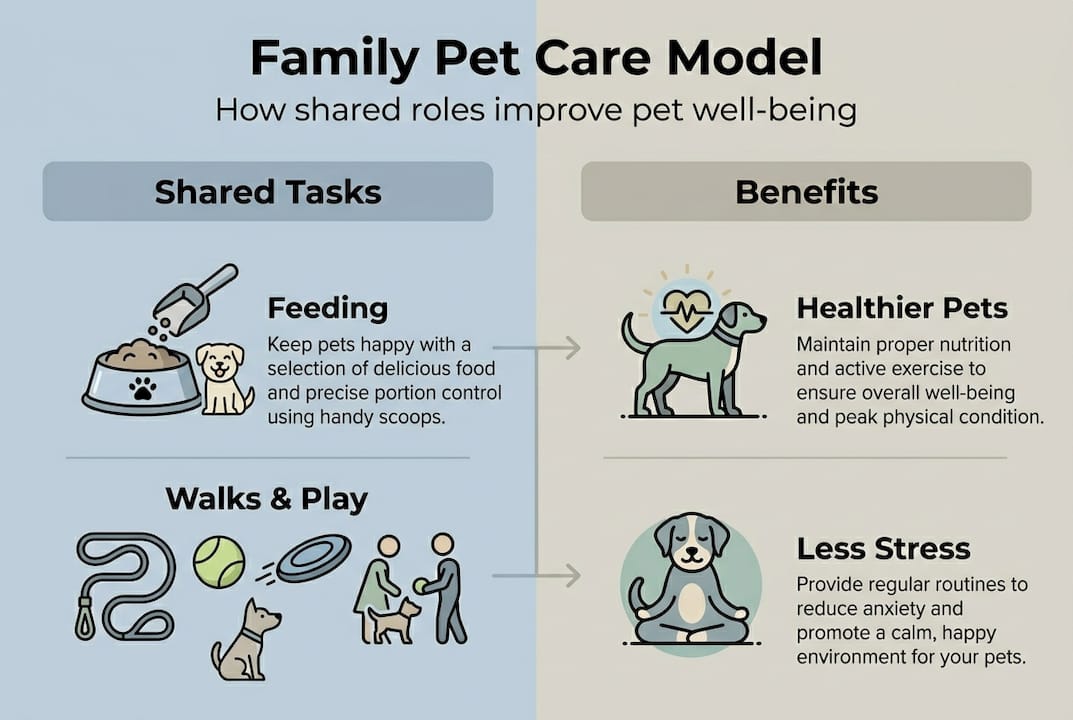
Sharing pet care breaks down into a few core task categories. Feeding and fresh water, daily walks or play sessions, litter box or yard cleanup, grooming and hygiene, and vet appointment scheduling. Each of these can be assigned, rotated, or shared based on age and availability.
Here is how different household types typically divide responsibilities:
| Household type | Daily feeding | Walks/play | Cleaning | Vet scheduling |
|---|---|---|---|---|
| Single parent | Parent | Parent + older kids | Parent | Parent |
| Two-parent household | Rotates between parents | Shared with kids | Kids with supervision | One parent manages |
| Families with kids 8+ | Kids with reminders | Kids + parent | Kids + parent | Parent |
| Multi-generational | Shared by adults | Mixed by availability | Adults or teens | Primary caregiver |
Setting up a working routine does not need to be complicated. Here is a simple numbered approach:
- List every care task your pet needs daily, weekly, and monthly.
- Assign primary owners for each task based on who is most available.
- Add backup assignees for every task so nothing falls through on busy days.
- Review it as a family once a month and adjust based on what is actually working.
- Celebrate completions to keep everyone motivated and engaged.
Following pet health routines does not have to feel like a chore when everyone has a clear, manageable role.
Pro Tip: Use a shared calendar app like Google Calendar or a free app like ChoreMonster for kids. Assign tasks visually so everyone can see what needs doing and who is responsible. Visibility reduces conflict and forgotten duties.
Shared responsibility is also good for pet parenting best practices. When care is distributed, no single person burns out, and your pet gets more consistent attention.
Health, hygiene, and well-being: Why teamwork matters
Consistency is everything when it comes to pet health. And consistency is a lot easier to maintain when multiple people share the load.
Routine vet care, grooming, and hygiene prevent most common health and behavioral problems before they escalate. The CDC on healthy pets makes it clear: regular care is the single most effective tool you have. Family teamwork makes that regular care actually happen.
Here is what good teamwork looks like in practice for pet health:
- Disease prevention: Multiple family members noticing changes in behavior or appearance catches problems earlier.
- Less stress for pets: Consistent handling by several trusted people helps animals feel secure, not anxious.
- Cleaner environment: Shared cleaning tasks mean messes get handled faster, odors do not build up, and living spaces stay healthier for everyone.
- Reduced emergency vet costs: Routine care caught early avoids expensive late-stage treatment.
- Better grooming frequency: When one task belongs to one person, grooming actually happens on schedule.
Imagine a household where Tuesday brushing belongs to your teenager, Saturday bath time belongs to one parent, and daily litter box cleaning rotates among adults. That structure means your pet grooming workflow stays on track without anyone feeling overwhelmed.

Odor control is a big piece of the hygiene puzzle. When cleaning tasks are spread across the family, no single space goes ignored for too long. That makes odor management much more manageable. Check out this pet cleaning checklist to make sure your household covers all the bases.
Pro Tip: Create a rotating monthly checklist posted somewhere visible, like on the fridge. Include tasks like wiping down pet bedding, washing food bowls, and spot-treating odors. When it is visible, it gets done.
Challenges and solutions: Common pitfalls in family pet care
Even the best systems have snags. Here is how to tackle the most frequent family pet care hurdles.
No matter how well you plan, real life gets in the way. Kids lose interest. Schedules get packed. Pets get older and need different kinds of care. These are normal bumps, and they all have solutions.
The most common pitfalls include:
- Kids agreeing to tasks and then not following through
- Adults forgetting whose rotation it is
- Multi-pet households creating confusion over which pet gets what care
- Elderly or special-needs pets requiring adapted routines that disrupt existing systems
“Children under 5 should always be supervised during pet interactions and care tasks. Every family member who has an assigned duty should have a backup person responsible for covering it on busy days.”
According to getting kids to help with pet care, positive reinforcement and consistency are far more effective than punishment or nagging. Here is what actually works:
- Gamify it. Use sticker charts or point systems for kids that earn small rewards.
- Color-code supplies. Assign each pet or task a color so multi-pet confusion disappears.
- Use trackers. A simple whiteboard or app gives everyone visibility without constant reminders.
- Keep expectations realistic. Young kids can fill water bowls. Older kids can handle feeding and brushing.
- Build in flexibility. Life happens. A pet family lifestyle guide helps you adapt without abandoning the system.
For aging pets, the solution is an adapted care plan reviewed every few months. Older animals may need more frequent vet visits, softer food, or gentler grooming. Assign those tasks to the adult most available and document the changes somewhere accessible. This pet cleaning checklist for odor-free homes can help you adjust your hygiene routines as your pet’s needs evolve.
Balancing the benefits and costs of family pet care
After tackling challenges, it is crucial to balance the equation. What do families truly gain, and what should they prepare for in pet parenting?
Honesty matters here. Pets bring real joy, but they also bring real responsibility. 95% of owners report some form of cost or burden from pet ownership. That does not mean it is not worth it. For most families, the positives far outweigh the hard parts.
Benefits of family pet care:
- Emotional support and stress relief for every family member
- Stronger family bonding through shared responsibility
- Teaching children empathy, accountability, and routine
- More time for positive, playful interaction with your pet
- A sense of shared purpose that strengthens household connection
Costs and challenges to prepare for:
- Financial investment in food, vet care, grooming, and supplies
- Time commitment that competes with work, school, and social life
- Grief and emotional weight when a pet’s health declines or they pass
- Potential disagreements within the family about care decisions
The families who thrive with pets are the ones who talk about this balance openly before and during pet ownership. Set realistic expectations. Discuss who is willing to take on what. Revisit those conversations as life changes.
Learning more about pet parent responsibilities helps your whole family go in with eyes open. And investing in pet parenting education keeps everyone growing in their role over time.
Self-care matters too. Shared systems reduce individual burnout. But even in a well-organized family, the primary caregiver needs rest, support, and appreciation for the invisible work they do.
Our take: What most guides miss about family pet parenting
Here at Percy Loves, we have seen a lot of families go from frazzled to functional once they stop treating pet care like a chore chart and start treating it like a shared adventure.
Most guides focus on splitting tasks. That is useful, but it misses the bigger picture. The real win in family pet parenting is not efficiency. It is growth. Children who help care for animals build empathy that carries into every other relationship in their lives. Adults who share the responsibility rediscover the simple joy of a pet they might have started taking for granted.
The best families we have seen do not point fingers when tasks get missed. They celebrate the wins instead. Did your seven-year-old remember to refill the water bowl three days in a row? That deserves a high five. Small victories stick. Exploring family pet care together, rather than assigning it like homework, changes the whole dynamic.
Pro Tip: Hold a short monthly family meeting just about your pet. What is working? What is not? What does your pet seem to need more of right now? Keeping it open and low-pressure keeps routines adaptable and keeps everyone invested.
Flexibility and positive reinforcement are the two things most guides skip entirely. Build those into your system and you will not just have a cleaner home. You will have a closer family.
Keep your whole family and home thriving
Ready to take action? Here are next steps and tools to support your family’s pet parenting journey.
Your family has the heart for this. Now give it the right tools. When everyone pitches in on pet hygiene, odor management becomes so much easier. No more hoping someone else handled it.

That is where Pal Furresher Odor Eliminator comes in. It is fragrance-free, lick-safe, and works at the source to completely eliminate odors, not just cover them up. Perfect for shared cleaning routines because it is safe for everyone in the family, including the furry ones. Grab the travel-friendly 4 oz Pal Furresher for on-the-go freshness. Find more products and resources at the Percy Loves store to keep your home and your whole family feeling great.
Frequently asked questions
Why is family involvement important in pet care?
Family involvement distributes tasks, lessens individual stress, and improves pet health and routine consistency. Pets boost cohesion and teach responsibility at every age when everyone plays an active role.
How can we ensure children stay engaged with pet chores?
Use positive reinforcement, sticker charts, and adult supervision for young kids, and rotate tasks to prevent boredom. Positive strategies work far better than pressure or punishment for keeping kids consistently involved.
What are the main benefits of family pet care?
Family pet care builds bonding, emotional support, and a sense of shared purpose while giving pets more consistent attention. Pets as family serve as companions that strengthen connection across every generation in the household.
Are there drawbacks to family pet parenting?
The main drawbacks are shared costs, time investments, and emotional weight around loss, but most families find the positives far outweigh these. 95% note burdens yet still report that pets meaningfully improve their lives overall.


