

Small animal care guide: Essential tips for a healthy pet
TL;DR:
- Small animals require dedicated care covering husbandry, nutrition, enrichment, social needs, and health monitoring.
- Proper habitat setup, adequate space, safe bedding, and species-specific diets are essential for their well-being.
- Responsible small animal ownership involves steady routines, attentive observation, and avoiding common hazards.
Small animals like rabbits and guinea pigs often get labeled as “easy” first pets. The truth? They’re anything but. Small animal care covers husbandry, health, enrichment, and species-specific needs that take real time and dedication. These animals are sensitive, social, and surprisingly complex. Get their care right, and they’ll reward you with years of personality and joy. Get it wrong, and the consequences can be serious. Whether you’re a new pet parent or looking to level up your routine, this guide covers everything you need to know to give your small pet the life they deserve.
Table of Contents
- Defining small animal care and why it matters
- Setting up a safe and enriching home
- Feeding for health: Diet do’s and don’ts
- Daily care routines: Social, grooming, and health essentials
- Choosing safe products: Bedding, toys, and odor control
- A realistic look: The truth about small animal care
- Safe solutions for small animal homes
- Frequently asked questions
Key Takeaways
| Point | Details |
|---|---|
| Daily commitment | Small animal care demands daily interaction, cleaning, and health checks. |
| Species-specific needs | Guinea pigs, rabbits, and rodents all require different housing, diets, and socialization. |
| Safe products matter | Using proper bedding, foods, and toys reduces health risks and supports well-being. |
| Veterinary oversight | Annual checkups and prompt action for illness help pets live longer, healthier lives. |
Defining small animal care and why it matters
Small animal care is not just about filling a food bowl and cleaning a cage. It covers five core areas: husbandry, nutrition, enrichment, social interaction, and health monitoring. Each one matters. Skip one, and your pet’s quality of life drops fast.
Here’s what surprises most people: the smaller the animal, the easier it is to miss early warning signs. Small pets hide illness well. By the time something looks wrong, it may have been brewing for days. That’s why consistent, attentive daily care isn’t optional. It’s essential.
As daily care requirements show, small animals need appropriate space, health oversight, and regular interaction despite their size. Many pet parents underestimate this going in.
One of the most striking examples? Indoor housing for rabbits. Rabbits kept outdoors often live just 1 to 5 years due to predator stress, extreme temperatures, and limited care monitoring. Rabbits kept indoors with proper care can live 7 to 12 years. That’s more than double the lifespan just from changing their environment.
Core areas of small animal care:
- Husbandry: Cage setup, bedding, cleaning schedule, and space requirements
- Nutrition: Species-appropriate diet, fresh water, and daily feeding routines
- Enrichment: Mental stimulation, chew toys, tunnels, and safe play areas
- Social needs: Companionship requirements that vary by species
- Health monitoring: Daily checks, vet visits, and knowing red flags
“The best thing you can do for a small animal is treat their care like it matters as much as a dog or cat. Because it does.”
Using safe cleaning solutions and establishing pet health routines early sets the foundation for a thriving pet. And if you want to stay ahead of problems, preventive pet care is the smarter long-term play.
Now that we understand the depth of small animal care, let’s look at the environment your pet needs.
Setting up a safe and enriching home
Most cages sold in pet stores are too small. That’s not an opinion. It’s a documented problem. A standard pet store guinea pig cage might offer a square foot or two of space. Guinea pigs actually need a minimum of 7.5 square feet, and more is always better. Rabbits need even more room to binky (jump and twist joyfully) and stretch fully.
Proper housing must include space for natural behaviors, solid flooring, exercise opportunities, hides, and temperature management. Wire floors are a serious hazard. They cause a painful condition called bumblefoot, where pressure sores develop on foot pads. Always use solid flooring.
Bedding and materials to use:
- Paper-based bedding (unscented): Soft, absorbent, and safe
- Fleece liners: Washable and gentle on feet
- Timothy hay: Works double duty as bedding layer and food source
What to avoid:
- Cedar or pine shavings: Toxic aromatic oils harm respiratory systems
- Wire flooring: Causes foot injuries and chronic pain
- Plastic hideaways with small gaps: Chewing creates sharp edges
For more on guinea pig bedding tips, species-specific guidance makes a big difference.
Temperature matters more than most people realize. Guinea pigs are especially prone to heatstroke above 80°F. Keep their space between 65°F and 75°F, away from direct sunlight and drafts.
| Species | Minimum cage size | Critical notes |
|---|---|---|
| Guinea pig | 7.5 sq ft (2 pigs) | Needs daily floor time and hides |
| Rabbit | 8 sq ft + exercise | Needs space to stand fully upright |
| Hamster | 40 gallons or 775 sq in | Burrowing depth is key |
| Rat | 2 cu ft per rat | Vertical space matters |
Pro Tip: Add tunnels, chew toys, and foraging opportunities to the enclosure. Mental enrichment reduces stress and prevents destructive behavior. Rotate toys weekly to keep things interesting.
Review pet parent responsibilities to understand how habitat setup fits into the bigger picture of small animal ownership.
Once your pet’s environment is set up, feeding them right is the next most important factor.
Feeding for health: Diet do’s and don’ts
Hay is the foundation of a healthy small animal diet. For rabbits and guinea pigs, timothy hay should make up 70 to 80% of their daily intake. Guinea pigs also need daily vitamin C from fresh foods since they can’t produce it themselves. Alfalfa hay is too high in calcium for adult animals and should be avoided after six months of age.

Pellets should be plain and species-appropriate. Skip the colorful mixed bags full of seeds, dried fruit, and grain puffs. Those extras look fun but cause nutritional imbalances and selective feeding, where the animal eats only the tasty bits and ignores the healthy parts.
Foods to avoid entirely:
- Iceberg lettuce: Almost zero nutrition and causes digestive issues
- Seeds and nuts: Too high in fat for small herbivores
- Grain-heavy pellet mixes: Disrupt gut balance
- Avocado, onion, garlic: Toxic to most small animals
- Sugary fruits in large amounts: Cause bloating and obesity over time
| Species | Hay % | Fresh veggies % | Pellets % | Special notes |
|---|---|---|---|---|
| Rabbit | 80% | 10-15% | 5% | No alfalfa for adults |
| Guinea pig | 70% | 20% | 10% | Daily vitamin C required |
| Hamster | 50% | 10-20% | 30-40% | More protein options needed |
| Rat | 40% | 20-30% | 30-40% | Protein from cooked egg or tofu ok |
Pro Tip: Introduce new vegetables slowly over 5 to 7 days. Sudden diet changes can upset the digestive system, leading to diarrhea or gas. Start with small amounts and watch for loose stools.
For a broader look at keeping your pet well-fed and well-cared-for, pet parenting best practices are a great resource.
With nutrition covered, daily care routines also involve social, mental, and physical health considerations.
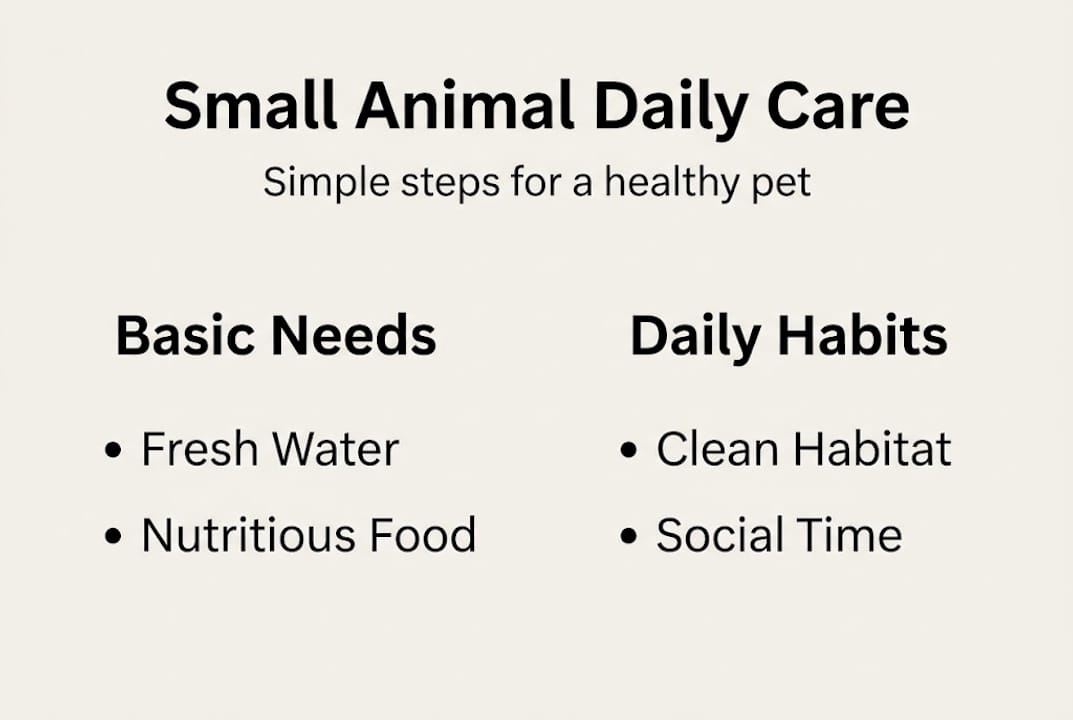
Daily care routines: Social, grooming, and health essentials
Not all small animals want the same social setup. Guinea pigs are highly social and should almost always be kept in pairs or small groups. A lone guinea pig is a stressed guinea pig. Rabbits can bond with another rabbit but need careful, gradual introductions. Hamsters, on the other hand, are largely solitary and will fight if housed together.
Grooming needs vary by breed and coat type. Long-haired rabbits and guinea pigs need daily brushing to prevent matting. Short-haired varieties do fine with weekly brushing. All small animals need their nails trimmed every 4 to 6 weeks. Overgrown nails curl and cause pain when walking.
Daily health check routine:
- Check appetite: Is your pet eating hay, drinking water, and foraging?
- Observe droppings: Healthy droppings are firm, round, and plentiful
- Look for discharge: Eyes and nose should be clear, not crusty or wet
- Assess energy level: Lethargy or hiding more than usual is a red flag
- Check coat and skin: Look for bald patches, redness, or parasites
Early warning signs that need vet attention: labored breathing, teeth grinding, bloated abdomen, head tilt, sudden weight loss, and drooling.
Annual checkups with an exotics vet, daily health checks, and meeting socialization needs are all part of responsible small animal care. A general practice vet may not be the right fit. Find one who specializes in exotic or small mammal care.
Pro Tip: Keep a simple daily log on your phone. Note what your pet ate, how active they were, and what their droppings looked like. Patterns become obvious fast, and you’ll catch problems much earlier.
Explore science-based pet care to understand how evidence supports the routines covered here.
The right products can make these routines safer and more effective. Let’s explore what’s truly safe for small pets.
Choosing safe products: Bedding, toys, and odor control
Product safety matters enormously for small animals. Their respiratory systems are delicate. Many common products marketed for small pets contain chemicals or materials that cause real harm.
Safe product choices include paper bedding, solid exercise wheels, and willow or untreated wood toys. Avoid cedar and pine shavings entirely.
Safe product checklist:
- Bedding: Unscented paper or fleece only
- Chew toys: Untreated wood, willow, apple sticks, and hay-based items
- Hideaways: Solid wood or cardboard, no sharp plastic edges
- Exercise wheels: Solid surface, no rungs that trap feet
- Odor control: Fragrance-free, non-toxic sprays only
For odor control specifically, avoid anything with strong fragrances, bleach, or ammonia. Clean cages regularly and use a product that actually eliminates odors rather than just covering them up. Understand what makes up a pet family care definition to make smarter buying decisions for your household.
Now that you have a clear view of the essentials, here’s a candid perspective on what most pet parents aren’t told.
A realistic look: The truth about small animal care
Here’s what we at Percy Loves see time and again: people adopt small animals thinking they’re choosing the easy route. Six months later, they’re overwhelmed. Not because the animals are difficult in a dramatic way, but because the commitment is steady and unrelenting.
Large enclosures, daily interaction, and specialized diets are the baseline, not the bonus. Small animals aren’t starter pets. They’re a different kind of commitment, one that demands consistency, attention to detail, and a willingness to learn.
But here’s the flip side: the rewards are genuinely special. A rabbit that flops in contentment next to you, or a guinea pig who wheeks (squeals) with excitement when you walk in the room? That’s a bond built on care and trust. It doesn’t happen by accident. It happens because you showed up every day.
The humans at Percy Loves believe that every pet, regardless of size, deserves a home that prioritizes safety, health, and joy. Small animals are no exception. They’re just misunderstood.
Safe solutions for small animal homes
Keeping a small animal’s habitat clean and odor-free is an ongoing task. And it matters more than most people think. Odor buildup isn’t just unpleasant. It can signal poor hygiene conditions that affect your pet’s health.

That’s where Pal Furresher comes in. Our fragrance-free, lick-safe odor eliminator spray doesn’t mask odors. It tackles them at the source. Whether it’s a rabbit hutch, guinea pig cage liner, or any soft surface in your pet’s space, Pal Furresher is safe to use around your most sensitive fur babies. Try the unscented odor eliminator in the 16 oz size for regular use, or grab the 4 oz Pal Furresher for travel or spot treatment. Safe, simple, and effective.
Frequently asked questions
What small animals need the most attention from pet owners?
Guinea pigs and rabbits require the most daily interaction, socialization, and cage maintenance compared to hamsters or mice. Both species are highly social and thrive with compatible companions.
How often should I clean my small animal’s cage?
Spot-clean daily and do a full bedding change once or twice a week. Daily cleaning is essential for maintaining hygiene and monitoring your pet’s health through their droppings and habits.
What are signs my small pet is sick?
Watch for appetite loss, lethargy, diarrhea, unusual posture, or hair loss. Red flags like discharge and hunched posture mean it’s time to call your exotics vet right away.
Can children care for small animals alone?
Children should always be supervised around small pets. Some small animals bite when startled, and consistent, gentle handling takes practice and adult guidance to develop properly.


