

Why pet product pH balance matters for odor control
TL;DR:
- Using products with the wrong pH can disrupt your pet’s skin barrier, leading to irritation and worse odor issues.
- Choosing pH-balanced, veterinarian-tested, and species-specific grooming solutions supports your pet’s long-term skin health and hygiene.
You grab a bottle of baby shampoo or a gentle-smelling spray, thinking it’s safe enough for your fur baby. It smells clean, it says “gentle,” and it works on your skin. But here’s what most pet parents don’t realize: what’s safe for you can seriously disrupt your pet’s skin, making odor problems worse instead of better. The hidden factor? pH balance. Understanding why pH matters for cats and dogs is one of the most important things you can do to protect their skin, coat, and overall comfort. This guide breaks it all down so you can make smarter, safer choices.
Table of Contents
- Understanding pH: What it means for pets
- Why human products can harm cats and dogs
- Choosing safe and effective odor control for pets
- Beyond pH: Other factors in safe pet hygiene
- The overlooked truth about pH and pet product safety
- Shop safe, pH-balanced solutions for odor-free pets
- Frequently asked questions
Key Takeaways
| Point | Details |
|---|---|
| pH matters most | Matching your pet’s skin pH is the single biggest factor for safe, effective odor control. |
| Avoid human products | Stick with products labeled ‘pH-balanced for pets’ to prevent skin problems and aggravated odors. |
| Read product labels | Check for proof like veterinarian testing and clear claims on pet-friendliness and pH. |
| Consider sensitivities | Allergy risks and other ingredients play a role too, especially for sensitive pets. |
Understanding pH: What it means for pets
Now that you know picking based on scent isn’t enough, let’s break down what pH really means for your pets.
pH is a simple scale that measures how acidic or alkaline a substance is. It runs from 0 to 14. A pH of 7 is neutral. Anything below 7 is acidic. Anything above 7 is alkaline. Your pet’s skin has a natural pH level that keeps their skin barrier healthy and their coat in good shape. When you use a product that doesn’t match that level, you throw off the balance. That causes real problems.
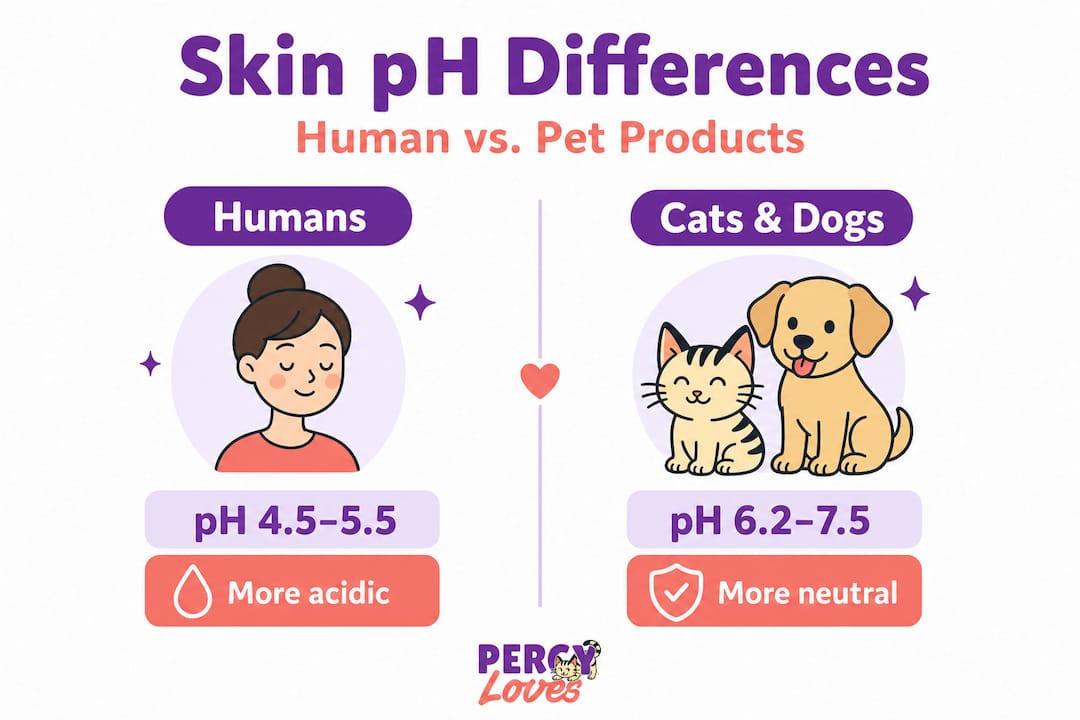
Here’s where it gets interesting. Humans, cats, and dogs all have different natural skin pH levels. Human skin sits in a more acidic range, around 4.5 to 5.5. Dogs tend to have a more neutral to slightly alkaline skin pH, typically between 6.2 and 7.4 depending on the breed and body area. Cats fall somewhere in the middle, usually between 6.0 and 7.0. These differences are significant. A product formulated for human skin is simply not designed for your pet’s biology.
| Species | Average skin pH range | Skin type tendency |
|---|---|---|
| Humans | 4.5 to 5.5 | More acidic |
| Cats | 6.0 to 7.0 | Slightly acidic to neutral |
| Dogs | 6.2 to 7.4 | Neutral to slightly alkaline |
When you use a product with the wrong pH on your pet, their skin barrier gets disrupted. That barrier is the first line of defense against bacteria, yeast, and environmental irritants. Once it’s compromised, bacteria can thrive. And bacteria are a leading cause of that funky pet odor you’re trying to eliminate. So using the wrong product doesn’t just irritate your pet’s skin. It can actually make the smell worse. As pet pH neutral cleanser benchmarks confirm, mismatched skin pH leads to irritation and barrier disruption that no amount of fragrance can fix.
Understanding why pet product pH matters is the first step toward making choices that actually work for your pet’s long-term health.
Key things to know about pet skin pH:
- Breed and body area matter. A dog’s paw pads may have a different pH than their back. This is why one-size-fits-all human products are risky.
- Coat type affects sensitivity. Pets with thicker or double coats may trap moisture and be more vulnerable to pH disruption.
- Age plays a role. Senior pets and young kittens or puppies often have more sensitive skin that reacts faster to pH imbalances.
Pro Tip: When shopping for any pet grooming product, look specifically for the phrase “pH balanced for pets” or “pH balanced for cats/dogs” on the label. Vague terms like “gentle” or “natural” don’t tell you anything about pH compatibility.
Why human products can harm cats and dogs
Understanding pH is the first step. Now let’s see why using the wrong products can backfire, even if they seem gentle.

Many pet parents reach for baby shampoo thinking it’s the safest option. After all, if it’s gentle enough for a newborn, it must be fine for a cat or dog, right? Not quite. Baby shampoos are formulated for human infant skin, which still sits in that more acidic human pH range. That’s a meaningful mismatch for your pet.
Here’s a side-by-side look at how human and pet products compare:
| Product type | Typical pH range | Designed for | Safe for pets? |
|---|---|---|---|
| Human shampoo | 4.5 to 5.5 | Human skin | No |
| Baby shampoo | 5.5 to 6.5 | Human infant skin | Not recommended |
| Pet shampoo (dog) | 6.5 to 7.5 | Dog skin | Yes |
| Pet shampoo (cat) | 6.0 to 7.0 | Cat skin | Yes |
| Unscented pet spray | Formulated for pets | Pet skin and coat | Yes, if pH-matched |
The gap between human and pet pH ranges might look small on paper. But even a one-point difference on the pH scale represents a tenfold change in acidity or alkalinity. That’s not a minor variation. That’s a significant chemical shift that your pet’s skin has to deal with every time you use the wrong product.
“Veterinarian-tested and pH-balanced” is now recognized as a key safety marker for cat products, reflecting how seriously the industry takes pH compatibility in pet care.
Beyond shampoos, the same concern applies to deodorizing sprays, wipes, and rinses. Many products marketed as “pet-friendly” or “all-natural” don’t specify their pH. That’s a red flag. Natural ingredients can still be too acidic or too alkaline for your pet’s skin.
Signs that a product may be disrupting your pet’s skin pH:
- Increased scratching or licking after application
- Redness or flaking on the skin
- Dull or brittle coat that loses its natural sheen
- Persistent or worsening odor even after cleaning
- Dry, flaky patches that weren’t there before
If you notice any of these signs, stop using the product immediately and consult your vet. You can also explore resources on sensitive skin pet care to find gentler alternatives that won’t throw off your pet’s natural balance.
Choosing safe and effective odor control for pets
Armed with the risks of mismatched products, let’s tackle how to select the right odor control solutions for your pet.
Picking the right product doesn’t have to be complicated. Once you know what to look for, you can shop with confidence. Here’s a clear, step-by-step approach to evaluating any pet odor control product before it touches your fur baby.
-
Check for a pH claim on the label. Look for “pH balanced for cats,” “pH balanced for dogs,” or “pH balanced for pets.” If there’s no mention of pH at all, that’s a warning sign.
-
Look for veterinarian testing. Products that have been tested by veterinarians are more likely to meet safety standards for skin compatibility. This isn’t just a marketing phrase. It signals that a professional has evaluated the formula.
-
Avoid products with heavy fragrances. Strong scents often indicate a product that masks odor rather than eliminating it. Fragrance-free formulas are generally safer for sensitive pet skin.
-
Check for enzyme-free options if your pet has sensitivities. Enzymatic cleaners work well on surfaces, but some pets react to enzyme-based sprays applied directly to their coat or skin.
-
Look for “lick-safe” labeling. Cats especially groom themselves constantly. Any product applied to their coat needs to be safe if ingested. If the label doesn’t address ingestion safety, don’t risk it.
-
Avoid alcohol-based formulas. Alcohol can dry out your pet’s skin quickly, disrupting the natural barrier and making odor problems worse over time.
Pro Tip: When in doubt, choose a deodorizing solution that was specifically tested and formulated for cats or dogs, not just “pets” in general. Cats and dogs have different pH ranges and sensitivities, so species-specific formulas offer the best protection.
Building efficient grooming routines around pH-safe products makes a real difference in long-term coat and skin health. And when you want to keep things fresh between baths, odor-free pet grooming solutions that are pH-matched to your pet’s skin are the way to go.
Here’s a number worth knowing: Studies on pet skin health suggest that using pH-mismatched products regularly can increase a pet’s risk of bacterial skin infections, which are one of the most common reasons pet parents notice worsening odor over time. Choosing correctly from the start is far easier than treating an infection later.
Beyond pH: Other factors in safe pet hygiene
Since pH isn’t the only factor, here’s what else to consider when picking safe, healthy odor-control solutions for your pet.
pH balance is foundational. But it’s not the whole story. Even a perfectly pH-balanced product can cause problems if it contains ingredients your pet reacts to. Sensitivities and product compatibility matter just as much as pH when you’re selecting grooming products for your fur baby.
Here are the other key questions to ask before choosing any pet hygiene product:
- Is it fragrance-free? Artificial fragrances are one of the most common causes of skin reactions in pets. Even “natural” fragrances like lavender or citrus can irritate sensitive animals, especially cats whose livers process certain compounds differently than dogs or humans.
- Does it contain any known allergens? Common culprits include parabens, sulfates, and certain preservatives. If your pet has a history of skin issues, this matters a lot.
- Is it safe if licked or ingested? As mentioned, cats groom constantly. Dogs lick their paws and coats too. Any topical product needs to be safe if swallowed in small amounts.
- Has it been tested on the specific species? A product tested on dogs may not be appropriate for cats. Species-specific testing is the gold standard.
- Does it address the source of odor or just cover it? Products that mask odor with fragrance don’t solve the underlying problem. Look for formulas that tackle odor at the source without relying on scent to hide it.
- Is it free from harsh surfactants? Surfactants help products lather or spread, but harsh versions strip natural oils from your pet’s coat, leaving skin dry and vulnerable.
For cat owners especially, checking out cat grooming tips can help you build a routine that addresses all these factors together. And if you want to maintain cat hygiene without constant bathing, knowing which products are safe for daily or weekly use makes the whole process much easier.
The bottom line is this: pH is your starting point, not your finish line. A truly safe, effective pet hygiene routine considers pH, ingredient safety, fragrance, species compatibility, and lick safety all at once.
The overlooked truth about pH and pet product safety
Here’s something we at Percy Loves have noticed after spending a lot of time in the pet care space. Most guides, most store associates, and even some groomers still recommend products based on how they smell or whether they carry a “natural” label. Very few conversations start with pH.
That’s a problem. Because “natural” doesn’t mean pH-safe. A product made entirely from plant-based ingredients can still have a pH that’s completely wrong for your cat or dog. And a product that smells fresh and clean can still be quietly disrupting your pet’s skin barrier every time you use it. The visible results, a shiny coat, a less funky smell right after use, can mask the underlying damage happening at the skin level.
We think the industry needs to do better. Clear pH labeling should be standard, not a bonus feature. Pet parents deserve to know exactly what they’re putting on their animals, not just vague claims about gentleness or natural sourcing. Demand that clarity. Ask your vet. Read the label carefully. If a product doesn’t tell you its pH or whether it’s been veterinarian tested, that’s information worth having before you buy.
The brands that are doing it right are the ones being transparent about formulation, not just fragrance. That’s the standard worth holding everyone to. And when you find a product that checks every box, from pH to lick safety to zero harsh ingredients, it’s worth sticking with it. Your pet’s skin will thank you.
For a deeper look at what owners miss about cat grooming, there’s a lot more beneath the surface than most people realize.
Pro Tip: Before introducing any new grooming or odor-control product to your pet’s routine, especially if they have known sensitivities or a history of skin issues, check with your veterinarian first. A quick conversation can save you and your pet a lot of discomfort.
Shop safe, pH-balanced solutions for odor-free pets
Ready to put this knowledge into practice? Here’s where you can find odor-control solutions that check all the boxes for safety and efficacy.
At Percy Loves, we built Pal Furresher around one simple idea: your pet deserves a product that’s truly safe, not just one that smells okay. Pal Furresher is fragrance-free, enzyme-free, and lick-safe. It tackles odor at the source using a proprietary formula, without masking it with scent or relying on harsh ingredients. No guessing about pH compatibility. No worrying about what happens when your cat grooms after application.
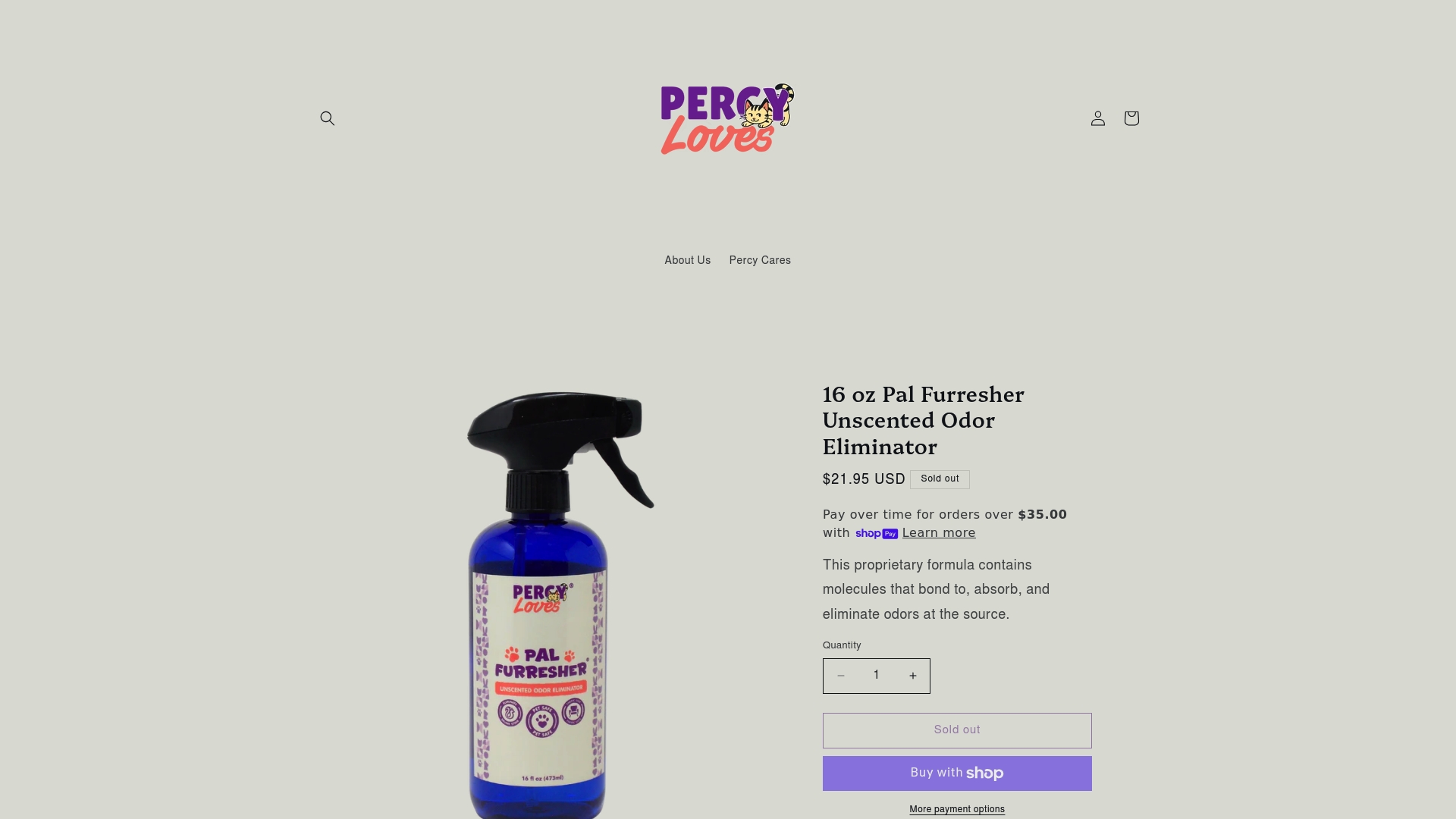
Whether you need a travel-friendly option or a bottle that keeps up with your whole household, we have you covered. The 4 oz Pal Furresher Unscented Odor Eliminator is perfect for on-the-go freshness, and the 16 oz Pal Furresher Unscented Odor Eliminator keeps your home and your pet smelling clean without any of the worry. Health-first odor management, exactly the way it should be.
Frequently asked questions
What does it mean if a pet product is pH-balanced?
A pH-balanced pet product is formulated to match your pet’s natural skin acidity, which helps protect their skin barrier and prevent irritation. As veterinarian-tested standards confirm, pH balance is a key safety marker for cat grooming products.
Can I use baby shampoo or human deodorizing sprays on my pet?
No, using human products can disrupt your pet’s skin pH and lead to irritation or worsening odor. Human and baby shampoos don’t match pet pH ranges and can cause real skin problems over time.
How do I know if a pet product is pH-safe?
Check the label for terms like “pH balanced for pets” and look for evidence such as “veterinarian tested.” Products that carry a veterinarian-tested claim have been evaluated for safety and pH compatibility.
Is pH the only factor I should consider when choosing pet hygiene products?
No, also check for fragrance type, ingredient safety, and suitability for your pet’s specific sensitivities. Other factors beyond pH, including allergens and lick safety, are equally important for truly safe grooming.


