

Pet odor control: Protect your cats and small animals
TL;DR:
Odor signals underlying waste breakdown and ammonia buildup, impacting your pet’s health and air quality.
Managing odors at the source through regular cleaning and proper routines is essential for pet wellness and safety.
Most pet parents assume odor control is about making a room smell better. But there is so much more going on beneath the surface. When your cat’s litter box or your guinea pig’s cage starts to smell, that odor is a signal, not just an annoyance. It tells you that waste is breaking down, ammonia is building up, and your pet’s air quality is taking a hit. This guide is all about shifting your thinking from masking smells to managing them at the source, because that shift is one of the most practical things you can do for your pet’s wellness and comfort.
Table of Contents
Key Takeaways
| Point | Details | |
|---|---|---|
| Odor source removal | Managing waste, damp bedding, and porous surfaces eliminates odors and protects pet wellness. | |
| Ammonia control | Frequent cleaning and ventilation reduce ammonia, which is crucial for small animal respiratory health. | |
| Routines beat masking | Establishing spot-cleaning and airflow routines prevents traps and odors better than fragrances. | |
| Cage size matters | Larger enclosures help slow ammonia build-up and support better air quality for pets. | |
Why odor control matters for pet wellness
Let’s be clear: odor is not just a human inconvenience. For cats and small animals like guinea pigs, rabbits, and hamsters, living in a smelly environment is a real health risk. The biggest culprit is ammonia, a gas that forms as urine breaks down in bedding, litter, and cage materials.
Ammonia is a respiratory irritant for small animals and can contribute to serious respiratory disease. Guinea pigs, for example, breathe closer to their bedding than we breathe to our floors. The ammonia concentration they experience is dramatically higher than what you notice standing in the room. Even at levels your nose barely detects, your small pet may already be struggling.
Here is why this matters so much:
-
Ammonia irritates mucous membranes in the nose, throat, and lungs of small animals
-
Persistent exposure can increase the risk of chronic respiratory illness
-
Cats are sensitive too, especially in poorly ventilated spaces where litter box gases concentrate
-
Human family members also benefit from better air quality in shared living spaces
-
Ignoring odors does not make the underlying waste residue disappear; it makes it worse
“Odor sources in pet homes are best managed by removing waste and residues, not masking with fragrance.”
The good news is that pet wellness odor solutions do not have to be complicated. Once you understand the source of the problem, addressing it becomes much more straightforward.
With the connection between odor and health clear, let’s explore how to address its sources rather than cover them up.
Common odor sources in pet homes and why masking fails
Odors in pet homes come from a handful of predictable places. Knowing exactly where they originate helps you stop them before they take over.
The main sources include decomposing waste in litter and bedding, moisture trapped in porous flooring and carpet fibers, urine soaked into furniture upholstery, and residue left behind after incomplete cleaning. These are physical problems, not air quality problems. And that is exactly why spraying a room with air freshener does not fix them.

Persistent pet odors after cleaning often result from residues absorbed in porous materials, which standard cleaning or masking simply does not eliminate. Think about what happens when urine seeps into a carpet pad. You clean the surface, it smells okay for a day, and then humidity brings the odor back. That cycle repeats endlessly unless you actually break down the residue.
Here is a straightforward comparison of masking versus source control:
| Approach | How it works | Does it eliminate odor? | Safe for pets? |
|---|---|---|---|
| Air fresheners | Adds competing scent | No | Often not |
| Scented candles | Covers smell temporarily | No | Often not |
| Perfumed sprays | Masks with fragrance | No | Often not |
| Natural cleaning agents | Breaks down organic residue | Yes | Usually yes |
| Source removal + cleaning | Removes the physical cause | Yes | Yes |
| Odor eliminator spray (fragrance-free) | Neutralizes at molecular level | Yes | Yes, if lick safe |
The difference between masking and source-control is not just about effectiveness. It is also about safety. Many scented products contain volatile organic compounds (VOCs) that can irritate pets’ respiratory tracts, especially cats, who have highly sensitive airways. You think you are solving a problem but you may be creating a new one.
Pro Tip: If an air freshener makes your space smell “clean” but your pet keeps scratching at their face or sneezing, the fragrance may be the issue. Go fragrance-free and see if the behavior improves.
Building odor-free home routines is really about replacing masking habits with source-focused ones. It takes a little adjustment but the results are real and lasting.
Knowing why odors form makes it easier to see how proper routines can break the cycle, so what does real odor control look like in daily pet care?
Effective odor control routines for cats and small pets
Consistent routines are the backbone of any odor management plan. Here is what actually works, based on solid evidence and practical experience from pet parents who have been there.
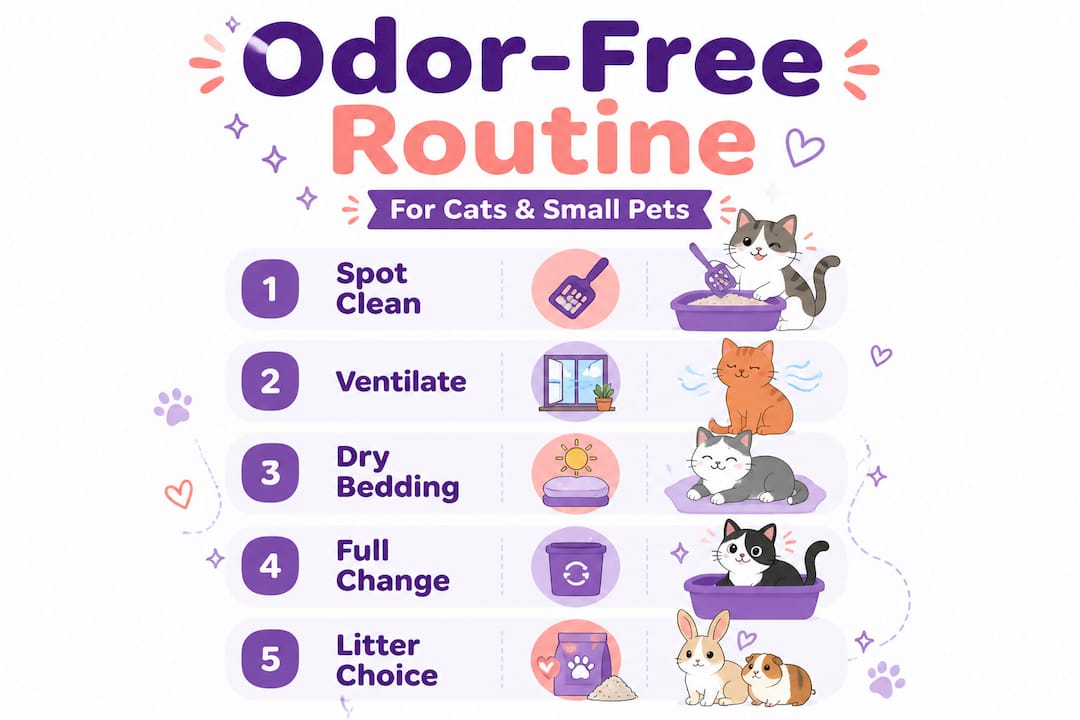
Daily tasks
-
Scoop the litter box at least twice a day for cats. Waste sitting in the litter is the primary driver of ammonia in cat homes.
-
Spot-check small animal bedding morning and evening. Remove visibly wet or soiled areas immediately.
-
Check water bottle nozzles for drips, which create hidden damp zones that accelerate ammonia buildup.
-
Wipe down cage bars, ramps, and solid surfaces where urine spray can linger.
-
Open a window or run a fan near the pet area for at least 30 minutes to refresh airflow.
Weekly tasks
-
Do a full litter change for cats, even if you scoop daily. Old litter holds residual ammonia.
-
Replace all bedding for small animals on a weekly basis, or more often for smaller enclosures.
-
Wash cage accessories like food dishes and hideouts with pet-safe cleaner.
-
Vacuum and treat surrounding floors and any soft surfaces near the habitat.
Managing airflow, scooping waste twice daily, and choosing the right bedding and litter are proven to minimize odor and ammonia buildup. The science is consistent: prevention is far more effective than cleanup.
A handy reference for cleaning frequency based on pet type:
| Pet type | Spot clean | Full change | Special notes |
|---|---|---|---|
| Cats | 2x daily | Weekly | Unscented, clumping litter works best |
| Guinea pigs | Daily | Every 3 to 5 days | Need high air volume in cage |
| Rabbits | Daily | Weekly | Litter training helps concentrate waste |
| Hamsters | Every 2 days | Weekly | Burrow materials need rotation |
| Mice/gerbils | Daily | Every 5 to 7 days | Very sensitive to ammonia |
One thing that surprises many pet parents: the size of the enclosure matters as much as cleaning frequency. Ammonia builds up faster in smaller cages, and air volume is just as important as cleaning habits. A bigger cage is not just about exercise. It genuinely protects your small animal from ammonia exposure.
Bedding choice matters too. Keeping litter dry and maintaining good ventilation reduces ammonia and supports overall animal welfare. Paper-based, unscented bedding absorbs moisture better than wood shavings for many small animals, and it does not carry the aromatic oils found in pine or cedar that can irritate airways.
Pro Tip: Put your nose right at cage level when you check odor. That is the air your guinea pig or hamster actually breathes. If it smells sharp or unpleasant at their height, it is time to clean, even if the room seems fine from where you are standing.
Check out our detailed cleaning checklist and safe odor control guide to make these routines even easier to stick with.
Once these core practices are in place, you may wonder how to tackle tricky, persistent odors or tough cases that resist routine cleaning.
What to do when odors persist: Advanced strategies
Sometimes you do the work, stick to the routine, and odors still come back. That is frustrating, and it usually points to one thing: residue hiding in a porous material that your regular cleaning did not fully reach.
Here is how to recognize the signs:
-
The smell returns after a day or two, even right after cleaning
-
Odors get stronger in humid weather or after mopping
-
You can smell it in one specific corner even after full cleaning of the area
-
Your pet avoids a spot they used to use, suggesting a lingering scent cue from old residue
“True odor elimination means nothing is left to smell. If you can still detect it in humidity, the residue is still there.”
Here is a step-by-step approach for stubborn cases:
-
Identify the exact source. Use a blacklight if needed. Urine fluoresces under UV light, revealing spots that look clean in daylight.
-
Extract or blot thoroughly. Do not just let it air dry without removing the broken-down residue.
-
Repeat if needed. Heavy saturation may require two or three treatments.
-
Consider replacement for materials that are fully saturated. Sometimes a carpet pad or wood subfloor absorbs so much urine that replacement is the only real solution.
Scented sprays or plug-in fresheners added on top of this problem will only make it worse. You are layering fragrance over chemistry that needs to be broken down, not covered. This is where a lick-safe, safe cat odor control solution that works at the molecular level becomes genuinely valuable.
Empowered with new strategies, you are ready to build a holistic odor-control system that truly supports your pets’ wellness.
Our take: Why true pet wellness starts with source control, not scents
Here at Percy Loves, we have thought about this a lot, because we live it. Percy, our real cat and the heart of this brand, has a real funk problem. He inspired Pal Furresher, our fragrance-free odor eliminator, and along the way we learned something that we think more pet parents deserve to hear.
The wellness conversation around odor control is stuck. Too much of it revolves around making homes smell pleasant for humans. Not enough of it focuses on what those smells mean for the animals living in them. A product that simply smells like lavender or citrus is doing nothing for your guinea pig’s lungs or your cat’s airways. In fact, it may actively be making things worse.
We believe that relying on perfumed sprays creates a cycle where the underlying problem is consistently missed. You cover, it returns, you cover again. The residue grows. The ammonia continues to build. And your pet keeps living in that environment while you think the problem is handled.
Real pet wellness means thinking about air volume, cleaning frequency, material choice, and products that actually neutralize rather than mask. There is no shortcut, but the good news is that the right routine is not complicated. It is just different from what most products and advertising have been telling you. You can read more about pet safety and odor control and why we built our whole brand around this principle.
The humans at Percy Loves genuinely believe that sustainable, source-focused routines benefit both pets and the people who love them. Fresher air, healthier animals, and a home that stays clean without the chemical cloud. That is the goal, and it is absolutely achievable.
Discover safe, unscented odor solutions with Percy Loves
You have done the learning. Now it is time to put it to work. Percy Loves was built for exactly this moment, when you are ready to stop covering odors and start eliminating them for real.
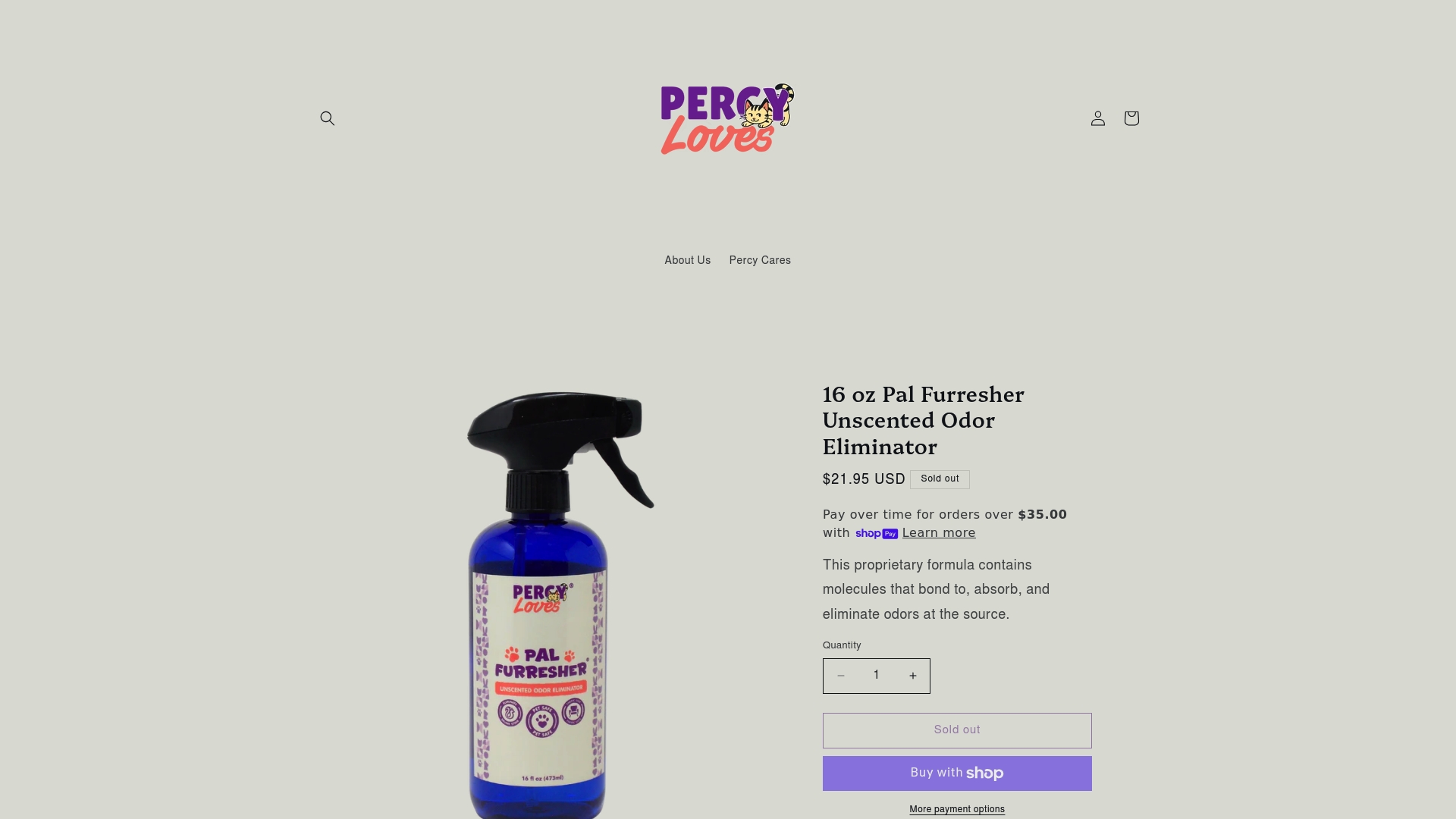
Pal Furresher is our fragrance-free, lick-safe odor elimination spray. It works at the source of the problem to completely eliminate it, not cover it up. No scents. No harsh chemicals. Just a proprietary formula designed with your pet’s safety as the top priority. Whether you are dealing with litter box smells, cage odors, or mystery funk on the couch, Pal Furresher has your back. Start with our 4 oz odor eliminator for easy everyday use, or go bigger with our larger odor eliminator sizes for whole-home coverage.
Frequently asked questions
How does ammonia affect my guinea pig’s health?
Ammonia is a respiratory irritant for guinea pigs and can contribute to respiratory disease, making clean, well-ventilated bedding essential for their daily wellbeing.
What’s better: scented sprays or source control for pet odors?
Source control is far more effective because it physically removes or neutralizes odor-causing waste, while scented sprays only mask the problem temporarily without addressing what is causing it.
How often should I clean my pet’s cage or litter box for best wellness?
Spot-clean waste and damp areas every single day and do a full litter or bedding change at least weekly, since consistent scooping and routine changes prevent ammonia buildup and keep air quality safe.
Why do pet odors keep coming back after cleaning?
Residual odors return because waste seeps into carpets or porous surfaces and re-emits in humidity, so enzymatic or bio-based cleaners are needed to fully break down the molecules causing the smell.
Will a bigger cage help with odor control for small animals?
Yes, more air volume in the enclosure slows ammonia accumulation significantly, making it easier to maintain healthy air quality even between cleanings.


