

Cat Litter Box Training Tips for New Cat Owners
TL;DR:
- Most litter box issues stem from environmental problems rather than behavioral ones, and proper setup is crucial.
- Choosing the right location, size, and type of litter, along with consistent cleaning routines, helps cats develop good habits.
- Patience and routine, combined with thorough cleaning of accidents and understanding of your cat’s preferences, promote successful litter training.
Bringing a new cat home is exciting. Then you notice they missed the box. Or refused it entirely. It’s one of the most common frustrations new cat owners face, and it’s almost never the cat’s fault. The good news? Most cat litter box training tips come down to simple setup and routine. Cats instinctively know what a litter box is for, so if your cat isn’t using it, something in the environment is working against them. This article walks you through exactly what to fix, step by step.
Table of Contents
- Key Takeaways
- 1. Understanding the basics of cat litter box training tips
- 2. Choosing the right location for the box
- 3. Getting the size and style right
- 4. Following the one-plus-one rule for multiple cats
- 5. Picking the best cat litter for training success
- 6. Keeping the litter box clean enough to use
- 7. Building a routine with gentle guidance
- 8. Using temporary confinement to reset habits
- 9. Troubleshooting litter box issues like a pro
- 10. Cleaning up accidents to prevent repeat offenses
- My honest take on litter box training
- Keep your home smelling clean with Percyloves
- FAQ
Key Takeaways
| Point | Details |
|---|---|
| Setup matters most | Location, box size, and number of boxes directly affect whether your cat uses them. |
| Litter type is critical | Unscented, clumping litter is what most cats prefer; heavy fragrances drive avoidance. |
| Positive reinforcement works | Praise and treats after correct use build habits faster than any correction. |
| Cleanliness drives consistency | Daily scooping and a full wash every one to two weeks keeps cats returning to the box. |
| Sudden avoidance needs a vet | A cat that stops using the box without warning may have a medical issue, not a behavior problem. |
1. Understanding the basics of cat litter box training tips
Here’s something that surprises most new cat owners: cats do not need to be taught what a litter box is. Put a kitten near a box and they already know what it’s for. What they do need is a setup that makes using it feel easy, safe, and comfortable.
Most litter box problems are not behavior problems. Cats avoid boxes for environmental reasons before behavioral ones. That means if your cat is going outside the box, start by looking at the box itself, its location, its size, and its cleanliness. Fix those things first, and most cats correct themselves within days.
2. Choosing the right location for the box
Where you put the litter box matters more than most people realize. Cats want privacy and a quick escape route. They will skip a box that feels exposed, noisy, or hard to reach.
Place the box in a quiet, low-traffic area away from your cat’s food and water bowls. A corner of a spare room, a bathroom, or a laundry room works well. Avoid placing it next to a washing machine or furnace that kicks on suddenly. That kind of noise startles cats and creates a negative association fast.
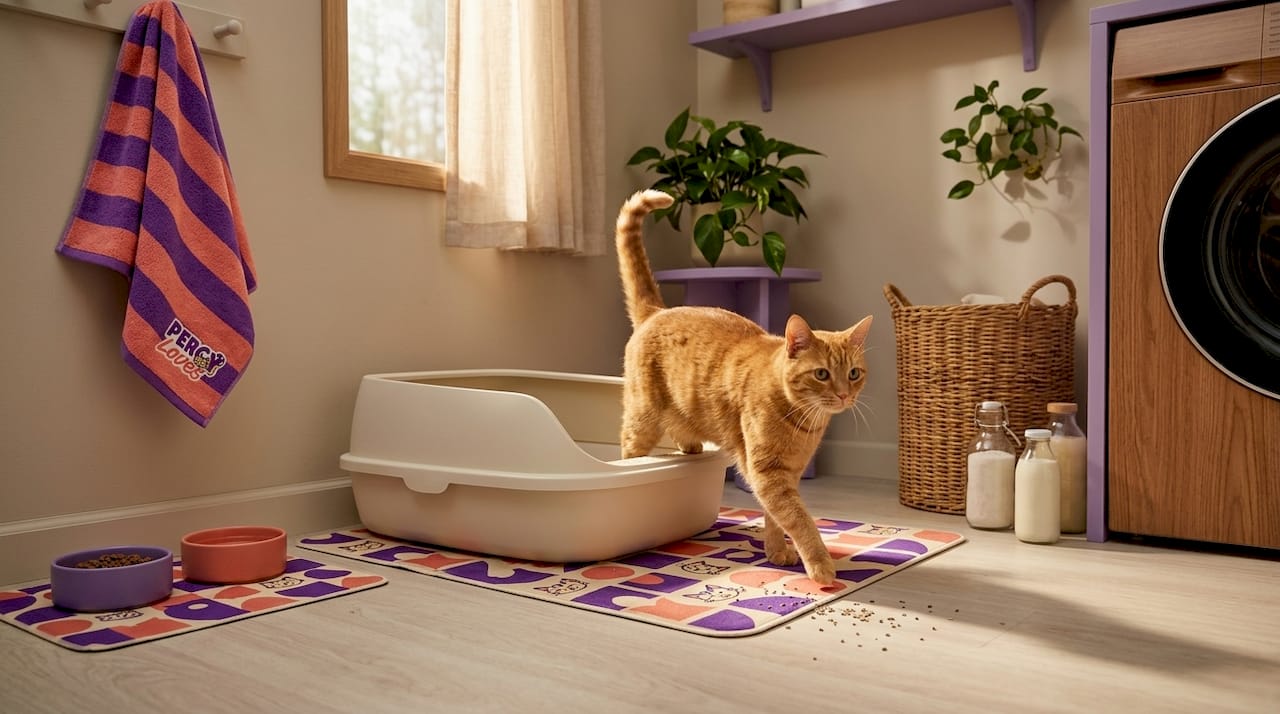
For apartment living, check out tips on choosing the right cat space to find quiet, accessible spots even in smaller homes.
Pro Tip: If your cat has access to multiple floors, put at least one box on each floor. Cats in discomfort or elderly cats should never have to travel far to find their box.
3. Getting the size and style right
The box needs to fit your cat, not your cabinet. Litter boxes should be at least 1.5 times the length of your cat, from nose to tail. Most standard boxes sold in stores are too small for adult cats, which is why cats end up hanging over the edge or just avoiding the box altogether.
For kittens and senior cats, low-sided entry boxes are a better choice. High walls are hard to climb over when you are tiny or stiff. Style matters too. Uncovered boxes with clear exits reduce stress and improve usage, because cats feel less trapped. Covered boxes trap odor inside, which bothers cats far more than it bothers you.
4. Following the one-plus-one rule for multiple cats
If you have more than one cat, this is one of the most practical litter box techniques you will use. Have one litter box per cat, plus one extra. Two cats means three boxes. Three cats means four boxes.
This matters because cats are territorial, especially around elimination spaces. When one cat monopolizes a box, the other cat starts going elsewhere. Spreading boxes across different rooms reduces this tension. Do not stack them all in one bathroom. Think of it as giving each cat their own space and a backup.
5. Picking the best cat litter for training success
Walk into any pet store and you’ll see dozens of litter options. Most of them are wrong for training purposes. Here’s what cats actually prefer:
- Unscented clumping litter. Cats prefer unscented, dust-free, clumping litter, and heavily scented options often cause avoidance because of cats’ highly sensitive noses.
- Fine to medium texture. Most cats prefer a softer, sandier texture underfoot.
- Low dust formula. Dusty litters irritate their respiratory systems and may make them avoid the box.
Avoid anything labeled “fresh scent” or “odor control formula.” That scent is for you, not your cat. For guidance on fragrance sensitivity and litter selection, it pays to understand how strongly smell influences your cat’s choices.
Pro Tip: If you want to switch litter types, mix the new litter in with the old over five to seven days. Abrupt changes often cause cats to reject the box entirely.
6. Keeping the litter box clean enough to use
You would not use a dirty bathroom. Neither will your cat. This is the single most underestimated piece of cat potty training advice.
Scoop daily and do a full wash every one to two weeks. Use a mild, non-toxic soap and rinse it completely before refilling. Avoid bleach or heavy-duty cleaners with strong smells. Timing and cleanliness build the consistent association your cat needs to keep returning to the right spot.
Replace the box itself every year or so. Plastic absorbs odors over time, and even a freshly cleaned box can smell off to a cat if the plastic has degraded.
7. Building a routine with gentle guidance
This is where cat behavior training pays off. Cats are creatures of habit, and you can use that to your advantage. Here is a simple routine that works:
- Place your cat in the box after meals and naps. These are the moments when cats are most likely to need to go. Gently set them inside, let them sniff around, and walk away.
- Praise immediately after correct use. Praise or small treats right after your cat uses the box create a positive association. Timing matters. Do it within seconds.
- Stay calm after accidents. Scolding or raising your voice after a miss creates anxiety. An anxious cat avoids the box more, not less.
- Gradually expand access. Start with a smaller area of your home during the first week. Once your cat is consistently using the box, give them more space.
Pro Tip: Never rub a cat’s nose in an accident. It does nothing useful and causes real stress. Just clean the spot thoroughly and move on.
8. Using temporary confinement to reset habits
If your cat has developed a habit of going in the wrong spot, this technique works well. Structured short-term containment helps rebuild litter habits and lets you monitor their behavior more closely.
Use a small, comfortable area with clean, uncovered litter boxes for 48 to 72 hours if problems persist. A bathroom or a spare room works well. Include food, water, a bed, and two boxes. This is not punishment. It is a reset. Most cats return to consistent litter box habits quickly in this setup.
Once they are using the box reliably again, slowly expand their access to the rest of the house over several days.
9. Troubleshooting litter box issues like a pro
When best litter box practices are in place and your cat is still avoiding the box, work through this checklist before assuming it’s a behavior problem:
- Is the box clean? Scoop it. Even one deposit can deter a fastidious cat.
- Is the location too loud or exposed? Try moving it somewhere quieter.
- Has the litter changed recently? Go back to what worked before.
- Is the box too small? Upgrade to a larger one.
- Are there enough boxes for the number of cats? Add one more.
If none of those fixes help, watch your cat closely. Frequent trips to the box with little output, vocalizing, or straining are signs of a possible urinary tract infection or blockage. Sudden litter box avoidance may indicate a medical issue, not a behavior problem. Get to the vet promptly. Urinary issues in cats escalate fast.
10. Cleaning up accidents to prevent repeat offenses
Cats have an excellent sense of smell, and they will return to a spot that still smells like a bathroom to them. Odor removal is key to stopping cats from returning to wrong spots. That means the cleaner you use matters.
Avoid products with harsh chemicals or heavy fragrances. They can irritate your cat and do not always eliminate the odor at the source. A safe, enzyme-free odor eliminator that works by bonding to and neutralizing odors is far more effective than anything that just masks the smell. You want the odor gone, not covered up.
For a broader look at keeping your home smelling fresh, the cat hygiene guide from Percyloves covers daily routines that make a real difference.
My honest take on litter box training
I’ve seen a lot of new cat owners assume their cat is being defiant when they miss the box. I’ve been there too. What I’ve learned over the years is that the vast majority of litter box problems come down to us, not the cat.
The box was too small, or too close to the food bowl, or the litter smelled like a pine tree. Cats are not complicated. They want clean, quiet, and accessible. When I finally stopped overthinking it and just matched the setup to what my cat actually preferred, the problems disappeared.
What I also know is that punishment makes everything worse. I’ve never seen a cat “learn a lesson” from being scolded after an accident. What I have seen is a nervous cat who starts hiding and avoiding the box even more. Patience, observation, and a clean setup will get you there faster than any correction ever will.
The other thing I’d tell every new cat owner: watch your cat. Your cat will show you what they need if you pay attention. Are they sniffing around the box but walking away? The litter might be the problem. Doing laps in the house? Check that there are enough boxes. Behavior is communication, and once you start reading it, training gets a whole lot easier.
— Kathy
Keep your home smelling clean with Percyloves
Even with perfect litter box habits, odors happen. That’s just life with cats. The humans at Percyloves know that firsthand because Percy himself had a serious funk problem.

That’s why we created Pal Furresher, a fragrance-free, enzyme-free odor eliminator that is completely lick safe. It does not mask odors. It bonds to them, absorbs them, and eliminates them at the source, instantly on contact. No harsh chemicals. No heavy fragrance that drives your cat away from their box. Just clean, fresh air.
It’s safe for all pets, including sensitive ones. Spray it around the litter box area, on accident spots, or anywhere funk tends to linger. Grab your Pal Furresher odor eliminator and give your cat (and your nose) a break.
FAQ
How do I get my cat to use the litter box consistently?
Place the box in a quiet spot, keep it scooped daily, and use unscented clumping litter. Gently place your cat in the box after meals and naps to build a routine.
How many litter boxes does a cat need?
The standard rule is one box per cat plus one extra. A single cat household needs at least two boxes, placed in different areas of the home.
Why is my cat suddenly avoiding the litter box?
Sudden avoidance often points to a medical issue like a urinary tract infection. If the box is clean, correctly placed, and your cat is still avoiding it, contact your vet.
What type of litter is best for training?
Most cats do best with unscented, fine-textured, clumping litter. Avoid heavily scented varieties since cats’ sensitive noses find strong fragrances off-putting.
Can I punish my cat for litter box accidents?
No. Punishment creates anxiety and makes the problem worse. Clean the spot thoroughly with a safe, fragrance-free product and focus on fixing the underlying setup issue instead.


