

Essential dog comfort checklist: keep your pet happy and safe
TL;DR:
- A comprehensive dog comfort setup includes a safe, clean resting space and proactive stress management techniques. Maintaining temperature, cleanliness, and odor control enhances your dog’s physical and emotional well-being. Regular observation and checklist updates ensure your pet’s evolving needs are consistently met for lasting happiness.
You love your dog. You buy the best food, take them on walks, and shower them with affection. But here’s the honest question every devoted pet parent should ask: have you truly covered every base for their comfort, both physically and emotionally? Most checklists out there cover the obvious stuff like food bowls and leashes. They miss the stress triggers, the emotional retreat spaces, and the daily habits that actually make the biggest difference. This checklist covers it all, from building a safe home environment to managing your dog’s emotional well-being, so you can feel genuinely confident you’ve got it handled.
Table of Contents
Key Takeaways
| Point | Details |
|---|---|
| Safe resting space is essential | Every dog needs a dedicated, secure spot to rest for both comfort and safety. |
| Cleanliness and temperature matter | Daily cleaning, odor control, and steady temperatures keep your dog healthy and happy. |
| Emotional comfort needs attention | Routines, stress reduction strategies, and enrichment are as important as physical needs. |
| Checklists must be updated regularly | Seasonal and life changes require review of your comfort and safety routines. |
Create a safe and comfortable home environment
Every great routine starts with a strong foundation. Before you think about emotional comfort or behavioral enrichment, your dog needs a physical space that feels safe, clean, and truly theirs.
According to Providing a Home for a Dog from the Merck Veterinary Manual, a practical dog comfort checklist should start with creating a safe, comfortable home that includes a dedicated resting area and, for outdoor dogs, a clean and weather-protective shelter. That advice sounds simple, but most pet parents skip the details that make it actually work.
Here’s what a truly comfortable home setup includes:
-
A dedicated rest space: A crate, dog bed, or quiet corner that belongs only to your dog. It should be placed away from heavy foot traffic and loud noises.
-
Proper bedding: Soft, washable bedding that you clean at least once a week. Dirty bedding isn’t just gross. It can harbor bacteria and irritate your dog’s skin.
-
Outdoor shelter requirements: If your dog spends time outside, their shelter needs a solid roof, raised floor, weatherproof door flap, and enough room for them to stand, turn around, and stretch out comfortably.
-
A quiet zone indoors: Even dogs that spend most of their time with the family need a low-stimulation area where they can decompress.
-
Routine cleaning schedule: Vacuum, wipe down surfaces, and wash dog bedding weekly at minimum.
Use these dog-friendly home tips to set up your space before bringing a new dog home or doing a full comfort refresh.
| Home setup element | Minimum standard | Ideal standard |
|---|---|---|
| Rest space size | Fits dog lying flat | Extra room to stretch and turn |
| Bedding cleaning | Weekly | Every 3 to 5 days |
| Outdoor shelter floor | Raised off ground | Insulated and waterproof |
| Quiet zone | Accessible daily | Consistent and low-traffic |
| Hazard check | Monthly | Weekly inspection |
Pro Tip: Walk your home at your dog’s eye level. Look for chewed wiring, toxic houseplants like pothos or lilies, and cleaning products stored within reach. Your complete safety and comfort guide can walk you through a full room-by-room evaluation.
Control temperature, cleanliness, and odors
Once your dog has a secure and restful base, keeping that space clean, comfortable, and fresh becomes the next priority. Temperature and odor management are two things pet parents often underestimate until they become real problems.
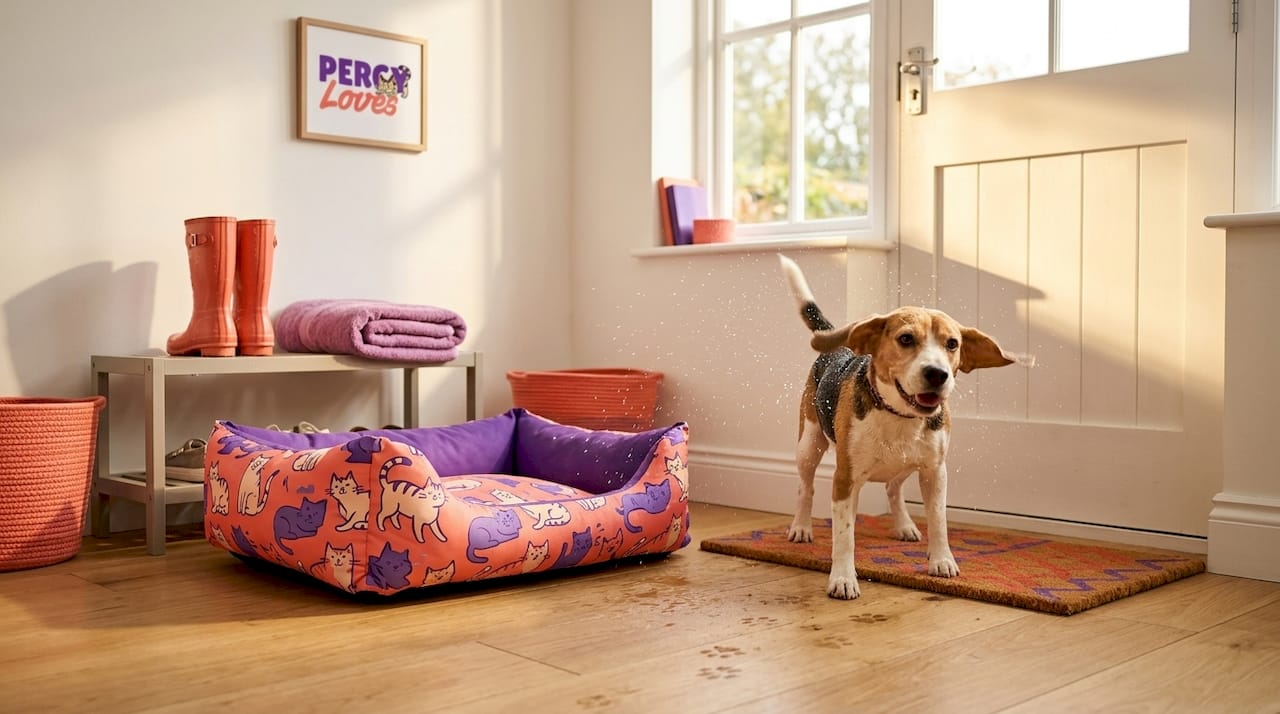
Temperature matters more than most people realize. Puppies can’t regulate their body temperature efficiently in their early weeks, and senior dogs often struggle in extreme heat or cold. The Merck Veterinary Manual notes that outdoor shelters need solid roofs, off-ground floors, and doors to keep out rain or snow, which applies just as much to indoor climate control.
Simple tools for keeping your dog’s environment at the right temperature:
-
Fans and ventilation: Especially important in summer months. Position a fan to circulate air without blowing directly on your dog.
-
Crate covers: A breathable cover reduces drafts in winter and creates a den-like feeling your dog will actually enjoy.
-
Heating pads: Only use pet-safe, low-wattage pads with an automatic shutoff. Never leave a heating pad unsupervised.
-
Cool mats: Gel-based cooling mats work great for breeds prone to overheating.
Odor control is the part that directly affects both your dog’s health and your enjoyment of a shared space. You want to use non-toxic cleaners that don’t leave residue your dog will lick up later. Check out these home hygiene tips for a practical routine you can actually keep up with.
| Odor control option | Effectiveness | Safe for dogs? | Fragrance-free? |
|---|---|---|---|
| Activated charcoal bags | Moderate, passive | Yes | Yes |
| Baking soda | Low to moderate | Yes | Yes |
| Fragranced sprays | Masks only | Often no | No |
| Lick-safe odor eliminators | High, eliminates at source | Yes | Yes |
The biggest mistake people make with odor control is reaching for anything that smells nice. Strong fragrances irritate your dog’s nose and can cause respiratory issues. Always choose fragrance-free, non-toxic options, especially in areas where your dog sleeps or plays. These dog odor prevention tips break down exactly what to use and where.
Pro Tip: After rainy or snowy walks, focus on air flow and dry bedding before your dog settles in. Wet fur plus damp bedding is a recipe for mildew and bacterial growth. Towel dry your dog, swap the bed cover, and open a window if the weather allows. A safe cleaning guide can help you build this into your routine without it feeling like a chore.
Stress management: emotional comfort isn’t optional
Here’s where most dog comfort checklists drop the ball entirely. They cover beds and bowls but ignore the fact that a dog living in a state of chronic stress is not a comfortable dog, no matter how nice their setup looks.
The Merck Veterinary Manual is clear that comfort is both physical and emotional, and that a real checklist should explicitly separate environment and safety from stress management. That distinction matters because the solutions are different.
Here’s a numbered checklist to reduce daily stress for your dog:
-
Create a safe retreat zone. Designate one space your dog can go when overwhelmed. A crate with the door left open, a corner behind the couch, or a quiet room works well. This space should never be used for punishment.
-
Establish a predictable daily routine. Dogs thrive on knowing what comes next. Feed, walk, play, and rest at the same times each day. Inconsistency is genuinely stressful for them.
-
Build positive crate associations. If your dog is crate trained, add a worn t-shirt or blanket with your scent. Feed treats inside the crate to reinforce it as a good place.
-
Manage known stress triggers proactively. Thunder, fireworks, and unfamiliar visitors are common ones. Prepare ahead of time with a white noise machine, a calming wrap, or simply staying close and calm.
-
Add environmental enrichment daily. Puzzle feeders, sniff walks, and interactive toys keep your dog mentally engaged and reduce anxiety caused by boredom.
-
Learn your dog’s stress signals. Common signs include yawning repeatedly, lip licking, hiding, excessive barking, or avoiding people they normally like. If you see these signals, dig into what changed.
“A dog that has a reliable retreat, a predictable schedule, and an attentive owner who notices behavioral shifts will handle stress far better than one with the most expensive gear and no emotional support structure.” — Merck Veterinary Manual, Dog Owner Guidance
The health benefits for dogs that come from consistent routines extend beyond just behavior. Lower stress levels connect to better immune function, healthier weight, and a longer, happier life. And these routine care tips make it easy to build a schedule that works for your lifestyle too.
Pro Tip: Offer at least one enrichment activity each day, even if it’s just a 10-minute sniff walk in a new area. Mental stimulation burns more energy than physical exercise alone and keeps anxiety from building up over time.
Dog comfort checklist: complete summary
With all the details covered, here’s your master checklist. Use this as a daily and weekly reference to make sure nothing slips through.
-
Set up a dedicated rest space (crate, bed, or quiet corner)
-
Clean and replace bedding at least weekly
-
Inspect outdoor shelter for weatherproofing, insulation, and raised flooring
-
Eliminate hidden hazards like toxic plants, wiring, and unsecured chemicals
-
Maintain a stable indoor temperature and check for drafts
-
Use only fragrance-free, dog-safe odor eliminators
-
Establish and stick to a daily feeding, walking, and rest schedule
-
Create a designated stress retreat area your dog can access anytime
-
Add daily enrichment through toys, puzzle feeders, or sniff walks
-
Check in on stress signals weekly and note any behavioral changes
-
Wash food and water bowls daily
-
Schedule monthly home safety walk-throughs
As the Merck Veterinary Manual notes, puppies especially benefit from a dedicated rest and sleep space that supports both safety and training progress. But this applies to dogs of every age.
| Comfort category | Action item | Frequency |
|---|---|---|
| Environment | Inspect and clean rest space | Weekly |
| Cleanliness | Wash bedding and bowls | Weekly / Daily |
| Temperature | Check fans, pads, ventilation | Seasonally |
| Odor control | Apply dog-safe spray as needed | As needed |
| Stress management | Assess retreat zone and enrichment | Daily |
| Safety | Walk through home for hazards | Monthly |
| Routine | Follow feeding and walk schedule | Daily |
For a deeper breakdown of every safety essential your home should have, visit this list of dog safety must-haves that covers both basics and easy-to-miss details.
The real reason most dog comfort checklists fall short
Here’s our honest take at Percy Loves, after working with thousands of pet parents: the checklist isn’t the problem. The habit of actually observing your dog is.
Most people buy a checklist, go through it once, and feel done. But dogs change. Their stress triggers shift as they age. A dog that handled fireworks fine at three might panic at eight. A dog that loved their crate as a puppy might need more space as an adult. A checklist that never gets updated isn’t a comfort tool. It’s just a to-do list you completed once.
The critical errors we see most often aren’t about missing products. They’re about missing signals. A dog that starts avoiding the living room isn’t being difficult. They’re communicating discomfort. A dog that suddenly scratches more might be reacting to a new cleaner you started using. A dog that becomes clingy before storms might need a better retreat setup than you currently have.
Developing the habit of proactive observation is what actually separates good pet parents from great ones. Set a weekly five-minute check-in with yourself. Ask: Did anything change this week in my dog’s behavior, appetite, or sleep? Did I introduce any new products or routines? How did they respond? That habit catches problems early, before they become expensive vet visits or behavioral issues.
To prevent common injuries and ongoing stress, revisit your checklist every season and after any major life change, like moving, a new baby, a new pet, or a change in your work schedule.
The best comfort checklist isn’t the most thorough one. It’s the one you actually revisit and adapt over time.
Next steps to a fresher, happier dog home
You’ve got the checklist. Now it’s time to make sure odor and cleanliness don’t undermine all the work you’ve put in. At Percy Loves, we built Pal Furresher specifically for households like yours, where your dog’s safety is non-negotiable and a fresh-smelling home still matters.

Pal Furresher is a fragrance-free odor eliminator spray that tackles odors at the source instead of just covering them up. It’s lick-safe and uses a proprietary formula that completely eliminates the problem, not just the smell. It fits right into the cleaning step of your checklist without adding any worry about what your dog might sniff or lick afterward. Check out our Pal Furresher odor eliminators and find the right size for your home. The 4 oz Pal Furresher is perfect for spot treatments on bedding and furniture, while the 16 oz Pal Furresher is ideal for regular whole-room use. Simple, safe, and effective. Just like it should be.
Frequently asked questions
What is the most important element of dog comfort?
A safe environment and dedicated resting space form the foundation of comfort, but emotional needs like routine and stress retreat spaces matter just as much and should never be overlooked.
How can I tell if my dog is stressed at home?
Common stress signals include hiding, excessive licking, repeated yawning, increased barking, or avoiding spaces they usually enjoy. The Merck Veterinary Manual confirms that emotional and environmental comfort are distinct needs, so address both if you notice changes in behavior.
What type of bedding is best for dog comfort?
Soft, washable beds in a quiet location work best for indoor dogs. For outdoor dogs, the Merck Veterinary Manual recommends weather-resistant shelters with insulated, raised floors and solid doors to keep conditions safe and dry year-round.
How often should I refresh my dog’s comfort checklist?
Update your checklist seasonally and after any major household change, such as a move, a new pet, a new baby, or a significant shift in your daily schedule, to make sure your dog’s needs are still fully covered.


