

Dog odor prevention: proven, safe methods for a fresh home
TL;DR:
- Regular grooming, deep cleaning, and using pet-safe odor neutralizers effectively reduce household dog odors.
- Using HEPA vacuums, frequent washings, and air purifiers improves air quality and prevents odor buildup.
- Proactive routines and targeted products like odor eliminators maintain a fresh home and support pet health.
You love your dog more than anything. But even the most beloved pup can leave a smell that follows you from room to room. The good news? You don’t need harsh chemicals or overpowering sprays to fix it. With the right routine and pet-safe products, a fresh-smelling home is absolutely within reach. We at Percy Loves have put together this step-by-step guide to walk you through everything, from prep to prevention, so you can stop chasing odors and start staying ahead of them.
Table of Contents
- What you need before starting: Essential tools and prep
- Step 1: Groom and bathe your dog the right way
- Step 2: Deep clean your dog’s environment
- Step 3: Use safe odor neutralizers and advanced prevention
- How to troubleshoot stubborn odors and special cases
- Why prevention is smarter (and easier) than constant cleaning
- Bring freshness home with Percy Loves odor control solutions
- Frequently asked questions
Key Takeaways
| Point | Details |
|---|---|
| Prioritize regular grooming | Routine bathing and brushing drastically cut down on dog odors at the source. |
| Clean your space often | Vacuum, wash bedding, and safely clean fabrics weekly to keep your home fresh. |
| Opt for safe odor solutions | Baking soda, vinegar, and enzymatic cleaners neutralize smells without harsh chemicals. |
| Fix the real problem | Vet checks for health or behavior issues are vital when odors persist despite cleaning. |
What you need before starting: Essential tools and prep
Before you tackle dog odors, gather your supplies. Having everything on hand makes the process faster and more effective. Regular grooming and washing bedding is a foundational step before any odor removal routine begins.
Here’s what you’ll want ready:
- HEPA vacuum cleaner to pull dander and hair from fabric surfaces
- Pet-safe shampoo formulated for your dog’s skin type
- Baking soda for overnight odor absorption on carpets and upholstery
- White vinegar diluted 1:1 with water for surface deodorizing
- Enzymatic cleaner for accident spots (check for pet-safe, fragrance-free options)
- HEPA air purifier to filter airborne particles and odors
- Washing machine access for bedding, toys, and accessories
Knowing why each item matters helps you use it correctly. Dander is a major odor carrier, so a HEPA vacuum pulls it out of fibers instead of just pushing it around. Baking soda absorbs odor molecules rather than covering them. Pet-safe shampoos clean without stripping your dog’s skin. Check out our safe pet grooming basics for more on choosing the right products.
| Product type | Chemical-based | Natural/pet-safe |
|---|---|---|
| Odor coverage | Masks with fragrance | Neutralizes at the source |
| Safety for pets | Often contains irritants | Formulated for lick-safe use |
| Surface compatibility | May damage fabrics | Generally fabric-friendly |
| Repeat use needed | Frequent reapplication | Less frequent with routine |
Use this dog home hygiene checklist to make sure you’re covering every area of your home.
Pro Tip: Designate at least one room as a dog-free zone. This gives you a space that stays consistently fresh and limits how far odors can spread throughout the house.
Step 1: Groom and bathe your dog the right way
With your tools ready, start at the source: your dog. The oils, dander, and bacteria that live on your dog’s coat are the primary drivers of household odor. Getting grooming right makes every other step more effective.
Follow this routine:
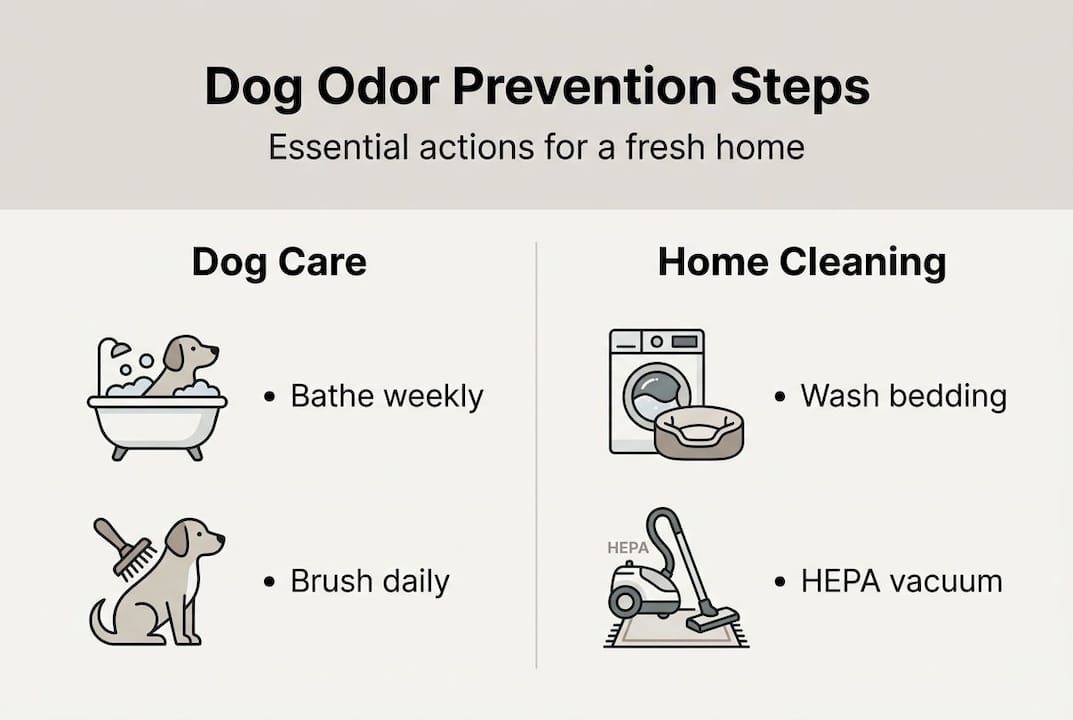
- Bathe every 4 to 6 weeks using a pet-safe shampoo. Medium to thick-coated dogs benefit most from this schedule, paired with weekly bedding washes.
- Dry thoroughly after every bath. Focus on paws, skin folds, and ears. These are the spots where moisture gets trapped and yeast or bacteria thrive.
- Brush between baths at least two to three times a week. This removes loose dander and distributes natural oils more evenly, reducing buildup.
- Wipe down daily if your dog swims frequently or lives in a multi-dog household. A damp cloth or pet-safe wipe on paws and belly goes a long way.
One thing many owners don’t realize: overbathing strips valuable skin oils and can actually make odor worse over time. Stick to the 4 to 6 week window unless your vet advises otherwise.

For a more detailed breakdown of grooming order and technique, our efficient pet grooming workflow guide walks you through it step by step. You can also find product guidance in our keep pets clean naturally article.
Pro Tip: After drying your dog’s ears, do a quick sniff test. A yeasty or sour smell from the ears is often the hidden culprit behind that persistent “dog smell” in the house.
Step 2: Deep clean your dog’s environment
A clean dog isn’t enough if the home around them is holding onto odors. Fabrics, furniture, and floors trap dander, oils, and bacteria every single day.
Here’s how to clean effectively:
- Vacuum all fabric surfaces daily in high-traffic areas and do a full deep clean weekly. Vacuum daily in high-traffic zones and wash pet beds every 1 to 2 weeks.
- Wash pet bedding, toys, and accessories at least once a week in hot water. This removes the oils and dander that build up fast.
- Clean upholstery with baking soda. Sprinkle, let it sit for 15 to 30 minutes, then vacuum thoroughly.
- Wipe hard surfaces like baseboards, door frames, and floors with a diluted vinegar solution. Dogs rub against these more than you’d think.
“The spots most owners miss are the ones that cause the most problems: under furniture, behind doors, and along baseboards where dogs rest or rub regularly.”
A common mistake is using a standard vacuum without a HEPA filter. Regular vacuums recirculate fine particles back into the air. HEPA filters trap 99.97% of airborne dander particles, making a real difference in air quality. See the AKC’s pet home cleaning guide for more surface-by-surface tips.
| Surface type | Recommended method | Frequency |
|---|---|---|
| Carpet and rugs | HEPA vacuum + baking soda | Daily vacuum, weekly deep clean |
| Pet bedding | Hot water wash | Every 1 to 2 weeks |
| Upholstery | Baking soda + vacuum | Weekly |
| Hard floors | Vinegar solution wipe | Weekly |
For more guidance, visit our proven home hygiene tips page.
Pro Tip: Rotate two sets of pet bedding. While one is in the wash, the other is in use. This keeps your dog off dirty bedding and makes weekly washing much easier to stick to.
Step 3: Use safe odor neutralizers and advanced prevention
With the home cleaned, the next step is neutralizing any odors that remain and keeping new ones from forming. The right products make this simple and safe.
Here’s how the main options work:
- Baking soda absorbs odor molecules when left on surfaces overnight. Sprinkle on carpets or upholstery before bed and vacuum in the morning.
- White vinegar mixed 1:1 with water neutralizes odors safely on textiles and hard surfaces. Let it sit for 5 to 10 minutes before wiping.
- Pet-safe odor eliminators work at the molecular level to destroy odor compounds rather than masking them. Look for fragrance-free, lick-safe formulas.
- Improve ventilation by opening windows when possible, running HEPA or carbon air purifiers, and changing HVAC filters every 1 to 3 months.
- Address accidents immediately. Blot up liquid, apply your cleaner, and let it dwell. Waiting allows odor compounds to set into fibers.
| Method | Best for | Dwell time | Pet-safe |
|---|---|---|---|
| Baking soda | Carpets, upholstery | Overnight | Yes |
| Vinegar solution | Hard surfaces, fabrics | 5 to 10 minutes | Yes (diluted) |
| Pet-safe odor spray | Spot treatment, general use | Per product label | Yes (fragrance-free) |
For dog urine stain removal specifically, the AKC has solid guidance on technique. You can also find our odor-free parenting strategies and healthy odor-free home tips for a broader prevention plan.
Pro Tip: Never use ammonia-based cleaners on accident spots. Ammonia smells similar to urine to dogs and can actually encourage repeat marking in the same spot.
How to troubleshoot stubborn odors and special cases
Sometimes smells linger despite your best efforts. That’s frustrating, but it usually means there’s a specific cause worth investigating.
Check this list for your situation:
- Multi-dog households need daily wipe-downs, more frequent bedding washes, and extra attention to shared resting spots.
- Senior or incontinent dogs require more frequent cleaning schedules and waterproof covers on all bedding and furniture.
- Dogs with allergies or skin conditions may produce more oils and yeast, creating stronger odors even with regular bathing.
- Dental disease is a surprisingly common source of household odor. Bad breath from infected gums spreads to bedding and toys fast.
- Anal gland issues produce a very distinct, fishy smell. If you notice it, a vet visit is the right call.
“Persistent odors often signal underlying health problems that cleaning alone can’t fix.”
Allergies, skin infections, dental issues, and gland problems are among the most common health-related causes of ongoing dog odor. If your home still smells strongly after a full cleaning routine, don’t skip the vet. More context on dog smell health causes can help you figure out what you’re dealing with. Our odor control wellness tips also cover when to escalate to professional help.
Why prevention is smarter (and easier) than constant cleaning
Here’s something we’ve seen time and again: most dog owners only react to odors once they’re already obvious. They clean hard for a weekend, things smell great, and then two weeks later they’re back to square one. It’s an exhausting loop.
The shift that actually works is moving from reactive to proactive. Small, consistent actions like brushing your dog three times a week, wiping paws after walks, and running an air purifier daily add up to something much bigger than any single deep-clean session ever could. They keep the odor load from building in the first place.
Prevention also protects your dog’s health. Catching skin issues, dental problems, or ear infections early means less discomfort for your pup and fewer odor problems for you. It’s genuinely a win on both sides.
Building a simple pet care workflow into your weekly routine is the single most effective thing you can do. Ten minutes a day beats three hours on a Saturday every time.
Bring freshness home with Percy Loves odor control solutions
Now that you have a solid prevention plan, let us make the odor elimination part even easier for you.
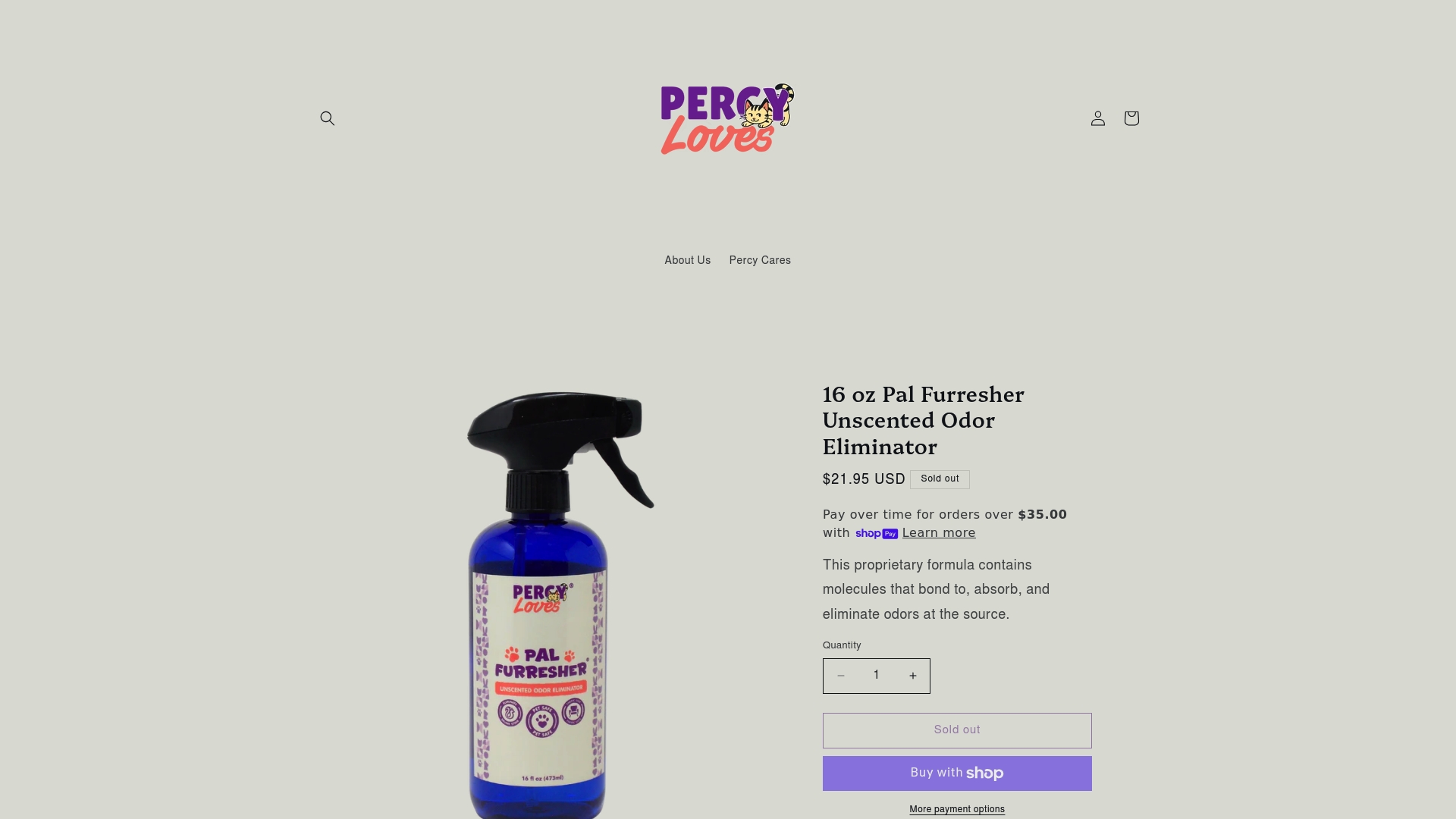
At Percy Loves, we created Pal Furresher specifically for homes like yours. It’s a fragrance-free, lick-safe odor eliminator that doesn’t just cover smells. It works at the source to completely eliminate them. No harsh chemicals. No overwhelming scents. Just a clean, fresh home that’s safe for your dog and your whole family. Grab the 16 oz odor eliminator for whole-home use or keep the 4 oz odor eliminator handy for quick spot treatments. Your nose (and your dog) will thank you.
Frequently asked questions
How often should I wash my dog’s bedding to prevent odors?
Wash dog bedding and accessories every 1 to 2 weeks to remove dander, oils, and trapped odors before they build up.
Can I use baking soda or vinegar to safely get rid of dog smells?
Yes. Baking soda and white vinegar are both safe, natural odor neutralizers. Baking soda works overnight on dry surfaces, while vinegar diluted 1:1 with water tackles odors on fabrics and hard surfaces.
Why does my dog still smell bad after a bath?
Persistent odors after bathing often point to a health issue. Allergies, skin infections, or dental problems can all cause ongoing odor that bathing alone won’t fix. See your vet if the smell keeps coming back.
Do air purifiers actually help with dog odors?
Yes. HEPA and carbon air purifiers trap dander and filter airborne odors effectively, making them a worthwhile addition to any pet household.
What type of cleaner should I use for dog urine accidents?
Use a pet-safe, fragrance-free odor eliminator that destroys urine proteins and pheromones at the source. This prevents re-marking and removes the smell completely rather than just covering it.


