

What is pet funk? A pet parent's guide to odor
TL;DR:
- Pet funk results from bacteria and yeast on your pet’s skin producing odor compounds that intensify when wet. Managing moisture, targeted hygiene, and using safe odor eliminators help maintain a fresh pet and home environment. Understanding pet funk as a natural biological process guides better care practices and reduces reliance on harsh cleaning products.
If you’ve ever caught a whiff of something musty coming from your dog or cat and thought, “What is that smell?” you’re already familiar with what is pet funk. But here’s the thing most pet parents get wrong: funk isn’t just a sign that your pet needs a bath. It’s actually a biological process happening on your pet’s skin every single day. Understanding pet funk, what triggers it, and how to manage it safely makes a real difference in your pet’s comfort and your home’s freshness. This guide covers all of it.
Table of Contents
- What causes pet funk odor and why it smells worse when wet
- When pet funk signals more than just odor: signs to watch for and when to see a vet
- Common pet funk hotspots and how to keep them fresh and healthy
- Safe and effective solutions to combat pet funk without harsh chemicals
- A simple pet care routine to keep funk at bay and maintain fresh pet-friendly spaces
- Why understanding pet funk’s complexity helps you care better for your pet
- Keep your pet and home fresh with Percy Loves Pal Furresher odor eliminator
- Frequently asked questions
What causes pet funk odor and why it smells worse when wet
Let’s start by looking at what actually creates that unmistakable pet funk smell and why it often gets worse after baths or rainy days.
Your pet’s skin is home to millions of bacteria and yeast. These microorganisms live on skin oils and produce volatile organic compounds (VOCs) as a byproduct. VOCs are the actual source of what causes pet funk. They’re odorless in small amounts, but when they build up, that’s when your nose knows.
Here’s a fact that surprises most pet parents: a dry coat carries roughly 16 distinct odor compounds. A wet coat raises that number to 22. Some of those compounds become up to 30 times more intense when moisture is involved. That’s why your dog smells perfectly fine before a bath and comes out smelling somehow worse. Water doesn’t wash away the bacteria causing the smell. It activates them.
The sneaky spots where funk builds fastest:
- Paw pads. Warm, often moist, and in contact with everything outside. A perfect environment for bacteria and yeast.
- Skin folds. Dogs like Bulldogs and Shar-Peis have deep folds that trap heat and moisture all day long.
- Ear canals. Low airflow and warmth make ears a common funk zone, especially in floppy-eared breeds.
- Belly and groin. Areas that rarely get airflow and often collect moisture after walks in damp grass.
| Condition | Odor compounds present | Intensity compared to dry coat |
|---|---|---|
| Dry coat | ~16 | Baseline |
| Wet coat | ~22 | Up to 30x stronger |
| Skin fold (moist) | Variable | Consistently elevated |
Pro Tip: After outdoor walks, give your pet’s paws a quick dry with a clean towel. Reducing moisture in these hotspots is one of the simplest ways to slow down funk buildup between baths.
Understanding moisture’s role is key. Washing alone doesn’t fix the biology. Check out this pet wellness and cleanliness guide for a bigger picture of how grooming and hygiene work together.
When pet funk signals more than just odor: signs to watch for and when to see a vet
Knowing what causes pet funk helps, but it’s also important to spot when that odor is signaling a bigger problem your vet should check out.

A mild, yeasty smell from your dog or cat is usually normal. It’s just the skin microbiome doing its thing. The key is knowing when the smell changes. A sudden shift in odor, especially one that’s stronger, moldier, or cheesier than usual, is worth paying attention to.
Watch for these warning signs alongside any odor change:
- Redness or inflammation around paws, ears, or folds
- Excessive licking or chewing at one area
- Flaky or crusty skin patches
- Discharge from the ears
- Head shaking more than usual
A sudden, intense funk smell paired with any of these symptoms can indicate a yeast or bacterial infection, or even an allergy that needs a vet’s diagnosis. The classic “Fritos” or corn chip smell from paws is actually a known sign of a yeast or bacterial imbalance, not just a quirky pet characteristic.
Chronic or unusual pet funk may hint at underlying health issues like hormonal imbalances or immune system changes. If you’ve cleaned everything, followed a good routine, and the smell keeps coming back strong, that’s your signal to book a vet visit rather than just grabbing more product.
Pro Tip: Take a quick photo of any redness or skin changes when you first notice them. Showing your vet the progression, not just the current state, can help them diagnose faster and more accurately.
Reading up on pet parenting best practices can help you stay proactive rather than reactive when it comes to your pet’s skin and coat health.
Common pet funk hotspots and how to keep them fresh and healthy
Focusing on these key areas with simple care habits can make a big difference in managing pet funk at home.
Funk doesn’t build up evenly. It concentrates in specific spots, and targeting those spots with a simple routine keeps the problem from snowballing. Here’s a practical breakdown of where to focus and what to do.
- Paws. Wipe paws after every outdoor trip with a damp cloth or pet-safe wipe. Dry thoroughly, especially between the toes. This removes outdoor bacteria before they settle in.
- Skin folds. For dogs with wrinkles, gently wipe inside folds with a dry cloth every few days. Keeping them dry is more important than any product you use.
- Ears. Check ears weekly. If you see wax buildup or notice an off smell, ask your vet about a safe ear cleaner. Don’t probe deep inside on your own.
- Bedding and gear. This one surprises people. Pet bedding is a breeding ground for odor-causing bacteria and parasites, and it should be washed as often as your own sheets, which means roughly once a week.
- Nose and face folds. Cats and flat-faced dogs accumulate oils and debris around the nose and face creases. A gentle daily wipe makes a noticeable difference.
Pro Tip: Use hot water when washing pet bedding. Warm water reduces bacteria counts, but hot water is significantly more effective at killing the microorganisms that contribute to persistent funk odors.
The key principle across all these hotspots: use gentle, pet-safe products that don’t strip natural oils. Your pet’s skin has a protective barrier, and harsh products disrupt it, which can actually make funk worse over time. For more on building a sustainable care plan, the pet freshening workflow is a great next read.
Safe and effective solutions to combat pet funk without harsh chemicals
With these care tips in mind, choosing the right products can help keep your pet’s environment fresh and your furry friend comfortable.
Not every odor product on the market is a good fit for your pet. Many sprays rely on heavy fragrances that simply cover the smell. Others use ingredients that can irritate sensitive skin or disrupt the natural microbiome balance you’re trying to support. The goal is neutralizing odors at the source, not layering new smells on top of old ones.
What to look for in a pet odor eliminator:
- Unscented formula. Fragrances can be irritating to pets’ sensitive noses and skin. If you can smell it strongly, your pet can smell it even more.
- Non-toxic and lick-safe. Pets groom themselves constantly. Any product that touches their coat, bedding, or gear needs to be safe if they lick it.
- Enzyme-free. Enzyme-based products can disrupt your pet’s natural skin balance. An enzyme-free formula works without that risk.
- Tackles odors at the source. Masking sprays are temporary. Look for something that bonds to and eliminates the odor compound itself.
Pal Furresher by Percy Loves is exactly that kind of product. It’s unscented, non-toxic, enzyme-free, and lick-safe, built around a proprietary formula that bonds to odor compounds and eliminates them rather than masking them. Percy, the real cat behind the brand, had a real funk problem. Pal Furresher was created to solve it.
Use it on bedding, gear, furniture, and pet areas as part of your regular routine. It complements grooming without interfering with your pet’s natural biology. Explore more safe pet wellness products to round out your approach.
Pro Tip: Spray Pal Furresher on bedding right after washing and let it dry completely before your pet settles in. This gives it time to bond and work before it’s needed most.
A simple pet care routine to keep funk at bay and maintain fresh pet-friendly spaces
Putting all these insights and products together into an easy routine ensures pet funk stays manageable and your home fresh.
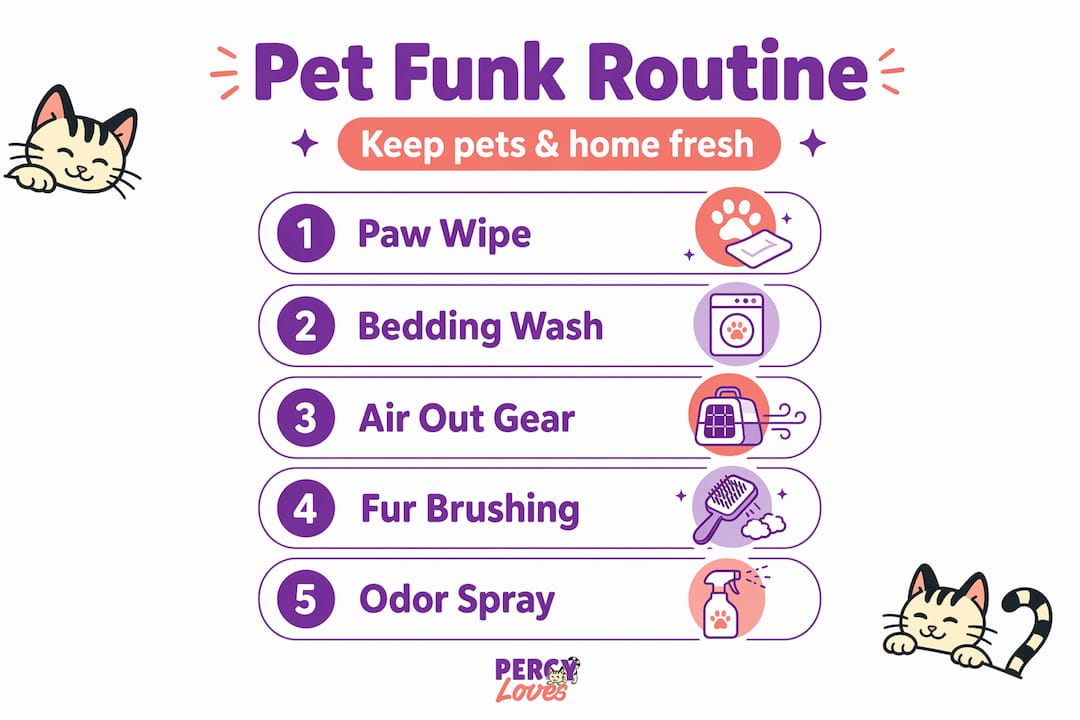
Pet funk solutions work best when they’re consistent, not reactive. The goal is building small habits that stack together into something that keeps funk from ever getting out of hand.
Your weekly pet freshness routine:
- Daily. Check and wipe paws after every outdoor trip. Quick, easy, 60 seconds. Dry between toes.
- Daily. For dogs with skin folds or flat faces, do a quick wipe of those areas to remove moisture and oils.
- Every 2 to 3 days. Spray Pal Furresher on your pet’s bedding and any furniture they use regularly.
- Weekly. Wash all bedding and gear in hot water. This is the single most effective step for long-term funk management alongside grooming and regular odor control.
- Weekly. Do a full coat and skin check. Look for changes in smell, new redness, or any spots your pet is licking repeatedly.
- As needed. Photo-document anything that looks unusual and share it with your vet at your next visit or sooner if symptoms worsen.
Quick reference: what each step targets
| Routine step | Funk source it targets | Frequency |
|---|---|---|
| Paw wipe and dry | Bacteria from outdoor surfaces | Daily |
| Skin fold wipe | Moisture and yeast in folds | Daily |
| Bedding spray | Airborne and surface odor compounds | Every 2 to 3 days |
| Hot water bedding wash | Bacteria, parasites, dander | Weekly |
| Coat and skin check | Early detection of infection or imbalance | Weekly |
The master pet care workflow gives you an even more detailed breakdown if you want to build this into a full household system.
Easy wins to add anytime:
- Keep a dedicated pet towel by the door for post-walk drying
- Replace synthetic bedding with materials that breathe better and dry faster
- Improve airflow in the areas where your pet spends the most time
Why understanding pet funk’s complexity helps you care better for your pet
Here’s the take the humans at Percy Loves want to share, and it’s one that most pet odor content gets completely wrong.
Pet parents often treat funk like it’s a cleanliness failure. Something went wrong, something wasn’t cleaned, something needs to be eliminated. That framing pushes people toward over-washing, heavy fragrances, and harsh products, and none of those things actually solve the problem. Some make it worse.
Pet funk is a natural biological process. It’s a sign of your pet’s living skin microbiome, not evidence of neglect. Your pet’s skin supports a balanced community of bacteria and yeast. That community is supposed to be there. The goal isn’t to destroy it. The goal is to manage the conditions, mainly moisture and buildup, that let it tip out of balance.
When you understand that, your whole approach shifts. You stop trying to sterilize everything and start focusing on airflow, drying, gentle cleaning, and products that work with your pet’s biology rather than against it. You also get better at noticing when the smell stops being normal and starts being a health signal. That’s when the vet gets involved, not more product.
The pet parenting best practices approach is built on this exact principle: manage, don’t battle. It’s genuinely better for your pet, and it’s more effective long-term.
Over-cleaning and fragrance masking are short-term fixes that often cycle back to worse odors because they disrupt the skin balance that was keeping things stable. Working with your pet’s natural biology, while keeping things clean and dry, is the sustainable path.
Keep your pet and home fresh with Percy Loves Pal Furresher odor eliminator
Managing pet funk gets a whole lot easier when you have the right product in your corner. Pal Furresher was born out of a real problem with a real cat named Percy. His funk needed a real solution, and that’s exactly what the humans at Percy Loves built.
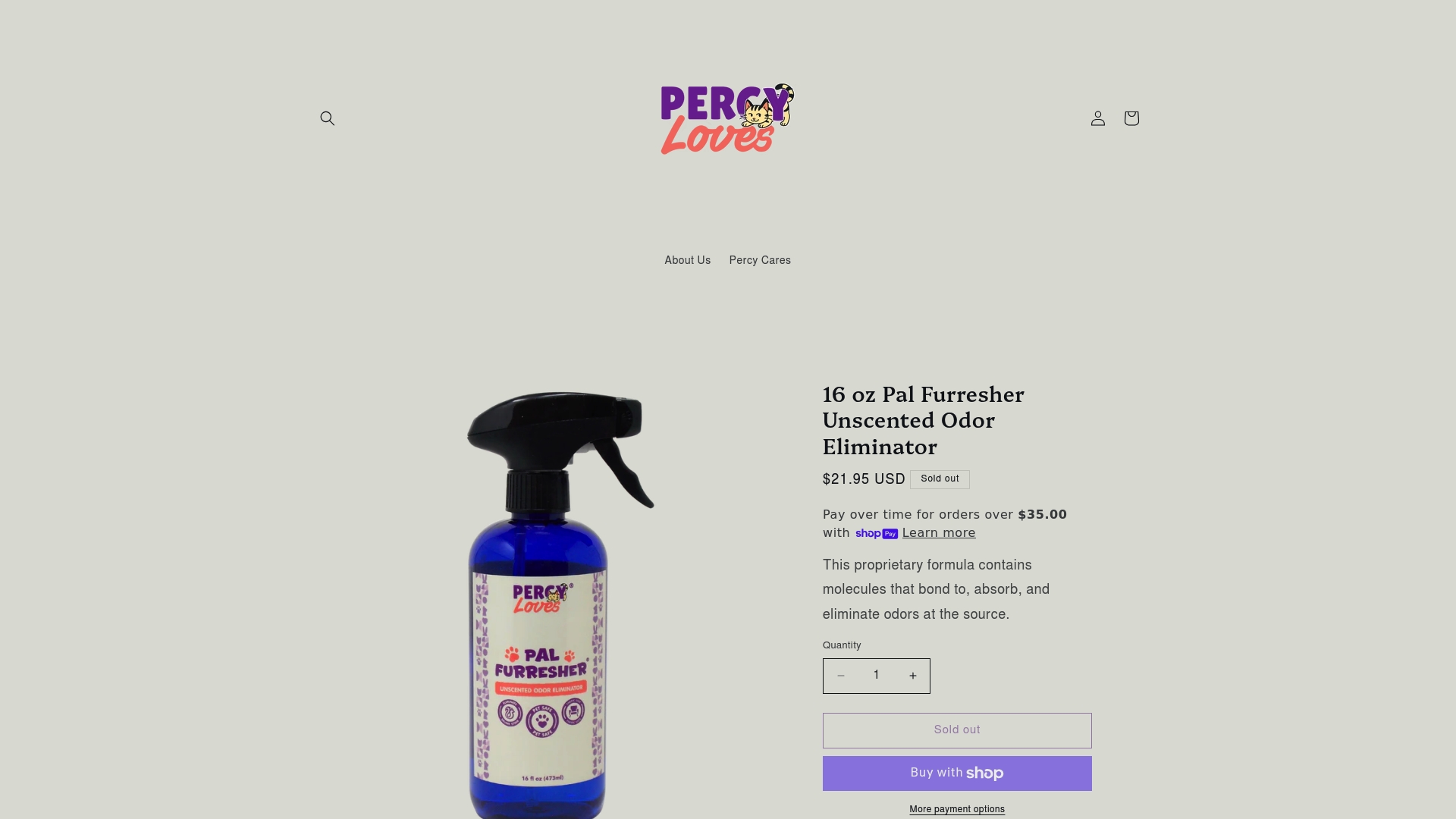
Pal Furresher unscented odor eliminator is enzyme-free, fragrance-free, non-toxic, and completely lick-safe. Its proprietary formula bonds directly to odor compounds and eliminates them at the source. No masking. No harsh chemicals. No disruption to your pet’s skin biology. It’s safe for sensitive pets, multi-pet homes, and everyday use. Pick up the 4 oz Pal Furresher to try it out, or grab the Pal Furresher 3-pack to keep one in every room. Because when funk doesn’t stand a chance, your whole home feels better.
Frequently asked questions
What exactly causes pet funk odor?
Pet funk odor comes from bacteria and yeast metabolizing skin oils, producing odor-causing VOCs that intensify significantly when the coat gets wet.
Is pet funk a sign of poor hygiene?
No. Pet funk is a natural biological process reflecting your pet’s skin microbiome balance and moisture levels, not simply poor hygiene or neglect.
When should I worry about my pet’s odor?
Be concerned if you notice a sudden intense or moldy smell along with redness, itching, or licking, as these can signal infections that need a vet’s attention.
Are all pet odor products safe to use?
Not at all. Choose unscented, non-toxic, enzyme-free products that are lick-safe for pets and avoid harsh chemicals that can disrupt your pet’s skin health.
How often should I wash my pet’s bedding to prevent funk?
Wash pet bedding as often as your own sheets, about once a week, since pet bedding harbors odor-causing bacteria and parasites that build up quickly.


