

Your Pet House Odor Prevention Guide for 2026
TL;DR:
- Living with pets involves managing persistent odors at their source rather than masking them. Establishing daily and weekly routines, using safe odor eliminators, and improving air quality are essential for long-term freshness. Regular deep cleaning of fabrics, carpets, and ventilation systems helps prevent embedded odors and airborne particles from lingering.
Living with pets means living with a little funk. You vacuum, you wash, you spray something lemony on the couch — and an hour later, that smell is back. A solid pet house odor prevention guide isn’t about covering odors up. It’s about stopping them at the source, building habits that actually stick, and using products that are safe for everyone in the house, including your fur babies. This guide walks you through everything, from what’s causing the smell to the daily routines and deep-cleaning strategies that make a real difference.
Table of Contents
- Key takeaways
- Understanding your pet’s odor sources
- Daily and weekly habits that prevent odor buildup
- Deep cleaning for stubborn odors in fabrics and carpets
- Controlling airborne pet odors for long-term freshness
- My honest take on pet odor prevention
- Meet your new odor-fighting partner
- FAQ
Key takeaways
| Point | Details |
|---|---|
| Prevention beats masking | Eliminating odor at the source stops the stale scent buildup that sprays and candles can never fix. |
| Routines matter most | Daily and weekly cleaning habits prevent odors from embedding into fabrics, carpets, and air. |
| Safe products protect pets | Choose fragrance-free, enzyme-free, and non-toxic sprays to protect sensitive pets during cleanup. |
| Air quality is half the battle | HEPA purifiers and regular ventilation reduce the airborne particles that carry pet smells. |
| Deep cleaning handles the rest | Carpets, upholstery, and pet bedding need periodic deep cleaning to remove embedded odors. |
Understanding your pet’s odor sources
Before you can tackle the problem, you need to know where it’s coming from. Pet odors don’t come from just one place. They stack up from multiple sources at once.
The main culprits are:
- Pet body oils and skin dander that transfer to furniture, bedding, and carpet
- Litter boxes that release ammonia and bacterial odors into the air
- Accidents on floors or fabric that soak in and linger if not treated quickly
- Food and water bowls that develop a sour, biofilm smell over time
- Pet bedding and toys that trap oils, saliva, and outdoor debris
The good news is that effective odor control requires a system built around daily, weekly, and monthly tasks rather than a single cleaning event. Once you understand that, the whole thing gets a lot more manageable.
For cleaning, you will want to have these basics ready:
| Tool or product | Best use |
|---|---|
| Vacuum with pet attachment | Carpets, upholstery, and pet hair removal |
| HEPA air purifier | Airborne dander and odor particles |
| Pet-safe laundry detergent | Washing bedding, blankets, and soft toys |
| Baking soda | Fabric and carpet odor neutralizing |
| Fragrance-free odor eliminator | Accident cleanup and surface freshening |
A fragrance-free, enzyme-free odor eliminator like Percy Loves Pal Furresher deserves a spot in your kit. It bonds directly to odor molecules and eliminates them on contact. No masking, no harsh chemicals, and totally lick-safe for curious pets.
Pro Tip: Before buying any odor eliminator, check that it is fragrance-free and free of harsh chemicals. Fragrances do not remove odors. They blend with them and create a different, often worse smell.
Daily and weekly habits that prevent odor buildup
Small habits done consistently do more than big cleanups done rarely. This is the heart of preventing pet smell in home for the long term.
Daily habits to keep on top of:
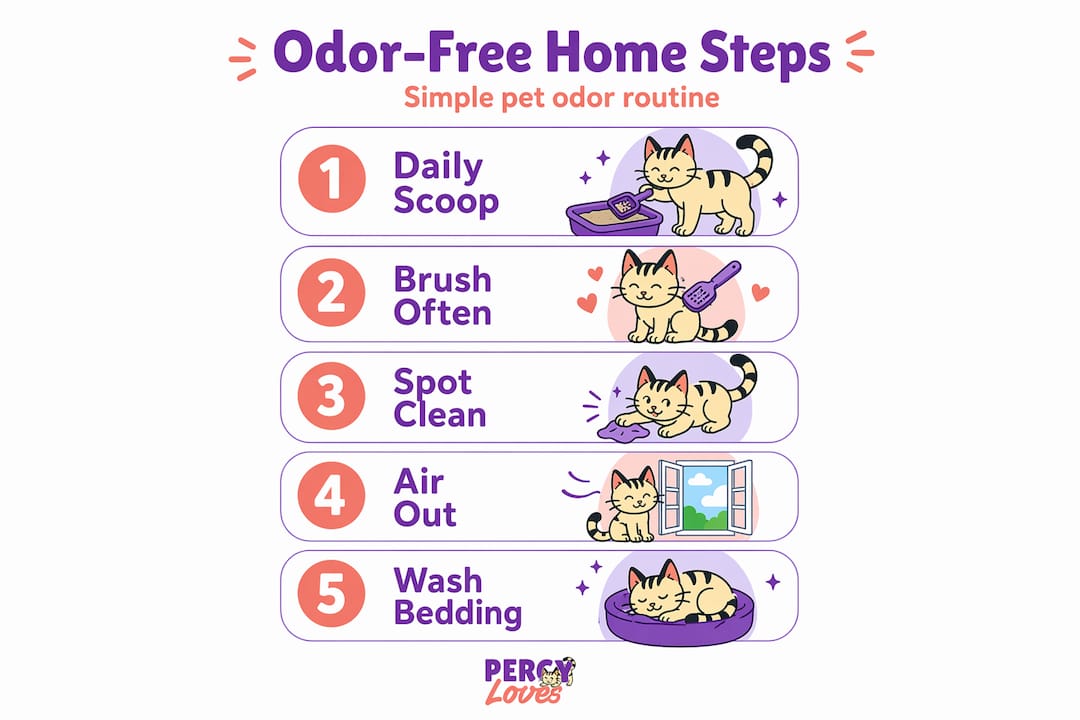
- Scoop the litter box every single day. Litter boxes should be scooped daily and deep cleaned weekly with mild soap and water.
- Wipe down your pet’s paws when they come in from outside.
- Rinse food and water bowls to prevent biofilm from forming.
- Spot clean any accidents immediately. The longer urine or feces sits, the deeper it penetrates.
Weekly habits that make a big difference:
- Wash pet bedding in hot water. Laundering pet bedding weekly removes oils, hair, and odor-causing bacteria that build up fast.
- Vacuum all carpets, rugs, and upholstered furniture. Pet hair carries oils and dander directly into fabric fibers.
- Wipe down hard surfaces your pet frequents, like the side of the couch or their favorite window sill.
- Deep clean the litter box with soap and water to reduce ammonia accumulation.
- Open windows to flush stale air and bring in fresh circulation.
On the grooming side, brushing your pet a few times a week dramatically reduces loose hair and dander in the air. For baths, don’t overdo it. Over-bathing pets can actually strip their natural oils and increase odor, so aim for every four to six weeks unless your vet suggests otherwise.
Pro Tip: Clean your washing machine drum monthly with a cup of white vinegar run on a hot cycle. Neglecting machine cleaning transfers musty smells right back onto freshly washed pet bedding.

Deep cleaning for stubborn odors in fabrics and carpets
Even the best daily routines won’t reach everything. Odors embedded in carpet fibers and upholstery need a different approach. This is where removing pet odors from carpet and soft surfaces calls for a bit more effort.
Follow these steps for a thorough deep clean:
- Sprinkle baking soda generously over carpets and upholstered surfaces. Baking soda neutralizes both acidic and alkaline odor compounds safely without harming fabrics. Let it sit for at least 15 minutes, then vacuum thoroughly.
- Steam clean carpets every one to three months depending on your pet’s activity level. Steam penetrates deep into fibers and breaks up oils that vacuuming misses.
- Wash soft pet toys in a mesh laundry bag on a warm cycle. Replace toys that are cracked or heavily absorbent since they hold odors that washing can’t reach.
- Replace litter boxes annually. Litter boxes absorb odors over time at a level that cleaning alone cannot reverse. Scratches in the plastic harbor bacteria.
- Spray a safe, enzyme-free odor eliminator on any fabric surface after cleaning to eliminate residual odors at the molecular level.
A few things to avoid during deep cleaning:
- Ammonia-based products on litter box areas. Ammonia smells like urine to pets and can make accidents worse.
- Fragranced fabric sprays that sit on top of odors rather than removing them.
- Leaving HVAC filters unchanged. Pet dander circulates through HVAC systems and settles into upholstery, so dirty filters just keep redistributing the problem.
Pro Tip: For accident spots on carpet, blot first to absorb as much liquid as possible before applying anything. Rubbing pushes the odor deeper into the fibers and spreads the stain.
For a complete step-by-step cleaning workflow, the pet cleaning process guide at Percyloves is a helpful reference.
Controlling airborne pet odors for long-term freshness
You can clean every surface in your home and still have a smell. That’s because a significant portion of pet odor is airborne. Dander, shed hair particles, and volatile odor compounds float around and settle continuously. Natural ways to reduce pet odor have to include air quality.
Here is what actually works:
- Run a HEPA air purifier with an activated carbon filter. HEPA purifiers with carbon filters are the most effective option for airborne pet odors. Size matters. Choose a unit rated for at least 1.5 times your room’s square footage.
- Change HVAC filters regularly. Use MERV 11 or higher rated filters and swap them every one to two months if you have pets. Standard filters do not capture fine dander particles.
- Ventilate daily. Indoor air holds 2 to 5 times more pollutants than outdoor air. Opening two windows on opposite sides of a room creates cross-ventilation that flushes stale air in minutes.
- Manage humidity. High humidity makes dander stick to surfaces and amplifies odor. Keep indoor humidity between 40 and 50 percent with a dehumidifier if needed.
- Groom pets in a well-ventilated area to reduce the amount of loose dander that enters your living spaces during brushing.
For homes with cats and small animals like rabbits, guinea pigs, or ferrets, airborne odor control is especially worth prioritizing since their enclosures can release concentrated smells into the surrounding air.
My honest take on pet odor prevention
I’ve tried every approach. The scented sprays, the plug-in diffusers, the candles that promise to smell like “clean linen.” None of them worked. They just added a layer of fragrance on top of something that hadn’t actually been cleaned. And honestly, that combination often smells worse than the original problem.
What changed things for me was eliminating the odor at the source before reaching for anything to make the room smell nice. Once I stopped masking and started actually removing odors, the difference was immediate. My home didn’t smell like a perfume store trying to hide a secret.
The other shift was finding a product safe enough that I didn’t have to worry about my cat walking across a freshly sprayed floor and then licking her paws. Percy Loves Pal Furresher solved that. Fragrance-free, enzyme-free, and lick-safe. I spray it, it works, and I don’t stress about what my cat might be absorbing.
Prevention is the thing no one talks about enough. Daily habits take five minutes. The result is a home that genuinely smells clean, not just temporarily covered up. That is worth every one of those five minutes.
— Kathy
Meet your new odor-fighting partner
If you have made it this far, you are serious about keeping your home fresh and your pets safe. That’s exactly what Percyloves built Pal Furresher for.
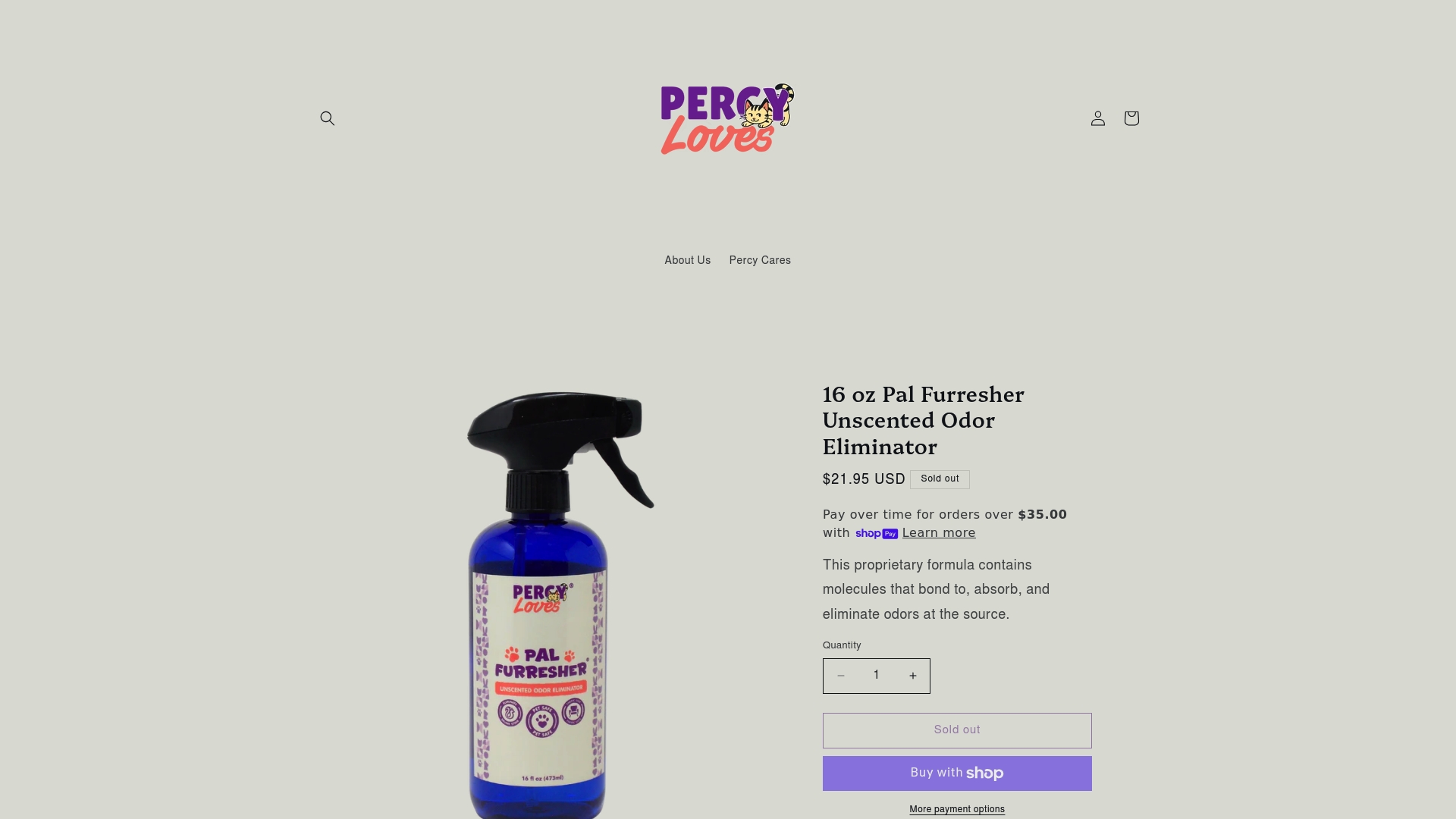
Pal Furresher is fragrance-free, enzyme-free, and completely lick-safe. Its proprietary formula bonds directly to odor molecules and eliminates them on contact. No covering up. No chemicals to worry about. Just a genuinely clean result you can trust, whether you are dealing with a fresh accident, stale pet bedding, or surfaces your furry family member uses every day.
Check out the Pal Furresher odor eliminator to get started, or grab the pack of 3 to keep one in every room. Your nose will thank you. So will your pets.
FAQ
What is the best way to prevent pet odors at home?
Build a daily routine around litter box scooping, wiping paws, rinsing bowls, and spot cleaning accidents right away. Combine that with weekly vacuuming and bedding washes to stop odors before they embed.
How often should I wash my pet’s bedding?
Wash pet bedding at least once a week in hot water. If your pet is active or goes outdoors often, washing twice a week will do a better job of keeping oils and odors from building up.
Can I use baking soda to remove pet odors from carpet?
Yes. Sprinkle baking soda generously on the carpet, let it sit for 15 minutes or longer, then vacuum it up. Baking soda neutralizes both acidic and alkaline odor compounds and is safe for fabrics.
Why does my home still smell even after cleaning?
The odor is likely airborne or embedded deep in fabric fibers. An HVAC filter change, a HEPA air purifier, and a fragrance-free odor eliminator sprayed directly on surfaces will address what regular cleaning misses.
Are fragranced sprays effective for pet odor removal?
No. Fragranced sprays mask odors temporarily but do not eliminate them. The scent mixes with the underlying pet odor and often creates a worse combined smell. A fragrance-free product that works at the source is far more effective.


