

How to Remove Pet Odor: Safe Methods That Work
TL;DR:
- Effective pet odor removal focuses on treating the source, such as bedding and carpets, rather than masking smells. Regular grooming, prompt accident treatment, and safe, enzyme-free products like Pal Furresher ensure a fresher home while protecting pets. Consistency in cleaning routines and addressing deep contamination are key to long-term odor control.
You love your pets. But let’s be honest. That smell? Not so much. Learning how to remove pet odor effectively is one of the biggest challenges pet parents face, whether you’ve got a dog, a cat, or a small furry friend like a rabbit or ferret. The good news is that you don’t need harsh chemicals or complicated routines to win this battle. You just need the right approach, a few good habits, and products that actually tackle odors at the source instead of covering them up.
Table of Contents
- Key takeaways
- Getting ready to tackle pet odors
- Step-by-step methods to remove pet odor
- Why odors keep coming back and what to do about it
- Building long-term habits for a fresh home
- My honest take on pet odor removal
- Meet Pal Furresher: the odor eliminator we trust
- FAQ
Key takeaways
| Point | Details |
|---|---|
| Target the source | Masking odors with sprays never lasts. Treat the actual source to eliminate smells for good. |
| Prep before you clean | Gather your tools and identify odor hotspots before you start any cleaning routine. |
| Groom regularly | Weekly grooming can remove up to 84% of surface allergens and reduce odor buildup indoors. |
| Avoid scrubbing accidents | Blotting beats scrubbing every time. Scrubbing spreads contamination deeper into fibers. |
| Choose safe products | Enzyme-free, fragrance-free, lick-safe formulas protect sensitive pets while still eliminating odors. |
Getting ready to tackle pet odors
Before you spray anything or scrub a single surface, take a few minutes to figure out where the smell is actually coming from. This step alone saves you a lot of wasted effort.
The most common odor sources in a pet home are:
- Pet bedding and blankets soaked with body oils, saliva, and dander
- Carpets and rugs where urine, fur, and tracked-in dirt settle deep
- Furniture and upholstery that absorbs pet smells over time
- Litter boxes and small pet enclosures that need frequent cleaning
- Pet gear like collars, leashes, and toys
Once you know where you’re dealing with the worst of it, gather your supplies. You’ll want a HEPA-filtered vacuum, microfiber cloths, baking soda, and a reliable odor eliminator spray. Percy Loves Pal Furresher is a great one to keep on hand. It’s fragrance-free, enzyme-free, and lick-safe, which means it’s totally safe to use around curious noses and paws.
Pro Tip: Set a recurring cleaning schedule on your phone. Consistency is everything when it comes to keeping pet odors from building up. Even a 15-minute weekly routine makes a big difference.
One thing that often gets overlooked? Your pet’s hygiene. Regular grooming and bathing can remove up to 84% of surface allergens and dramatically reduce how much smell spreads through your home. Brushing your dog or cat outside keeps dander and loose fur from settling on surfaces indoors.
| Odor source | Cleaning frequency |
|---|---|
| Pet bedding | Weekly wash |
| Carpets and rugs | Vacuum twice a week |
| Litter boxes | Daily scooping, full clean weekly |
| Furniture | Spot treat as needed, full clean monthly |
| Small animal enclosures | Every 3 to 7 days depending on species |
Step-by-step methods to remove pet odor
Now that you’re prepped, here’s how to actually get rid of pet odors from the most common spots in your home. These methods are safe, practical, and won’t harm your pets.
-
Vacuum first, always. Use a HEPA-filtered vacuum on carpets, rugs, and furniture before applying any product. HEPA vacuums capture particles as small as 0.3 microns at 99.97% efficiency, which means you’re pulling out dander, fur, and dried debris that hold odor before you treat the surface.
-
Wash pet bedding on hot. Toss beds, blankets, and covers into the washing machine weekly. Hot water does a better job at breaking down body oils and bacteria than cold. Add a cup of white vinegar to the rinse cycle for extra odor-neutralizing power.
-
Treat accidents immediately. Fresh accidents are much easier to handle than old ones. Blot up as much of the liquid as you can using a dry cloth. Don’t rub. Then spray Percy Loves Pal Furresher directly on the spot. It bonds to the odor molecules at the source and eliminates them on contact, without any fragrance to just layer over the smell.
-
Use baking soda on carpets and upholstery. Baking soda neutralizes odors naturally without chemicals. Sprinkle a generous layer over the area, let it sit for 15 to 30 minutes, then vacuum thoroughly. This works especially well between deep cleanings.
-
Ventilate the space. Open windows when you can. Air purifiers with HEPA filters run continuously in pet-used rooms and make a noticeable difference in overall air freshness. Good airflow keeps smells from concentrating in one area.
-
Finish with Pal Furresher. After cleaning, a light spray of Pal Furresher on bedding, furniture, or any freshly cleaned surface gives you that final layer of odor elimination. Since it’s fragrance-free, there’s no perfume smell. Just clean.
Pro Tip: For carpets in high-traffic pet zones, try a two-step approach. Baking soda first to absorb, then Pal Furresher to eliminate. The combo works better than either product alone.
Why odors keep coming back and what to do about it
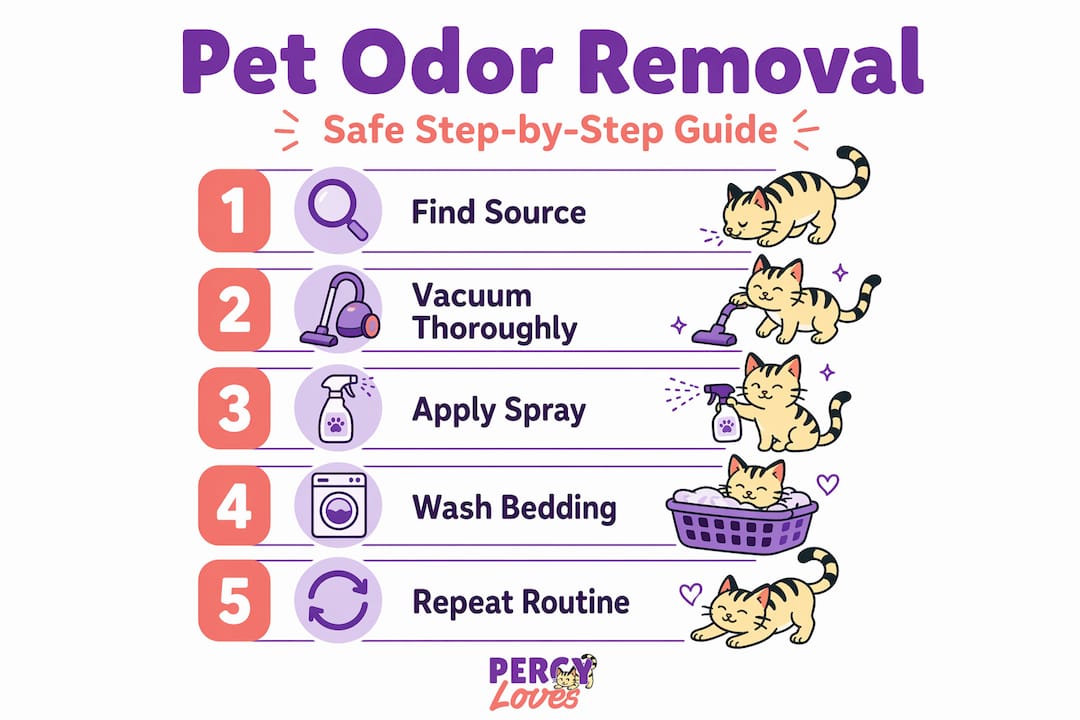
If you’ve cleaned a spot three times and the smell keeps returning, you’re not doing anything wrong. The issue is almost always that the odor source goes deeper than the surface you can see.
The most common reasons pet odors persist:
- Hidden urine spots. A UV blacklight flashlight is genuinely one of the most useful tools for pet parents. It reveals dried urine spots invisible to the naked eye, especially on light-colored carpet.
- Deep padding contamination. When urine soaks through carpet fibers and into the padding underneath, surface cleaning only reduces odor temporarily. The smell returns as the padding dries and re-releases the odor.
- Porous materials. Grout, unsealed wood, and thick foam absorb liquid quickly and hold odor long after the surface looks dry.
- Residue from prior cleaners. Some products leave a residue that attracts pets to re-mark the same spot. Fragrance-free options like Pal Furresher don’t have this problem.
One mistake that makes things worse: scrubbing hard at an accident spot. Scrubbing spreads the contamination and pushes it deeper into fabric and padding. Always blot. Press down, lift up, repeat.
When deep padding is the culprit and home methods aren’t working, professional carpet cleaning may be the right call. Some companies specialize in pet odor removal and can treat below the carpet surface. It’s not cheap, but it’s often the only way to fully resolve severe contamination. For everything else, consistent home treatment using safe, targeted products handles the job well.
Building long-term habits for a fresh home
Removing a smell once is satisfying. Keeping your home fresh for the long haul is where real pet parent habits kick in.

The single biggest factor in long-term odor control is a consistent routine. Not a perfect one. Just consistent. Here’s what that looks like in practice:
Pro Tip: Don’t wait until you can smell something to clean it. Odors build up slowly in fibers and padding long before they become noticeable. Cleaning on a schedule means you stay ahead of the smell instead of chasing it.
A few habits that genuinely help:
- Groom your pet regularly. Brushing outdoors and bathing with a pet-safe shampoo keeps hair, dander, and oil from accumulating indoors. This is one of the most underrated ways to reduce pet allergens and keep your home smelling better between deep cleans.
- Rotate and wash pet gear. Collars, harnesses, and favorite toys carry a surprising amount of odor. Washing them monthly makes a real difference.
- Create low-odor zones. Designate certain rooms, like bedrooms, as pet-free spaces. This limits how far odors spread and gives you a genuinely fresh area in the house.
- Reach for non-toxic products every time. Using a lick-safe, fragrance-free formula like Pal Furresher as your everyday go-to means you’re never gambling with your pet’s safety when you freshen things up.
- Check your HVAC filter. Pet dander and fur travel through air systems. Changing filters monthly in a pet home keeps airborne allergens from recirculating constantly.
These habits don’t take a lot of time. But they add up quickly. A home with three cats or two large dogs can stay genuinely fresh with about 20 minutes of intentional cleaning per week, as long as you’re consistent and using the right products.
My honest take on pet odor removal
I’ve tried a lot of products over the years. Scented sprays, heavy-duty carpet foams, all of it. And what I kept finding was that the strong-smelling ones never actually fixed anything. They just added another smell on top of the one I was trying to get rid of. My sensitive cat would avoid rooms I had just “freshened.” That told me everything.
What changed things for me was switching to a completely fragrance-free, enzyme-free formula. With Pal Furresher, there’s no perfume competing with the odor. It works at the source, and because it’s lick-safe, I don’t have to stress about my cat walking across a sprayed surface and grooming himself afterward.
What I’ve learned from trial and error is this: patience and consistency matter more than any single product. You won’t fix deep carpet contamination in one afternoon. But with a routine that includes regular grooming, frequent vacuuming, and a safe odor eliminator you actually trust, you genuinely can have a home that smells clean. Even with a cat named Percy who has opinions about litter boxes.
Be patient with yourself. Every pet home has its moments. The goal isn’t perfection. It’s a routine that works.
Meet Pal Furresher: the odor eliminator we trust
If you’ve been searching for a safe, reliable way to neutralize pet odors without harsh chemicals, we think you’re going to love what Percy Loves Pal Furresher does.
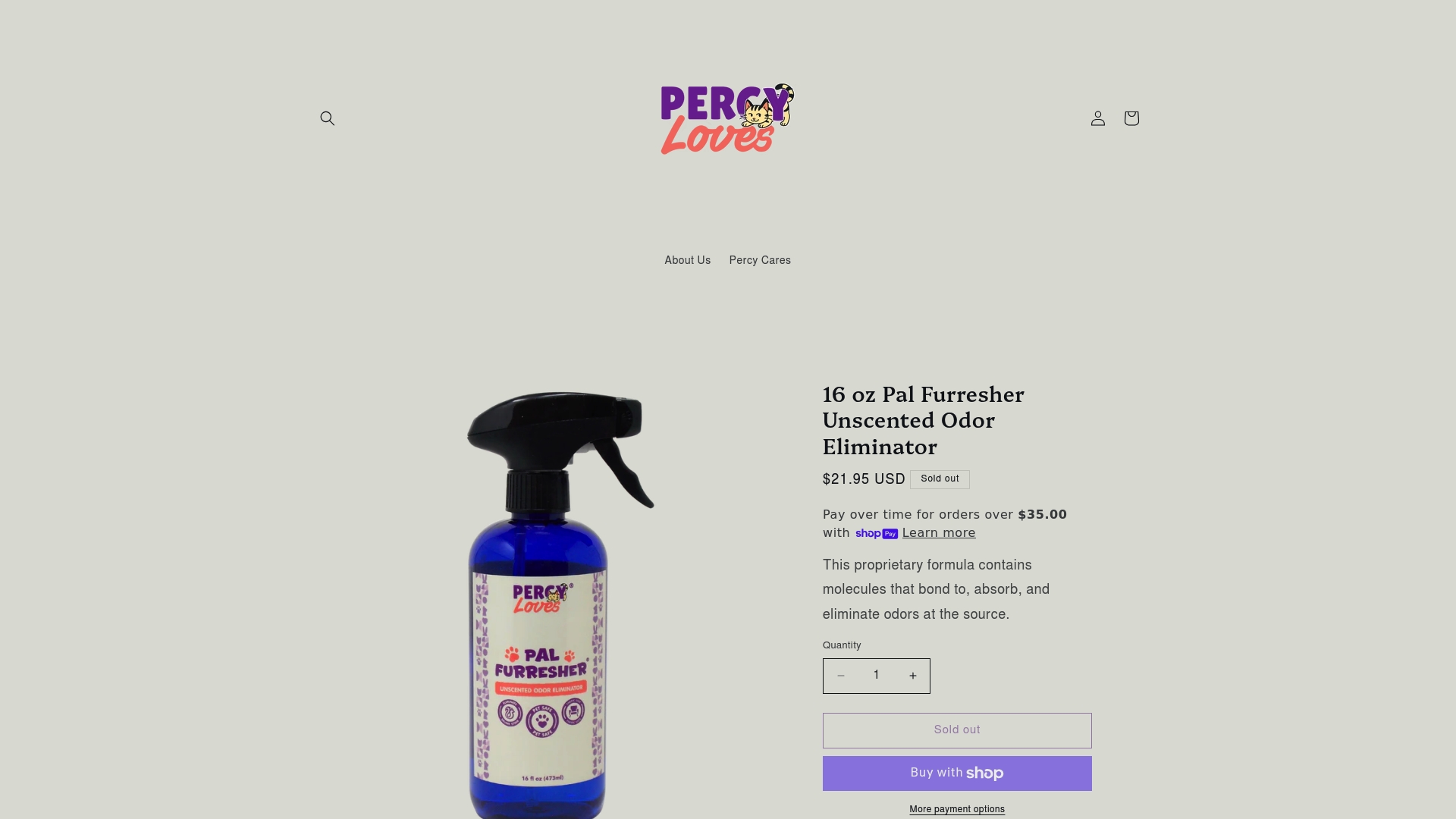
Pal Furresher is fragrance-free and enzyme-free, so there’s no masking and no mystery ingredients. It works by bonding directly to odor molecules at the source and eliminating them on contact. Instantly. That means no waiting around, no repeat applications on fresh accidents, and no worrying about what your pet is licking off the carpet.
It’s lick-safe. Full stop. That matters a lot in homes with curious dogs, cats, rabbits, ferrets, and small animals who explore with their mouths. Percy himself inspired the formula, and the humans at Percyloves made sure it was safe enough for even the most sensitive noses.
Grab the 4 oz Pal Furresher to start, or stock up with the pack of 3 if you’ve got a multi-pet household and want to keep a bottle in every room. Your home and your pets will thank you.
FAQ
How do I remove pet odor from carpet?
Blot the area immediately to absorb as much liquid as possible, then apply a lick-safe, fragrance-free odor eliminator like Pal Furresher directly to the spot. For older odors, sprinkle baking soda first, let it sit for 20 minutes, vacuum, then treat with the spray.
Why does pet odor keep coming back after cleaning?
The odor source is likely deeper than the surface. Urine that soaks into carpet padding or porous materials will continue to release smell as it dries. A UV blacklight flashlight helps locate hidden spots that need direct treatment.
What is the safest way to eliminate pet odors?
Using a fragrance-free, enzyme-free, non-toxic spray that works at the source is the safest approach, especially in homes with sensitive pets. Pal Furresher by Percyloves is lick-safe and eliminates odors without harsh chemicals.
How often should I clean to keep pet odors away?
Vacuum at least twice a week, wash pet bedding weekly, and spot treat accidents immediately. A consistent routine is more effective than infrequent deep cleans.
Does grooming really help with indoor pet odors?
Yes, significantly. Weekly grooming removes up to 84% of surface allergens and keeps dander, oils, and loose fur from building up on your floors and furniture. It’s one of the most effective ways to reduce pet allergens and keep your home fresher between cleaning sessions.


